
Bluey's Happy Snaps Review
Xbox Series X|S
Gameloft Brisbane captures the world of Bluey through photography, familiar places, and playful activities in a gentle adventure that suits its young audience but may leave older players wanting more.
Reviewed by Maisie Scott on Oct 21, 2026
Bluey has become one of those rare children's shows that appeals as much to parents as to kids. Everyday family stories, imaginative games, and recognizable characters have helped it grow beyond television, with video games offering families another way to spend time with the Heeler family.
Bluey's Happy Snaps offers a slightly different take on a typical adventure: you're given a camera and can wander the show's world at your own pace. Developed by Gameloft Brisbane in collaboration with Ludo Studio and BBC Studios, the game lets players visit familiar locations, snap photos, collect stickers, and create memories in a digital scrapbook.
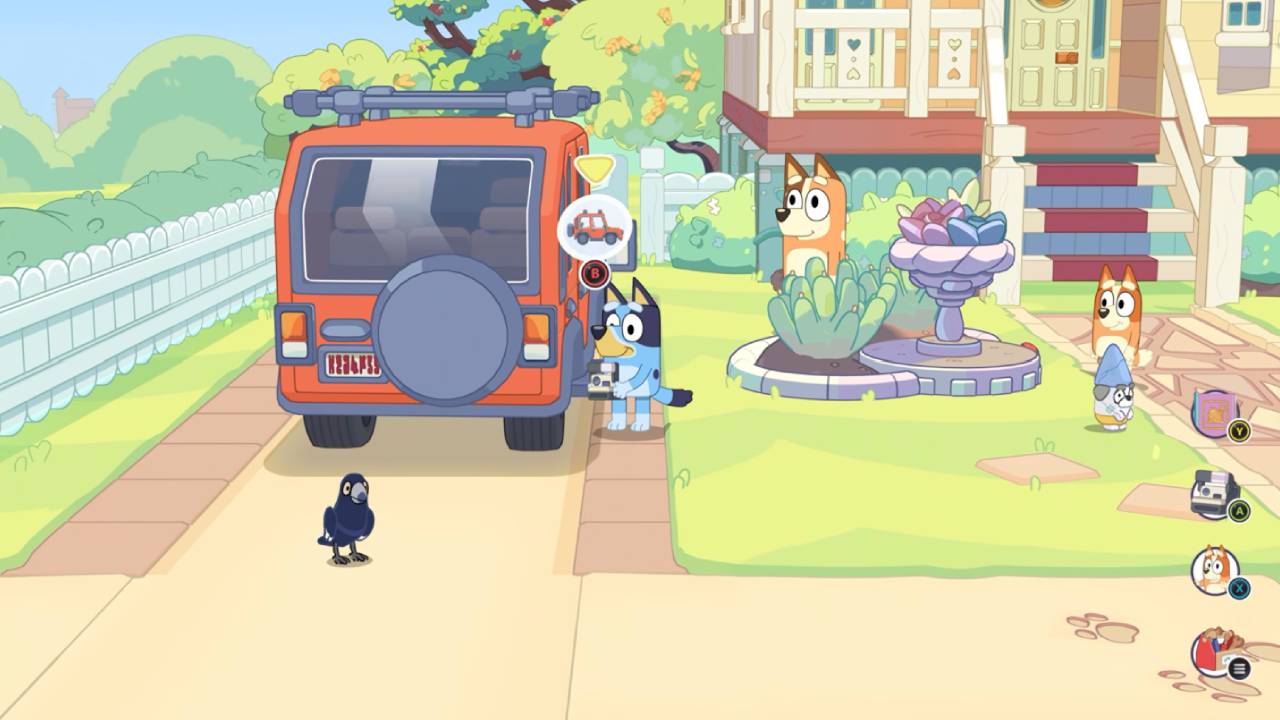
Bluey and Bingo's adventure begins when they find their dad's old camera.
Bandit gets it working again, and the girls set off to photograph their hometown, Brisbane. The premise is simple, but it fits the series, which has always found entertainment in ordinary places and everyday family activities. You do not need a major adventure to give the characters something to do. Sometimes all you need is a camera, a few friends, and a reason to turn a regular outing into a game.
Bluey's Happy Snaps doesn't offer a complex story or an imminent threat; instead, it gives you a reason to explore. Bandit and Chili help the family travel from place to place while Bluey and Bingo play, find things, and document their experiences. Fans will recognize familiar locations from the television series, including the Heeler family home, parks, beaches, lookouts, South Bank, and Hammerbarn.
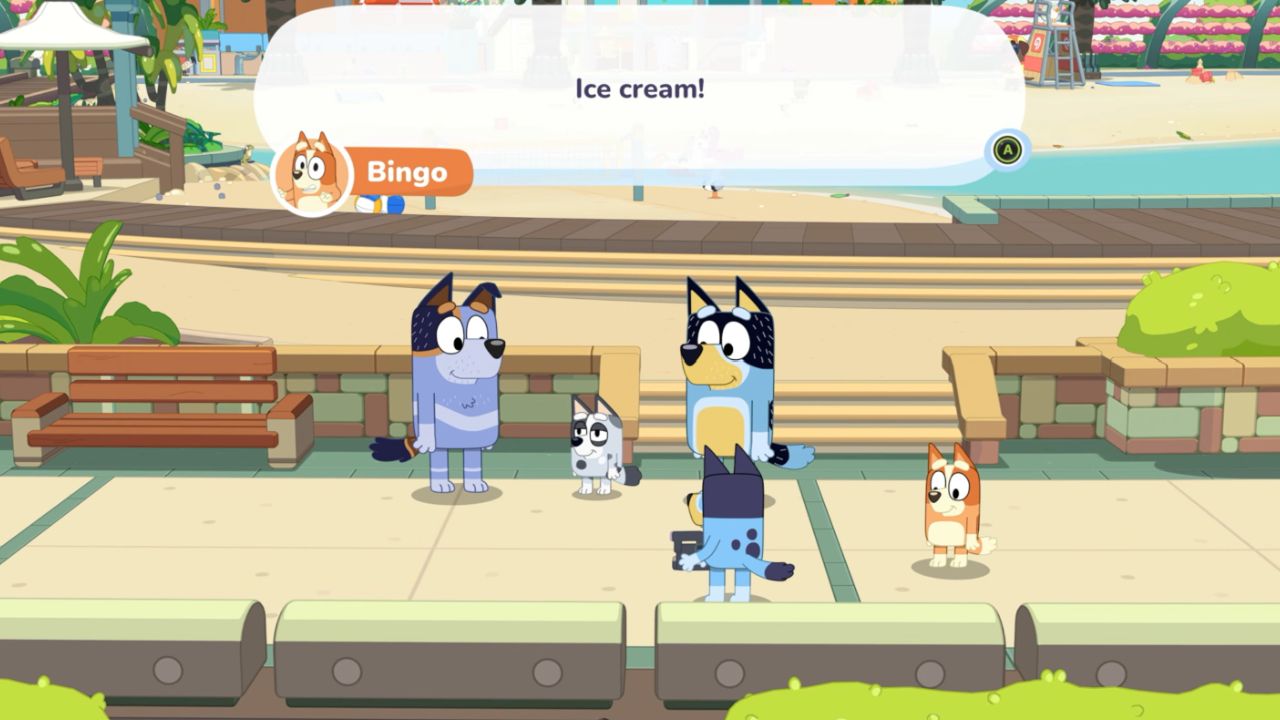
These places are not just a backdrop for your photographic goals. They include familiar objects, characters, wildlife, and references that fans may recognize from individual episodes. You're no longer just watching Bluey and her family visit these places; you can explore them yourself and discover details hidden in the environment.
The story mostly serves as a vehicle for this exploration.
Younger players can focus on finding things and taking photos without needing a complicated plot. But the story is light for players looking for significant character development or memorable plot twists. The appeal is in hanging out with Bluey and her family, not in waiting to see what happens next.
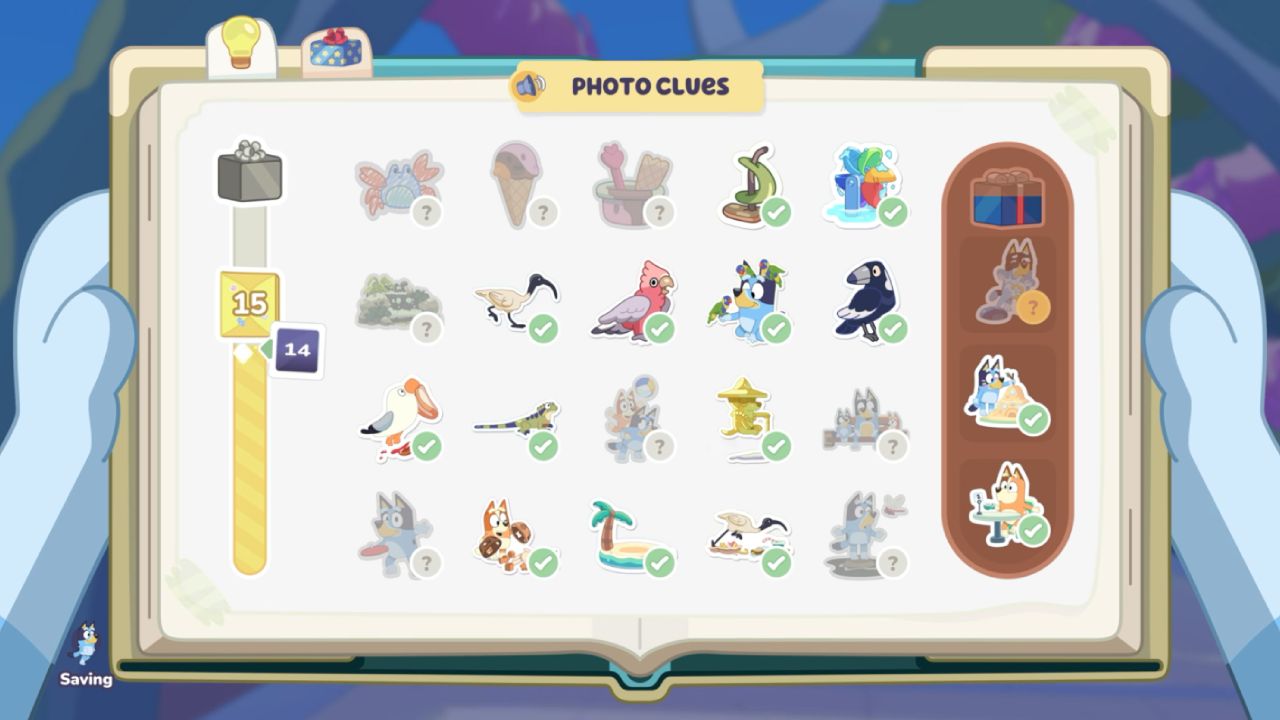
Your main tool when you start playing is the camera. You explore each place looking for the subjects listed in your scrapbook and photographing them. They can be animals, landmarks, friends, things, or things happening around you. Every successful photo earns you stickers that slowly fill the scrapbook and bring you closer to unlocking the next area.
The controls are simple enough for young children to figure out. To view the camera, press the A button, and press it again to take the picture. You don't need to change focus, adjust settings, or deal with complicated equipment. You just point the camera at a subject and shoot.
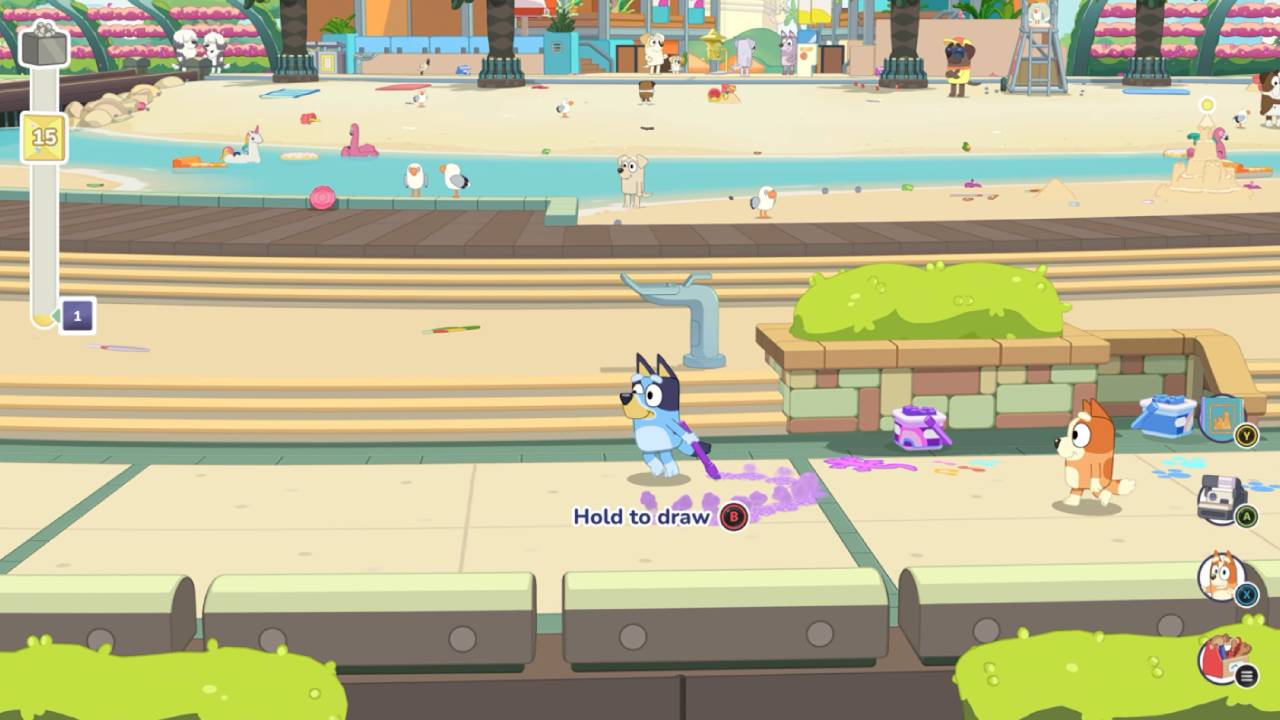
The game's simplicity is one of its biggest strengths.
Children who have never played a video game before can quickly learn what the camera does and start experimenting. You can also photograph things unrelated to the current goal. So you can photograph what you want, rather than treating every moment like a checklist. You won't get frustrated by mistakes, so you can keep trying and playing.
But the camera mechanics are simple. If you are used to photography games that let you adjust framing, zoom in on distant subjects, or experiment with more advanced controls, you will find little of that here. The camera supports exploration rather than deep photography simulation. That makes sense for the intended audience, but it also limits how much the central mechanic can offer over several hours.
Your scrapbook provides the main progression structure.
Each location contains a collection of photographs to complete, and audio and visual clues help you figure out what to photograph. These hints are especially useful for children who aren't yet comfortable reading independently. The game guides you on what to look for next rather than leaving you stuck on an objective.
Exploration isn't limited to completing the scrapbook. The environments are teeming with wildlife, toys, and little details that reward you for looking around. You might see colorful birds, discover a koala, or find a character tucked away in a corner. Australian wildlife is an important part of the setting, and photographing animals gives you another reason to explore instead of rushing to the next objective.
You can also interact with the environment via small activities. Collect items, play with toys, throw balls around, jump on trampolines, or draw on the ground with chalk. These interactions make the locations feel like places Bluey and Bingo would actually hang out.
They aren't always necessary to complete objectives, but they give younger players reasons to wander from their current task and see what else is available.
Each location also includes three special photography opportunities that go beyond simply finding an object and taking a picture. These can lead to short minigames where you arrange toys, set up a scene, or take part in an activity before capturing the result. They offer a welcome change of pace because you create a photograph rather than merely locating its subject.
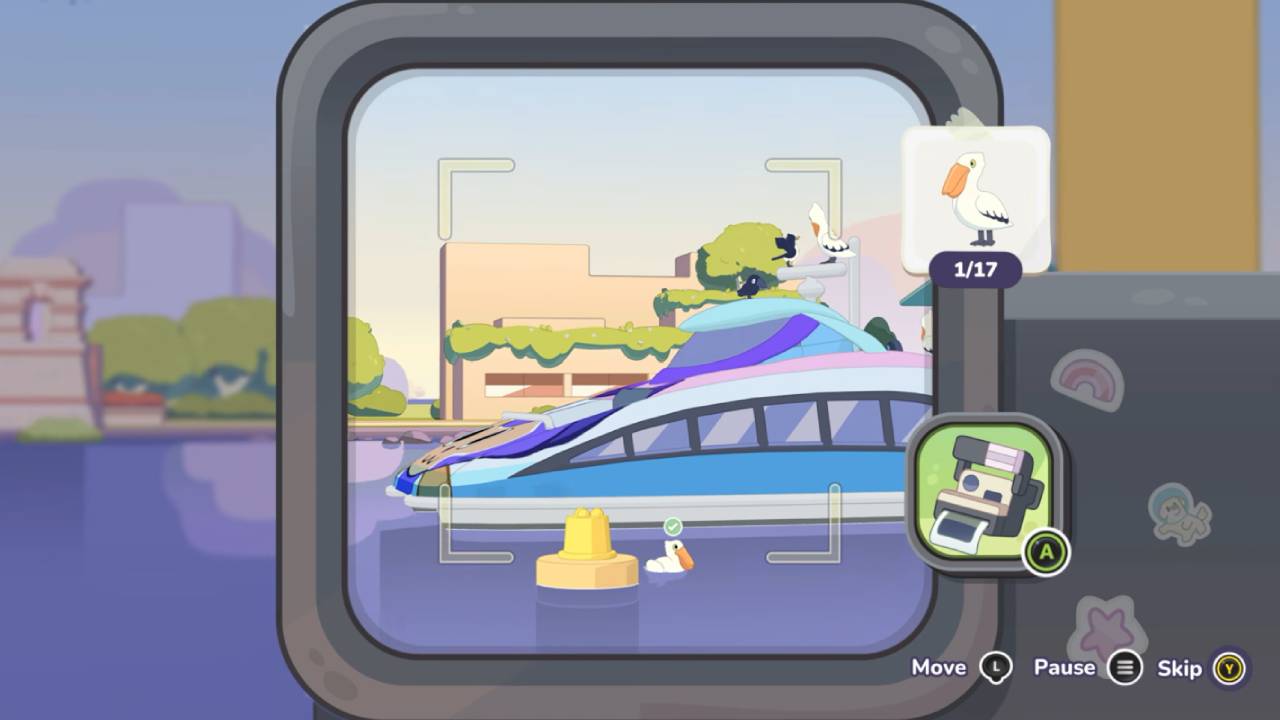
Between locations, photography minigames add a little more movement. You may need to photograph birds or other animals as they appear, capturing as many suitable subjects as possible before the opportunity passes. The idea brings to mind games like Pokémon Snap, although the mechanics here are considerably simpler.
You have limited time to photograph targets, and collecting enough successful shots unlocks additional stickers.
These activities offer some welcome variety without making the experience difficult for younger players. However, their limited complexity means they don't become particularly demanding. Once you understand what an activity requires, there's little left to master.
Completing photographs also unlocks coloring pages and decorations that let you personalize your scrapbook. You can add stickers, organize the pictures, and make a collection of your adventures. This gives the photographs a use beyond simply ticking off objectives, especially for children who enjoy being creative.
The drawing tools let you create your own designs, although using them precisely can be awkward. Freeform drawing feels like a natural fit for a creativity-focused game, but the controls can make it hard to produce exactly what you have in mind. The coloring pages are more straightforward, particularly when you use the available decorations to customize them.
There is no traditional XP system or elaborate character progression to manage.
You won't grind levels, upgrade equipment, or unlock combat abilities. Progress comes mainly from completing photos, collecting stickers, unlocking places, and adding more to your scrapbook. This keeps the experience accessible and prevents adding systems that would interfere with the core concept.
The downside is that once you've completed the major objectives in an area, there's not much reason to return. You can return to previously unlocked locations and discover things you missed, but the game offers little incentive to repeat everything. Experienced players can move through the available stages in a matter of hours, although younger children may naturally take longer as they play with objects, take extra pictures, and explore.
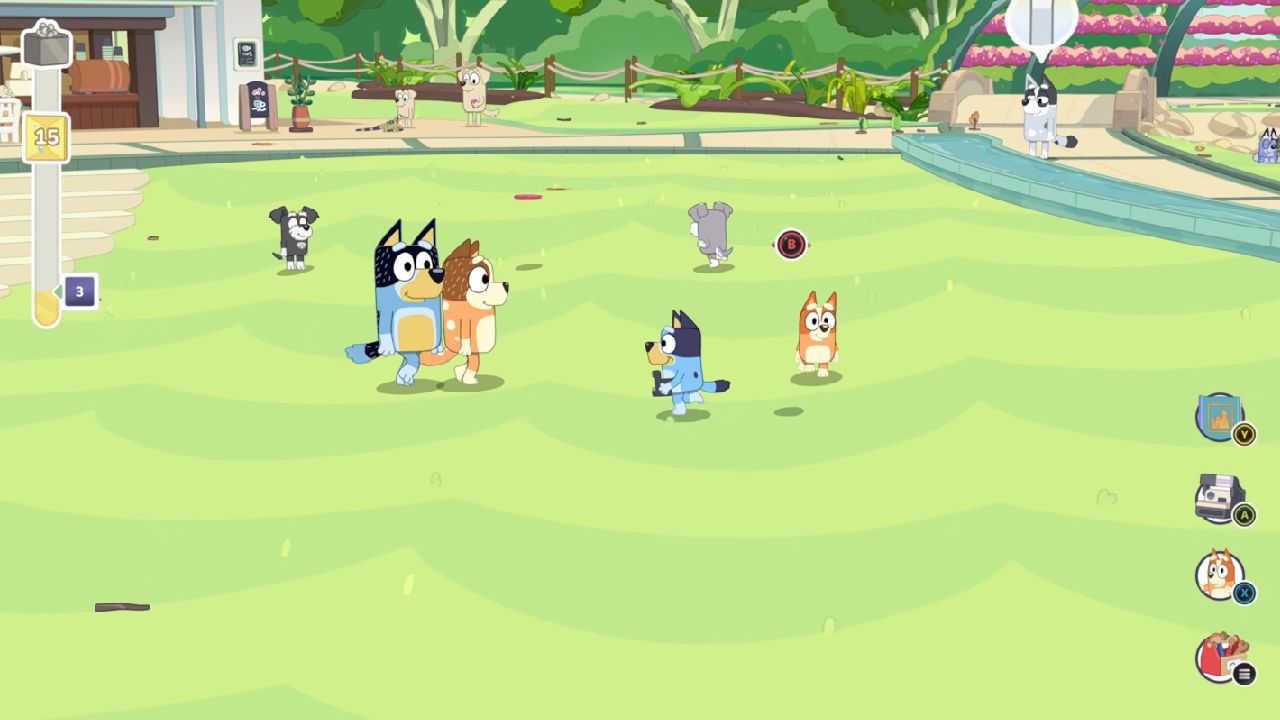
Local multiplayer offers another way to enjoy the game. A second player can join in the adventure to explore with the main player. A sibling or parent can play with a child on the same system. The main player controls the camera, while the second player controls the other character, strikes poses for photos, and explores the environment.
That's a welcome addition, as playing together feels much more in the spirit of Bluey than a competitive multiplayer mode would.
You can explore the same space, try different activities, and create silly moments without the pressure to win or lose. But the second player is less capable than the main player. They can't control the camera the same way, so they mainly explore and play in the environment.
That limitation may not matter much for a young child who simply wants to run around with Bluey or Bingo. Older siblings, however, may find the reduced control restrictive. The game suits casual local play better than a fully developed two-player adventure, and it has no online multiplayer for families who want to play together remotely.
The presentation is one of the strongest reasons to play Bluey's Happy Snaps. Gameloft Brisbane has done a good job recreating the television series' look in 3D. The characters retain their familiar designs, while the environments reproduce the colors, shapes, and visual details that make Bluey's world recognizable. The result often feels like stepping into an episode and exploring the scenery after the characters finish their scene.
The environments deserve special credit because they aren't empty spaces designed solely to hold photographic targets.
They contain toys, plants, wildlife, landmarks, and references to the show. Fans may recognize objects and characters that appear briefly in particular episodes, making exploration rewarding even when you are not actively completing a scrapbook objective. Such details help make the game feel like a natural extension of the series.
The animation also enhances the experience, with characters moving through their surroundings in a way that suits the show's presentation. It's reported to run at 60 frames per second, keeping motion smooth as you explore and interact with the world. Families have several options, as the game is also available on Nintendo Switch, PlayStation 4, PlayStation 5, Xbox One, Xbox Series X|S, and PC.
On Switch, you can play in handheld, tabletop, or TV mode, while the Switch 2 version will support touchscreens. However, touch controls for interacting with the scrapbook and coloring activities might not always work as expected, so analog controls are better if touch input becomes uncomfortable. You don't need much space either, as the game isn't large and some estimate it's around 2.8 GB on Switch 2.
Sound is another key component of the experience.
The game also uses the characters' familiar voices, including the original cast, helping retain the show's personality and humor. Bandit and Chili also guide you through the menus and objectives. This is especially good for younger children who are still learning to read, as they can understand what the game wants them to do without an adult having to explain the instructions all the time.
It's handy to switch between Australian and American English if you prefer one voice over the other. Spoken prompts keep the game approachable, while sound effects add a little more character to everyday activities. You don't need to follow long conversations or complicated audio clues, but the voice work makes the characters feel present as you move through each location.
The soundtrack is pleasant enough to accompany exploration, though it is not necessarily what you will remember most clearly after finishing. The music supports the relaxed pace instead of trying to make ordinary activities feel dramatic. That suits the overall design, where the world, its characters, and what you can do in it are the main attraction.
A few practical details are worth considering before buying the game.
Bluey's Happy Snaps launched day one on Xbox Game Pass and supports Xbox Play Anywhere, letting you play supported Xbox purchases on console and PC. The game has no online play or in-game purchases, making it a straightforward option for parents who want a self-contained experience for their children.
The physical Standard Edition, announced for the United States and Europe, includes six activity cards designed to extend the fun beyond the screen. A limited-time physical Deluxe Edition adds a sticker sheet. At the same time, the Activity Book Edition includes the Deluxe content, a 44-page book of drawing pages and simple activities, and two additional sticker sheets. The Deluxe digital content includes the 'Here Come the Grannies' bonus, extra dress-up items for Bluey and Bingo, and a digital album featuring artwork from the game's development.
The announced US prices for the physical Standard and limited-time Deluxe editions were $39.99 each, while the Activity Book Edition was listed at $49.99. Digital preorder offers also let eligible buyers get Deluxe content at the Standard Edition price, but only for a limited time.
Regional prices and retailer availability can differ, so it is worth checking which editions are available in your area.
Price is one of the more difficult aspects to assess. The game doesn't have an enormous amount of content, and players who approach it like a traditional adventure may finish it quickly. Its value depends heavily on how you plan to play.
A young Bluey fan who enjoys exploring, taking pictures, decorating a scrapbook, and returning to favorite activities may get plenty of enjoyment from it. Older players looking for complex mechanics, substantial progression, or a strong reason to replay stages may find the experience limited for the price.
That difference in expectations matters. Bluey's Happy Snaps clearly targets kids, especially those just starting with video games. Easy to pick up, with simple controls, spoken instructions, forgiving objectives, and freedom to explore. It doesn't require quick reflexes or penalize players for not understanding a mechanic at first glance.
Those qualities make it a reasonable first gaming experience for a child, while local co-op lets parents and siblings join in.
Still, accessibility does not mean every feature works equally well. The camera mechanics remain basic, the drawing controls can be fiddly, and the second player's limited role prevents co-op from feeling as complete as it could.
The short length and meager replay rewards might also disappoint anyone looking for a meatier adventure. These caveats don't undermine the core concept, but they make the experience more dependent on whether the intended audience enjoys the activities.
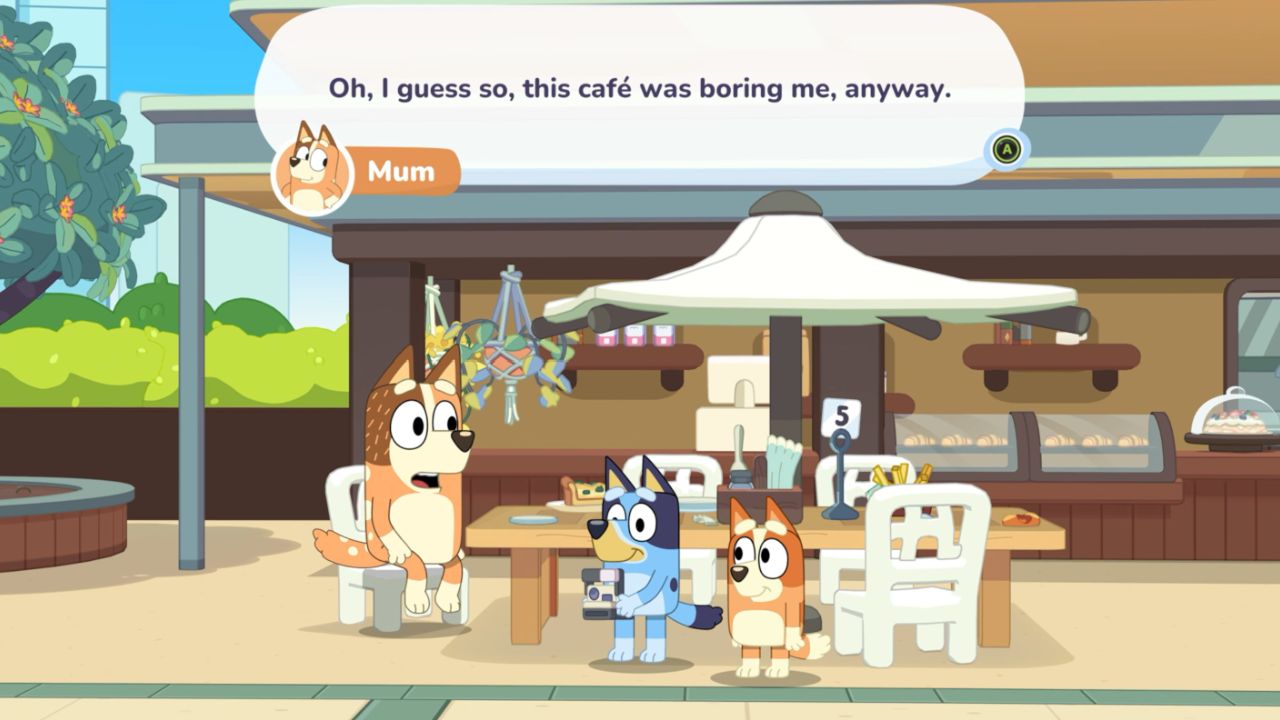
Ultimately, Bluey's Happy Snaps works because it understands what makes the series tick. It gives you a familiar world with small discoveries and lets you enjoy it without unnecessary complexity. The camera system is straightforward, the scrapbook gives a leisurely sense of progression, and the environments are chock-full of details fans will love.
It isn't meant to challenge experienced players or offer the depth of a larger adventure. Instead, it's a chilled-out way for kids to explore Bluey's world and build their own collection of memories. It's a good fit if you're buying it for a young Bluey fan, with familiar characters, simple controls, creative activities, and local multiplayer.
If you are buying it primarily for yourself, the limited mechanics and short playtime are harder to overlook. The best way to approach it is as an interactive extension of the show: something to explore together, enjoy at a comfortable pace, and put down when the scrapbook is full.
Editor, NoobFeed
Verdict
Bluey's Happy Snaps is a fun photography adventure for young fans, with loyal visuals and fun family activities. Simple mechanics, short length, and limited replayability may leave older players wanting more.
70
Related News
No Data.