
Football Manager 27 Review
PC
After a disappointing previous entry, Football Manager 27 brings back the depth, control, and immersion that make the series so addictive.
Reviewed by Mahi Araf on Nov 10, 2026
Football Manager has always been about more than choosing a team and deciding who plays on matchday. It puts you in charge of an entire football club, not just picking a team and deciding who plays each game. You're running a whole football club. What you do can affect what happens on and off the pitch. As the name implies, this series gives you control over almost every aspect of football management.
You can build a team, train young players, plan strategies, and deal with players' expectations. Every decision can influence what happens on and off the pitch. From building a squad and developing young players to preparing tactics and handling expectations, the series has earned its reputation by giving you control over almost every part of football management. That level of detail is what keeps players coming back, even when a single season can take dozens of hours to complete.
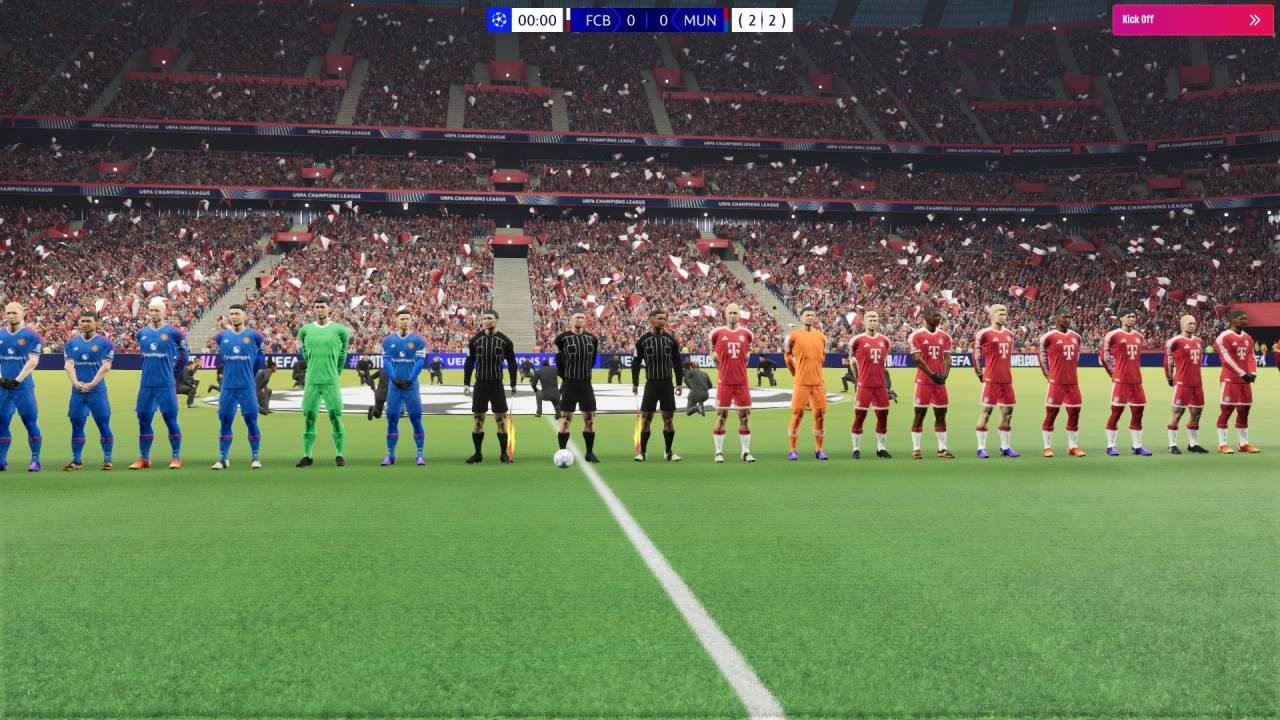
However, the previous entry left plenty of players disappointed. Football Manager 26 introduced significant changes, but the experience didn't feel as complete or comfortable as many expected. Some familiar features were missing, the interface was frustrating to navigate, and the overall presentation made it harder to settle into a long-term save.
Football Manager 27 offers a chance to leave those problems behind. Instead of reinventing everything, it focuses on restoring features players missed, improving systems that needed attention, and making the experience feel more connected.
That's what makes Football Manager 27 feel like a return to form.
It's not perfect, and there is still work to be done, but the various sections of the game just feel more connected now. Tactical decisions have clearer purpose, training is more valuable, and you have more reason to stay involved on match day. Most importantly, the old management loop is fun again.
When you start a new team, you are still responsible for recruitment, player development, training schedules, tactical preparation, matchday decisions, and the general direction of your club. The game offers plenty of freedom to build your own approach, whether you take over an established side with immediate expectations or a smaller team that needs years of development.
Your career is the story, and your choices determine what happens over time. A young talent could become the backbone of your team, a run of bad results could put your position under threat, or a well-executed transfer could change the course of an entire season. The satisfaction comes from watching those decisions evolve into something meaningful. You are not following a predetermined path; you are creating one through the way you manage your club.
One of the most important changes in Football Manager 27 is how tactical effectiveness works. In previous entries, you could spend time building a tactic, select players who appeared to fit it, and then wonder why the team struggled to perform consistently. This time, the game makes the relationship between your tactical philosophy and your squad more important.
It considers whether your players understand the instructions, can carry them out, and are committed to the approach you want them to follow.
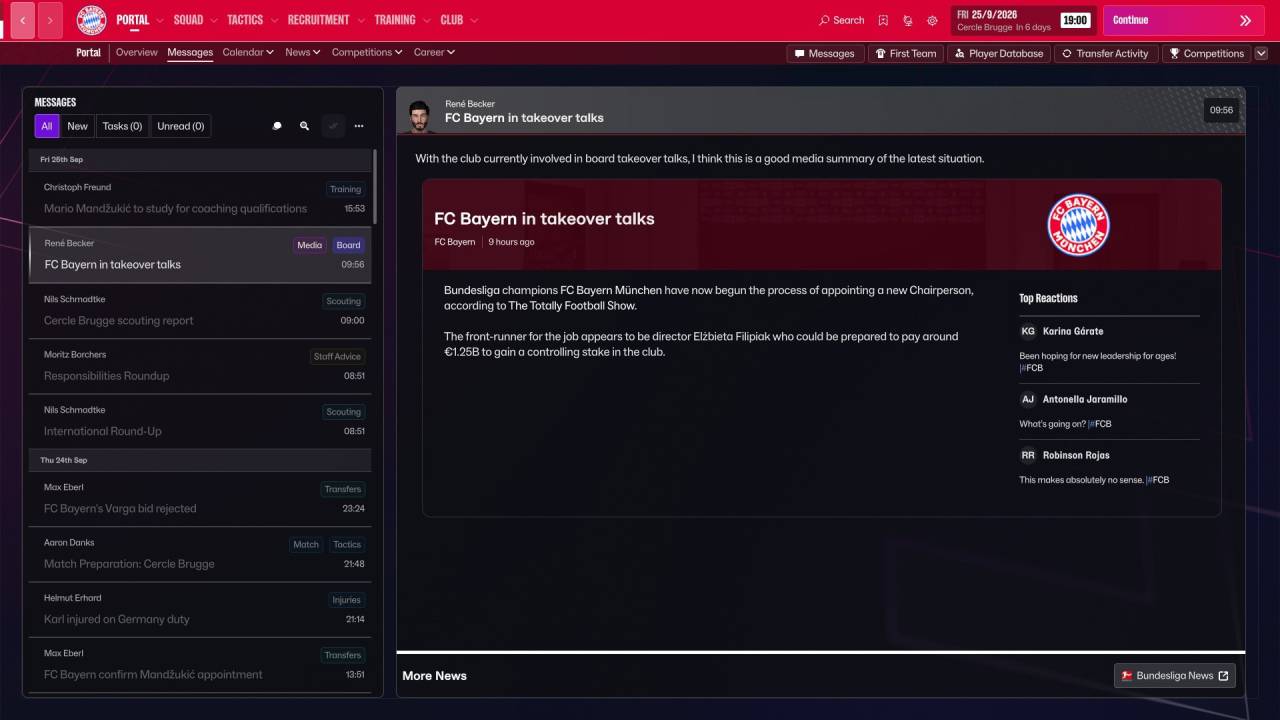
It creates a more engaging management experience. You can't just choose a popular formation and expect it to work because it looks good on paper. Your players need to be clear about what they are responsible for, and their individual qualities need to match what you ask them to do. When you put a player in a role that doesn't fit their skill set, problems pop up in matches. Similarly, a team that isn't fully on board with your approach might struggle to produce consistent performances.
Recruitment is now more closely tied to this system. You have to look at how well they fit your tactical plans, rather than just a player's overall quality/reputation. A technically gifted player might not be the right signing if they can't do the job you want. In contrast, someone with a worse reputation could be much more useful because their attributes fit your system. This gives transfers a clearer purpose and makes squad building feel less like collecting the best players available.
You also prepare for the opponent.
You have to consider the team you are up against rather than treating your formation as something that should stay untouched throughout the season. Knowing what is available before the match helps you see what could work and where your approach could run into trouble. You do not need to change your tactics every week, but you are encouraged to think about how your team should approach different situations.
The new Tweaks system is another good addition. This lets you change tactics without rebuilding your entire setup. When a match isn't going according to plan, you can make changes while keeping the foundation of your approach. This is useful if an opponent starts to exploit a weakness, or your team needs another way to break down a stubborn defense. It gives you more control in matches without making tactical management needlessly complex.
There's also been talk of training feeling more tied to player development and tactical preparation. Your sessions can help players become more comfortable with how you want them to play, while also growing as individuals. That means the work you do between games is more directly linked to what happens on the pitch.
But you still have to think carefully about your squad's workload and development.
Training is more than simply packing every slot with sessions and hoping for the best. You need to consider what your players require, how much they can handle, and whether your plans support your wider objectives. It becomes another part of building a functioning team rather than a management screen you visit out of obligation.
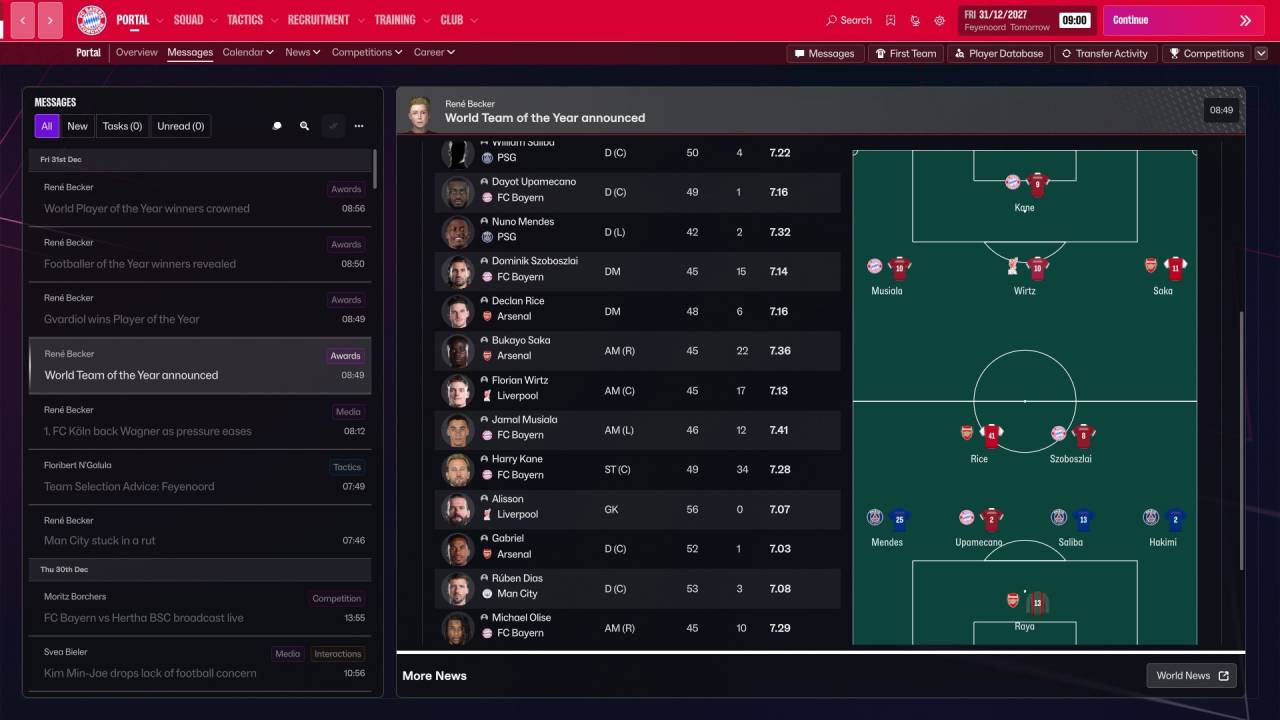
The interface is one area where Football Manager 27 improves noticeably. The menus feel more fluid, and navigation between sections is less frustrating than in the previous entry. There's still a lot of info to manage, as you'd expect from a management sim, but the layout makes it easier to get between the areas you need.
You spend a lot of time looking at player profiles, reviewing statistics, changing tactics, and dealing with club stuff. When the interface gets in the way, even simple tasks can become tiring. Football Manager 27 does a better job of making those interactions feel natural. The full-screen layout and improved navigation make the different sections more consistent, while customization options give you greater control over how you access information.
This matters because you spend so much time away from actual matches. A football management game cannot rely on its match engine alone to keep you interested. You also need to enjoy managing the club, including the smaller activities that happen between fixtures. A smoother interface makes it easier to focus on your decisions instead of constantly working around the menus.
The game also welcomes back familiar features that were absent or reduced in the previous game.
Touchline shouts, passing maps, heat maps, and international management all help make the experience feel more complete. Individually, these additions may not seem particularly exciting, but they reinforce the feeling that Football Manager 27 is bringing back parts of the series players expect.
If you want to take your career beyond the club game, international management will be especially useful. It gives you another way to approach the game; you can manage a national team alongside your normal club duties. Heat maps and passing maps also provide more ways to see how your team is doing. You can see how your players move, where the ball goes, and which parts of the pitch are causing problems, rather than just looking at the final score.
Football Manager 27 also introduces Shuffle Draft, providing an alternative method to assemble your squad. You are given a selection-based challenge: build a team from the options provided, rather than using the normal recruitment process. The key isn't simply choosing the strongest players.
You need to consider how each selection fits into your system and whether the resulting squad can function as a team.
The mode lets you play against AI opponents or other players online, offering a different kind of challenge than a traditional career save. It tests your ability to recognize useful combinations and make decisions with the options available, rather than relying on a long-term transfer strategy. If you enjoy the squad-building side of Football Manager but don't want to commit to an entire season, Shuffle Draft offers a welcome alternative.
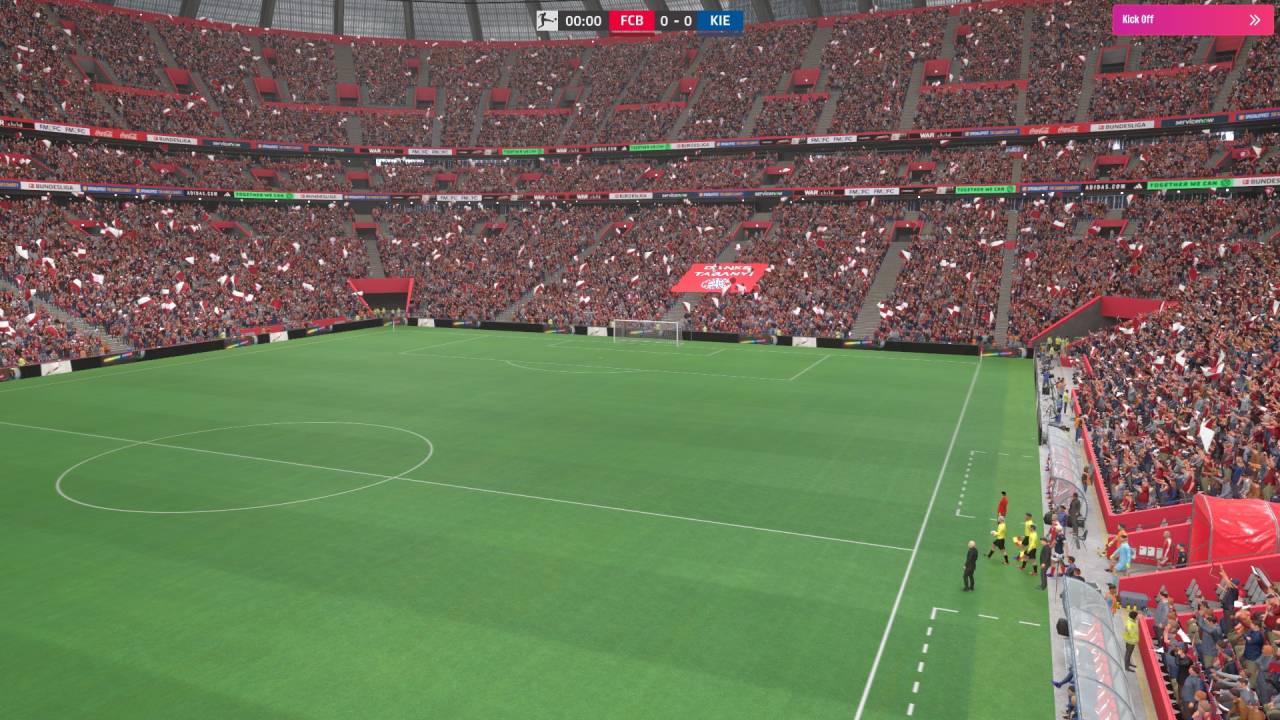
The match engine is another area where improvements are apparent, though the results aren't entirely consistent. The player animations have improved, and the variety of attacking and defensive situations makes for more interesting viewing. Movements and interactions are much more believable, and added camera angles and cut scenes make important moments stand out.
The matchday presentation is more like what you'd expect from a football broadcast, especially when watching a licensed Premier League match.
The tactical improvements also add variety to matches. Counterattacks can feel more meaningful, and different approaches are easier to recognize when you're watching your team play. If you have built a system around pressing and quick transitions, you get a better sense of how those instructions influence your players. Touchline adjustments and shouts also give you more opportunities to respond when a match starts moving away from your plans.
However, the match engine has not solved every problem. Some defensive behaviors remain inconsistent, and issues with marking and crossing can still affect the flow of a match. Sometimes the players don't act the way you want them to, even if your instructions seem reasonable. It can be frustrating because you've put in the work to prepare the team and pick the right players, but the same mistakes keep happening.
Performance can also be a problem. Matches may not always run as smoothly as you would hope, even on capable hardware. Stuttering can interrupt the experience, particularly when you are watching a full match rather than relying on highlights.
The match engine is more convincing in several areas, but it still needs optimization and more consistent player behavior.
Presentation is another major part of Football Manager 27's attempt to make the game feel more immersive, with better visual details and broadcast-like touches. New animations, cutscenes, and camera angles give the matchday experience a more authentic football feel. The crowds are livelier, and the seasonal clothing adds some variety to stadium scenes.
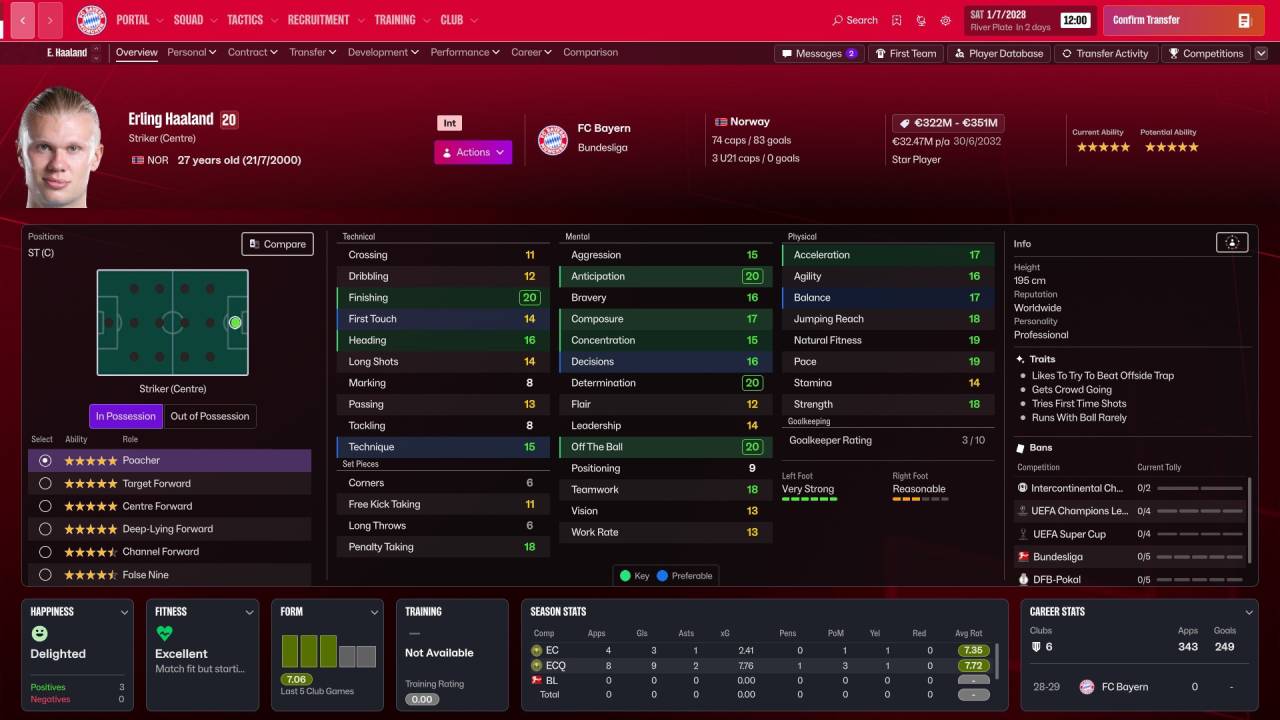
These changes help to create more atmosphere, especially when you are managing a club in a major competition. Cup draws, transfer deadline day, and other agent activities add to the experience outside of matches. The new news layout gives you more reasons to follow what's happening at your club, and more stats to help you track the season.
Player generation has also received attention. Newgens matter in any long-term Football Manager save, especially as your original squad ages and younger players take over. Improvements to their presentation and manager customization help make the world feel more personal.
More licensing, from French women's football to Saudi football, also increases the amount of authentic content on offer.
But not all parts of the presentation are equally strong. The seasonal recaps and award moments could be more interesting, and the game could do a better job of making achievements feel meaningful. The visual improvements are a good addition, but some parts of the presentation still feel less developed than the management systems around it.
The graphics are still a mixed part of the experience. The licensed Premier League presentation, better animations, and more vibrant stadiums are a step in the right direction, but the overall visual quality is not consistently impressive. Stadiums and crowds can get repetitive, and some environments don't have the variety to make every match feel unique. The changes are noticeable, but they don't completely change the game's look.
Manager creation is another area that could use more attention. The available customization options still feel limited, which is disappointing when you are expected to spend so much time building a career around your own managerial identity.
The game does a better job of making the football world feel alive, but it could give players more freedom when creating the person leading their club.
Sound is not the main reason to play Football Manager 27, but it contributes to the matchday atmosphere. Crowd reactions and stadium noise fuel the presentation, and it works especially well when combined with the improved animations and broadcast-style camera work.
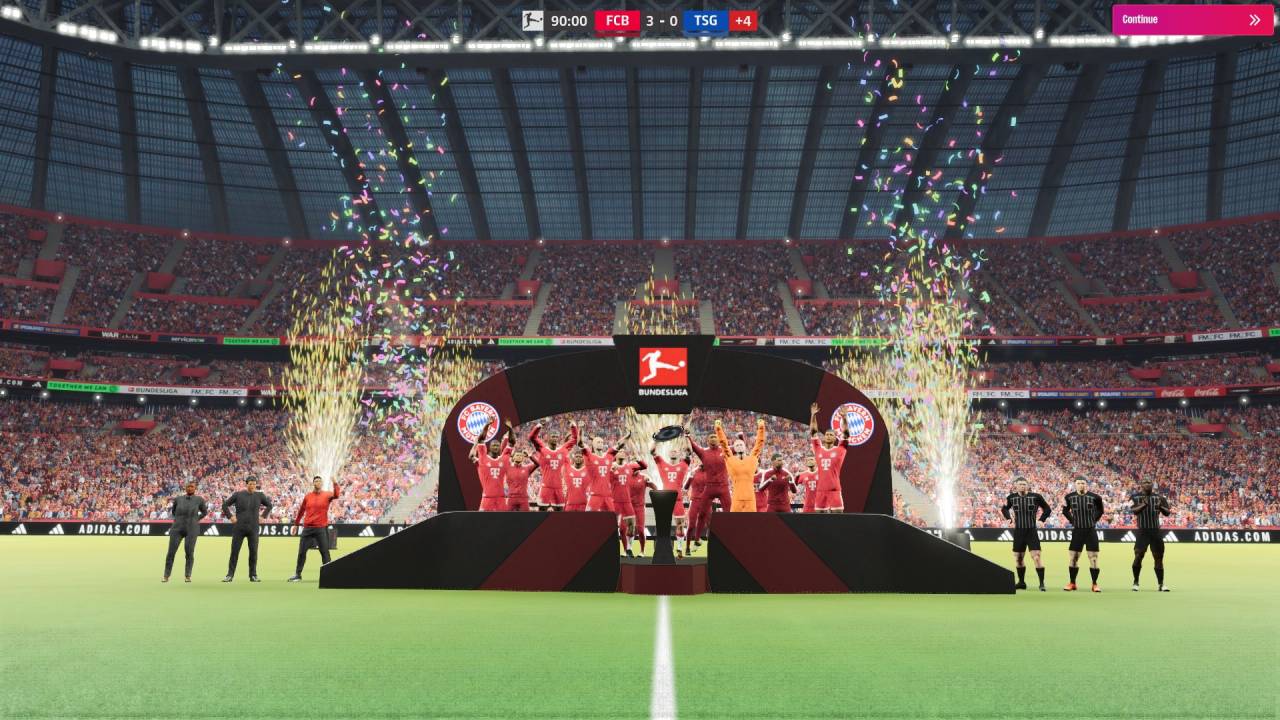
Some matches feel similar because of repetitive stadium environments, but the atmosphere feels more credible when the crowd responds to what's happening on the pitch. The sound design is good without being intrusive, but it could use more variety.
If you are coming directly from FM26, the improvements make Football Manager 27 a meaningful step forward. The redesigned interface, returning features, and stronger relationship between tactics and player development make it easier to recommend. If you are coming from Football Manager 24, the jump is still interesting, although the changes may feel less dramatic depending on which features matter most to you. Newcomers also have a reasonable entry point. There is a lot to learn, but the improved interface makes it easier to get started.
Ultimately, Football Manager 27 succeeds because it remembers what makes the series enjoyable. You spend your time building a team, finding players who fit your ideas, preparing for difficult matches, and trying to turn a collection of individuals into a functioning side. When those decisions start producing results, it becomes very easy to lose track of time. The game still has technical and presentation problems, but they do not completely overshadow the improvements.
There is a satisfaction in seeing a tactic finally click, a young player develop into an important part of your squad, or a way to beat an opponent who has been causing you trouble. Football Manager 27 brings that feeling back, with a fuller set of features and an easier management experience. It is not a complete reinvention, nor does it need to be. It is a solid step forward that gives the series a stronger foundation for what comes next.
Senior Editor, NoobFeed
Verdict
Football Manager 27 is a welcome return to form. The match engine and presentation still have issues, but an improved interface, deeper tactical systems, and restored features make it easy to recommend.
80
Related News
No Data.