
Forever Ago Review
PlayStation 5
A quiet road trip about grief, memory, and learning to live with a changing world.
Reviewed by Maisie Scott on Oct 10, 2026
Some adventures ask you to save a kingdom, defeat an impossible enemy, or change history. Forever Ago takes a much smaller route. You follow Alfred, an older man traveling alone in his camper van, carrying a camera and a journal connected to his late wife, Audrey. His trip is not about changing the world around him.
It is about returning to places that once mattered, confronting what they mean now, and trying to find a reason to keep moving after a personal tragedy changes everything. Developed by Third Shift and published by Annapurna Interactive, Forever Ago is a third-person narrative adventure built around exploration, photography, conversations, and memories.

Rather than leaning on combat or elaborate systems, it asks you to pay attention to ordinary places and the emotions attached to them.
That choice gives Forever Ago a clear identity, even if it also means that its pacing and writing have to carry much of the experience. You begin by meeting Alfred and Audrey as young adults in 1974. Their relationship takes shape through small interactions, teasing conversations, and everyday decisions that gradually bring them closer.
On one of your first trips out, you get the hang of moving around and using Alfred’s camera. You can adjust the zoom and focus, change your perspective by crouching or standing, and choose details like clothing or the color of the couple's future minivan. These modest decisions help make the opening feel personal.
Forever Ago later shifts to Alfred as an older man, traveling in the van you helped choose. He revisits places he and Audrey once knew well, including a petrol station and convenience store where they used to stop, and where the owner was once a local celebrity. The location has changed.
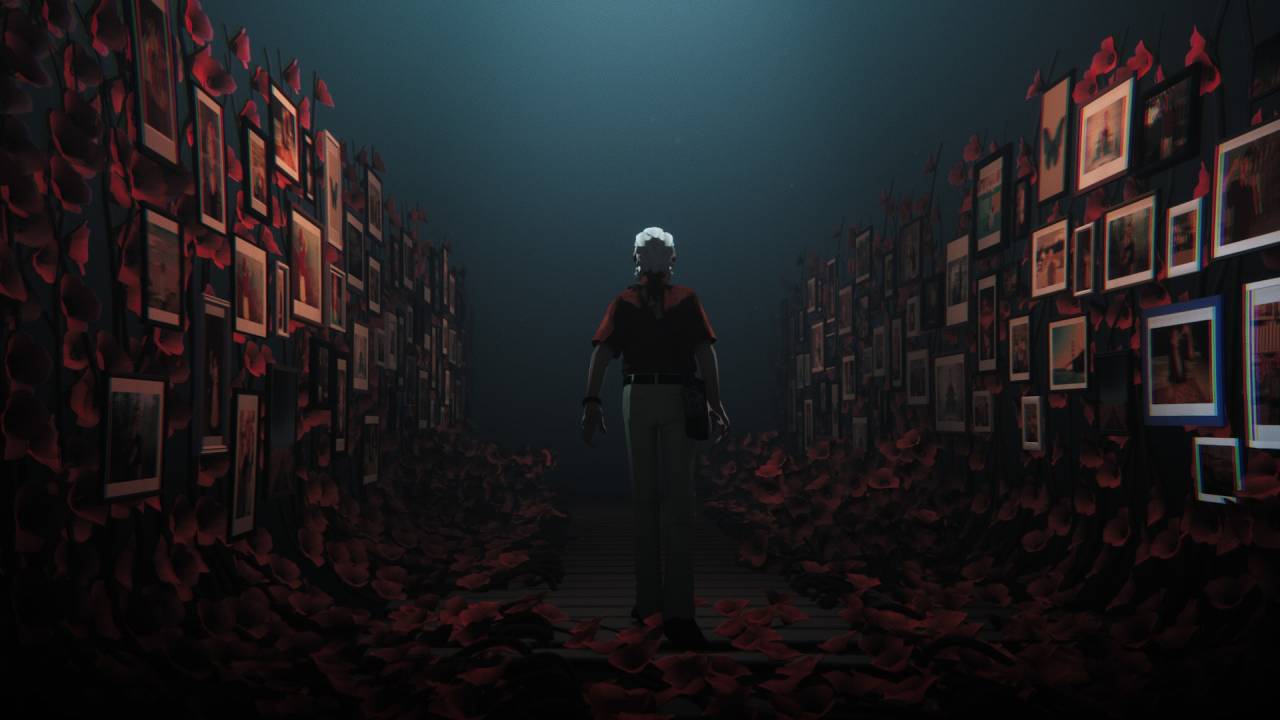
The familiar figure is semi-retired, and the store is largely run by Milton, an enthusiastic young clerk whose constant questions quickly test Alfred's patience. In Forever Ago, the narrative moves between the present, flashbacks to Alfred and Audrey's younger years, and dreamlike sequences that place Alfred inside the corridors of his own memories.
Bit by bit, these shifts show why certain places matter and how the couple's hopes changed along the way.
The story doesn't hurry to explain every piece of the tragedy that shaped Alfred's later years. Sometimes it hints at an event without showing enough to satisfy the curiosity it stirs up. One early flashback, for instance, suggests something big happened during a stop at the store, but the scene holds back the one detail that would explain why Alfred is so attached to the place.
When a later stop gives more context, the narrative begins to feel more purposeful. That gradual release of information suits a story about recollection, because memories rarely arrive as a complete, neatly arranged account. Its strongest scenes understand that restraint can make an emotion more powerful; its weaker moments leave a gap where a more revealing scene might have helped.

Alfred is the key to whether the story works. In his younger years, he is awkward but full of possibility. As an older man, he is bitter, impatient, and often difficult to be around. He snaps at people who are trying to help, refuses to engage with changes he dislikes, and sometimes seems determined to turn a minor inconvenience into another reason to resent the present.
His behavior can be irritating, but it is not simply a joke about a grumpy older man. Forever Ago treats his anger as part of his grief. He has lost someone central to his life, and the familiar world that once gave him comfort now seems to be moving on without him. That idea reaches beyond Alfred's personal circumstances.
The diner that once offered a quiet place to sit and listen to a jukebox has become part of a chain selling a packaged version of nostalgia.
The music no longer plays, certain old favorites are gone, and customers pay for an "authentic" experience of an earlier decade. Alfred's frustration can feel like too much, but it also captures how uncomfortable it is to see familiar places turned into something that has no memory of what they once meant.
Forever Ago is most affecting when it connects that cultural change to personal memory. A table in a worn-out diner may mean nothing to one person and everything to another. A place becomes important because of what happened there, not because it looks special to everyone else. The optional memory scenes make this idea tangible.
By following trails of pink petals scattered around an area, you can trigger memories tied to specific places. They rise from the ground, and when you take a photo, a piece of Alfred's past plays out. Some of the memories are happy. Others are about fights, letdowns, or the way two people can drift apart.
You see how the characters change over the years, and how what they hoped for becomes something else. Something that felt fun at the start can become routine, and a small moment you barely noticed can become the one that stings most years later. Alfred's story hits because then and now have drifted so far apart.
The people around him have their own stories, and they fill in more of the picture.

Notes, photographs, letters, and bills provide details about people who might otherwise seem like background figures. Sam, a young mechanic with her own difficulties, offers a different outlook from Alfred's, and the material around her gives you a better sense of the life she is managing.
Elsewhere, you can gradually discover why an abandoned theme park has fallen into disrepair. These details are optional, but they reward you for slowing down and looking beyond the main objective. They make the world feel as though people have lived in it before Alfred arrived and will continue living in it after he leaves.
In Forever Ago, you mainly walk through these environments, examine points of interest, talk to people, collect petals, and take photographs. Calling the game a walking simulator isn't entirely wrong, but it misses the point of the slower pace.
Movement creates space for observation and thought. You might hop across rocks, pick flowers, fiddle with small objects, or stop and take in a view. A quiet stretch of road lets conversation sink in, and a place you've passed before can hit differently once you know its history. At other times, the lack of interaction becomes more noticeable.
Some sections make you walk for a while without much to discover.
There are also moments when you turn on the TV and have to sit through a commercial, with no option to leave immediately or move the dialogue forward. If you enjoy games that keep you actively engaged through frequent challenges, these stretches may feel slow.
The pacing works when the environment, a memory, or a conversation gives the walk a clear purpose; it drags when the game asks you to keep moving without adding much along the way. Photography is the main mechanic that adds an extra layer to exploration. Each chapter lets you take up to twelve pictures, then choose four to keep in Alfred's scrapbook.
That limit encourages you to decide which scenes deserve to be preserved rather than treating every view as disposable. You can adjust focus and zoom, and crouch or stand to change the framing, but the system remains fairly simple. You are not building a complicated photographic toolkit or mastering a deep technical challenge. Instead, the camera turns looking into an intentional action.

You choose what to remember, and that decision fits naturally with the story's concerns. The scrapbook also creates a small record of your progress through the journey. The mechanic suits the theme, but it needs a bit more freedom or depth to make taking pictures feel like more than a button press.
Photography supports the story, yet the controls barely deepen the gameplay.
The environments look good enough that you may want to spend time composing shots, yet the available controls do little to expand the activity beyond framing, focusing, and zooming. It supports the narrative more successfully than it deepens the gameplay. The challenge mostly comes from noticing what you can interact with and understanding how an object or location fits into the immediate task.
These small moments break up the walking, although they rarely become the main attraction. The game has no elaborate combat system, and it doesn't try to compensate for its quiet approach with action-heavy sequences. It focuses on movement, observation, and conversation. That makes the experience consistent, but it also limits the variety of things you do from one chapter to the next.
Forever Ago's dialogue system gives you some control over Alfred's responses, including opportunities to be dismissive or unkind. You can also make small choices about his appearance, such as selecting a shirt that reflects his mood. Sometimes you may choose a response that makes an encounter more uncomfortable, particularly when Milton refuses to take a hint.
Forever Ago does not always ask you to make Alfred pleasant. Instead, it shows how grief has affected his patience with others. That character-first approach generally benefits the writing. Conversations usually focus on what a person would plausibly say rather than forcing every exchange to deliver a punchline. That restraint makes Alfred and Audrey's relationship feel more believable.
The writing works because Piotr Michael and Cissy Jones sell Alfred and Audrey.
Their dialogue feels warm and familiar, and their performances give their changing relationship room to develop. Piotr Michael's Alfred and Cissy Jones's Audrey are especially important to the emotional core. Audrey's warmth contrasts with Alfred's increasingly sour outlook, making his sense of absence easier to understand.

Some supporting performances can be broad enough to sound almost sitcom-like, but the central pair carries the story well. Forever Ago's visual presentation supports the same careful approach. Environments are detailed, from forest paths to sunlit desert stretches, interiors, shops, diners, and neglected attractions. Character faces use a relatively simple style, but it fits the overall look and helps the figures stand out during cutscenes.
The camera direction is one of the game's strongest technical features. Framing, depth of field, and focus shifts steer your eye to the details that matter, so scenes can carry emotion without leaning on dialogue alone. Even a small exchange can feel weightier when the composition gives it room to breathe.
Sound does just as much for the atmosphere. Every place has its own sound. The old amusement park sits in a dead hush, and the motel's outside is just as still, with only faint background noise. Those touches make the settings feel lived-in instead of decorative. The music usually knows when to back a scene without drowning it out, and the voice acting gives the story its human feel.
A familiar song can bring a memory into focus, while quieter passages let the surroundings carry the mood.
Forever Ago's technical issues are more frustrating because the rest of the presentation is so controlled. Interacting with objects can be finicky, especially when you approach too quickly or struggle to line up the prompt. At one point, even opening a door can take unexpectedly long. When playing with a controller, selecting the intended object isn't always as straightforward as it should be.
The repeated prompt to display objectives can also interrupt the flow and appears more often than necessary. Saving is a more serious concern. Checkpoints can be infrequent, and completing a major journal objective doesn't always save your progress. If you leave before a chapter is fully complete, you may have to restart from the beginning without a way to skip ahead.
That is a needless setback in a game built around steady, unhurried exploration. When the experience asks you to take your time, it should also respect that time by saving reliably. Even with those shortcomings, Forever Ago has a clear sense of what it wants to say. Its story isn't especially surprising, and players who want constant twists, cameos, or big reveals may find the narrative familiar.
Grief, nostalgia, and learning to accept change are themes we've seen before. What makes the game worth your time is its angle on them and how it ties them to everyday experiences. It suggests that losing someone can change a life, but the memories left behind can also make everyday places feel worth returning to.
Even with those flaws, the themes of grief and nostalgia still hit home, familiar as they are.
By the end, the road trip feels less like a search for a single answer and more like an attempt to make peace with a life that has already happened. You may find Alfred frustrating, and the walking can occasionally wear thin, but his journey has enough warmth and honesty to make those weaknesses easier to accept.
Forever Ago is a measured, personal adventure whose strongest moments come from the people and memories it asks you to notice. It is not mechanically complex, but it understands that a quiet story can leave a lasting impression.
Editor, NoobFeed
Verdict
Forever Ago is a thoughtful, well-presented story about grief and memory. Its thin gameplay and uneven pacing hold it back at times, but Alfred's journey still moves and is well worth it.
75
Related News
No Data.