
AMD Zen 6 EPYC Venice Claims 2.24x NVIDIA Vera Performance
AMD's Zen 6 server benchmarks reveal per-core gains, higher memory bandwidth, and potential benefits for future Ryzen desktop processors.
Hardware by Shinji Okazaki on Oct 10, 2026
AMD Zen 6 Performance Revealed: Up to 2.24x Higher Throughput and Continued AM5 Support. AMD has shared performance figures for its next-generation Zen 6 architecture through its EPYC server processors, codenamed Venice. The results claim up to 2.24x the performance of Nvidia's Vera CPU platform, along with improvements in per-core performance and memory bandwidth.
However, these figures come from server processors and don't directly reflect the expected performance of future desktop Ryzen CPUs. AMD's latest performance figures offer a glimpse of what Zen 6 could deliver. The biggest headline is a claim of up to 2.24x the performance of Nvidia's Vera CPU platform. However, before assuming Zen 6 will double Ryzen gaming performance, there is an important catch.

AMD Claims Up to 2.24x Performance With Zen 6 EPYC Venice
These results come from AMD's next-generation EPYC server processors, codenamed Venice. The flagship EPYC 9996 uses 256 Zen 6C cores and 512 threads, while Nvidia's Vera platform uses 88 CPU cores. So the 2.24x result isn't a per-core comparison. AMD is also gaining an advantage by using far more cores.
The more relevant result comes from AMD's 96-core Venice configuration. Against Vera, AMD claims about 20% higher per-core performance. Desktop users should pay more attention to that figure because, if Zen 6 delivers a real per-core improvement, it could eventually benefit future Ryzen processors in gaming, productivity, and high-refresh-rate workloads.
One more important point to consider. These are AMD's own benchmarks, and the Venice system used a newer GCC compiler than the Vera platform. As a result, the testing conditions aren't identical, and independent reviews will be needed to verify the performance claims.
Zen 6 is also about more than faster cores. Venice supports up to 16 channels of DDR5 memory, and AMD claims around 18% higher sustained memory bandwidth than Vera. This matters in servers, AI workloads, and applications that move large amounts of data. AMD also estimates that, under a modeled 100kW rack power limit, Venice could deliver more than 3x the throughput of a Vera-based setup.
What Zen 6 Performance Could Mean
So, what does this mean for gamers? Zen 6 server chips differ significantly from desktop Ryzen CPUs. They have different power limits, memory systems, cache layouts, and core counts. Therefore, nobody should expect 2x the gaming performance based on these server results alone.
However, they still offer some useful clues. First, AMD appears to be improving per-core performance rather than relying only on adding more cores. Second, leaks suggest Zen 6 desktop chiplets could increase to 12 cores per CCD. That could potentially allow a 24-core mainstream Ryzen processor.
AMD has not confirmed this configuration, so treat it as a rumor. The more important confirmed detail concerns the AM5 platform. AMD has officially extended AM5 support through 2029, meaning current AM5 owners could potentially receive another major CPU upgrade without replacing the entire platform.
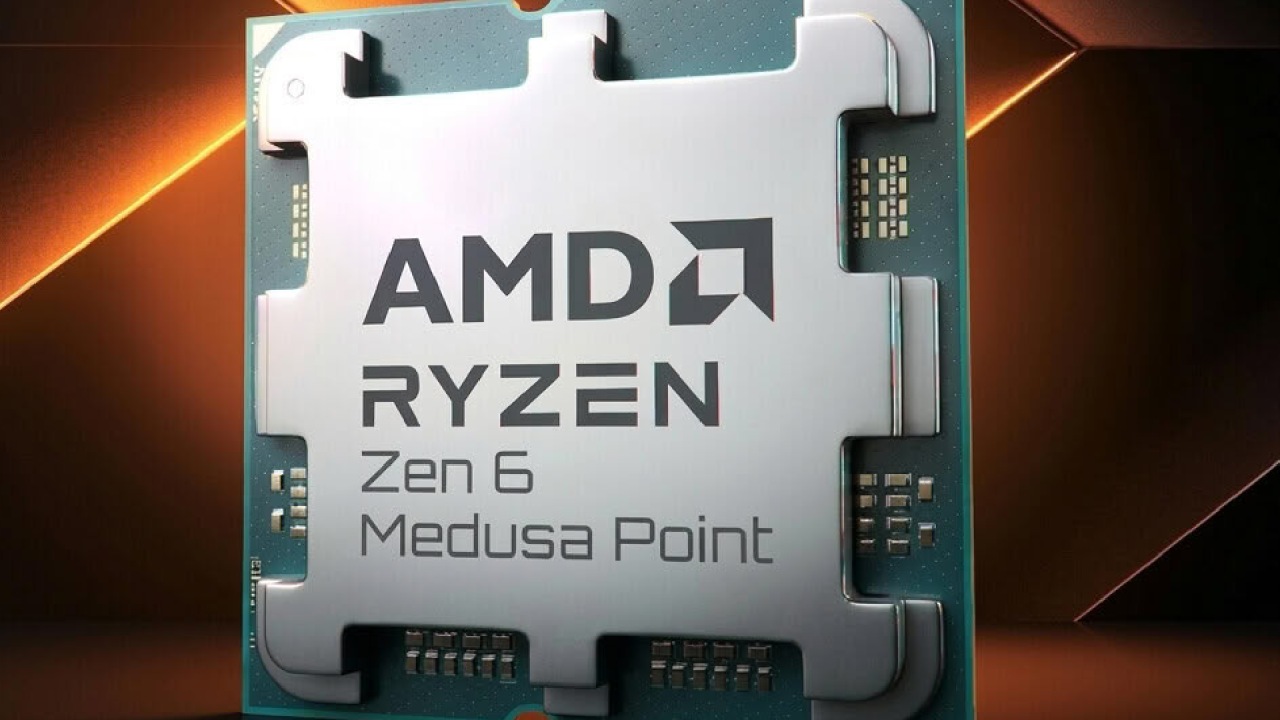
AMD documentation also links the Zen 6 desktop family, known as Olympic Ridge, to AM5.
This could make Zen 6 relevant for anyone already using a B650, X670, or X870 system. However, motherboard support will still depend on BIOS updates. The same socket doesn't guarantee every motherboard will support every future CPU, so check compatibility before upgrading.
For existing AM5 users, the extended support timeline provides more flexibility when planning a future CPU upgrade. Instead of replacing the motherboard and other platform components, some users may be able to install a new processor in their current system. If you already own a fast Ryzen X3D processor and mostly game at 1440p or 4K, these server benchmarks alone are not a reason to upgrade.
Your GPU may still have a greater impact on gaming performance, depending on the game and settings. However, if you are planning a new AM5 build, the upgrade path is becoming more attractive. For creators, developers, rendering workloads, and local AI applications, higher core density could also make a difference.
Editor, NoobFeed
Gaming Hardware Updates
No Data.