
XBOX Prepares Major Upgrades for Project Helix as Series X and S Could Receive FSR 4.1 Support
Microsoft is improving its PC gaming experience while potentially bringing new graphics technology to its existing consoles, suggesting that XBOX plans to support its current hardware as it prepares for the next generation
News by Tahmid Mahi on Oct 11, 2026
XBOX appears to be preparing several improvements to its gaming ecosystem as Microsoft looks toward the launch of Project Helix, its next-generation console initiative. The new platform is expected to bring PC and console gaming closer together, and it’s important for Microsoft to improve how its software and services work across both environments.
Recent changes to the XBOX PC app prove the company is clearly putting a lot of effort into performance and usability as it develops its wider gaming strategy. In the meantime, reports suggest that the XBOX Series X and Series S could receive further graphics upgrades, which could ensure the consoles remain relevant for years to come.

One of the biggest questions surrounding Project Helix is how Microsoft will be able to merge the flexibility of PC gaming with the simplicity of a traditional console.
Players usually want a console that is easy to use; they want to be able to turn the system on, pick a game, and start playing without having to mess with a number of complex settings. PC gaming is more flexible, but technical problems like launcher integrations, performance issues, and other technical problems can make the experience less consistent.
The company has already been doing frequent updates to the XBOX console interface, and those updates could very well continue as the next generation approaches. But Project Helix could present another interface, one designed to bring its PC gaming environment closer to the console experience.
Microsoft has also been working on the XBOX PC app, which has been criticized in the past for its performance and responsiveness. The app has gotten a bit more user-friendly with things like full-screen mode and compact mode, but it still has a ways to go before it can be compared to the console-like experience of other apps like Steam's Big Picture mode.
Windows Central posted a hands-on report of a new update to the XBOX PC app recently, and one of the most significant changes is the performance improvements. The new experience features a sidebar that provides access to features like friends, the game library, Game Pass, and the store. Users can also opt for a full-screen mode, which offers a more traditional console dashboard-like interface.
The updated app also has improvements to make the PC experience more convenient with a variety of ways to control it. Microsoft is working to ensure mouse and keyboard navigation is supported and also giving users the option to set the XBOX app as their home screen by default through Windows 11’s new gaming mode setting.
It could also mean a more seamless experience for players already using their PCs in this way. With a controller-focused experience, you get quick access to the XBOX app, and you can start playing games without relying heavily on the usual desktop controls. This approach could be exploited by Project Helix, which would provide a tighter integration of Microsoft’s hardware with its software.
Performance also appears to be a distinct difference with the updated app.
The new version loads faster, especially when you have a giant collection of games, according to the hands-on report from Windows Central. The report also talked about a library of more than 1,400 XBOX titles. The updated app will make it easier to browse the collection and see which games you can install locally or stream via cloud gaming.
Microsoft is also working to reduce some of the inconveniences associated with launching PC games. Shader compilation can delay gameplay on PC, forcing players to wait while the system prepares certain graphical elements before they can properly start playing.
But even with these improvements, the XBOX PC app still lacks some of the features that have helped Steam establish itself as a leading PC gaming storefront. Steam has a massive suite of community tools, ways for developers to communicate, and user reviews to help players judge games before they buy them.
Microsoft may add similar features to its application as it builds the ecosystem around Project Helix. A better integration with third party launchers would also help to create a more consistent experience, especially when games bought through different services appear in the same library.
When you play a game via another service, you may see different launcher windows or inconsistent presentation at times. A more unified interface could let games from different storefronts show up with consistent artwork, menus, and launch behavior. Microsoft’s already done some work in this area, but the fixes haven’t been rolled out consistently across all launchers.
The interface itself could also be important to Project Helix. Recent comments attributed to XBOX leadership have suggested that the company is pleased with improvements to the operating system and overall user experience being developed for the next generation. That has led to speculation that Project Helix could have a different interface than the one seen on the Series X and Series S.
That does not mean Microsoft is ready to abandon its current consoles.
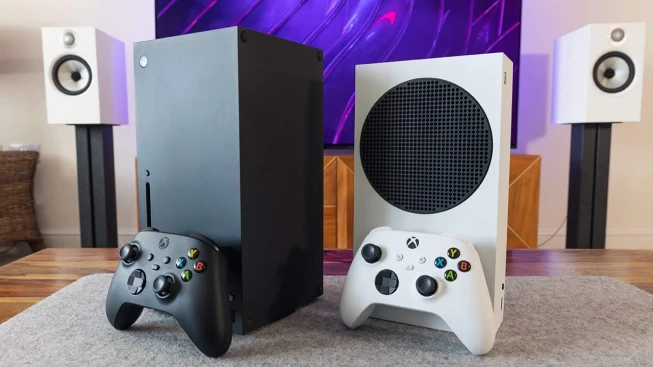
The Series X and Series S launched in 2020, and their installed audience is likely to remain important even after Project Helix arrives. Many gamers won’t jump to new hardware right away, especially if the next generation is much pricier. Thus, continuous software updates and graphical improvements could enable Microsoft to prolong the life cycle of its existing consoles while preparing its next platform.
One possible enhancement is to use AMD FidelityFX Super Resolution, or FSR for short. Idle Sloth points out reports from XBOX journalist Jez Corden, who claims that FSR 4.1 could be coming to the Series X and Series S. When asked about FSR 4.1 support and related visual improvements, Corden replied, "Stay tuned,” sparking speculation that an announcement may be coming soon.
AMD has previously said it plans to extend FSR 4 support to more devices by the end of 2026. That would fit in with that broader direction, bringing newer upscaling technology to Microsoft’s existing consoles, although the companies haven’t confirmed the Series X and Series S as supported platforms.
Upscaling technologies allow games to render sharper images at a lower performance cost than rendering at higher resolutions. Depending on how they are implemented, these techniques can help developers balance visual fidelity, resolution, and frame rates on hardware with limited resources.
This topic is particularly relevant given the differing hardware capabilities of the Series X and Series S, as well as the potential for newer graphics technology to be introduced. The Series X has more graphical processing power, while the Series S was made to be a cheaper way to access the current generation of consoles.
The competition from PlayStation also gives Microsoft a reason to keep exploring these improvements.
The PlayStation 5 Pro from Sony has a dedicated hardware block for handling machine-learning tasks that power its PSSR upscaling technology, and newer versions of the PlayStation upscaling tech also target enhancements to existing hardware. Microsoft could leverage progress in graphics processing and upscaling to keep its consoles competitive.
Developers have already demonstrated that the Series S can achieve impressive results when its hardware is properly leveraged. The Coalition’s work on Gears of War: E-Day has been cited as an example of what experienced development teams can do with careful optimization.
Developers are also looking for ways of coping with memory limitations, for example, by using SSD-related techniques that help deal with resources that otherwise would add to the burden on available memory. These approaches show how developers can use development time, technical expertise, and platform-specific optimization to extend the capabilities of existing hardware.
And these techniques may become even more important as game developers continue to make punishing games for the current generation. The Series S has less memory for games than the Series X, which makes it harder for studios that are trying to offer similar experiences on both consoles.
So far, the information available has not officially confirmed the potential FSR 4.1 upgrade or the final Project Helix interface.
The improvements to the XBOX PC app do a better job of showing Microsoft’s ongoing work to improve their software and the graphical improvements as reported are still only a possibility and not a confirmed feature. Still, both moves are part of a larger plan to make games more accessible and to improve performance across the company’s gaming platforms.
There are a few things Microsoft needs to do with Project Helix, such as creating a unified experience between PC and console, improving its storefront, and making sure that existing hardware continues to receive meaningful support. Faster software, better launcher integration, and newer graphics tech could all contribute to that.
If Microsoft can pull off these enhancements and help developers squeeze the best out of their games, the Series X and Series S could remain relevant for longer than some gamers expect. It’ll be interesting to see how these plans shape up in the coming months, especially as Microsoft reveals more about Project Helix and the future of its XBOX ecosystem.
Editor, NoobFeed
Related News
No Data.