
Microsoft Patent Explores In-Game Ads for Paid XBOX Games
Microsoft’s new patent explores ways to slip ads into gameplay without wrecking the big moments, and it’s stirring worries about the future of paid games and cloud gaming.
News by Adeela Tas on Oct 09, 2026
It’s your final attempt at a boss you’ve been stuck on for ages. By now you know its attack patterns by heart, you’ve dodged nearly everything it threw at you, and its health bar is down to almost nothing. Then an ad barges in. By the time the fight comes back, your focus is gone.
That's exactly the kind of moment players dread, as XBOX ads become increasingly likely. Microsoft has filed a patent for a system that places ads during gameplay while avoiding disruptive moments. The tech is meant to improve ad delivery, but it also makes you wonder how far companies will go to squeeze extra money out of players.
Hardware keeps getting pricier, and the industry is feeling the squeeze, so XBOX ads could change how games are sold and played.
The proposed system is built to keep ads out of key gameplay moments. Still, the core idea remains: players might eventually trade some attention for cheaper access to games. Microsoft isn't alone in its search for more revenue. PlayStation has also admitted it needs new ways to earn money from its existing customers, suggesting the pressure extends well beyond XBOX.
The bigger issue is that players spend less time and less money on games, while companies struggle to reach new audiences. Publishers have to find ways to stay sustainable, and advertising is another income stream that doesn't require every player to buy something directly.
You can already see that approach taking shape elsewhere. Rockstar, for instance, has leaned into premium spending through pricey editions and merchandise, including a $100 deluxe edition of Grand Theft Auto and a $400 merchandise package. Other companies are pursuing ad revenue instead of asking players to buy more.
Electronic Arts has already launched a platform that connects advertisers with players inside its games. Advertisers love gaming because people stay deeply engaged for long stretches, and that can make ads work better. Familiar product placements can blend into a game's world with little fuss, but stopping play to show a commercial is very different.
Platforms also set their own rules for how ads can appear.
Steam, for example, allows certain ads that are built into a game, like product placement, but bans traditional mobile-style ads that make you sit through a commercial before you can keep playing. That difference matters, because XBOX ads could offer another way to make money from games, especially if Microsoft lets people play for less in exchange for watching them.
Microsoft's patent focuses on finding the right moment to pause the game and show an ad. Think of how streaming services put commercials around TV episodes. When ads land at a sensible break, they're a lot easier to put up with. Badly timed ones, on the other hand, can ruin an emotional scene or kill the tension right when it matters.
The patent calls these interruptions a negative user experience, especially in games without obvious stopping points. Open-world adventures are a good example, since what you're doing doesn't always follow a predictable pattern. One minute you're exploring a location, the next you're in a fight, meeting an important character, or stumbling onto something that changes where your journey is headed.
So instead of dropping ads at random, Microsoft's system would watch what's happening in the game and look for good moments to pause. That could mean spotting loading screens, waiting until a multiplayer match ends, or placing an ad after you take down a particular enemy.
The system would also use credits to decide how much uninterrupted playtime you get.
When you start streaming a game, you might receive an initial allowance that lets you play ad-free for a set period. Different activities could come with different allowances, depending on how often interruptions are acceptable. A tutorial might give you an hour of ad-free play, a single-player session 30 minutes, and multiplayer just 20.
The allowance could also shift by time of day, with more ad-free time on weekdays than on weekends, enabling demand-based pricing that adjusts access when the service is busiest. This would make XBOX ads less annoying than random pop-ups. Even so, the whole system depends on players being willing to accept ads as part of gaming.
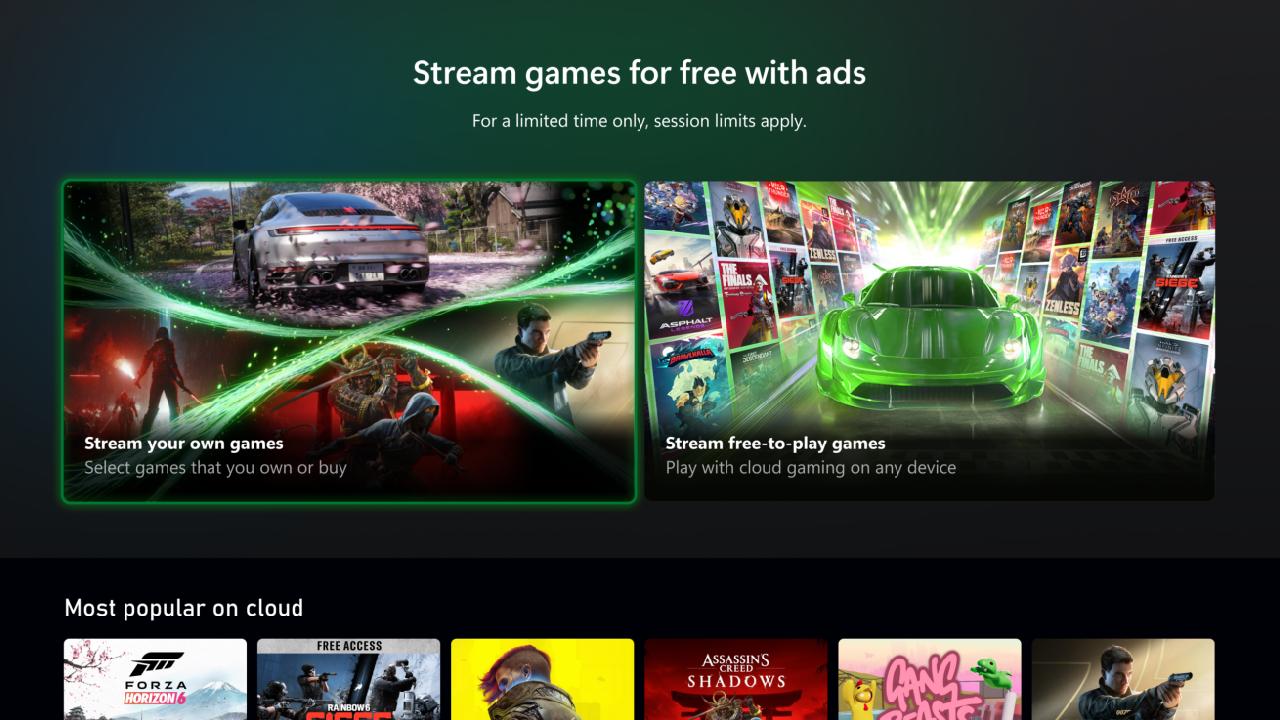
Dodging interruptions during boss fights doesn't automatically make the deal appealing, especially if you've already paid full price for the game. The money situation around XBOX helps explain why Microsoft might be exploring this. XBOX Cloud Gaming reportedly stops being profitable after customers use it more than 15 hours a month, which is why Microsoft introduced monthly streaming limits.
The most expensive Game Pass tier gets a 15-hour allowance, and each lower tier loses five hours. Starting in November, players who go over their allowance can buy extra hours, or streaming time, separately from Game Pass. It works much like services that bill you for how much cloud gaming you use, making long sessions another potential revenue source.
But the patent goes beyond charging for extra streaming time.
Microsoft has argued that cloud gaming lets XBOX One owners play eligible games made for XBOX Series X and S without buying newer hardware right away. That could matter in markets where consoles are expensive or hard to find.
With XBOX hardware prices rising, many players may not be able to afford an upgrade. Microsoft's next-gen Helix console could hit the same affordability wall, making it harder to grow the audience through regular console sales.
If Microsoft can't win enough customers through hardware sales and regular subscriptions, ads could lower the cost of getting in while still earning money from players who might never have paid for access otherwise. Microsoft filed the patent in 2023 under its previous leadership and resubmitted it in April, shortly after Asha Sharma took over.
Despite all the talk of a fresh direction for Xbox, the company still faces the same financial pressures. Its plans may change, but it still has to make its services profitable. Microsoft has also been testing an ad-supported Game Pass tier since June.
Combined with the patent, advertising could become a bigger part of its business model.
That said, the patent itself doesn't confirm the system will ever reach consumers. More importantly, the technology isn't limited to cloud gaming. The application also covers games running directly on a console or PC, which could let ads appear in software installed on hardware you already own.
One possible scenario is offering big releases like Forza Horizon 6 or Fable for free, or at a discount, in exchange for watching ads. Microsoft could use that to draw in more players, boost engagement, and lock in advertising commitments from companies willing to pay up front for exposure.
It would also make game design a lot more complicated. If developers started building their experiences around ad breaks, games could slowly drift toward the chopped-up format we've long associated with television. Mobile games already show how advertising can shape progression and pacing, and bringing those same incentives into premium releases could change how developers make their games.
Would leaning harder on advertising weaken the expectation that paid software should offer a complete experience with no interruptions? A cheaper, ad-supported version might appeal to people who can't afford full-price games, but it could also create two separate tiers of access.
Interestingly, Microsoft getting this patent could make things awkward for rival platforms.
Patents can protect a technology while scaring other companies off from building similar systems because of possible legal fights. If it's granted, Microsoft's patent could give XBOX more control over how ads are placed during gameplay.
That wouldn't necessarily be good news for players, though. If XBOX ads become the norm across the industry, other companies could follow with their own ad models, and commercials might become an accepted part of gaming.
Microsoft holding the patent might slow some competitors, but it wouldn't remove the financial pull pushing publishers toward advertising. In the end, the patent is an application, not proof of a finished product. Microsoft has good reasons to look at advertising for cloud gaming, where computing resources create ongoing costs.
Stretching that approach to locally installed games, however, raises much bigger concerns about what players can expect after they've bought software. The real issue isn't just whether ads can be placed without interrupting a boss fight. It's whether the industry will keep treating your attention as one more resource to cash in on, even after you've already paid for the game.
XBOX ads could make gaming more accessible through discounts, but they could also change the relationship between players, developers, and the games themselves. For now, Microsoft’s plans are still up in the air, but with the industry heading where it is, this patent is worth watching.
Editor, NoobFeed
Related News
No Data.