
Mewgenics Review
PC
Why Edmund McMillen’s longest-running passion project, Mewgenics, might be his most rewarding game yet.
Reviewed by Maisie Scott on Feb 14, 2026
If you have followed indie games for a while, you already know that anything connected to Edmund McMillen usually comes with a mix of creativity, dark humor, and systems that look simple at first but slowly take over your life.
From The Binding of Isaac to his earlier work on Super Meat Boy, he has always been the kind of developer who builds games that stick with you for years. Mewgenics is no different, except this time, it feels like the culmination of everything he has learned over the past decade.

This is not a game that came out of nowhere. Mewgenics was first discussed more than 10 years ago, back when Edmund was still working closely with Tommy Refenes. After they split, the project went quiet for a long time.
During that gap, Edmund focused heavily on Isaac, especially with Rebirth and Repentance, which pushed the genre forward and made him more popular than ever. After finishing that chapter, he finally came back to Mewgenics with fresh ideas and a much clearer vision. You can feel that history in every part of the game. This does not feel rushed.
Mewgenics takes place in a strange, broken place called Boone County, a town that clearly has seen better days.
Stray cats roam the streets, resources are limited, and people seem desperate enough to trade in animals just to survive. You start working with a scientist who gives you your first pair of cats, and from there, you slowly build up your own strange little operation. It is not a story-heavy game in the traditional sense.
The narrative is environmental and emotional. You piece together what is happening through NPCs, locations, and the weird situations your cats end up in. It feels more like living in a strange world than being told a story.
At its core, the game is about breeding cats and sending them into dangerous turn-based expeditions. Every run matters because each cat can only go out once. After that, it is retired from combat forever.
You can still use it for breeding, but its fighting days are done. You are not just building characters for one run. You are thinking in generations. Every choice you make now affects the next ten hours of gameplay.
You start with weak, mostly normal cats. You send them out, and they get injured, mutated, or sometimes blessed with powerful traits. Then you bring them home and decide who gets to pass on their genes.
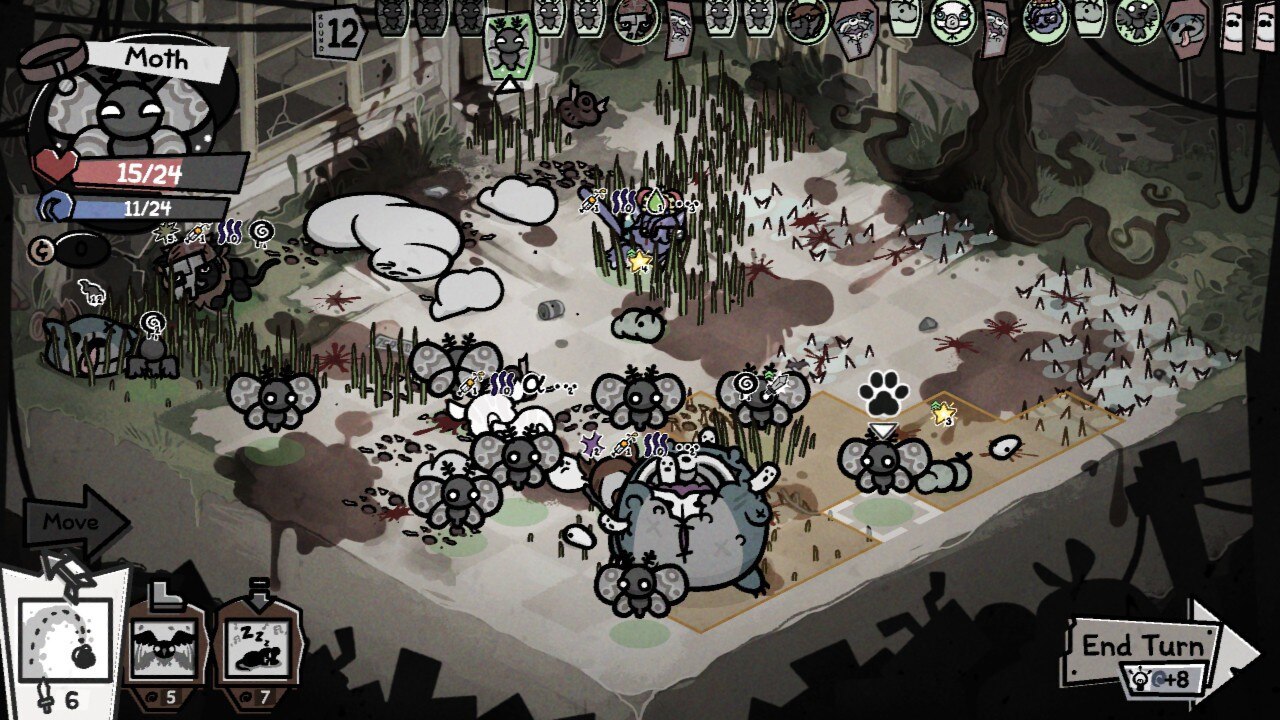
Some cats gain extra attacks, better movement, or useful passive effects. Others might develop problems like refusing commands or suffering permanent injuries. You are constantly weighing emotional attachment against efficiency.
Your home base becomes a major part of this loop.
You feed your cats every day, make sure they have enough room, decide whether to take in strays, and decide which ones to give away. Different NPCs give you different upgrades. One gives you more storage space, another improves your house, and a third opens up new collars and classes. Sacrifice is directly linked to progress. You give up animals that you have raised. It sounds dark, but that is really the point.
When you finally send cats on runs, the game shifts into full tactical mode. You can take up to four cats at a time, and each one can be assigned a collar that determines its class. These collars shape stats, abilities, and playstyle.
You can also send cats without collars, which turns them into unpredictable wildcards with random skills. Each class is huge, with dozens of abilities, and when you start mixing them with inherited traits, equipment, and items, the possibilities explode.
Combat takes place on grid-based maps with hazards, obstacles, and environmental effects. If you have played Into the Breach, you will immediately recognize the focus on positioning and prediction. Enemies telegraph their attacks. You usually know what is coming next turn. Your job is to respond properly. Put a tank in the wrong place, and it dies. Leave a mage without a line of sight, and you waste a turn.
Unlike many roguelikes, Mewgenics does not rely heavily on luck.
There are random elements, but most failures are your fault. You misread a pattern. You positioned yourself badly. You took a risky ability instead of a safe one. When you lose, it feels fair. That makes improvement feel rewarding.
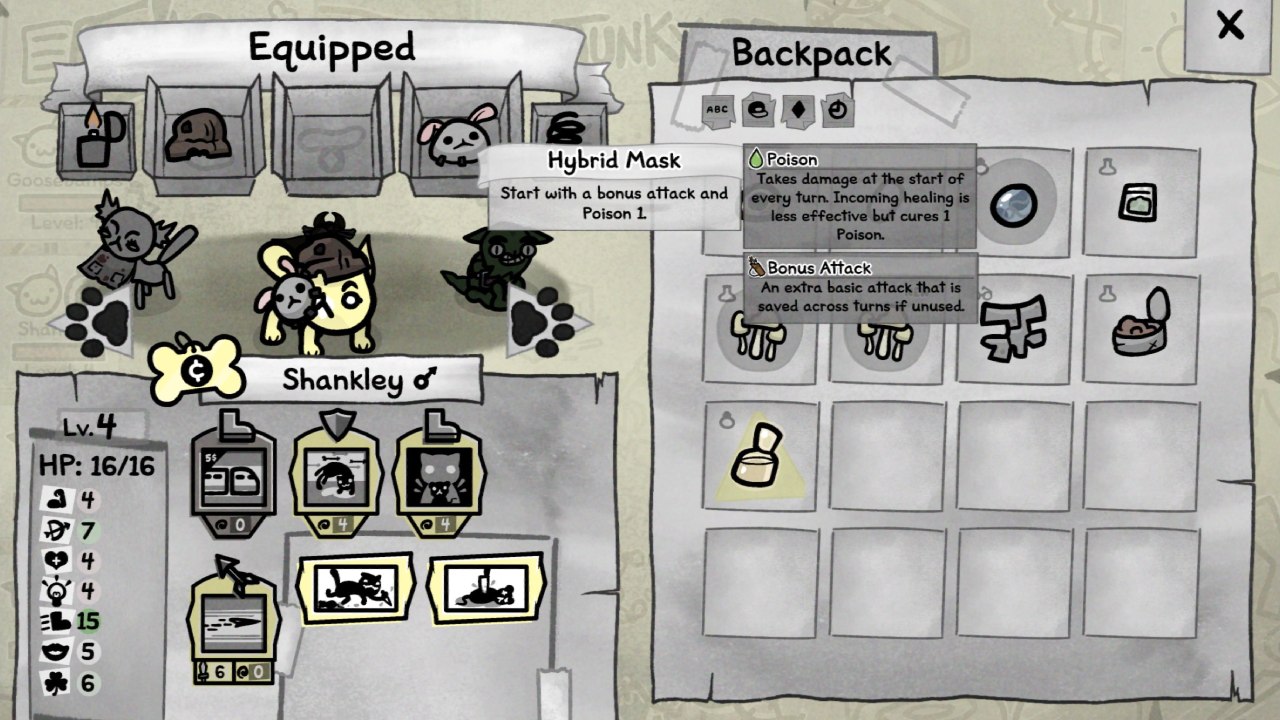
As long as they have enough resources, your cats can move, attack, cast spells, and use items on each turn. If you build it right, mana will come back based on stats, which lets you make strong chains. Some cats are good at close combat, others at long-range attacks, and others at support or control.
Abilities can work together in ways you wouldn't expect. You could freeze your enemies, break them, and then spread the damage through a chain reaction. You will still find new synergies even after playing for dozens of hours.
Equipment adds another layer. Armor, helmets, and consumables can completely change how a cat functions. On top of that, permanent injuries and random events can modify stats in lasting ways. These changes can then be passed down through breeding. Over time, you start creating specialized bloodlines designed for specific roles.
It feels like building a strategy game inside another strategy game.
The game also has branching paths, where you get to choose what kind of encounter to have next. You could choose between fighting, finding treasure, going to shops, or having story events. Boss fights are the most interesting. They often feel like puzzles that need to be solved at the right time and place. Some bosses are very harsh when you play carelessly. You get tested on how well you know your own builds. It feels great to beat a tough boss without taking damage.
Mewgenics does a great job of handling meta systems for progression. As you play, you unlock new classes, ways to breed, buildings, and storylines. Instead of making things easier, they give you more choices. You still need to play well, even if everything is unlocked. This is like how Slay the Spire rewards you for getting better at the game, rather than just giving you better gear.
That said, the scope can feel overwhelming at first. By hour twenty, you are managing genetics, base upgrades, the economy, relationships, and team composition. Early runs can feel directionless until you understand what truly matters. The learning curve is steep, but if you push through it, the payoff is massive.
Visually, Mewgenics is one of Edmund’s strongest works. Every time you load the game, small details change. The porch might have a spiderweb, a squirrel, or something gross lying around. Menu animations feel alive. Transitions are smooth and playful. It feels like a living cartoon.
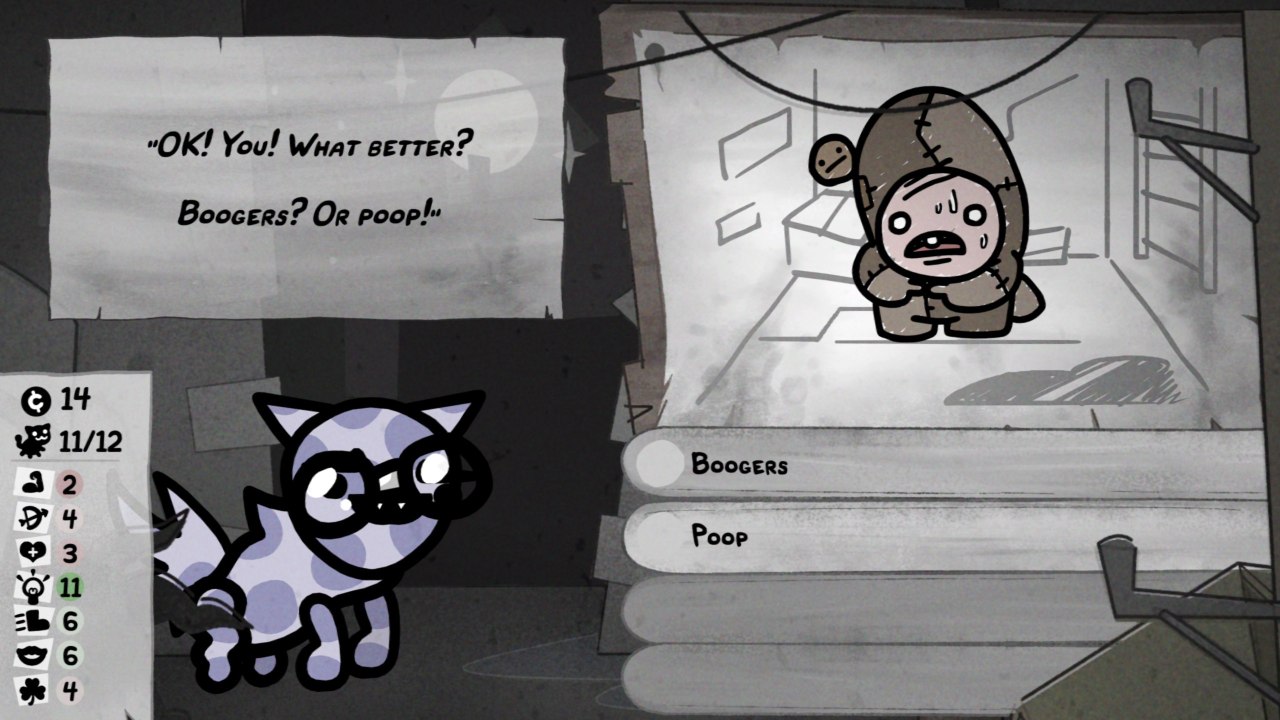
The muted color palette helps important elements stand out. Characters pop against darker backgrounds, which also helps gameplay clarity. Animations are simple but expressive. Every cat feels like it has personality, even without dialogue.
There is also a constant stream of small visual jokes and references, including subtle nods to Isaac, that longtime fans will appreciate.
Of course, the aesthetic is not for everyone. There is bodily humor, mutation, blood, and uncomfortable imagery. Cats can defecate, bleed, get dismembered, and develop grotesque forms. This is intentional. It is not there just for shock. It is part of the world’s identity. If you bounced off Isaac or Darkest Dungeon because of tone, you might struggle here too.
The sound design beautifully supports the atmosphere. Music is strange, but emotional too. It shifts naturally between calm management moments and intense battles. Nothing feels out of place. Sound effects are crunchy and impactful without being overwhelming. Small audio cues help you read combat situations, which is important in such a tactical game.
One of the most impressive things about Mewgenics is its sheer amount of content. The main campaign alone is estimated at two hundred hours. Full completion might take several hundred more. Between classes, items, storylines, breeding paths, and upgrades, it feels endless. Most of that time comes from experimenting and learning, not repeating the same content.
For its price, that matters. At around thirty dollars, it costs more than many indie roguelikes. But when you compare it to typical fifteen-to-twenty-dollar games that last fifty hours, the value makes sense. You are paying more upfront for something that can last months.
What really makes Mewgenics special, though, is how it blends everything Edmund is known for into one cohesive package.
It has the randomness and discovery of Isaac, the tactical precision of Into the Breach, the long-term planning of management sims, and the emotional weight of generational systems. Somehow, it all works together.
It is not perfect. The early game can feel confusing. The aesthetic will turn some people away. The complexity can be exhausting if you just want something light. But if you enjoy deep systems and are willing to learn, this is one of the most rewarding indie games in years.
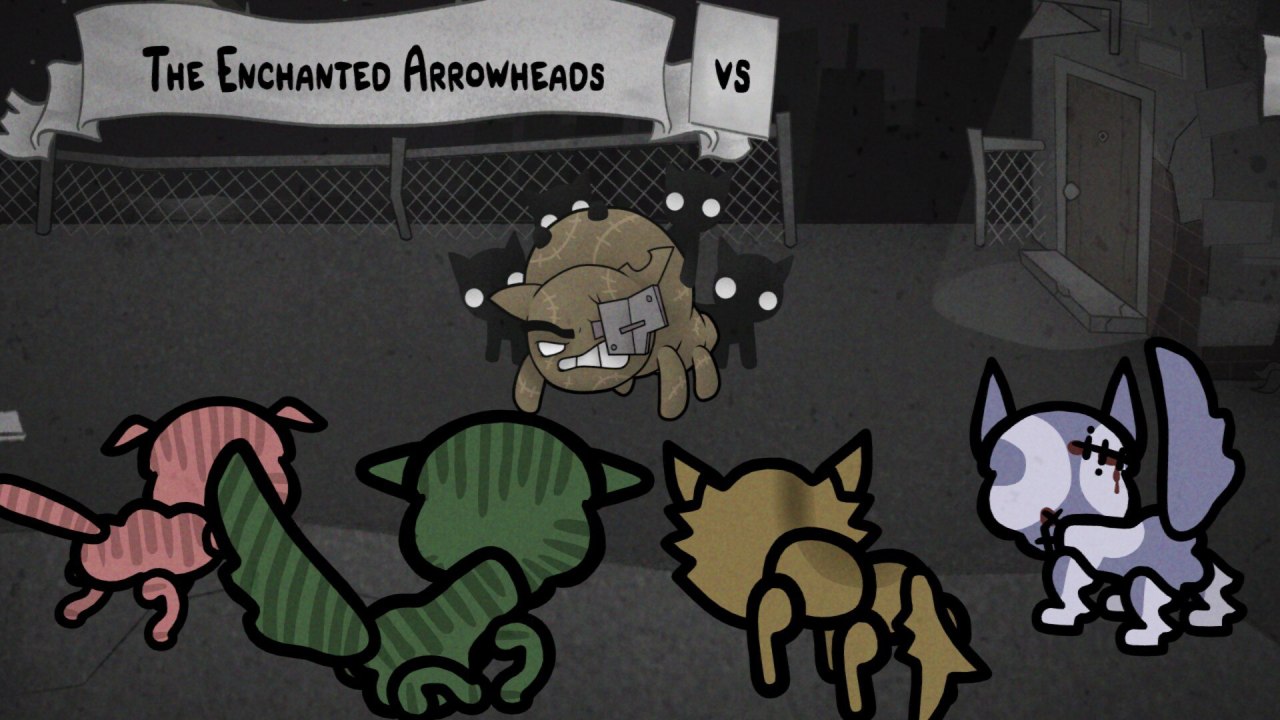
Playing it feels like watching a developer fully realize his vision after more than a decade. You can see the passion in every mechanic and animation. It never feels like a cash grab. It feels like something someone needed to make. By the time you are fifty hours in, you will probably still feel like a beginner.
In one hundred hours, you will start to feel confident. By two hundred hours, you will still be discovering new interactions. Very few games manage that. If you like tactical depth, long-term growth, and strange creativity, Mewgenics is a great game to play. At times, it is all of these things at once: strange, uncomfortable, funny, frustrating, and brilliant. That's why it works.
Editor, NoobFeed
Verdict
Mewgenics is a deep, weird, and endlessly rewarding tactics roguelike. If you enjoy complex systems, emotional progression, and dark humor, it is worth every hour. Skip it only if you cannot tolerate its tone.
86
Related News
No Data.