
Neo Junk City Review
PC
A police android investigates a murder she committed but cannot remember.
Reviewed by Adeela Tas on Nov 15, 2026
Josh Hano has built games largely on his own for years, and if you know his earlier point-and-click adventure Nefarious, you already know the humor and heart he brings. His latest, Neo Junk City, launched on Steam for PC on November 9, 2026, after a long wait.
At first glance, it looks like one more pixel-art point-and-click, and Steam has no shortage of those. It takes cues from classics like King's Quest, but Neo Junk City doesn't stay in that lane for long. Stealth, arcade racing, on-rails shooting, rhythm sections, puzzles, and a handful of strange surprises all get folded in, to the point where it's hard to file the game under one genre.
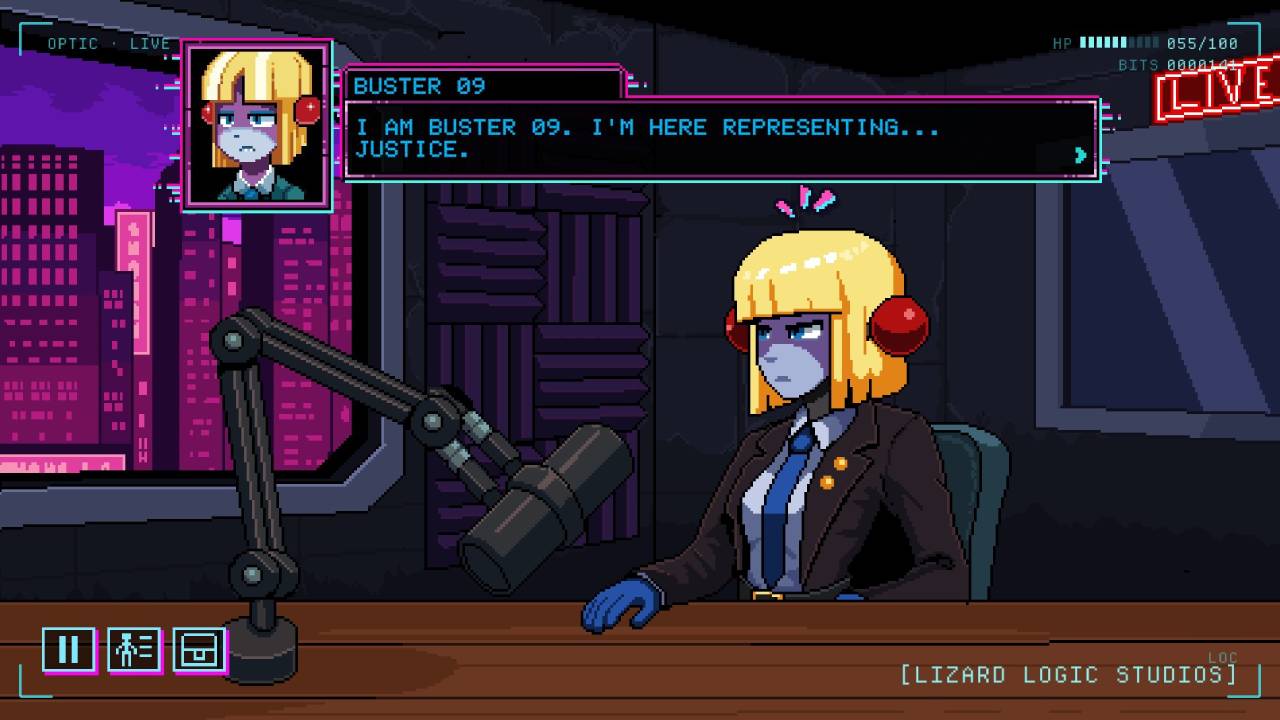
A strong story and a likable cast hold it all together, and that's what keeps you coming back.
Neo Junk City is set in the Drowned City, a half-sunken cyberpunk metropolis split into districts that you travel between by car. You play as Buster 09, a law enforcement android assigned to a murder case. The problem is that Buster is the killer. The evidence at the scene points straight at her, and she knows it, but her memory has been wiped, so she has no idea why she did it.
That twist gives Neo Junk City a hook most whodunits don't have. You aren't only working out what happened. You are also working out whether you can trust the person doing the investigating, which happens to be you. Details that seemed harmless early on can take on a different meaning later, so it pays to notice when something doesn't add up.
Keeping what you actually see separate from what Buster remembers helps a lot, because the two don't always line up, and the gaps between them often hold the real clues. The story starts small, but over seven chapters, which the game calls verses, it grows into something much bigger as more of the truth comes out. Hanging over everything is Mother, also known as Dr. Hydnellum, whose grip on the city is never far from view.
While Buster struggles with what she has done, she is also sent after Ark, a mysterious group whose members she must arrest one by one before reaching the boss at the top. Ark members and Rat's banter lead into endings and the point-and-click mechanics. Each Ark member has their own quirks, themed area, and boss fight. Optional side missions called Ark Quests dig into their pasts and explain why they do what they do, and they're worth doing because they make these characters feel like more than targets on a list.
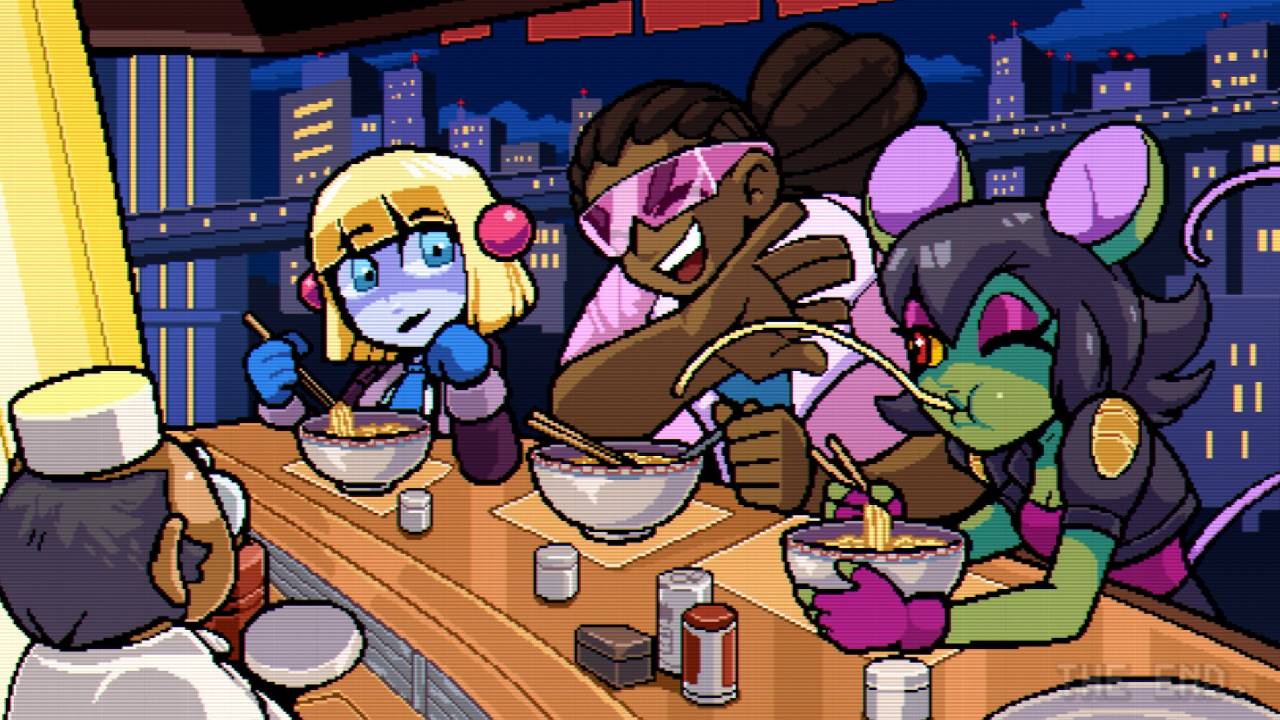
You don't go through this alone. Early on, you cross paths with Rat, a scrappy criminal who starts as an enemy and quickly wins you over with her charm, mischief, and habit of messing things up. Neo Junk City leans hard into the enemies-to-lovers angle, but dialogue choices let you take the relationship toward friendship or romance, so you get some say in how it plays out.
The back-and-forth between Buster and Rat is the game's best part. Their banter is funny, and watching the relationship shift as the stakes rise is a big reason the story works. The humor has a playful, self-aware streak that brings Toby Fox's work to mind, and it never gets in the way of the heavier moments.
Even minor characters you meet in passing tend to have a joke or a strange habit that sticks with you. There's plenty of dialogue, and you do need to pay attention, since key details like where to go next are sometimes tucked into the middle of a long conversation. Thankfully, a log tracks what everyone has said, so you can always check back if something slips past you.
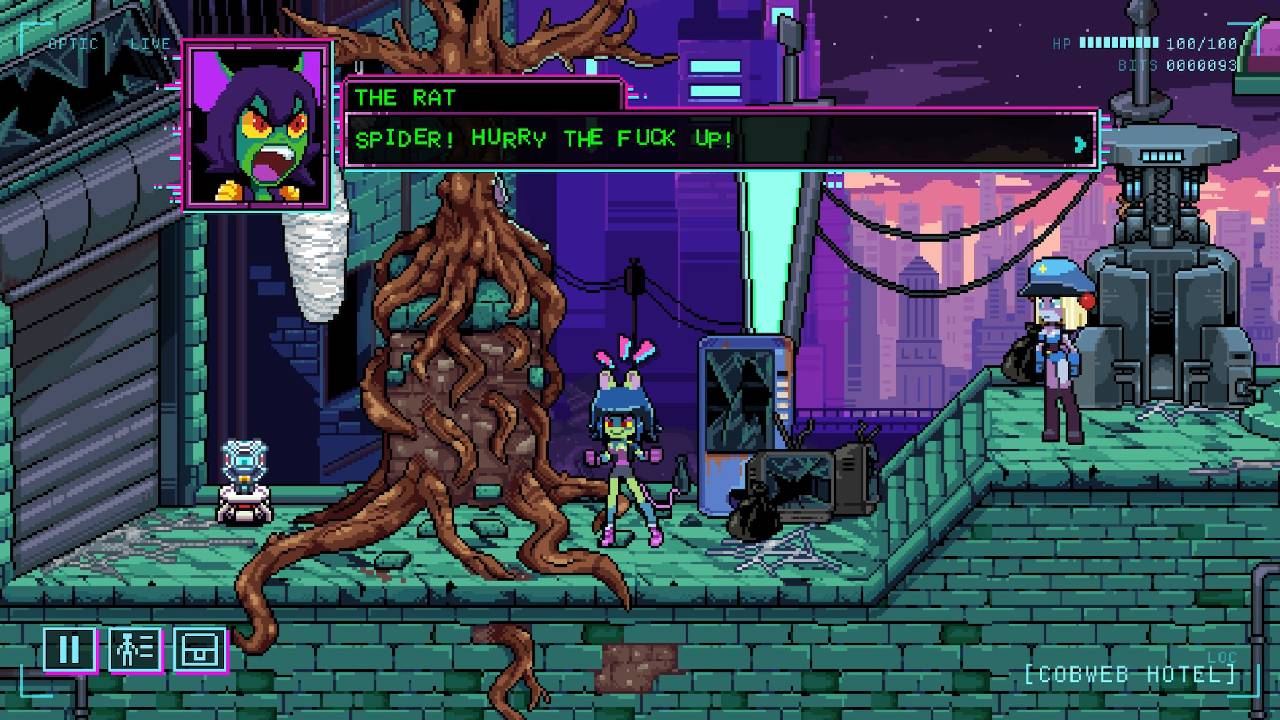
The second half of Neo Junk City tightens things up a lot.
One scene stands out above the rest. Throughout the game, you can stop and look at Buster's reflection in mirrors and other surfaces, and it seems like a small touch until one cutscene pays it off. That moment ties directly into the game's bigger themes of autonomy, control, and what it really means to be human, and it hits hard. The game also has multiple endings, and which one you get depends on the objectives you complete along the way, giving you a good reason to play through it again.
At its core, Neo Junk City is a point-and-click adventure, but it plays with that format in some new ways. Instead of a fixed set of verbs, it uses context-sensitive interaction blocks that change based on how you explore and how your relationships with the people of the Drowned City develop. That means there are hidden interactions to find and new routes that open up as you go, and the system rewards curiosity rather than clicking through every option.
The city also changes as you progress, reflecting your choices and their impact on the people around you. Clicking around interiors is a pleasure, because almost every room has objects to poke at and little bits of text that add to the world. Most chapters in Neo Junk City follow the same general pattern. You arrive in a new district, look around, talk to people, and solve point-and-click puzzles.
Most of the logic puzzles are simple. The one exception is a chapter set in a Gothic castle with its own murder mystery, which asks you to spend a good chunk of time investigating before things click. After the puzzle portion, you head into a dungeon full of enemies. When a fight starts, the game switches to an arcade-style on-rails shooter inspired by old light-gun games.
You shoot down incoming projectiles, take out enemies, build combos, unload charged shots, and spend energy on special moves. Targets pop up quickly, and not all of them are hostile, so you have to tell real threats apart from innocent bystanders before you pull the trigger. You can also duck behind cover, and often the best approach is to charge a shot while hidden, lean out for a quick hit or two, and then get back to safety. There are no experience points.
Fights give you bits instead, the game's currency, which you spend on weapon upgrades like more shot damage or a faster rate of fire. It's simple, and the upgrades aren't vital. You could skip most of the fighting without changing much about the overall experience. Simple shooting leads into repetitive bosses, then the chapter variety and driving. Still, it's better not to, because the combat breaks up long stretches of investigation and keeps the pace moving as you work through each area.
The shooting is fairly basic and serves more to move you from one part of the story to the next, but it's quick and responsive. Each dungeon ends with a boss, and this is where things wobble. The bosses look great, but the fights tend to feel the same. Most of them come down to patience, since your shield blocks almost everything, and you can wear them down with charged shots.
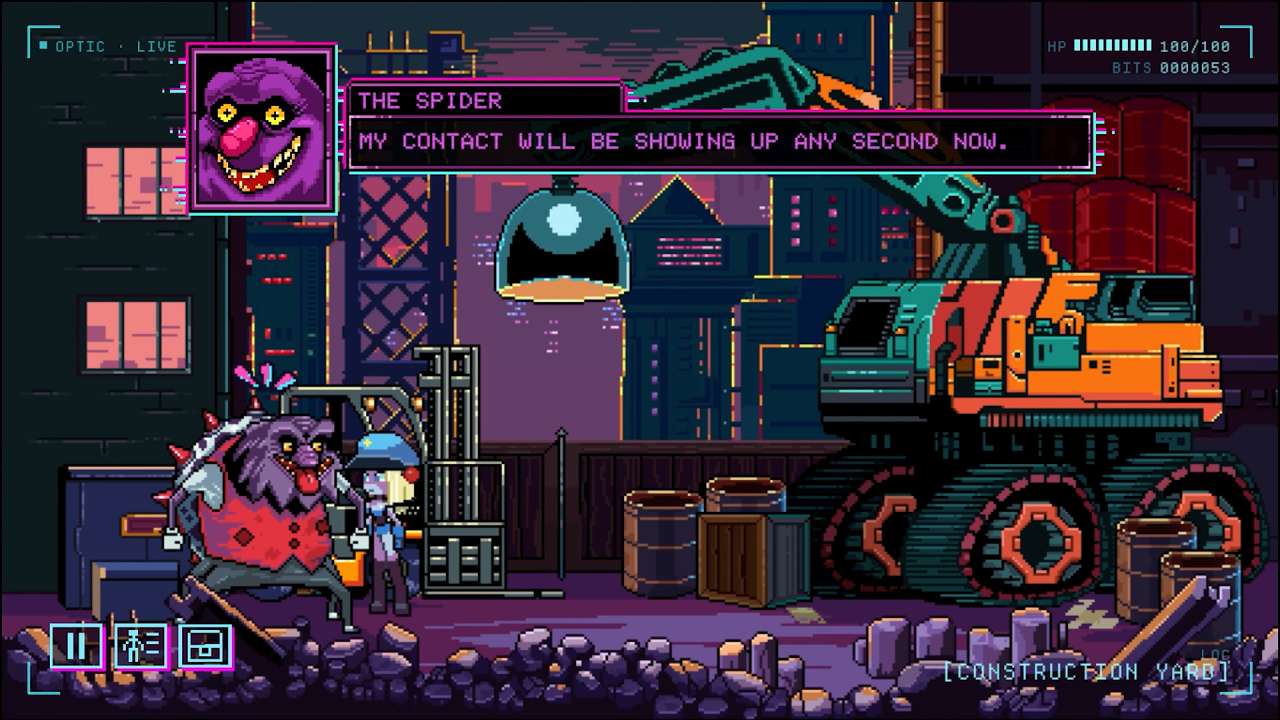
Many bosses also share attacks. Two later bosses that you fight one after the other both lob grenades the same way, and several early bosses rely on the same mine-throwing move. Some bosses also keep running off screen and then dashing back in, only to vanish again a few seconds later.
One late fight does this so often that it drags on for no good reason. It isn't a dealbreaker, but these encounters could have used more polish. Some great fights break the pattern, though. A side quest has you taking on a huge armored tank, and a mermaid boss shakes things up completely. Variety is where Neo Junk City really shines.
Every chapter feels different from the last.
One moment you're in a disco solving sound puzzles and stepping through a dance-pad rhythm minigame, and the next you're crossing a dusty desert to track down the region's most wanted criminal. At one point you even play pinball with Buster's own severed head to move forward. Even near the end, new mechanics keep showing up, like light beams you have to redirect and conveyor belts you have to manage.
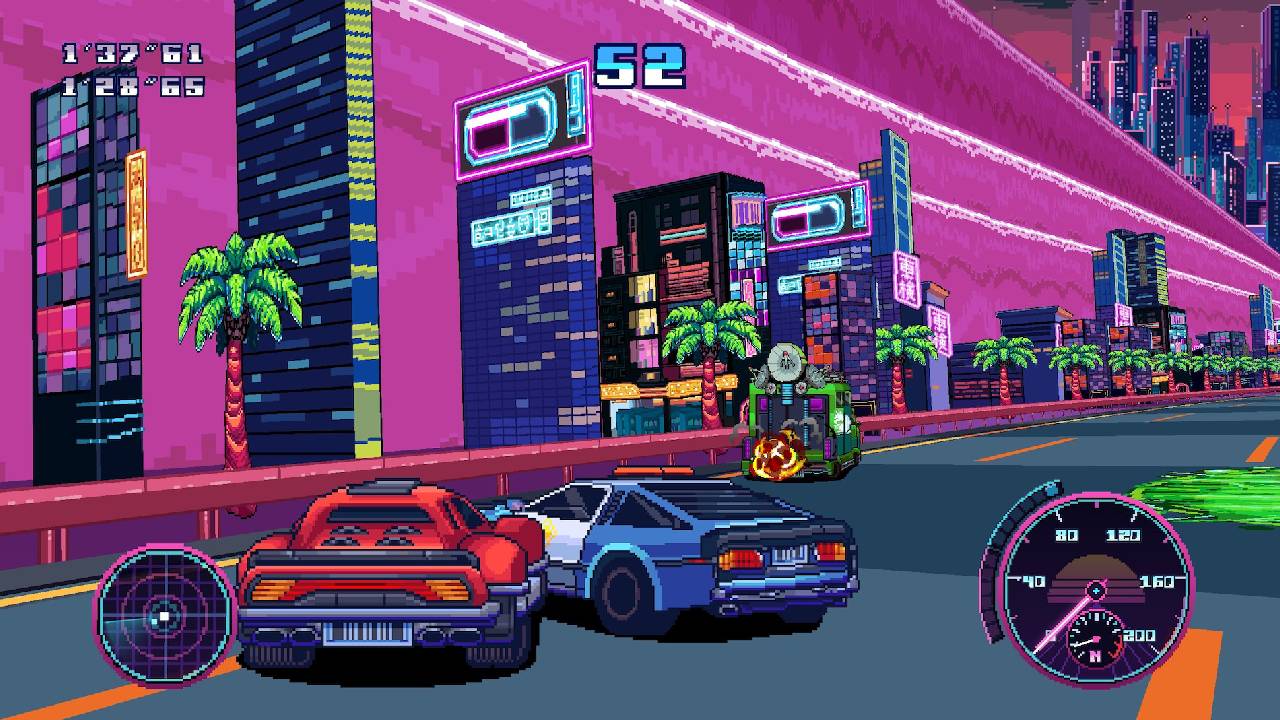
Plenty of big-budget games run out of new ideas well before the finale, so seeing fresh twists all the way to the credits is a nice surprise. Because of that variety, the repeating chapter structure is easy to forgive. You have a general idea of how each verse will unfold, but you rarely know what's coming next, and that makes it hard to put down. The driving sections deserve their own mention, since they work as a love letter to classic arcade racers. You use them to travel between districts, and they change a lot over time.
Some runs ask you to weave through traffic and reach the end, while others have you ram cars off the road or race against a timer. The Highway Authority System watches every driver closely, and going too slowly comes with consequences far worse than losing your license, so you always have a reason to keep your foot down.
Driving leads into unexplained mechanics, a late bug, then art and music.
You can earn gold ratings on each run, which is a nice extra goal. Some mechanics, like drifting and tailing other cars to get a speed boost, are never explained, and you only find out about them by accident. That lack of guidance is Neo Junk City's biggest flaw. Now and then it isn't clear how you're supposed to interact with a puzzle or an object.
One stone statue puzzle, for example, wants you to hold an icon and drag it up or down, but nothing tells you that. You can easily spend a long time backtracking and talking to every NPC in the area before figuring it out. That isn't the only time it happens, either. A few other puzzles are just as unclear, and those moments can stall your progress more than any actual challenge does. A small on-screen prompt here and there would have saved a lot of aimless wandering.
Neo Junk City also has one serious bug near the end. In one section, Buster can walk down into a dungeon instead of away from it, which breaks the game and forces you to reload an earlier save. It can happen more than once in the same area, and it seems possible to trigger it on purpose, so stay away from that spot.
Otherwise, the game runs well and is nicely optimized.
The art in Neo Junk City goes a long way. The pixel art looks beautiful, with strong colors in every district and charming animations throughout. The neon streets feel busy and alive, and the city is full of robots, psychopaths, and cybernetic monsters that want Buster out of the way. The character designs are great, too, and the anthropomorphic characters fit into the cyberpunk setting better than you might expect.
Interiors are a highlight, especially the Kraken coffee shop and an apartment you visit around the midpoint. Being able to click on objects in these spaces in classic point-and-click fashion shows how much care went into the details, and it gives the Drowned City a quirky personality of its own. Not every animation holds up over time, though. Getting into your car and leaving the Coinrust plays the same sequence every time, and a few other regions have similar transitions.
They're fun at first, but after the twentieth trip they start to drag. The music in Neo Junk City draws heavily from 8-bit soundtracks, and it works both for and against the game. Some tracks fit their areas perfectly and really enhance the mood. Others start to wear on you, especially when you're stuck in one place for a while working out a puzzle.
You're more likely to notice this during longer stretches.
Neo Junk City takes anywhere from 15 to 24 hours, depending on how much you explore, how closely you read every conversation, and how many side quests you take on. A run that covers almost every Ark Quest lands at around 16 hours.
That still leaves out the cassette tapes, which are the game's main collectible, as well as gold ratings in every driving section and the full set of Steam achievements, so a completionist run can easily go well past 20 hours. Very little of that time feels wasted, since the side content tends to add to the characters and the city rather than pad things out.
Ten hours in, you'll still be finding new things, and the game keeps finding ways to surprise you. All in all, Neo Junk City is one of the best surprises of 2026. The murder mystery at its center is gripping, the bond between Buster and Rat carries the story, and the constant stream of new ideas keeps every chapter interesting.
Repeated boss patterns, slow transitions, a few unclear puzzles, and one nasty bug keep it from being perfect, but none of them take much away from what Josh Hano has built here. If you enjoy cartoony cyberpunk worlds, sharp writing, and a game that isn't afraid to get weird, Neo Junk City deserves a spot on your list.
Editor, NoobFeed
Verdict
Neo Junk City's story and variety outweigh its weaker bosses and vague puzzles. It's a solid pick if you like slower, dialogue-heavy adventures, but less so if you want challenging combat.
75
Related News
No Data.