
Nocturnal 2 Review
PC
A flame-lit Metroidvania sequel that trades slow wandering for momentum, secrets, and a city worth setting alight.
Reviewed by Azfar Rayan on Nov 14, 2026
Fire has a way of making a dark place feel less hopeless, and Nocturnal 2 builds its entire identity around that idea. Sunnyside Games released the Metroidvania on Steam on November 10, 2026, as the follow-up to its 2023 original, a short, polished adventure whose smooth platforming, combat, and controls practically begged to be stretched across a bigger map.
This sequel does exactly that. Where the first game stayed compact, Nocturnal 2 opens up into a full city of linked districts, locked routes, and hidden passages, and it does so with the confidence of a studio that clearly cared about getting the details right. A straight run through the story lands around four to six hours, and chasing every secret stretches that out, which is a comfortable length for a game that never feels padded.
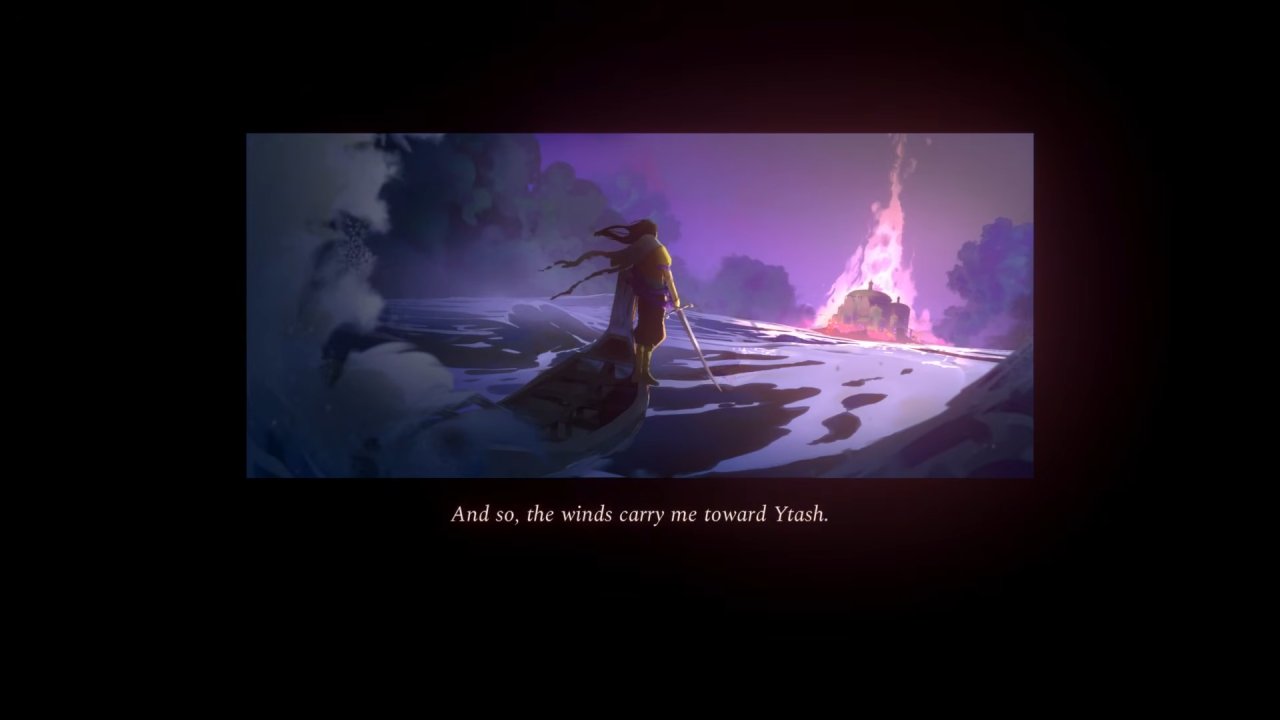
Nocturnal 2 follows Ardeshir into Ytash, a lost city with a flame to relight.
You play as Ardeshir, a warrior traveling through a world swallowed by a creeping mist that has stolen memories and homes alike. After crossing a wasteland of silence, you follow rumors of a lost city called Ytash, once devoted to a never-ending flame and said to have sheltered the brightest fire of all.
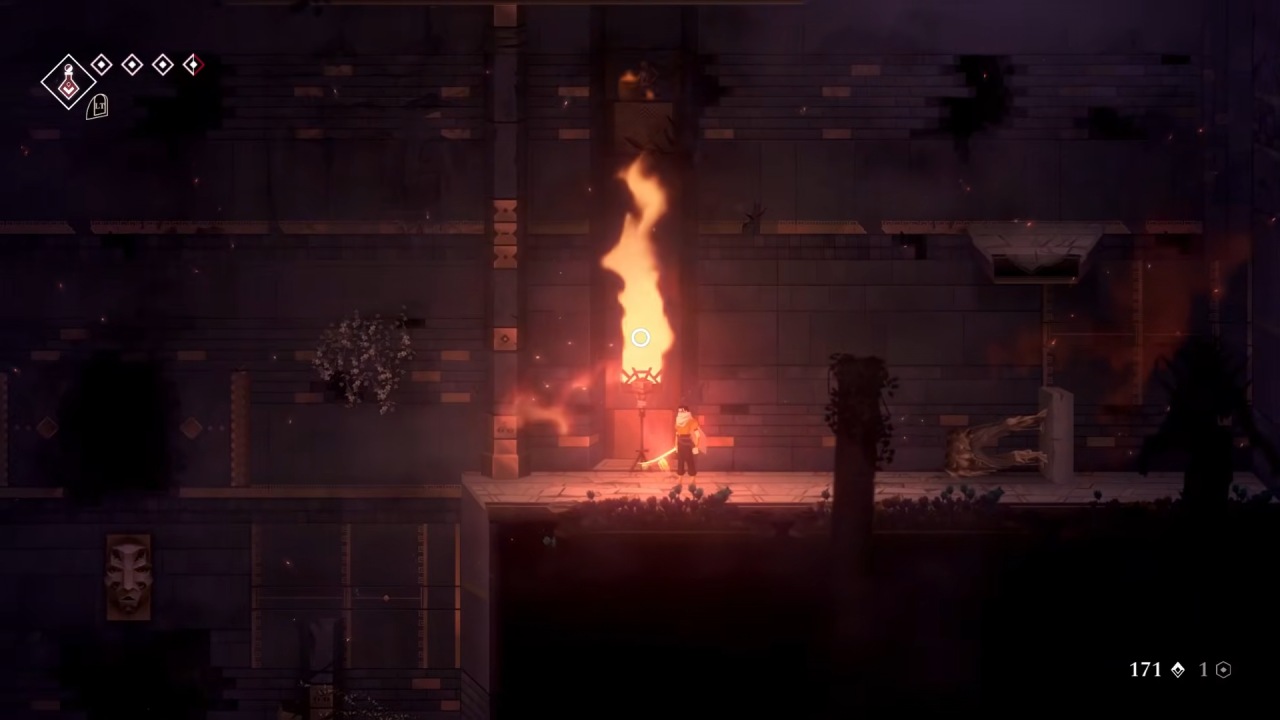
A flame is forged into your own flesh, and carrying it through those dark streets is both your weapon and your purpose. The opening words at the Gates of the Doused set the tone nicely: the Order of the Enduring Flame has broken and scattered, yet the coals are still warm, and a believer is expected to arrive.
Bringing the fire back is the entire mission, and Nocturnal 2 wastes no time putting a sword in your hand and a torch in front of you. Beyond that opening, it tells the story in fragments. Notes, poems, statue inscriptions, and short lines of text gradually describe how Ytash once worked.
The Firebrands were alchemists who offered the city to the Sunbird. The Fireworkers fed the furnaces of the Fireworks, sometimes giving their lives to it. The Doused, fishermen and oil makers, were looked down on even though the whole city depended on their fuel.
More factions fill out Ytash, before a personal story about grief emerges.
The Kindling Corps trained as flame dancers, the Ardentists molded fire into art and branded their own skin, and a group of moonstruck outcasts drifted away from the light into the depths below. None of this arrives all at once, and the cryptic presentation, with its distinctive lettering and sudden bursts of text, suits a place that is only half remembered.
A quieter human thread runs through all of Nocturnal 2. Yalda the Elder, another seeker of the brazier, turns up at several points along the way to trade a few careful words, and her remarks slowly hint at what the brazier might really be capable of.
Ardeshir also carries the ashes of his sister Arsia, and the question of how far someone will go to bring a loved one back sits beneath everything. When the story reaches the Great Hearth, the reunion that follows becomes its emotional high point, reframing the journey as one about grief and balance rather than simple conquest.
The closing stretch then asks you to put out what you spent hours lighting. It is a bold thematic choice, though the exact goals become a little unclear, and a few clearer signposts there would let the story land even more cleanly. The core loop of Nocturnal 2 is simple to describe and pleasant to repeat.
You enter an area, light every torch you can find, and watch the map fill in as the city's flame presence climbs.
That percentage is the real key to progress: certain doors and passages stay shut until you reach a set threshold, with early gates sitting around thirty percent and later ones asking for seventy or the full hundred. You can light out-of-reach torches with thrown knives, hit switches along tracks, and find torches hidden behind tapestries, or in small holes in the wall, so a little observation goes a long way.
Finishing a district even lights up that part of the city, a small reward that feels good every single time. Your toolkit grows steadily. You begin with a jump, a double jump, a dash, a sword, and throwing knives, then pick up the Flame Lift, which bursts upward and launches nearby enemies, along with a wall vault that keeps your airtime going as long as you connect with something.
Later gifts include the Wing Strike, a downward kick from the air; a charged Sun Slash that breaks armor; Spinning Claws that power switches; and the Blazing Dive, a ground smash that opens cracked floors. Each one arrives with a spot nearby to try it out, which explains its purpose at once and sends you back to old maps with fresh ideas.
That cycle of exploring, returning, and finding more keeps Nocturnal 2 moving at a steady pace. The flame is as much a resource as a tool. Water can douse your sword, hazards can snuff it out, and without a lit blade you deal less damage and cannot teleport, so you head back to a torch to relight it.
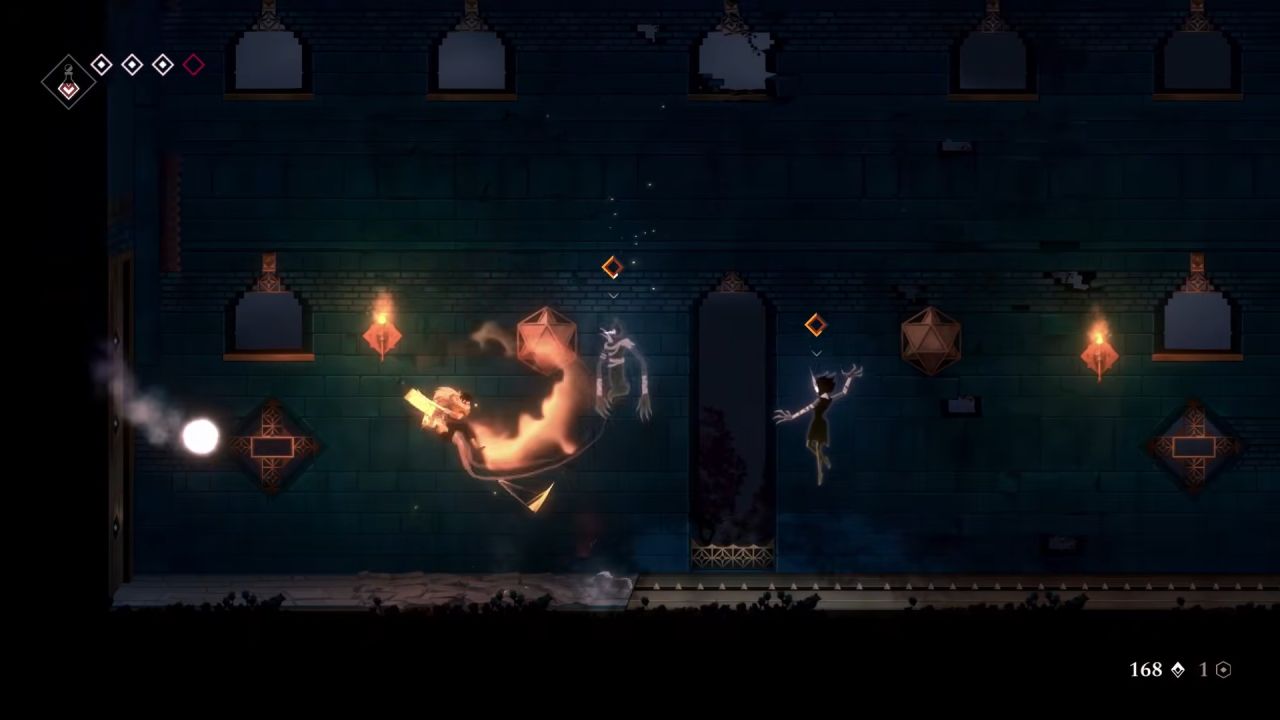
Relighting your blade leads to checkpoints, a helpful map, collectibles, and fluid controls.
Phoenix statues act as checkpoints that heal you and save progress, and the map lets you jump to any activated one or to a Sun Child, so backtracking stays painless. The map deserves real credit: markers show torches you have passed but not lit, spikes get noted automatically, and sealed doors and barriers carry icons that remind you what each one needs.
Every area also shows a tracker for fires and treasures once everything has been found, and markers are unlimited. Dark zones add another layer, with a small icon warning you when your light is running low. Collectibles add a second layer of searching. Poems, strange arcana cards, and hidden walls reward curiosity throughout Nocturnal 2, and small blue eye symbols hint at deeper secrets, though none of it is required to finish the story.
Some hidden areas turn out to be a secret within a secret, such as the Consumed or the Cinder Nook, and reaching them often involves a neat bit of platforming. Controls can be remapped, which is a welcome touch, and aerial movement is especially generous: you can chain jumps, wall vaults, and dashes to keep the pace up.
Combat in Nocturnal 2 is built on speed and aerial play. You slash through short combos, throw knives at a distance, lift enemies with the Flame Lift, juggle them in the air with follow-ups, or send them crashing back down with the Wing Strike.
Those aerial combat basics deepen with armored enemies, stances, parries, and healing.
Larger foes wear armor you have to break first, using either the charge attack or Spinning Claws, and Furnace's Favor puts you in a powerful stance with a longer combo and heavier hits. A parry arrives later and gives fights a pleasing rhythm once you learn when to use it.
Healing comes from the Pyre Potion, used on the ground by pressing up, and landing hits refills it, so aggression is rewarded. Your health pool is small, so careless play is punished quickly, but checkpoints come often enough that the penalty rarely stings.
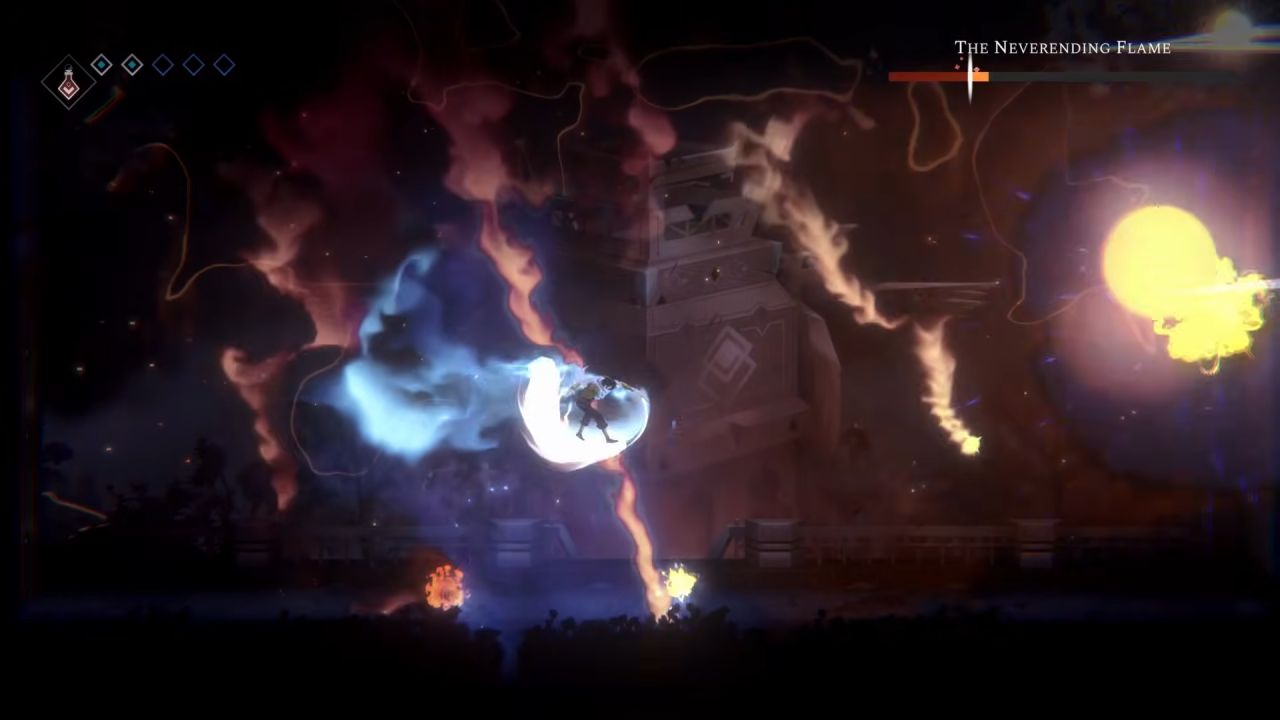
There is plenty to enjoy in the fights of Nocturnal 2. Hits feel responsive, moving through the air is a joy, and the freedom to choose between ground play, air juggling, and knocking enemies into spikes or pits adds variety to encounters.
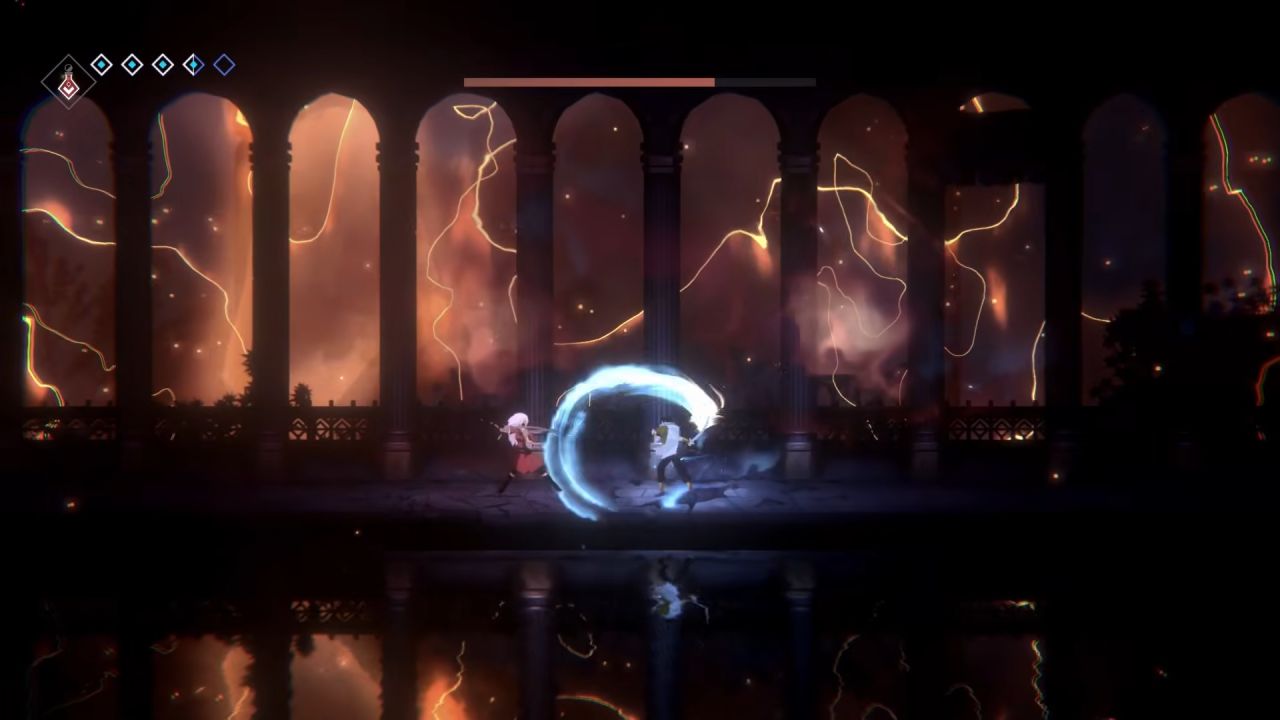
Mixed groups, such as ground fighters alongside turret-like shooters and armored brutes, ask you to think about positioning before diving in, and bosses are multi-phase affairs where you break armor, survive a few patterns, and repeat. A few edges could use smoothing.
Combat flaws surface next, followed by light puzzles and a thematic sealed-door twist.
Some foes, particularly the flying eyes and the homing projectile throwers, take more hits than the rest, and since your damage stays modest, those fights can run long. The upward launch tied to the jump button can send an enemy skyward when you only meant to hop, a few heavy attacks stagger less consistently than you might expect, and bosses can be juggled for quite a while once they open up.
Ways to raise damage, or a slight trim to enemy health, would tighten the pacing. A mid-air charge attack would be a lovely addition. The puzzles lean toward platforming and observation rather than head-scratching. Timed braziers switch waterfalls on and off, moving hazards demand sharp timing, oil-soaked rooms test your jumping, and diamond-shaped torches stay lit only briefly.
Water and darkness also work as puzzle pieces, and a late set of sealed doors opens only once you deliberately put out your own flame. It is a clever idea tied neatly to the theme, though it shows up with little introduction after hours of being taught to keep your blade burning.
A short, required example earlier on, like the one given to every other ability, would make that final idea click straight away. Elsewhere, the puzzle work in Nocturnal 2 stays pleasantly light and never stalls the momentum. There is no experience grinding in this game, which suits the size.
Without grinding, upgrades come from Cinderhearts, and the Persian-inspired visuals then take over.
Progress comes from a currency called Cinderhearts, found at specific spots in the world rather than dropped by enemies, and you spend them at a Sun Child to rekindle brands. Brands are permanent upgrades: a sprint, extra total health, a third hit in the air combo, daggers that make torches explode, stronger melee at low health, a potion that briefly boosts your damage, and the Brand of Wavering, which makes dashing ignite torches.
Because the points tie into puzzles and challenges, collecting them feels like a reward for exploring rather than a chore. Cinderhearts are limited, so early brand choices carry real weight. Seeing what each brand does before spending would take the guesswork out, and swapping brands at any Phoenix statue would make experimenting feel safe instead of risky.
Dying can cost you carried currency, but nothing in a normal playthrough calls for repeating content, so you can simply keep moving forward. Visually, Nocturnal 2 is gorgeous. The hand-drawn art draws on Persian architecture, which gives Ytash a clear identity instead of a generic fantasy look.
Towering upper districts contrast with dark depths below, and each region has its own palette, so the Firewalks, Oil Chambers, Scarlet Study, and the red-tinted areas are easy to tell apart. Fire is the star: it lights most of the world, reflects across surfaces, and makes the city feel coherent and alive.
Beyond the art, the sound design and a disorienting backtrack finale stand out.
Even in the dimmest rooms, Nocturnal 2 stays easy to read, with the firelight cutting hard against the shadows. It also runs well on modest hardware, and it still looks good at 4K with high frame rates. A slight shake during jumps and a mild background blur may linger even with camera shake turned off, so extra options for fine-tuning those effects would be appreciated.
Nocturnal 2 sounds like a ruined kingdom out of the Arabian Nights: somber, a little haunted, and always in the background of whatever you're doing. The music changes as you move between areas but never fights the action. The best moment is when Ytash's mechanical lungs wake up, a low rumble that pulses in time with its breathing.
Quieter stretches are filled with ambient noise and crackling fire, and the lore text that pops up beside each find adds to the mood. Small wishes remain; after the Great Hearth, the map disappears, safe points stop working, and you travel back through familiar halls to put out flames.
It carries the story's themes home, though the missing map and waves of sturdy enemies make it disorienting on a first pass. Nocturnal 2 has three endings. The true one means chasing the blue eye symbols: speaking with Yalda in all four of her locations, sitting on the forest bench, destroying the Sun Child late on, and dousing every torch.
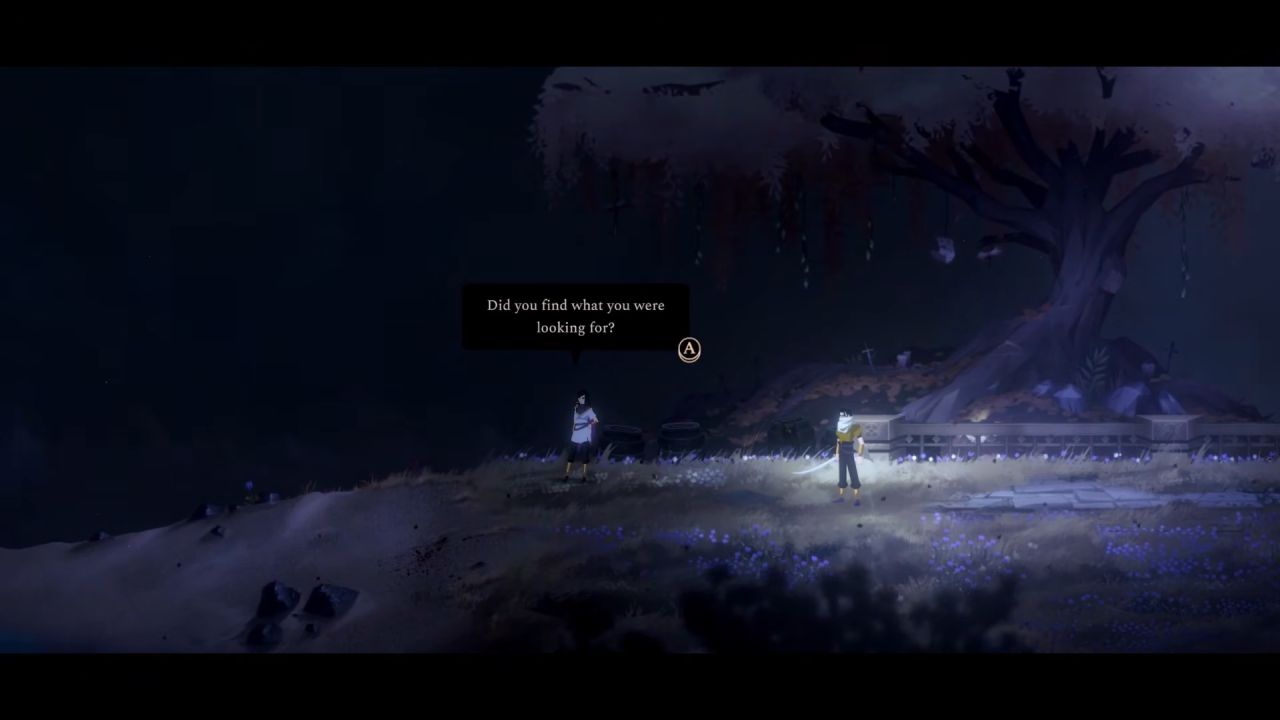
Unlocking the true ending takes effort, but it caps off a polished sequel.
The burn-everything finale asks for full flame presence and every poem and arcana card burned, and it wipes the save when it's done. That's a fitting way to close a game about fire, and backing up the file beforehand keeps the experience stress-free. A few more hints along the way would make the path to it even smoother.
Nocturnal 2 rewards players who pay attention. Every area has something worth finding, and the care that went into the world shows in small details. A gentler difficulty option and a few more collectibles would make it easier to recommend to casual players, but the foundation is already strong, and the people it's built for will have a great time.
Senior Editor, NoobFeed
Verdict
Nocturnal 2 is a gorgeous, fast-moving Metroidvania where fire drives both exploration and style. Combat balance and a clearer finale would help, but at this price, it is an easy pick for genre fans.
85
Related News
No Data.