
Sovereign Tower Review
PC
A leper takes the crown, a demon offers a second chance, and a kingdom asks you to figure out what kind of ruler you actually want to be.
Reviewed by Azfar Rayan on Aug 16, 2026
Sovereign Tower comes from Wild Wits Games, a small studio that already has a distinct visual fingerprint from its earlier title, Crown Gambit, and that same hand-painted, storybook look carries straight into this new project. Curve Games published the game, and if you know your genre touchstones, you'll clock the influences fast.
There's a bit of Reigns in the rhythm of daily decisions, a bit of This Is the Police in the way you're juggling limited resources against constant demands, and more than a passing resemblance to Dispatch in how you're assigning a roster of unique personalities to missions and hoping you paired them correctly.
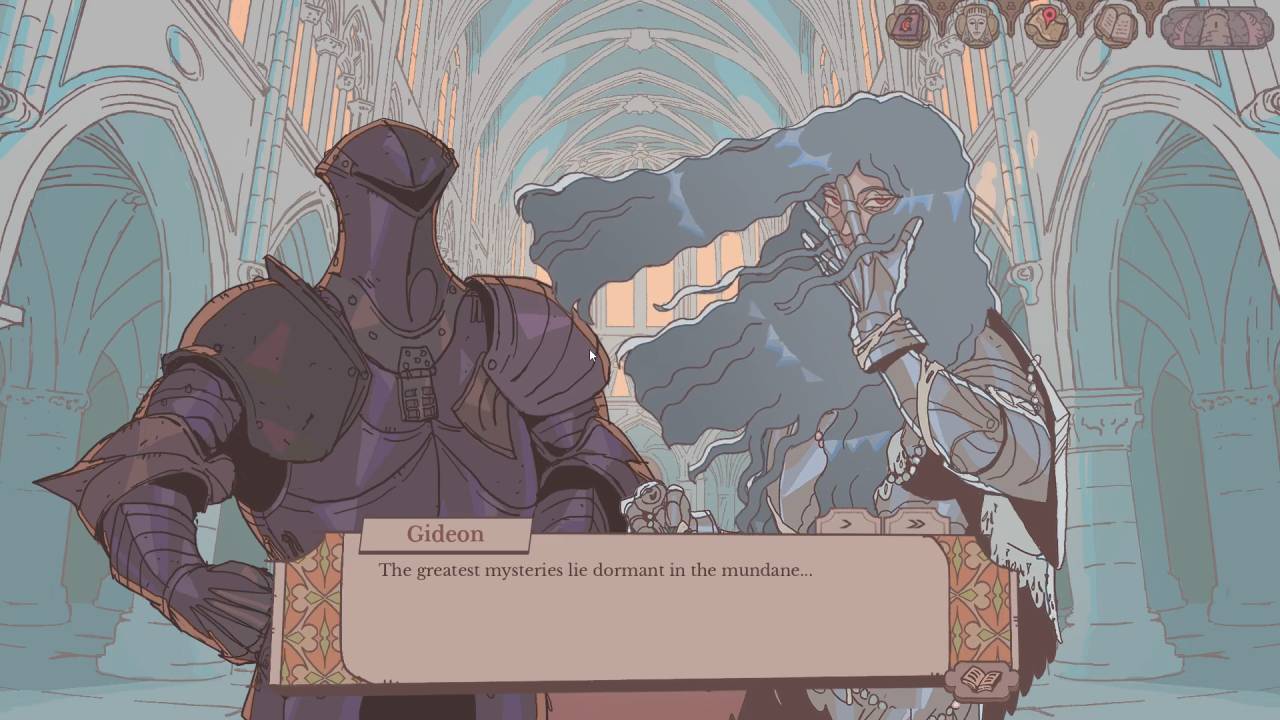
That mash-up of influences plays out through a leper's unlikely rise to the throne.
Sovereign Tower borrows from all of that, but it stretches the format into something with more narrative weight and a much stranger central hook: the ability to rewind time itself. For a studio this size, the ambition on display here is honestly impressive, even if the final product doesn't quite stick the landing every time.
You start the game as a leper, fleeing a burning town during an attack, and in the chaos you make a handful of early choices that don't feel especially consequential in the moment but end up shaping how the world perceives you later. You stumble toward a sealed tower that hasn't opened for over a hundred years, not since its last ruler was struck down by a figure known only as the Kingslayer.
A key finds its way into your hand, the doors part for you and you alone, and just like that you're the new Sovereign of a kingdom that hasn't had a leader in a century. There's a prophecy behind it, something about being chosen by the gods, but Sovereign Tower doesn't lean too hard into destiny talk. Instead, it drops you into the actual job of ruling almost immediately.
The overarching plot unfolds across three acts. Each act builds toward a confrontation with a major threat. About halfway through each act, you get a preview of who that threat is before the fight actually happens. You're also given some say in how you prepare for these clashes. You can lean on the backing of nobles, merchants, scholars, or the common people.
Beneath that main plot lies a hidden goal, along with the daily ruling loop that shapes it.
In practice, though, the outcome of these bigger confrontations doesn't shift all that much, no matter which faction you rally. Underneath all of that, there's a second key you're hunting for, a golden one, and the entity actually trying to stop you from reaching it isn't the imposing villain you're introduced to at the start.
It's someone far more low-key, someone you barely interact with until deep into the final act, and the story wraps up not long after that reveal. It's an interesting narrative idea that just doesn't get the room it needs to fully land. Once you're settled into the tower, Sovereign Tower's daily loop becomes second nature fast.
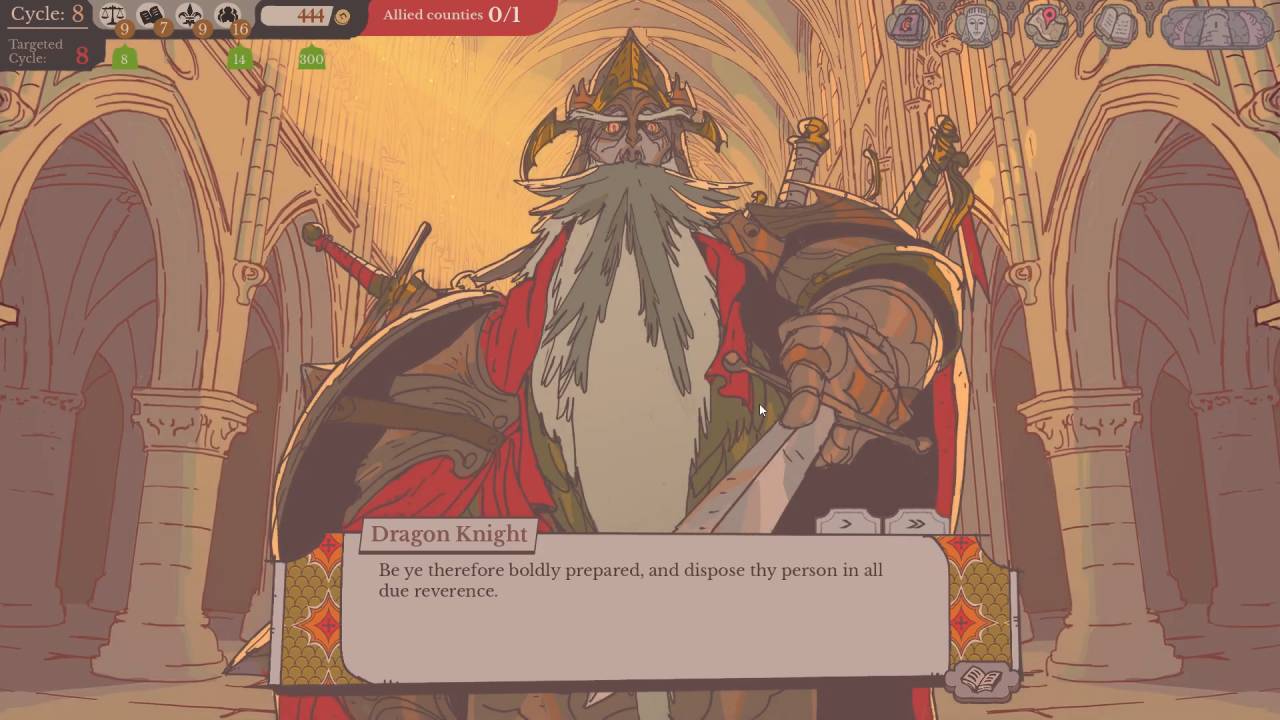
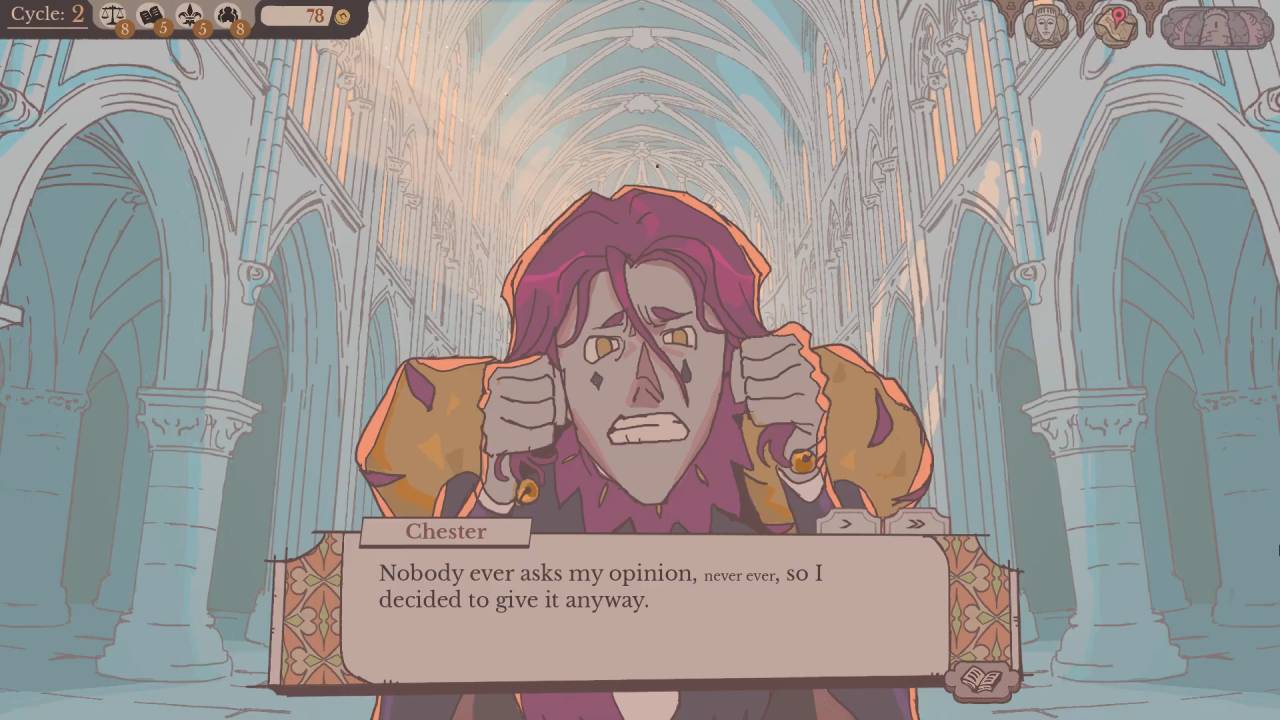
Your day begins with an audience, where you hear out a rotating cast of nobles, commoners, scholars, and merchants who show up with problems, requests, or opportunities to recruit new knights to your side. How you respond to each of them gets sorted into one of four ruling styles: Audacity, Wisdom, Tyranny, and Kindness.
Lean into one enough, and you'll rank it up, which unlocks new dialogue choices tied to that style further down the line. It's a smart way of making your early, seemingly throwaway answers actually matter later, since the game keeps track of the kind of ruler you're becoming even when you're not thinking about it.
With your ruling style set, the next task is to build and deploy your Round Table.
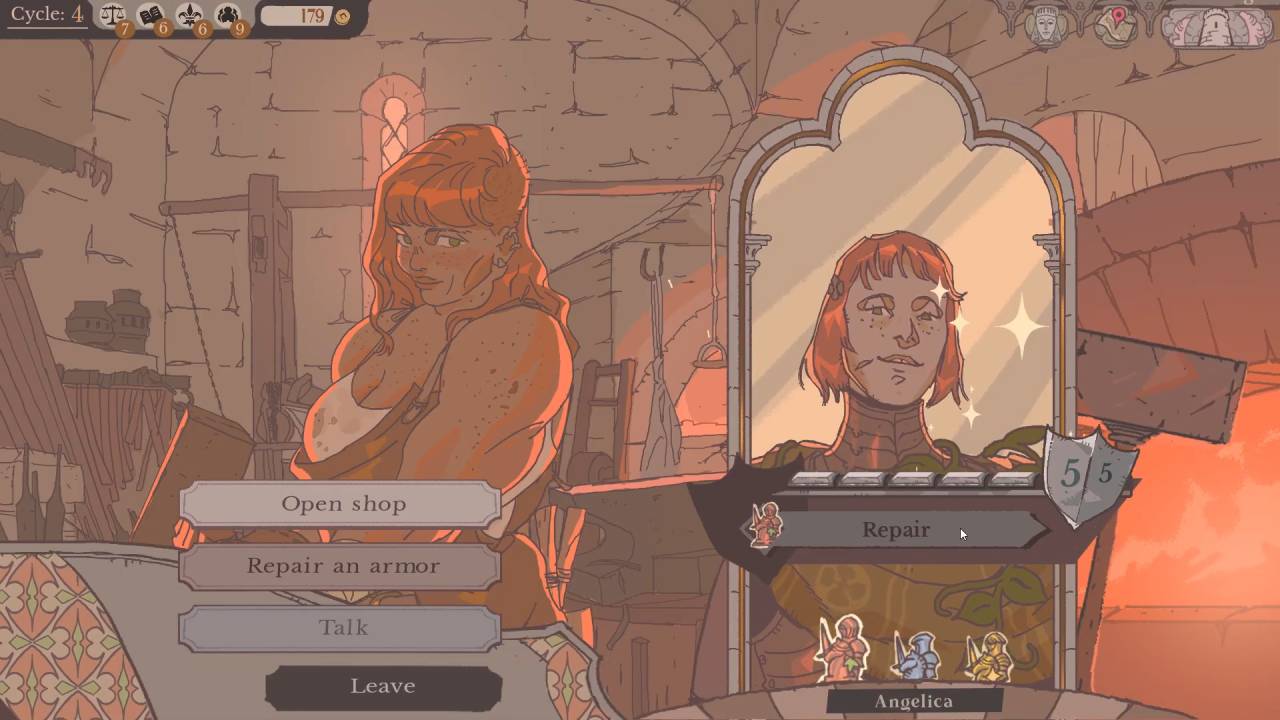
From there, you're managing your knights and sending them out to handle whatever needs handling, whether that's a monster attack, a diplomatic dispute, or something stranger. As you recruit new people to your Round Table, the tower itself grows with them, adding new rooms like a blacksmith, a magic tower, a training area, a kitchen, and a map room where you can keep tabs on knights currently away on missions.
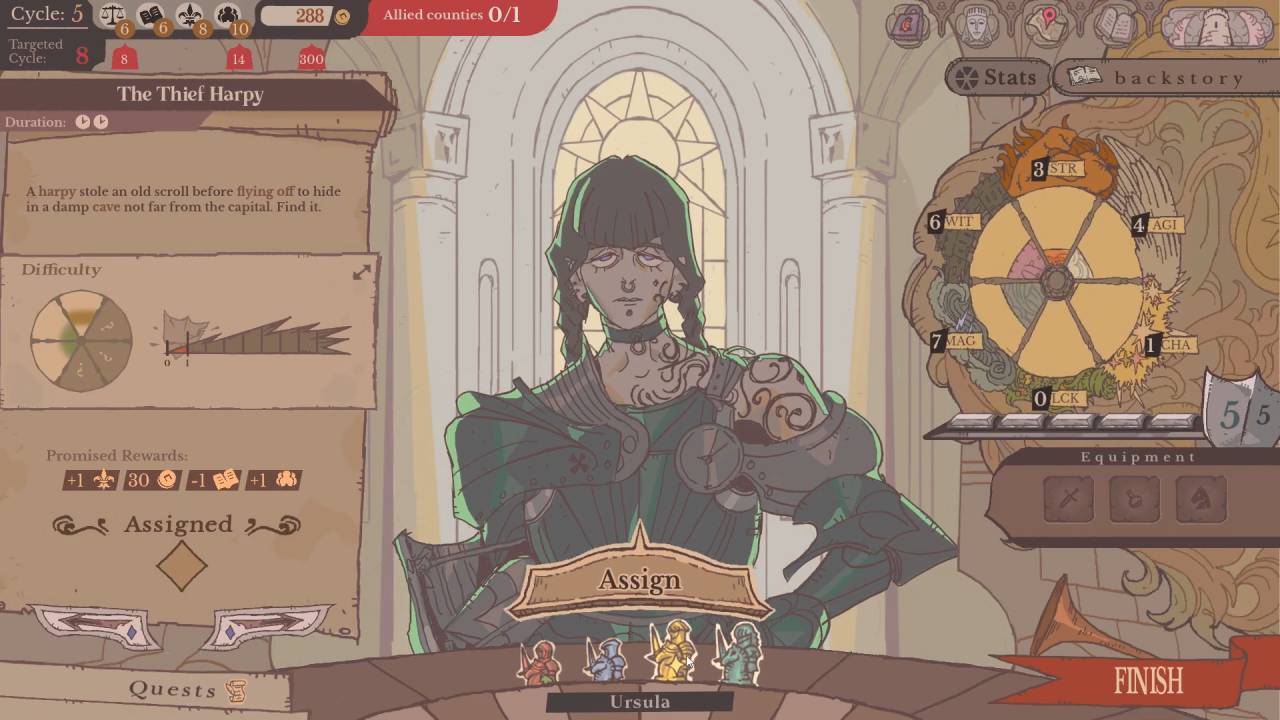
Each knight comes with their own stats covering things like strength, agility, charisma, luck, magic, and wit, plus a set of personal traits and preferences you have to actually get to know through conversation or, if you're feeling less scrupulous, by having an advisor quietly spy on them. You'll also be juggling weapons, armor, consumables, and mounts for each of them, since gear can shore up a weak stat or push a strong one even further.
There's no traditional combat in Sovereign Tower in the sense of controlling a fight directly. Instead, the game's versions of combat and puzzle-solving both come down to matching the right knight, with the right stats and disposition, to the right mission.
Send an animal lover to slaughter a pack of wolves, and you might get a bad outcome, or you might stumble into a completely different, better resolution where they talk the animals down instead. That unpredictability is genuinely one of the best parts of Sovereign Tower early on, because it forces you to actually pay attention to who you're working with rather than just picking whoever has the highest numbers.
That said, the mission-matching system has a few rough edges worth a quick look.
The problem is that the logic behind these special outcomes never becomes fully readable. You'll try to be clever, pairing someone whose skill set seems perfectly suited to a job, and get nothing for it, while some completely unrelated pairing triggers a unique result you never would have predicted. It's charming the first handful of times, and frustrating once you realize there isn't a consistent rule you can learn.
The bigger issue with the mission system shows up once you've played long enough to understand it. Early on, your knights genuinely differ from each other: someone fast but frail, someone strong but not especially clever, and you have to think carefully about who goes where.
As you keep playing Sovereign Tower, you'll notice the smartest long-term strategy is just to level everyone into fairly even, well-rounded stat blocks and then use gear to patch whatever's missing for a specific job. That flattens a lot of the personality out of the mechanical side of things, and by the back half of the game you're mostly managing a roster of similarly capable all-rounders instead of a group of knights with real, distinct strengths and weaknesses.
Gear management itself becomes a bit of a slog too, since there's no way to sort or filter your inventory, so you end up scrolling through long lists trying to remember what half of it actually does. Your knights gain experience from completing quests, and when they level up, you get to place a stat point wherever you want, either reinforcing what they're already good at or covering a gap.
Beyond stat growth, there's a demon in the tower's lower levels offering a stranger kind of power.
This system works fine in isolation and gives you a real sense of shaping each knight over time, but it's also the exact mechanic responsible for that late-game sameness, since nothing stops you from just rounding everyone out until they can competently handle almost anything. There's satisfaction in watching a knight grow into someone capable, but it does mean the build variety Sovereign Tower starts you off with slowly erodes the longer you play.
Then there's the demon. Tucked away in the tower's lower levels is a demon bound to some kind of magical artifact, and it offers you the ability to rewind time back to the start of your current act, keeping full knowledge of everything you learned in the timeline you're erasing.
It's genuinely one of the cleverer ideas in Sovereign Tower, because it takes the impulse every visual novel player has to reload and try a different choice and turns it into an actual part of the fiction instead of something you're doing behind the game's back.
New dialogue options open up once you know what's coming, characters react differently when you clearly already understand their situation, and you can skip past conversations you've already sat through once. The game does gesture at consequences for leaning on the demon too heavily, warning you through other characters that meddling with time isn't free, but those warnings never really pay off.
Rewinding time sounds freeing, but it wipes out more than just conversations.
You can rewind constantly, and the story doesn't punish you for it in any concrete way, which undercuts some of the tension the setup is clearly going for. The rewind mechanic also runs into a practical problem: turning back time doesn't just undo a conversation; it undoes everything.
Every piece of gear you equipped, every knight you fed, every armor repair, every quest assignment, all of it resets along with the dialogue, so using the demon's power to fix one mistake means redoing a lot of tedious menu work just to get back to where you were.
Sovereign Tower runs for dozens of turns across a full playthrough, and if you're someone who wants to use time travel liberally, that tedium adds up fast. It's the kind of mechanic that sounds better on paper than it sometimes feels to actually use, and it's a shame, because the underlying idea is strong enough that a little more streamlining around it would have made a real difference.
Completing the game once isn't really the end of Sovereign Tower either. Regardless of how your first run wraps up, the demon offers you the chance to go again with everything you've learned intact, and this isn't a cosmetic bonus. A second playthrough opens up entirely new characters, factions, and quest lines you'd have no way of discovering blind, along with dialogue that acknowledges just how much you already know.
A repeat playthrough isn't just more of the same, since it reshapes the experience entirely.
It reframes the whole experience. Instead of making choices based on what feels right, you start making choices based on what you now understand the game is quietly rewarding. There's a genuine true ending buried under multiple full playthroughs' worth of setup. It isn't hinted at clearly enough to find by accident.
Reaching it means avoiding the demon's power almost entirely across an entire run. That runs directly against how the game spends its first playthrough training you to behave. Getting there takes real commitment, and when you finally see it, it isn't a triumphant reward so much as a quiet, somewhat bittersweet statement about giving up control rather than chasing a perfect outcome.
Visually, Sovereign Tower is one of its strongest assets. The whole thing is rendered in a soft, pastel, storybook art style that extends from character portraits down to the UI itself, and it holds together as a cohesive aesthetic rather than feeling like a random collection of pretty assets.
Character sprites carry a surprising amount of expression given there's no animation or voice work involved. Poses and portrait changes do a lot of heavy lifting to sell personality. Because your leprosy keeps you confined to the tower for basically the entire game, you don't see a huge range of locations.
The presentation isn't flawless either, with some bugs and rough edges in the text.
What is on screen — the throne room, the gardens, the knights' personal quarters — is detailed enough that the limited scope doesn't feel like a shortcoming. The interface isn't flawless, though. A few screens have bugs, certain characters' quest progress can glitch or fail to trigger properly, and there are enough typos and awkward phrasings scattered through the text that it's clear another editing pass would have helped.
The audio side of Sovereign Tower is quieter but effective. The soundtrack leans heavily on piano and stays understated rather than trying to underscore every dramatic beat, which suits the tone of a game that's mostly about conversation and quiet decision-making.
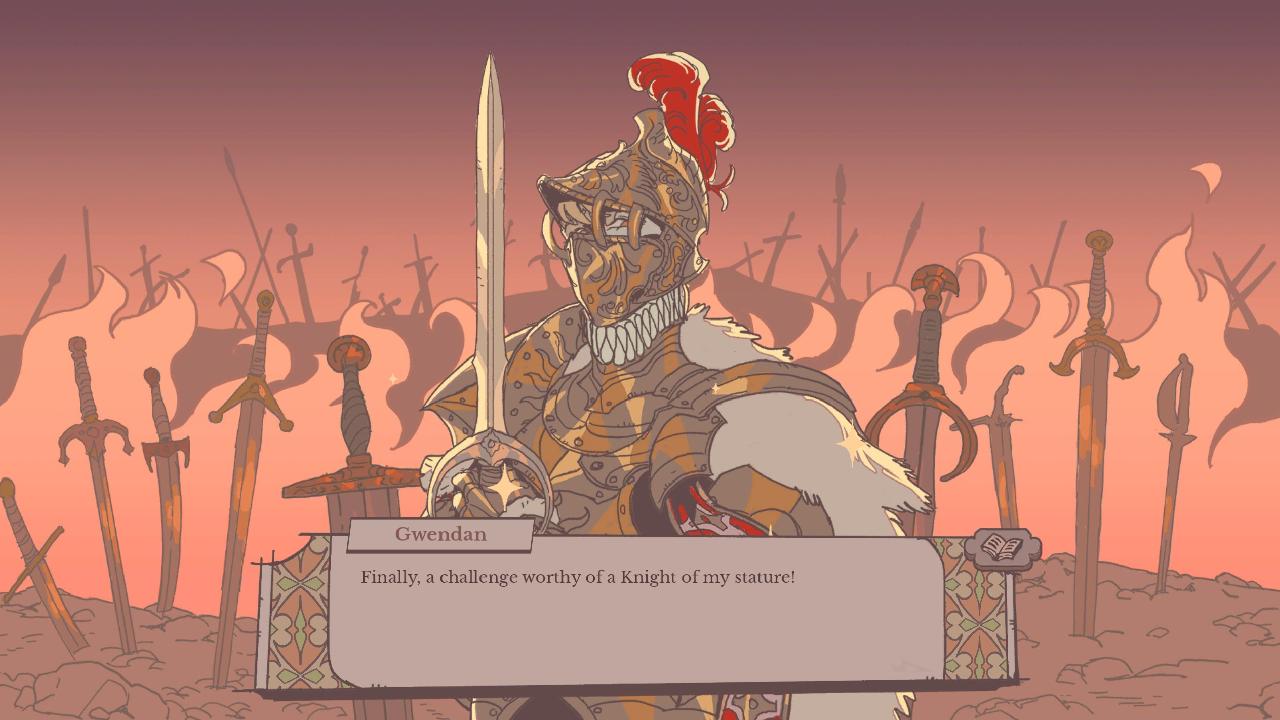
Small sound effects punctuate dialogue lines to give the reading text a bit more weight and rhythm, a simple trick that genuinely makes the game feel more alive than a typical visual novel where you're just clicking through blocks of text.
Taken as a whole, Sovereign Tower is a game built around genuinely interesting ideas, a time-rewind system with real narrative teeth, a cast of knights who feel individually crafted, and a setting that has more to say about power and rulership than it initially lets on.
With sound and visuals covered, it's worth stepping back to see how it all comes together.
It stumbles in the follow-through. The ending arrives abruptly, without the climactic weight the setup earns; the late-game knight builds collapse into sameness, the rewind mechanic asks for more tedious upkeep than it should, and the interface could use another round of polish.
None of that erases how much time you can sink into this willingly, though, and for a small studio's ambitious swing at blending kingdom management with a genuinely clever twist on choice-driven storytelling, Sovereign Tower earns the time it asks of you, even with its rough edges still showing.
Senior Editor, NoobFeed
Verdict
Sovereign Tower is a charming, ambitious kingdom-management game anchored by a genuinely clever time-rewind hook, and even with a few rough edges still showing, it earns every hour you put into it.
78
Related News
No Data.