
Star Trek: Outposts Unknown Review
PC
The latest Star Trek game puts scientific exploration and planetary management at the center of the experience. Still, slow progression, limited activities, and a lack of polish make this expedition harder to enjoy than it should be.
Reviewed by Sarwar Ron on Oct 21, 2026
Star Trek has explored many genres throughout its gaming history, from space combat and adventure games to strategy experiences that let you take command of the Federation's operations. However, the franchise has explored building colonies on alien worlds before, and the results haven't always been great.
Star Trek: New Worlds, released in 2000, attempted to bring planetary operations into the series, but repetitive resource gathering and awkward controls held it back. Now, more than two decades later, Star Trek: Outposts Unknown is giving the concept another shot.
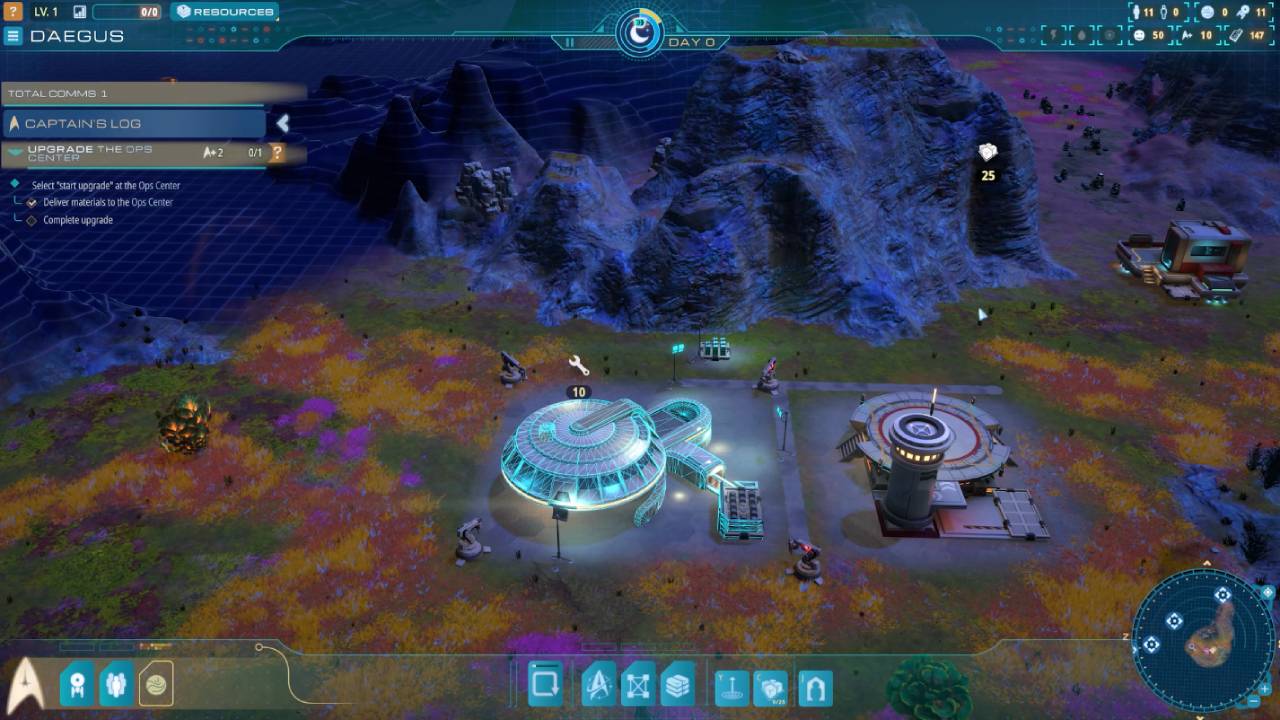
Developed by Magic Fuel Games and published by Playstack, Star Trek: Outposts Unknown takes a different approach to the franchise's usual formula.
Instead of taking control of a starship and sending you out to attack enemy ships, it focuses on building planetary outposts, managing Starfleet officers, gathering resources, and studying strange scientific phenomena. The idea fits a series built around exploration and discovery, letting you experience some of the work that goes into establishing a presence on an unfamiliar planet.
The game is available on Steam for $33, and unlike some smaller strategy releases, it launched as a full release rather than an early access project. That makes its current state particularly important. You're paying for what is available now, not a promise that the developers will eventually make it more substantial.
The game has interesting ideas, and the developers have already made adjustments based on player feedback. Unfortunately, the final experience still feels like it needs more time to grow. Star Trek: Outposts Unknown offers a different way to experience the Star Trek universe, but its slow pace, limited activities, and occasional frustrations make it difficult to recommend at full price.
The story puts you in command of the USS Resonant, sending you into an uncharted corner of the galaxy to investigate a mysterious Tetrion Rift that threatens an entire civilization. During your expedition, you make contact with an alien species and begin colonization of some of their worlds.
Your task is to explore your surroundings, gather materials, build research outposts, and advance science.
The developers have said your contact with alien life is limited to this single alien race, so don't expect to meet multiple civilizations or befriend multiple alien factions. The focus is on helping this species set up a colony while investigating the rift's danger.
That gives the game purpose, even if it lacks the variety you might expect from a bigger Star Trek adventure. Your top priority is the nuts and bolts of running an expedition, not bouncing between civilizations and complex diplomatic situations. You need to build facilities, keep your crew employed, acquire the resources you need, and keep studying the phenomena around you.
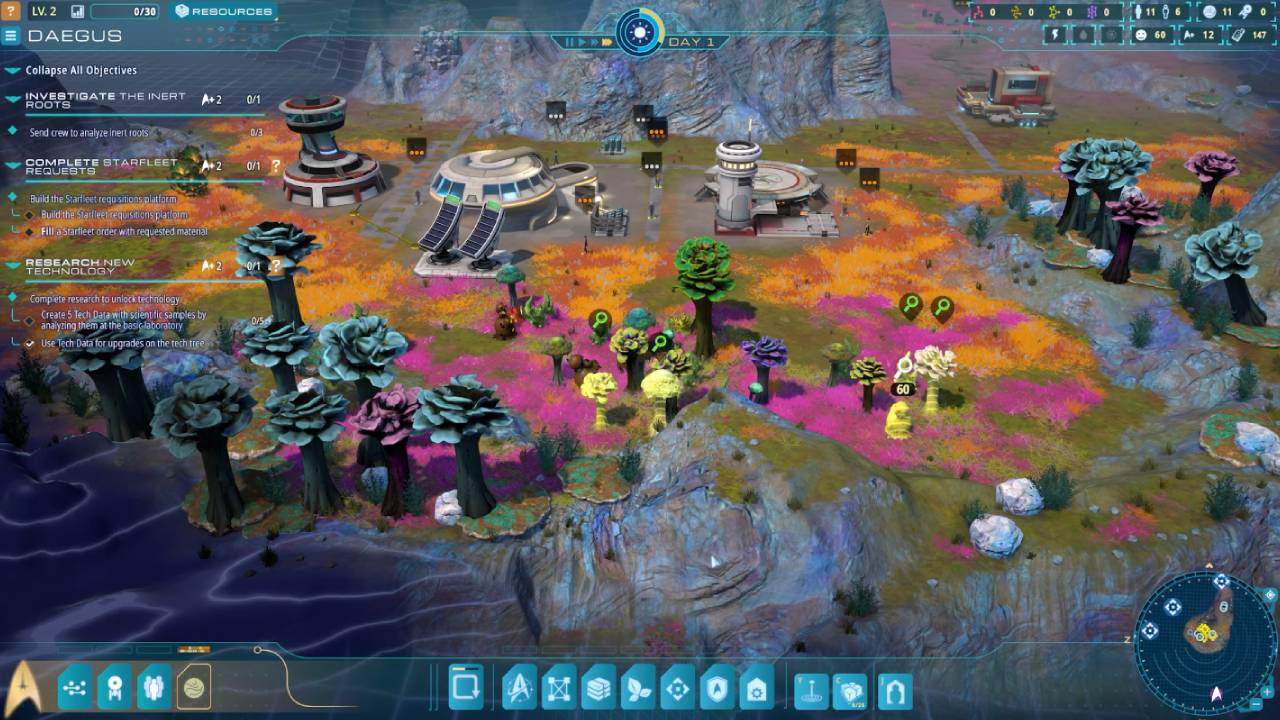
The premise fits the franchise well. Star Trek was never just about fighting. Many of the most memorable stories focus on scientific discoveries, alien environments, and problems a phaser can't solve. Star Trek: Outposts Unknown understands that exploration can be an important part of the experience, though it doesn't always make the process as engaging as it sounds.
One of your first decisions is choosing your captain. You can choose between two predefined options, but you can't customize your character any further. You cannot freely customize your appearance or build a unique identity for your character, which feels like a missed opportunity in a game where you're supposed to lead a Starfleet expedition.
You also cannot name your ship, though that is a relatively minor complaint, since Starfleet vessels already have established names in the franchise.
Still, letting players personalize their ship would have helped them feel more connected to the expedition. You can choose a personal catchphrase, which adds a small amount of customization, but it doesn't compensate for the lack of meaningful character options.
The writing is another place where the game stumbles. The story takes place in the Star Trek: Discovery universe, but the dialogue seems often too modern and joke-filled. Characters will often joke when a more serious conversation would be more appropriate. Instead of allowing the scientific mission and the threat surrounding the Tetrion Rift to carry the narrative, the writing sometimes interrupts the atmosphere with humor that feels out of place.
You also spend an unexpected amount of time having characters talk about coffee. Even conversations about practical survival problems, like protecting a colony from acid rain with an energy shield, can drift into coffee talk. While these moments don't necessarily ruin the story, they do make the dialogue repetitive and take you out of the situations you're supposed to care about.
The crew system also lacks the variety you'd expect from a Star Trek game.
Your officers come from a predefined roster, rather than letting you freely select characters from a larger pool of specialists. You might want a particular Vulcan science officer for their abilities, but the game doesn't offer the same freedom as a system where you can assemble your own squad.
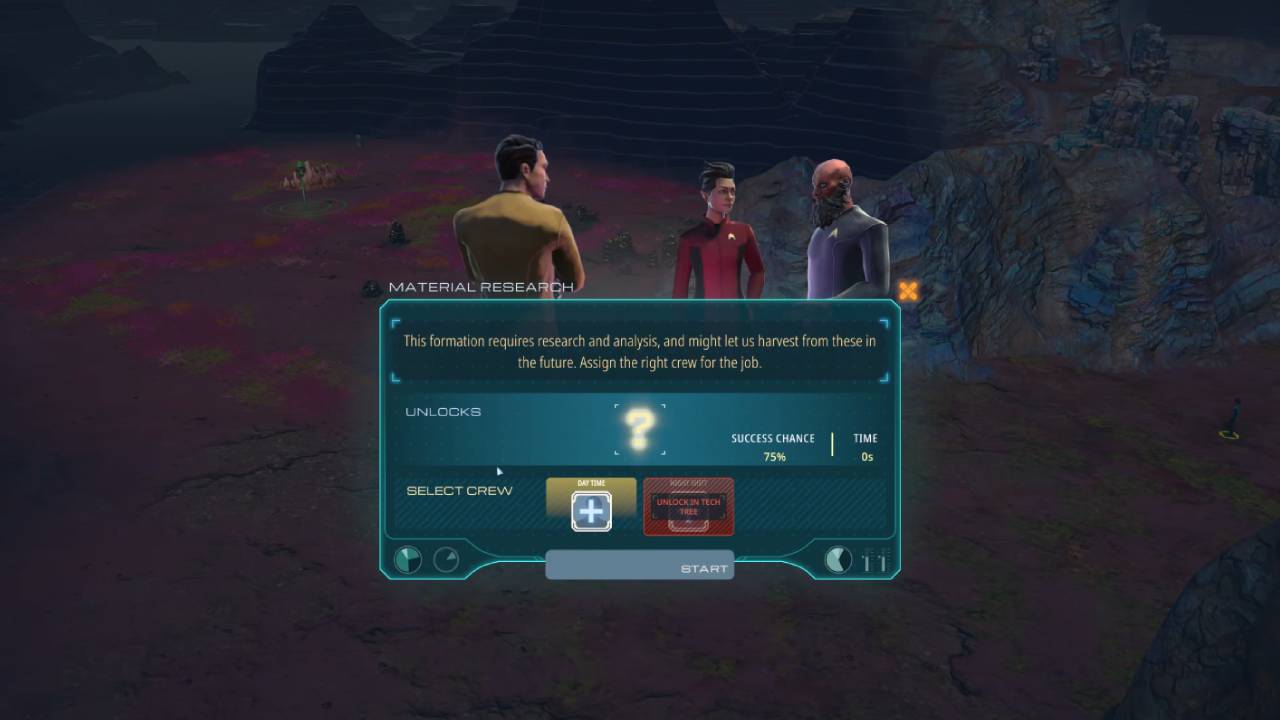
This is disappointing because the franchise has a wide range of species and characters to draw from. Instead, the available crew members seem to be clustered around humans, Vulcans, and Andorians. More familiar Star Trek species would have made each expedition feel more unique and given you more reasons to play around with crew combinations.
Star Trek: Outposts Unknown is fundamentally a real-time colony builder. You build a viable colony on an alien world while commanding a team of Starfleet officers with diverse tasks. Science officers examine objects and resources, engineers maintain facilities, medical personnel treat injuries, and security officers handle threats.
As the settlement grows, you assign jobs, organize schedules, and develop your officers.
Rather than treating the crew as an anonymous workforce, the game gives each specialist a role that reflects the responsibilities of a proper Starfleet expedition. This is one of the design's more appealing aspects because it ties the management mechanics to the setting.
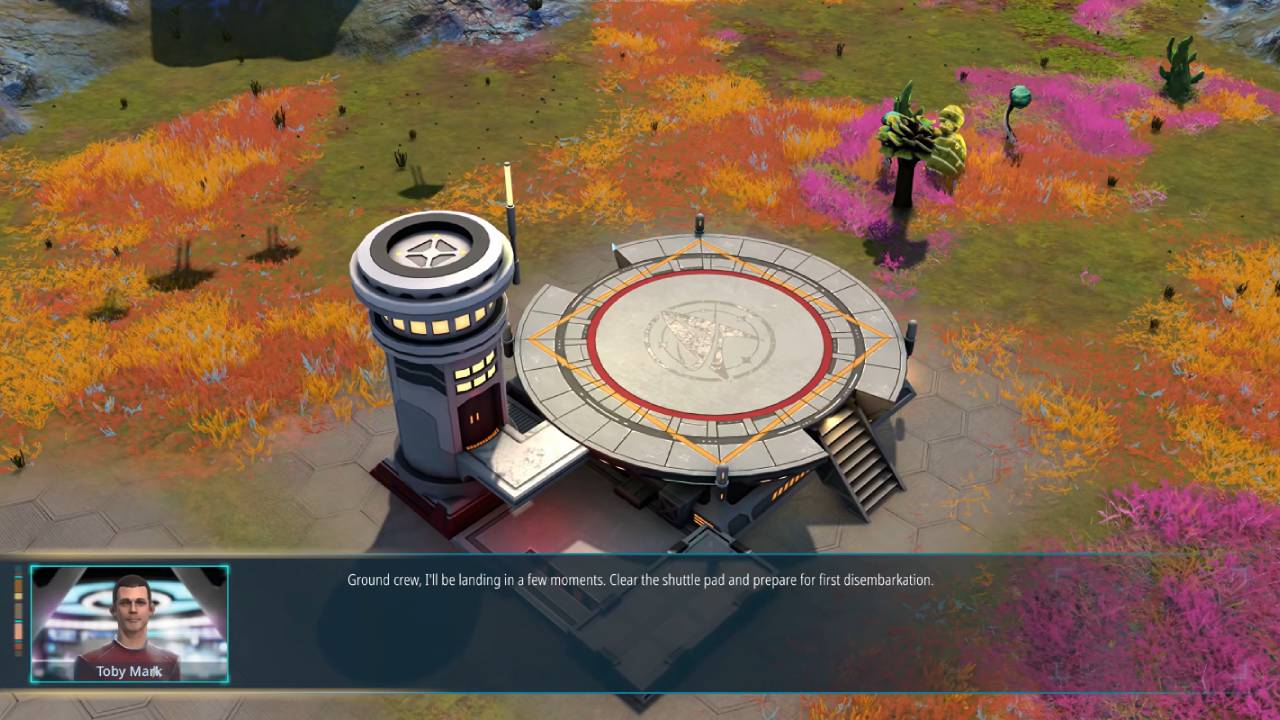
This game also differs from traditional colony simulators in how people live. Your crew members live aboard the USS Resonant, so you don't initially need to build houses for everyone working on the planet. Instead, you establish a landing pad where officers arrive for their shifts before heading out to perform their assigned tasks.
It's a relatively simple idea, but it gives the game a distinct identity. You're not immediately responsible for building an entire residential community, and you can focus on establishing the facilities needed for the expedition. Eventually, however, you'll recruit enough people to need additional accommodation, letting the settlement grow beyond its initial facilities.
Star Trek: Outposts Unknown also removes several familiar colony-simulation systems.
You don't have to maintain traditional food supplies, run farms, or constantly worry about water the way you do in many other games in this genre. There's a morale system, but it rarely feels like a major concern, and its effects aren't always clear enough to make managing it particularly interesting.
This sets it apart from something like Stranded: Alien Dawn, where keeping your people alive and meeting their needs is central to the experience. The focus here is on industrial production, research, and expedition organization, not the basics of survival.
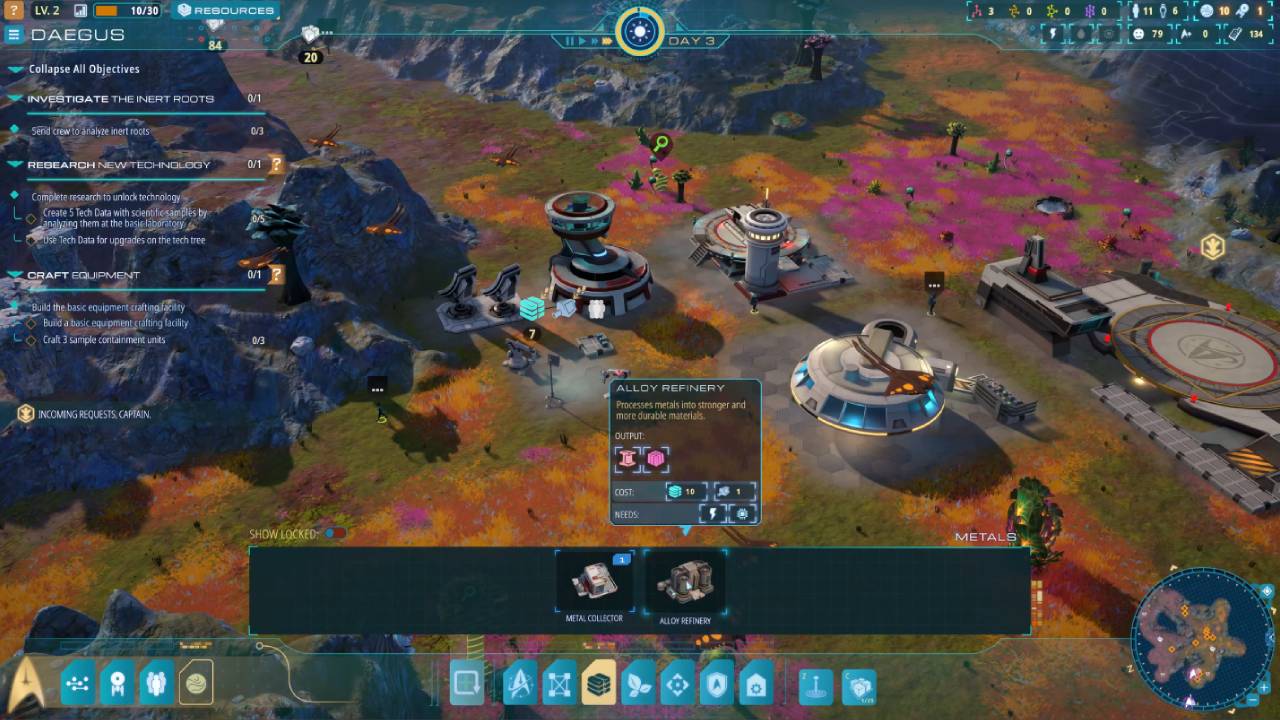
Unfortunately, these differences don't always translate into better gameplay. You still spend a lot of time gathering materials, processing them, and building new facilities. The game removes some usual survival mechanics for a more tech-heavy system, but the core process remains recognizable.
The further you go, the more important resource management becomes.
You need metals and biomass for construction and research; you must collect, refine, or transport other resources before you can use them. The game features more than 55 resources to research, gather, process, and move between locations, so there's plenty to keep track of as your expedition expands.
The problem is that nearly every activity takes longer than it should. You might have more than enough metal to build a structure, yet your crew can spend several in-game days gathering and delivering the materials before construction even begins. Even when you've already collected several times what you need, you can find yourself waiting for officers to finish tasks that should be relatively straightforward.
That waiting becomes one of the biggest problems with the overall experience. You issue commands, organize your workforce, and prepare the resources needed for the next stage of your settlement, only to spend much of your time watching the game carry out those instructions.
There's very little to do while you wait, and the slow pace makes even simple construction projects feel like chores.
The resource system also becomes more complicated as you unlock additional technologies. You gather materials, turn them into other resources, and manage the supply chains that keep your facilities running. Buildings need power, water, and computing power. Production becomes increasingly dependent on having the right materials available.
Some missions also ask you to send resources to Starfleet. This fits the setting, but it can interfere with your current plans, as you have to haul materials elsewhere instead of using them to expand your settlement. When gathering and processing resources already takes so long, these additional demands can make progression feel unnecessarily drawn out.
The game does, at least, offer a few interesting systems.
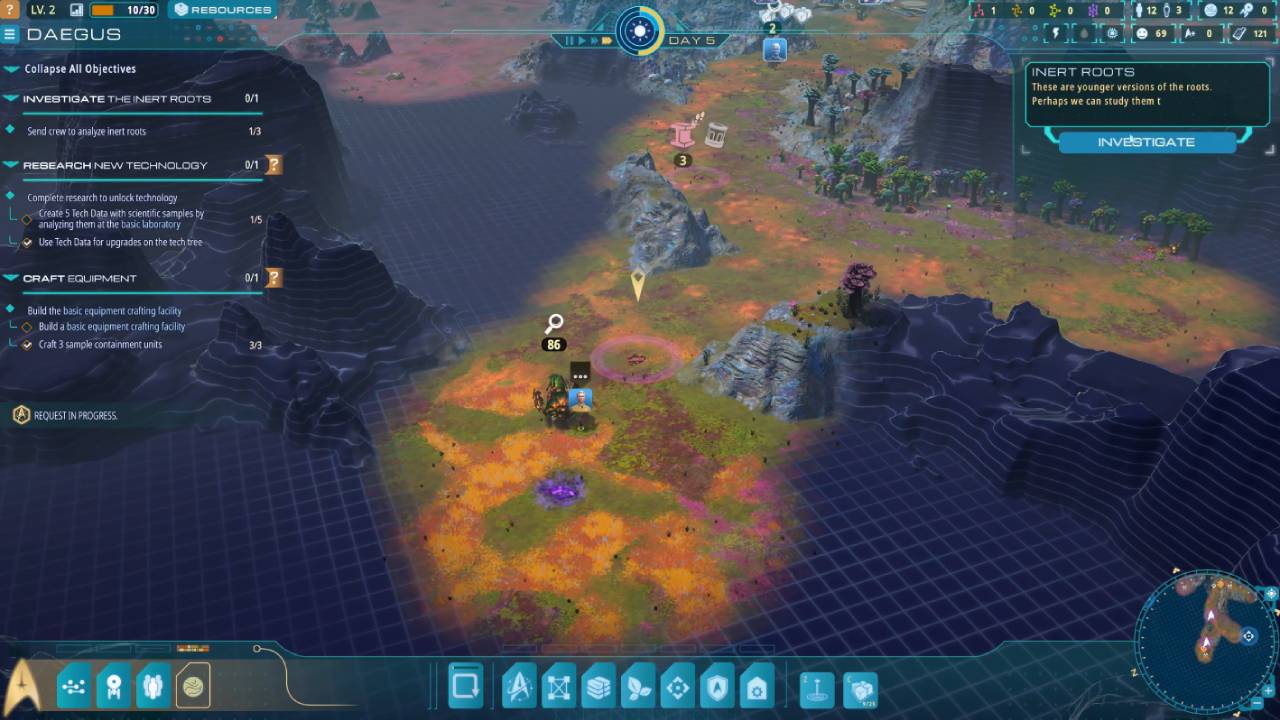
Scientific exploration is more than a decorative feature, as your officers can use tricorders to investigate objects, formations, and resources. These results contribute to the research, open new possibilities, and move the story forward.
Here's where Star Trek: Outposts Unknown most closely approaches the appeal of Star Trek. Instead of making every uncharted zone a place to conquer with combat, it gives you a reason to explore. Research and settlement management could form a satisfying loop, where each discovery helps you build a better expedition.
Different planetary environments also add variety. The developers have unveiled three planets, Dus, Karu, and Naral, each with their own environmental characteristics and challenges. Koru is also described as icy and volcanic, but the text doesn't make it clear how it fits into the three-planet structure. Naral is depicted as the most hostile of the revealed locations, and the text hints that future expeditions will require more preparation.
You can also transfer resources between planets, letting one settlement supply materials another lacks.
This could create a network of specialized outposts rather than simply expanding a single base indefinitely. Biological resource collection ties into replanting and restoring local ecosystems, giving environmental management a role alongside industrial development.
These are good ideas, but they'll only work if the game can handle the underlying management systems smoothly. If it takes forever to haul materials, assign jobs, build buildings, then the increased complexity is just one more thing to be annoyed by, not one more reason to play.
There's combat, but it's not the game's main draw. Security teams can handle dangerous aliens. The trailers have shown them fighting hostile creatures, such as tentacle-like monsters. Combat seems like a fairly small part of the overall experience, though, and it doesn't feel as deep as you might expect from a game built around tactical encounters.
Limited combat isn't necessarily a problem, since you're mainly here to found colonies and conduct scientific research.
Not every Star Trek game has to be about ship-to-ship combat or run-and-gun action. The issue is that the other activities need to be engaging enough to carry the experience, and the slow pace of resource management often makes that difficult.
One of the more frustrating design choices is the night cycle. In the early stages, nighttime can feel like a period when the game simply stops giving you meaningful things to do. Your officers aren't available, or some activities stop, and you have to wait until the next working period.
The developers have responded to complaints by adding night shifts, direct crew commands, vehicles, and permanent accommodation. These changes are designed to give you more flexibility in the management systems and to cut the time you wait for your crew to be available. They are welcome improvements, especially as the original pacing issues hampered such a large chunk of the experience.
Magic Fuel Games has also changed construction costs, resource gathering, and supply deliveries based on feedback from the public demo.
These tweaks suggest the developers know where the game fell short and are trying to improve the experience. As the story progresses, shield generators that protect settlements from Tetrion radiation add another layer of management challenge.
But when you are managing over 55 resources across multiple planets, the interface and automation have to be reliable. Otherwise, these added systems could make the game feel more like a series of administrative tasks than an engaging strategy experience. You should be able to plan a settlement, assign your crew, and see your decisions pay off without spending a ridiculous amount of time waiting for basic tasks to finish.
The tutorial does a good job introducing the basics, and the instructions follow the story's progression. But it can feel dull, and the UI doesn't help. The menus are hard to navigate, the text is small even at the largest setting, and tooltips aren't consistently available when you need them.
These problems make the resource system more difficult to manage than it needs to be.
With so many materials, production needs, and interconnected facilities to track, clear information is paramount. When the interface doesn't explain something properly, you're left trying to work out what went wrong instead of focusing on the next stage of your expedition.
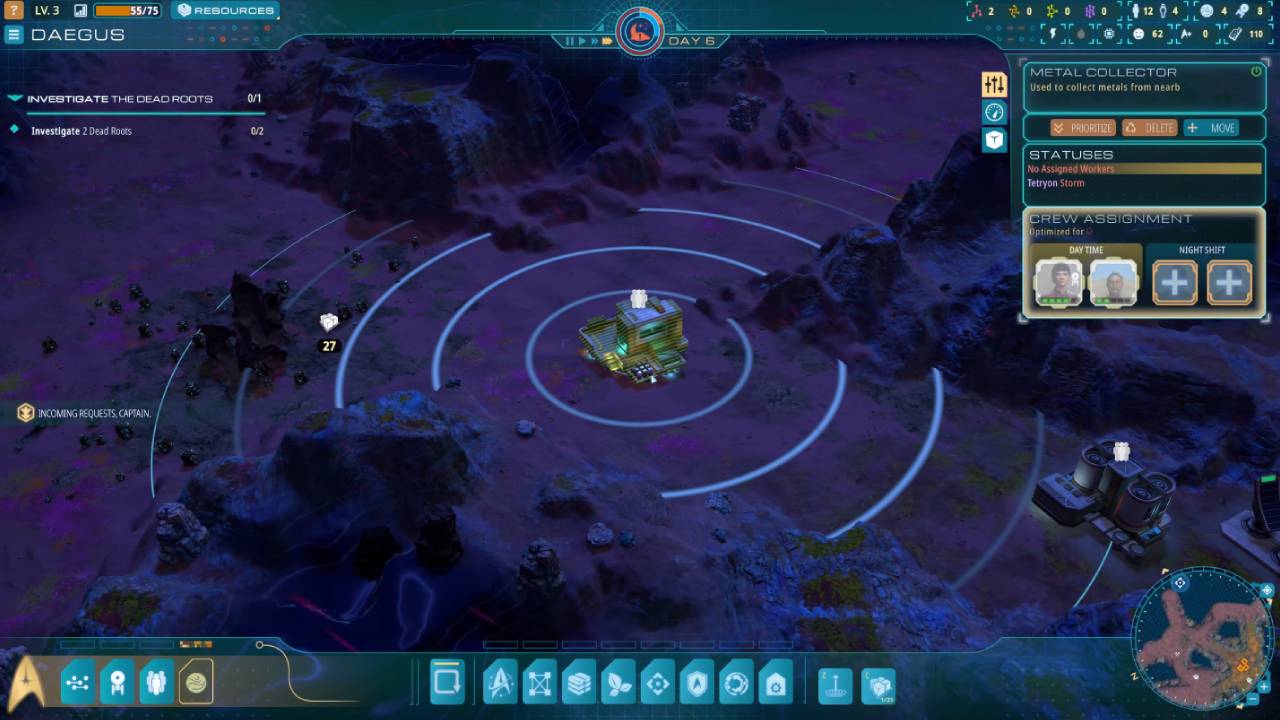
Performance is one of the game's stronger points. During testing, the game ran smoothly even at maximum graphical settings, with no crashes, clipping problems, or other significant technical issues. That stability is welcome, particularly in a management game where you're expected to spend extended periods building and expanding your settlement.
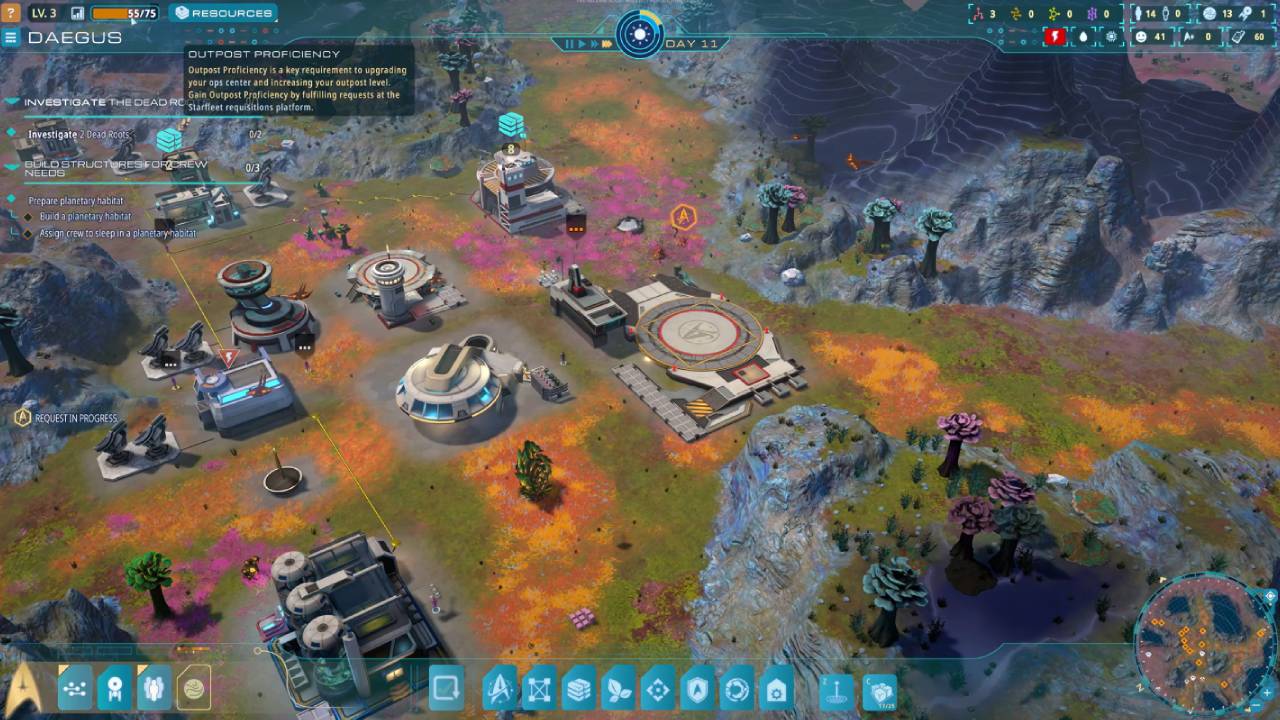
Visually, however, the results are mixed. The buildings themselves look decent, and zooming in on individual structures reveals reasonably well-presented models. The colors are bright, and the different structures give you enough visual distinction to recognize what you're building.
Beyond that, the graphics can feel lacking in detail, contrast, and movement.
Some of the presentation also resembles a mobile game, and the bright colors can become uncomfortable during longer sessions. The visuals aren't terrible, but they don't do enough to make exploring alien planets feel as interesting as the premise suggests.
The sound design is another weak point. The music is one of the stronger elements, capturing a familiar Star Trek atmosphere. Unfortunately, the generic sound effects don't always fit the setting, and the lack of environmental audio makes some scenes feel strangely empty.
Voice acting is limited as well. You hear brief voice lines when interacting with crew members, but much of the experience lacks the spoken dialogue that could have brought the expedition to life. At times, you'll arrive on a planet and notice there's practically no sound. Without enough environmental ambiance, the locations feel less convincing than they should.
The writing makes the problems worse.
The never-ending jokes and overuse of coffee references can get tiresome, especially when the subject matter involves a serious threat. Better dialogue, more diverse crew members, and a stronger sense of atmosphere would have helped make the expedition feel like a genuine Star Trek adventure.
Star Trek: Outposts Unknown has an interesting idea, but it doesn't always live up to its potential. It blends scientific discovery, colony building, crew management, and planetary logistics, which makes it feel different from some of the franchise's more combat-oriented games. Moving resources between planets and building specialized settlements also provides a satisfying long-term goal. But the slow pace is difficult to overlook.
Collecting materials, moving supplies, building structures, and processing resources can take so long that you spend more time waiting than making any real choices. The night cycle and inconsistent interface add to the problem, while the limited crew customization, repetitive writing, and underwhelming presentation make the experience feel less polished than it should.
The game has already received adjustments based on player feedback, and the developers have introduced systems intended to make crew management and planetary logistics more flexible. That willingness to respond to criticism is encouraging, but it doesn't automatically make the current experience worth its asking price.
At $33, Star Trek: Outposts Unknown is difficult to recommend to anyone looking for a polished colony simulator.
The Star Trek setting gives the game an appealing foundation, but the license alone doesn't justify the price. If you're particularly interested in scientific exploration and planetary management, keep an eye on future updates. For everyone else, waiting for a substantial discount is the safer choice.
Star Trek: Outposts Unknown doesn't need to become a completely different game to work. It needs to make its existing systems more responsive, give you more meaningful activities between construction projects, and make scientific exploration feel rewarding rather than another step in a lengthy resource-gathering process. With those improvements, its central idea could become something worth returning to. For now, though, this expedition still has plenty of work to do.
Admin, NoobFeed
Verdict
Star Trek: Outposts Unknown offers an interesting mix of scientific exploration and colony building, but slow progression, repetitive writing, and limited activities make it difficult to recommend at $33. Wait for a discount.
58
Related News
No Data.