
The Alters: Last Variable Review
PC
11 bit studios turns one unresolved ending into a thoughtful survival expansion filled with strange science, difficult choices, and surprisingly human moments.
Reviewed by Mahi Araf on Jul 15, 2026
11 bit studios has built a reputation for making survival games that care as much about people as they do about mechanics. This War of Mine explored the civilian cost of conflict, while Frostpunk turned city management into a constant moral balancing act. The Alters felt like the studio, combining those strengths into something stranger and more personal.
Instead of managing a group of unrelated survivors, you were forced to live with different versions of yourself, each shaped by a life that could have been yours. When The Alters launched, it stood out among sci-fi survival games for not focusing on fighting aliens or building a sprawling empire.

The hook was psychological. Jan Dolski created alternate versions of himself using the mysterious resource Rapidium, and those Alters came with their own memories, professions, and personalities. They were not simple clones or worker units. They argued, got frustrated, celebrated small victories, and sometimes made your life much harder.
The Alters: Last Variable takes one of the base game's most intriguing possibilities and turns it into a full campaign.
If Jan Scientist was allowed to remain on the alien planet and continue studying the Oasis, this expansion explores what happened afterward. By centering the story on a self-absorbed, socially awkward scientist who willingly chooses isolation, the DLC immediately feels different from the desperate survival tone of the original adventure.
That change in perspective gives the expansion a stronger identity than many story add-ons. Rather than feeling like cut content or a side mission, The Alters: Last Variable feels like a second chapter that reinterprets the original game's themes. You return to familiar mechanics, but the goals, the pacing, and the emotional payoff are all aimed in a new direction.
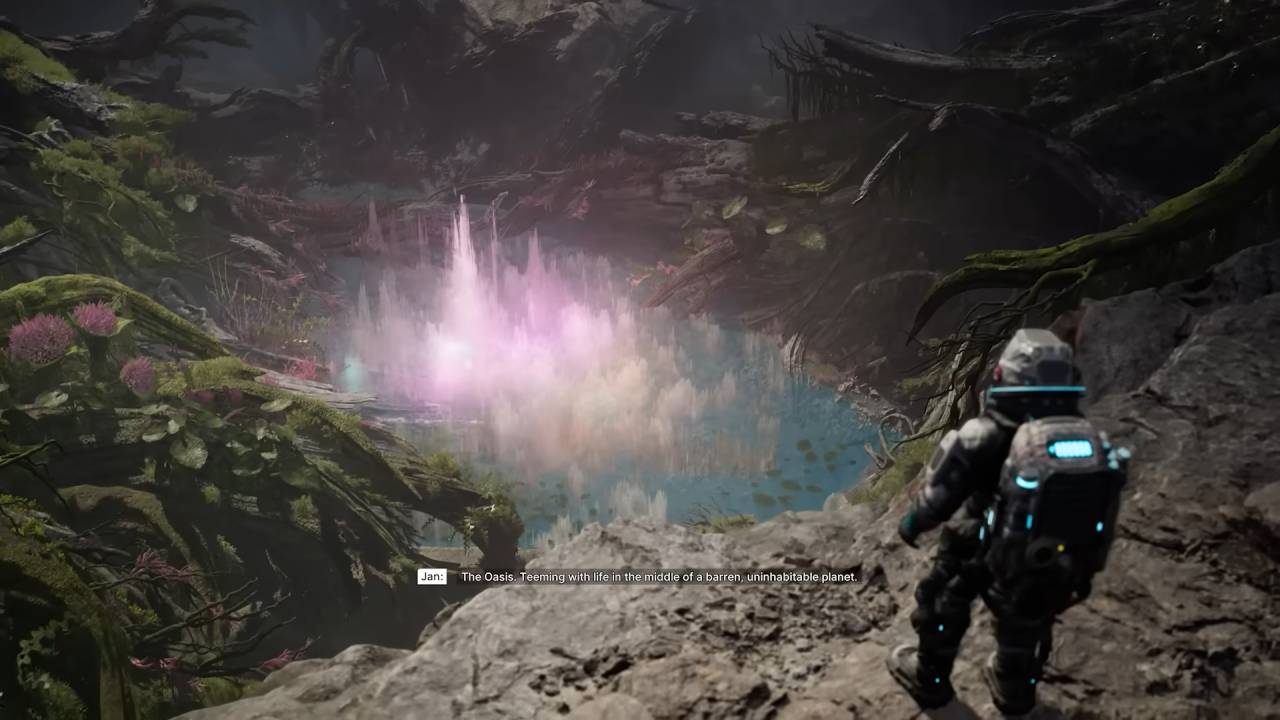
The story begins after the events of The Alters, with Jan Scientist having spent years trying to understand the Oasis. This region is the only place on the planet untouched by the devastating sunrise that wipes out everything else for years at a time.
The original Jan Scientist has grown old during his research and, in his final moments, creates another version of himself to carry on the work. You step into the shoes of that new Jan, inheriting a damaged underground laboratory, incomplete research, and a mystery that only becomes stranger the deeper you dig.
The narrative works because it is no longer about escaping the planet.
In the base game, every decision was driven by the need to survive, gather resources, and get back to Earth. Here, Jan Scientist has already accepted that he is staying. That single change gives the story a much calmer, more reflective tone. You spend your time studying the Oasis, preserving knowledge, and deciding which discoveries are worth pursuing, when there may be no one to share it with.
As you repair the lab and explore the surrounding wilderness, the game slowly reveals that the Oasis isn't just surviving the solar cycles by chance. Something about it allows life to persist while the rest of the planet is repeatedly sterilized. The whiteboard in the laboratory becomes a visual record of your theories, experiments, and breakthroughs, and watching that board fill up creates a satisfying sense of scientific progress.
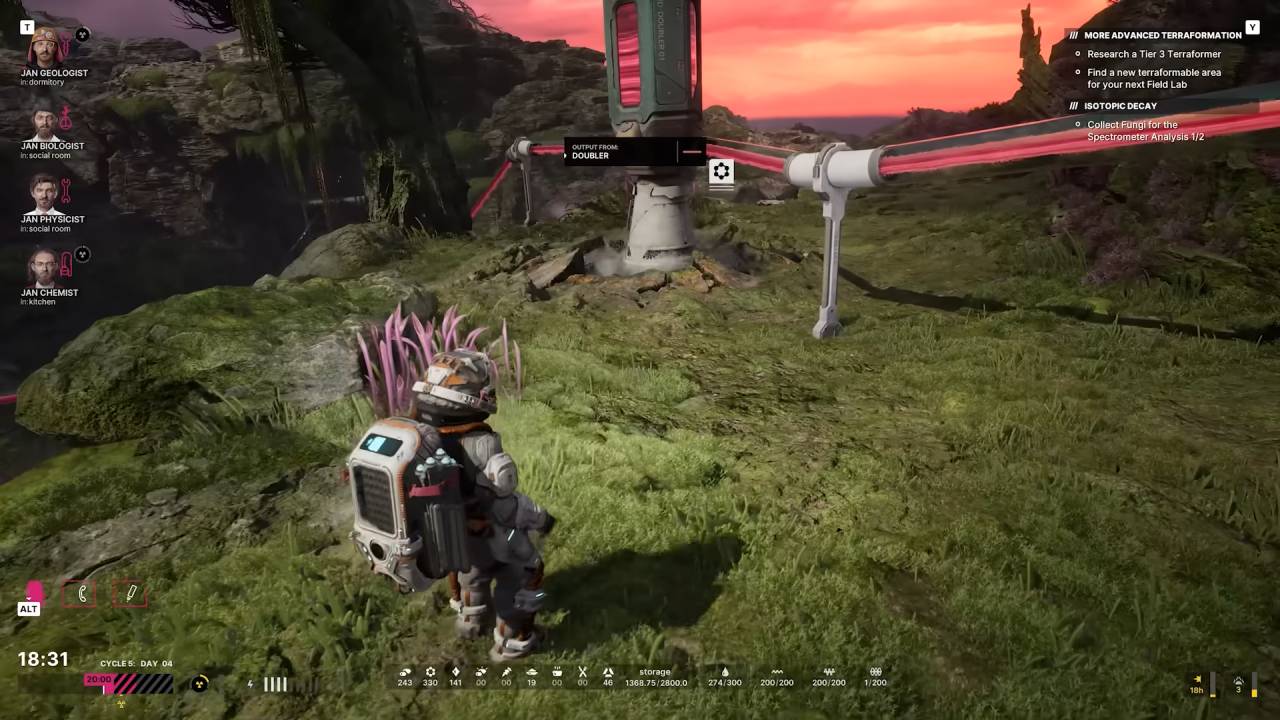
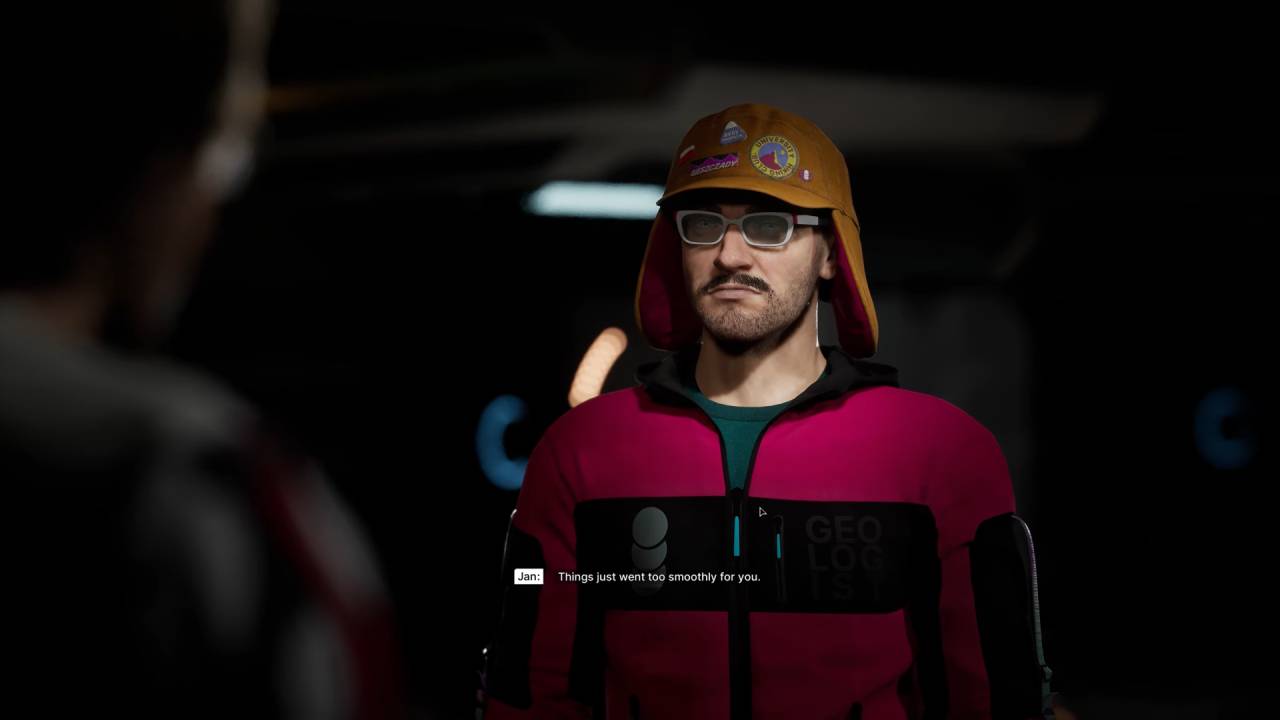
The real heart of the narrative, though, is the new cast of Alters. Because Jan Scientist serves as the template, every Alter comes from a different scientific discipline: a Physicist, a Biologist, a Geologist, and a Chemist.
Their personalities are wildly different. The Physicist is arrogant and sees himself as a visionary. The Geologist is energetic, restless, and fascinated by the possibility of exotic technology. The Biologist and Chemist bring their own perspectives and personal baggage.
These are not just skill trees with faces attached; they feel like people who have lived different lives.
The writing consistently makes you care about them. Small talk about their backgrounds, frustrations, and dreams is as important as the bigger revelations about the Oasis. There are some really funny moments, particularly when the Alters fight over scientific priorities or complain about the jobs you give them. Other scenes are surprisingly emotional as they begin to question why they chose to stay behind, and what kind of future is actually possible here.
By the final stretch, The Alters: Last Variable leans fully into its existential themes. The game asks what it means to dedicate your life to knowledge, whether discovery has value without an audience, and how different versions of the same person can grow into completely different individuals. The ending lands because it feels earned through hours of living with these characters rather than through a single dramatic twist.
If you played the base game, the core loop of The Alters: Last Variable will feel immediately familiar. You leave the safety of your underground base, explore the planet, gather resources, mine deposits, avoid anomalies, and bring everything back to expand your operations. The difference is that the expansion removes one of the original game's biggest sources of pressure: the constantly moving base.
This time, your headquarters is a permanent underground bunker.
You no longer spend hours preparing to relocate before the deadly sun catches up with you. Instead, the planet enters a long radiation cycle lasting for years, and the Oasis remains intact throughout it. That allows the DLC to focus more on exploration and long-term planning rather than repeated emergency evacuations.
Early on, almost every task is manual. You head out alone to collect enough materials to repair equipment and create your first specialized Alter. As your team grows, the management layer becomes much deeper. Each Alter can be assigned to workshops, research stations, field laboratories, or other facilities, and they will occasionally request reassignment if they believe their talents are being wasted.
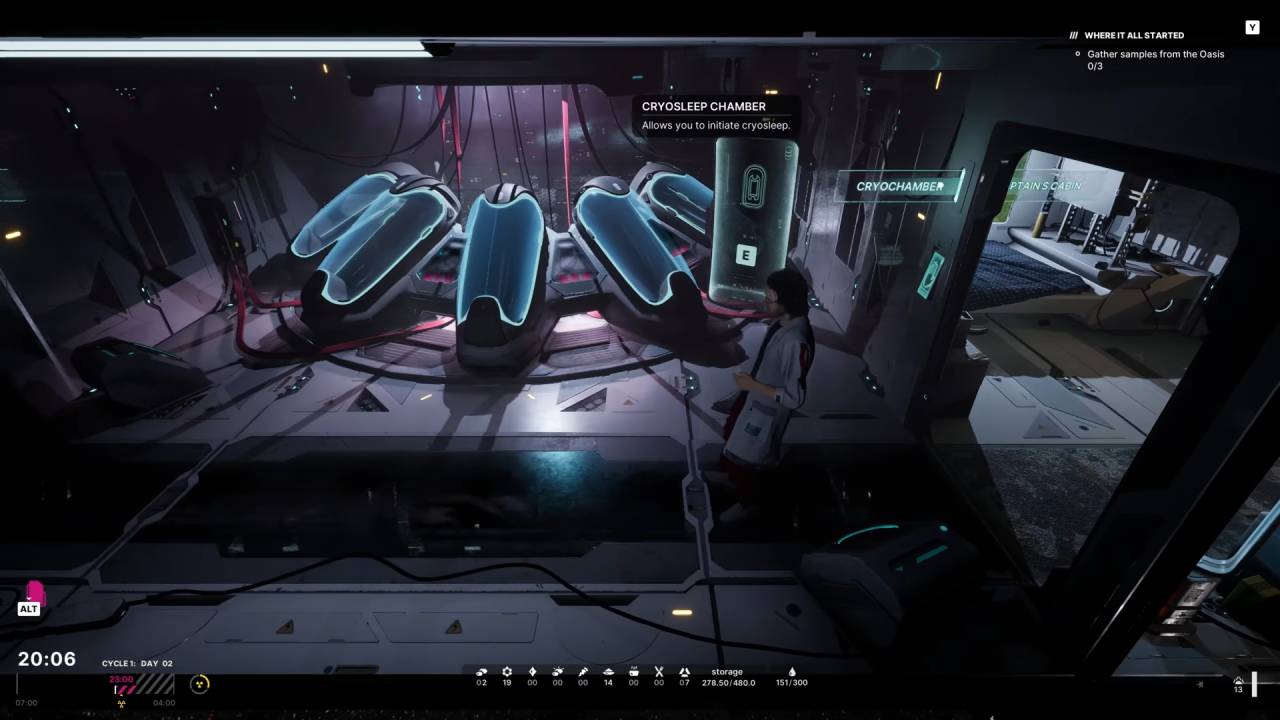
Keeping everyone productive while also keeping them happy becomes a constant balancing act. Research plays a much larger role than it did in the base campaign. Jan Scientist has access to cutting-edge technologies and even an AI assistant, JanBot, a chatbot version of his own mind, that helps him process complex problems.
Discoveries unlock faster mining methods, improved resource conversion, terraforming tools, and more efficient base modules. The sense of technological progression is excellent because each breakthrough usually changes how you approach the world rather than simply increasing a number.
One of the expansion's best additions is terraforming.
Certain barren areas can be restored to life, opening access to new research samples and resources. Watching previously dead regions slowly become green and habitable gives the campaign a strong feeling of leaving a lasting mark on the planet. Combined with the long time skips between solar cycles, you get to see the world evolve because of your actions.
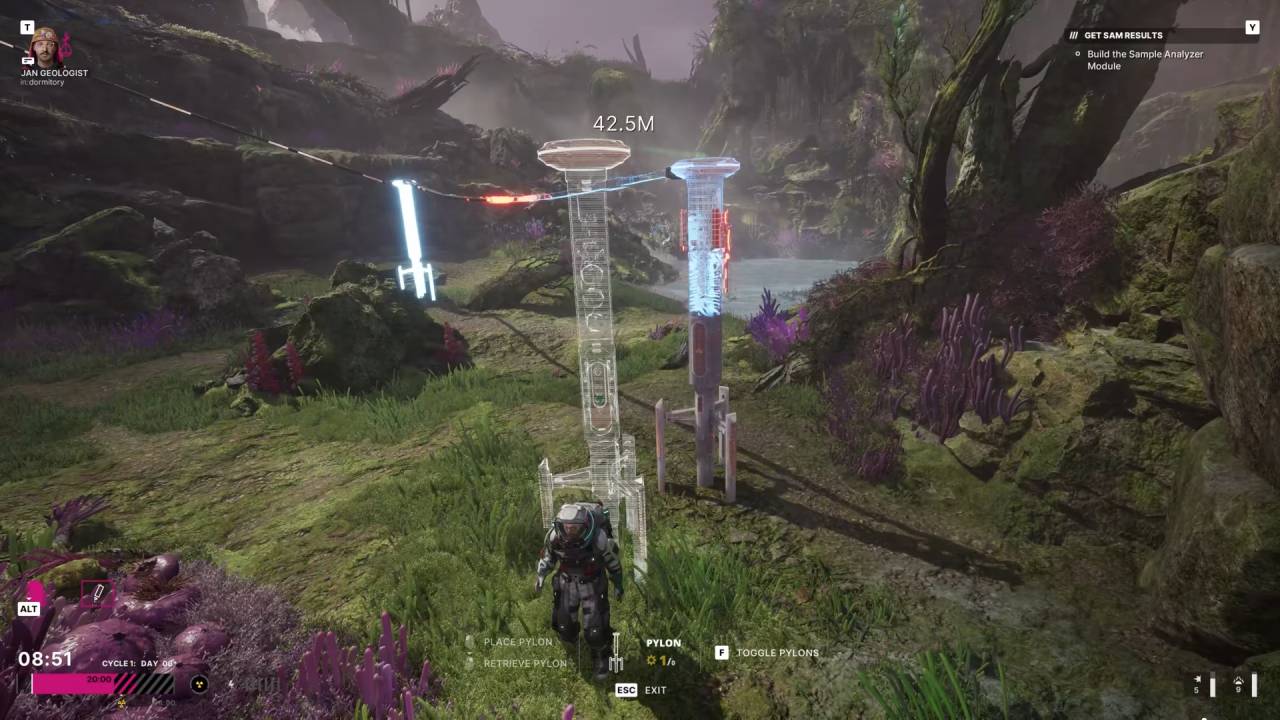
The late game introduces a much more complex resource network involving extractors, pipes, phased materials, and processing structures. You end up building elaborate chains that transport materials across large sections of the map before refining them into the specialized compounds needed for advanced research. It is easily the most mechanically demanding part of the DLC, but it is also incredibly satisfying once the whole system finally works the way you intended.
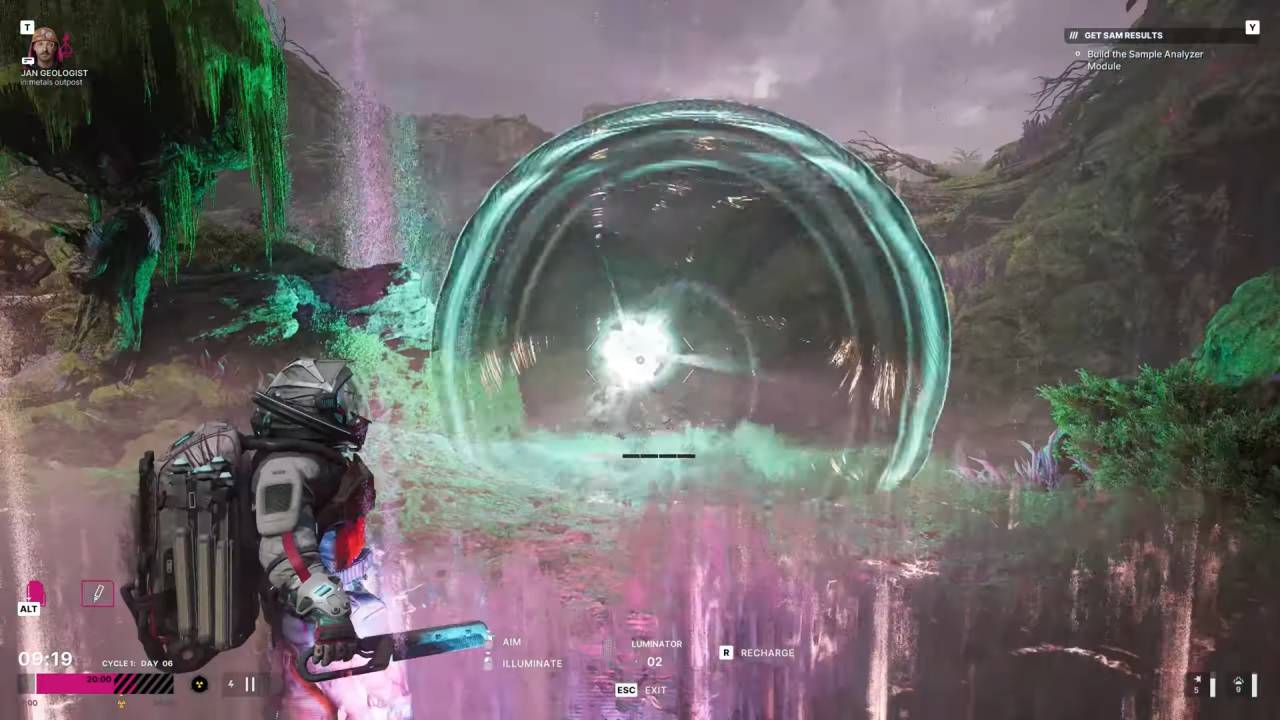
The anomalies return from the base game and are still one of the more memorable hazards. You use the Illuminator to disrupt them, but some are much more annoying than others, especially the time-dilation effects that can throw off your plans and waste valuable exploration time. Managing your battery supply while dealing with these anomalies adds a layer of resource pressure to every expedition.
Difficulty comes more from logistics than from combat.
Running out of organics, filling your storage too quickly, or realizing you forgot an important tool can force you to abandon an expedition early. The game is generally a little more forgiving than the original because your outposts are not constantly being destroyed by the sun. However, poor planning can still create cascading problems that take several in-game days to fix.
One mechanic that adds unexpected tension is cryosleep. Your protagonist may preserve his lifetime between solar cycles, but the Alters remain awake and active for years. They might be very different when you wake up. An Alter you can trust may become bitter, lose faith in the mission, or develop entirely new priorities. It's a clever way to make the passage of time feel meaningful and make the point that these Jan versions are real people, not static NPCs.
The challenge is survival itself. Every time you leave your bunker is a puzzle where your success depends on planning, bringing the right equipment, and making the most of the limited time you have before things get dangerous.
Most of your attention is focused on navigating environmental hazards.
Strange anomalies still occupy different parts of the map, forcing you to use the Illuminator to safely pass through them. While returning players will already understand how these obstacles work, the DLC introduces enough new exploration opportunities that they never feel like simple copy-and-paste mechanics. Some anomalies are simple; others require careful timing, patience, and especially the time distortion hazards that can easily throw your plans off course.
Exploration is just the beginning of problem-solving. Research is a giant scientific puzzle, with every discovery leading to another question rather than a reward. Whether you're terraforming barrens, experimenting with phased resources, or building increasingly complex extraction systems, you have to think several steps ahead.
By the later chapters, you have a network of pipes and mixers and extractors and specialized facilities that almost feels like an elaborate engineering problem instead of just plopping buildings down wherever there's room. But that slower, more methodical approach won't appeal to everyone.
If you're a player who lives for fast-paced action, you might find the gameplay a bit uneventful at times. But if you enjoy solving logistical problems and watching a carefully planned system finally come together, The Alters: Last Variable has some of its most satisfying moments in problem-solving rather than combat.
It sticks to what made the original game unique instead of forcing action mechanics where they don't belong.
The Alters: Last Variable is a strictly single-player experience with no co-op or online modes. This choice works perfectly with the game's design, as almost every emotional beat depends on your relationship with your Alters. Sharing control with another player would likely destroy the personal sense that makes the story so memorable.
The Alters: Last Variable does away with traditional experience points and character levels. There are no XP bars slowly filling up after every task, no skill trees demanding endless grinding, and no artificial progression designed to keep you repeating the same activities for dozens of extra hours.
Progress is instead directly tied to research and discovery. For every resource you gather, every sample you drag back, every scientific breakthrough adds to your understanding of the Oasis.
Getting new tech does more than just add numbers; it fundamentally changes how you do exploration, resource management, and base building. That makes every research project feel significant, opening up new possibilities rather than just giving you incremental upgrades.
Your Alters are also part of the progression system.
Each scientific specialty brings brand new research opportunities and improves different aspects of your new, burgeoning operation. When to create a new Alter, where to place them, and how to care for their mental health is just as important as building another facility. It feels like progress is earned because it's built on thoughtful planning rather than repetitive grinding.
One of the most interesting mechanics of the expansion is cryosleep. Jan Scientist keeps his life going between the planet's destructive solar cycles, but the Alters still work for years. When you finally wake up, they are older, wiser, and sometimes very different people.
Their personalities grow naturally over time, creating entirely new conversations, conflicts, and storylines that wouldn't be possible in a typical progression system. It's a neat way to give the passage of time significance and to underscore the game's central theme of shifting identities.
And the complete lack of microtransactions is just as refreshing. There are no premium resources, no paid boosters, cosmetic bundles, or shortcuts to bypass progression. Everything you unlock comes through gameplay, exploration, and research. Considering how many modern games try to monetize every aspect of progression, The Alters: Last Variable feels remarkably focused on simply delivering a complete experience.
Visually, The Alters: Last Variable remains every bit as atmospheric as the base game while introducing some memorable new scenery.
The Oasis is immediately a stark contrast to the surrounding wasteland. It is dense with greenery and vibrant plant life, a stark contrast to the harsh alien landscape you have spent so much time surviving. Terraforming is another layer of visual satisfaction, as you see parts of the environment slowly change, reinforcing your growing impact on the world.
Character animation is still impressive, too. All Alters have the same face, but tiny differences in posture, facial expressions, and body language make each version of Jan look like a completely different person. The small cast leads to surprisingly engaging conversations, with some great writing and those little animation details.
Alex Jordan once again deserves enormous credit for his performance. Voicing multiple versions of the same character could easily become repetitive, yet each Jan has a distinct personality, speech pattern, and emotional tone. Jan Scientist, JanBot, the Physicist, the Geologist, and the other Alters all sound like unique people rather than slightly altered versions of the same voice.
The soundtrack is well-suited to those performances, remaining low-key for much of the adventure before quietly ramping up the emotional weight of key story moments.
The performance is mostly solid, though not entirely flawless.
The Unreal Engine 5.5 upgrade has increased environmental detail and texture quality, but it also seems to have introduced performance issues for some players. No issues were exploring, but in scenes with lots of particles, such as the Illuminator, the frame rate could drop noticeably. Outside those moments, the expansion runs reliably enough that technical issues rarely distract from the experience.
The Alters: Last Variable succeeds because it doesn't try to reinvent what already worked. Instead, it builds carefully on the best ideas of the original game and gives one overlooked storyline the attention it deserves. It's less about escaping the planet and more about understanding it, and that shift changes the atmosphere quite a bit. It's quieter, more meditative, and surprisingly moving by the time the credits roll.
Gameplay is familiar, but the changes are meaningful. Removing the constantly moving base allows the expansion to focus on deeper research systems, more elaborate resource management, terraforming, and stronger character interactions. Watching your Alters grow older, develop new perspectives, and continue their work while you sleep through decades becomes one of the most memorable mechanics in the entire game.
There are still a few drawbacks. Players hoping for more action or dramatically different gameplay may find the expansion too similar to the original. More complex resource networks can occasionally become overwhelming, and the engine update may affect performance depending on your hardware.
Priced at around $15 USD, The Alters: Last Variable offers a surprisingly substantial campaign that can easily last close to twenty hours if you take your time exploring every system and storyline. If you already enjoyed The Alters, this expansion is absolutely worth adding to your collection. It opens up the world, it strengthens the story, and delivers one of the more thoughtful sci-fi tales you're likely to see this year.
Senior Editor, NoobFeed
Verdict
The Alters: Last Variable adds considerable story depth, progression, and character writing to the base game. A slam-dunk recommendation for returning players and one of the strongest story-driven DLCs in recent memory.
85
Related News
No Data.