
ASUS Arc Pro B70 Debuts With 32GB Big Battlemage GPU
ASUS enters Intel’s graphics ecosystem with the Arc Pro B70, combining Big Battlemage architecture, 32GB memory, and dedicated AI acceleration.
Hardware by Masaru Hoshino on Oct 18, 2026
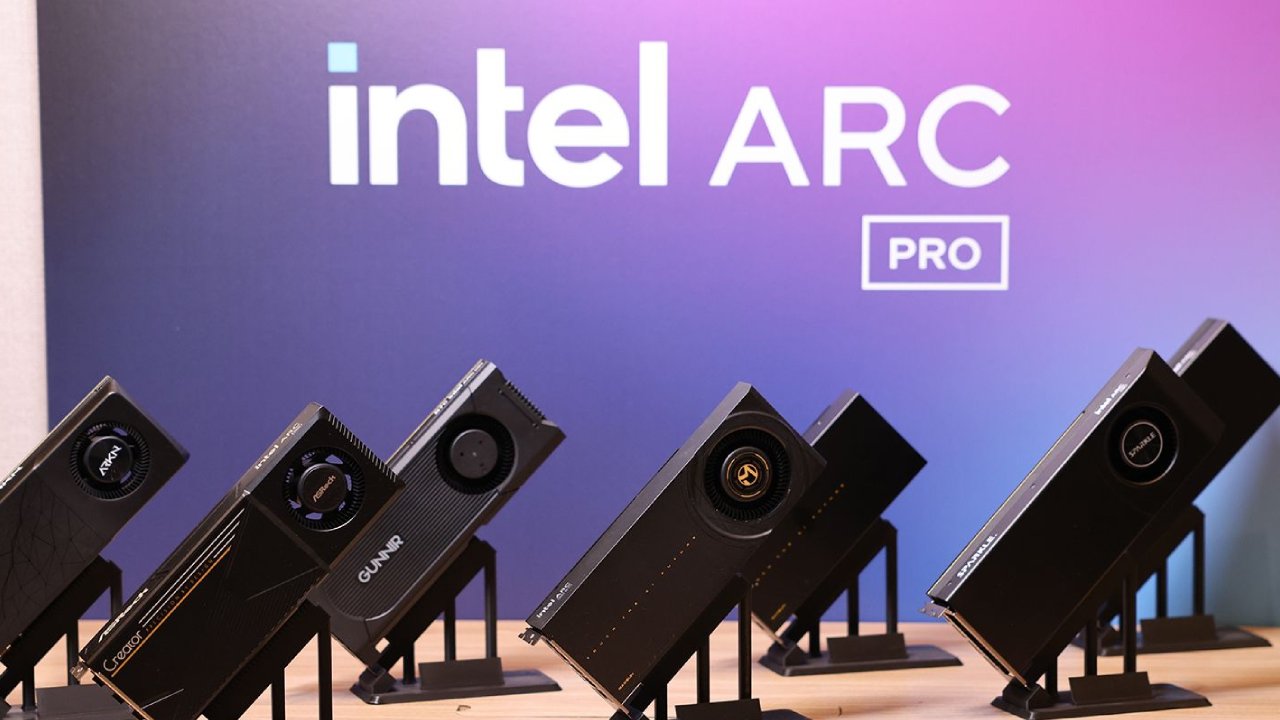
ASUS has finally entered Intel's discrete graphics ecosystem, marking a significant shift in its graphics card strategy with the launch of the ASUS UGen Arc Pro B70. After skipping the Arc Alchemist generation and the early Battlemage gaming lineup, the hardware giant is debuting a professional GPU built around Intel's most powerful Big Battlemage silicon.
Rather than competing for attention in the mainstream gaming market, ASUS is targeting workstation users and developers running increasingly demanding local AI workloads. The move is notable because ASUS is one of the most recognizable names in the add-in-board (AIB) market.
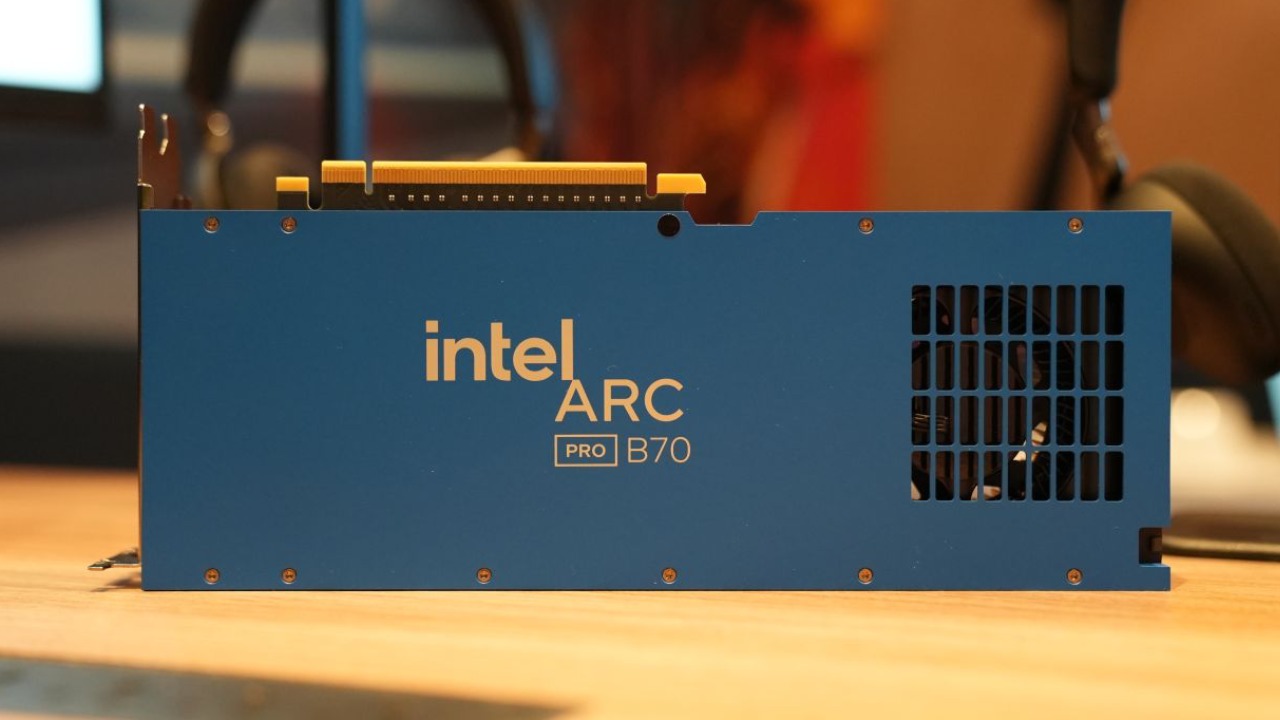
Its decision to adopt Intel graphics at the professional level gives the Arc platform another route into workstation systems, where memory capacity, software compatibility, and sustained computational workloads matter more than gaming benchmarks. With 32 GB of GDDR6 ECC memory and up to 367 TOPS of INT8 AI performance, the Arc Pro B70 represents a different direction for Intel's discrete GPU ambitions.
Big Battlemage Brings Intel's Full Xe2 Configuration to Workstations
At the heart of the ASUS UGen Arc Pro B70 sits Intel's BMG-G31 Big Battlemage GPU, built on the Xe2 architecture. It has 32 Xe2 cores and 256 XMX AI engines, making the card suitable for workloads that benefit from parallel processing and dedicated AI acceleration.
Intel's XMX engines matter because they accelerate matrix operations commonly used in neural network inference. These operations underpin many modern AI applications, from text generation and embedding calculations to image processing and other machine-learning tasks. By pairing its Xe2 compute resources with a substantial memory pool, Intel is addressing workloads that place different demands on a GPU than conventional gaming.
The card's advertised peak performance reaches 367 TOPS of INT8 computing. That figure indicates its potential throughput for integer-based AI operations, but it shouldn't be treated as a direct measure of real-world model performance. Actual inference speed depends on software optimization, memory bandwidth, model architecture, quantization, and workload size.
More broadly, Big Battlemage is being positioned as more than a gaming GPU architecture. The BMG-G31 configuration gives Intel a foundation for pursuing professional compute applications where dedicated AI engines and software support matter as much as raw graphics capabilities.
Why 32 GB of ECC Memory Matters for Local AI
The Arc Pro B70's 32 GB GDDR6 ECC configuration is arguably its most compelling feature for developers. Large language models can consume substantial GPU memory, especially when model weights, inference caches, and runtime overhead must coexist on the same device. More available memory lets developers run larger models locally or support longer contexts and more concurrent workloads without immediately spilling to system memory.
Another professional consideration is ECC support. Error-correcting memory can detect and correct some memory errors, helping improve data integrity during long computing workloads. That's especially important in workstation situations, where reliability counts as much as performance.
But 32 GB isn't enough to guarantee that any huge model will run well. Model precision, quantization, context length, and framework overhead all affect memory requirements. The practical advantage comes from having more room to work within a single GPU, rather than relying entirely on external memory or splitting workloads across multiple devices.
Software Compatibility Becomes the Competitive Battleground
The Arc Pro B70 supports a broad range of AI and compute software, including PyTorch through Intel Extension for PyTorch (IPEX), OpenVINO, Ollama, vLLM, and oneAPI. This ecosystem is central to the card's positioning because capable hardware alone cannot guarantee a useful developer experience.
Ollama provides an accessible route to running supported language models locally, while vLLM targets high-throughput inference and serving workloads. OpenVINO offers Intel's inference optimization framework, and PyTorch compatibility connects the card to a widely used machine-learning development environment. OneAPI adds a broader programming model for heterogeneous computing.
These integrations could make the Arc Pro B70 attractive to developers who want to experiment with local AI without immediately investing in expensive multi-GPU servers. However, framework support is only the starting point. Driver maturity, operator coverage, model compatibility, and performance consistency will determine whether Intel can deliver a genuinely competitive alternative to established accelerator platforms.
ASUS's decision to enter through the professional segment also reflects a changing GPU market. AI growth has driven demand for technology that balances memory capacity, compute throughput, and workstation practicality. If Intel had launched with a gaming-first focus, it would have had to compete primarily on frame rates and pricing. With a professional product, Intel can differentiate based on memory configuration and AI-focused features.
Editor, NoobFeed
Gaming Hardware Updates
No Data.