
Corsair Cove Review
PC
A pirate city builder that has you expanding across cliffs, coastlines, and the open sea.
Reviewed by Adeela Tas on Aug 02, 2026
Corsair Cove is the work of Limbic Entertainment, the German studio best known for Park Beyond and, more relevantly, Tropico 6. That background is obvious from the opening hours; the same instinct for weighing a settlement's growth against its residents' demands is here, just recontextualized.
Instead of running a tropical dictatorship, you're building a pirate republic pushing back against an oppressive Crown. Published by Hooded Horse, Corsair Cove launched as a full 1.0 release in late July 2026. It's clear Limbic took what they learned managing an island nation in Tropico and reshaped it into something rougher around the edges- cliffs instead of coastlines, ladders instead of roads.
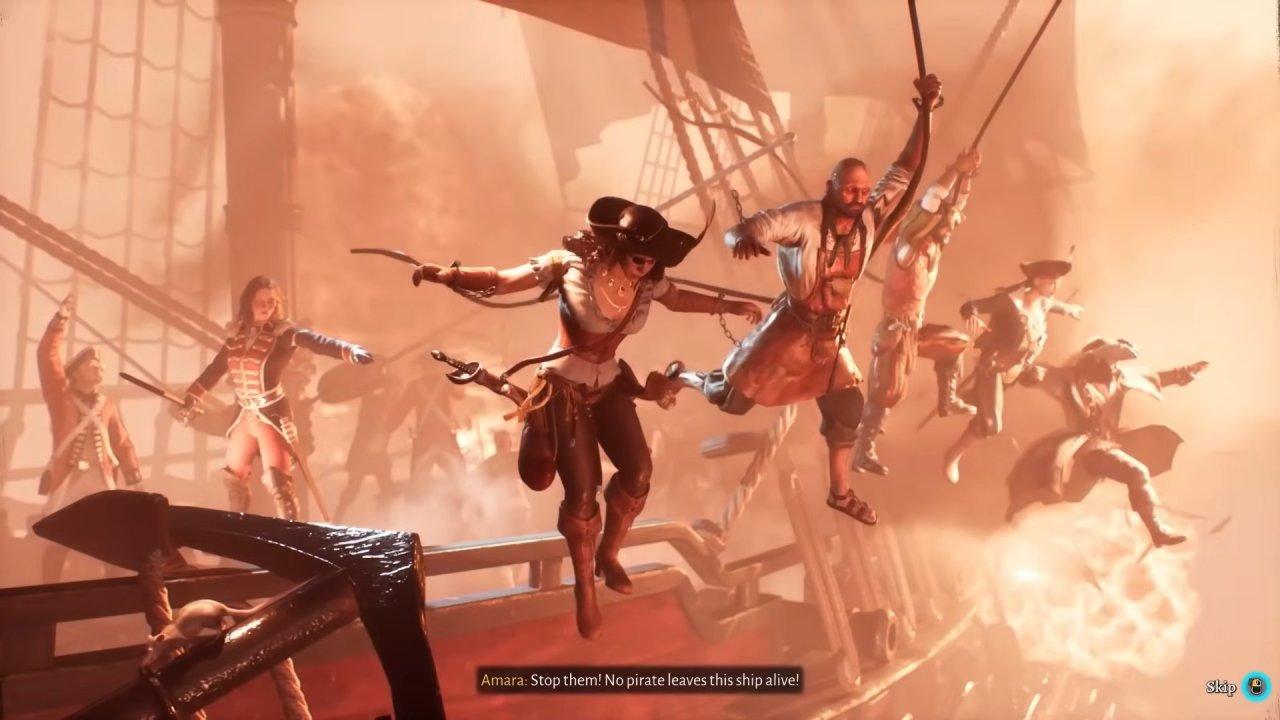
You begin the story as part of a small crew of escaped prisoners, freshly shipwrecked after fleeing a Crown vessel.
Your ship goes down, and you wash up on a rocky, unforgiving island called Skull Island, which becomes your new home whether you like it or not. Corsair Cove doesn't try to carry an epic RPG-level narrative on its back. Instead, story beats come through captains chiming in as you uncover new stretches of the map. Quests tie into fighting the Crown or hunting down legendary threats.
Random events occasionally force a hard choice, like whether to take shipwreck survivors on board at the cost of some cohesion, or hand over gunpowder to rebels on a distant island and weaken your own defenses in the process. It's atmosphere over plot, and in Corsair Cove that works because the game leans on four Principles instead, essentially separate paths to victory.
Notoriety has you chasing infamy, eventually working toward a confrontation with a legendary undead captain known as the Reaper. Wealth is exactly what it sounds like: getting rich enough to retire somewhere quiet. Empire means uniting rival factions to take the Crown on directly.
Seafaring is less about gold or glory and more about mastering the ocean itself, surviving storms and monstrous threats along the way. You can chase all four Principles in Corsair Cove if you want the bragging rights, but sticking to one keeps the pace far more manageable.
Once you're settled, the game splits your time between two loops.
You run your camp and send ships out into the world. On land, you place buildings within range of your original camp structure, gather wood and stone, and keep your people fed and watered, rum included, while slowly building production chains that get more complicated the deeper you go.
Raw materials get processed into intermediate goods, which then feed into higher-tier products, and distribution hubs like the Galleon Tavern automatically supply everyone nearby once they're stocked themselves. Because your island is mostly cliff face rather than flat ground, you build vertically.
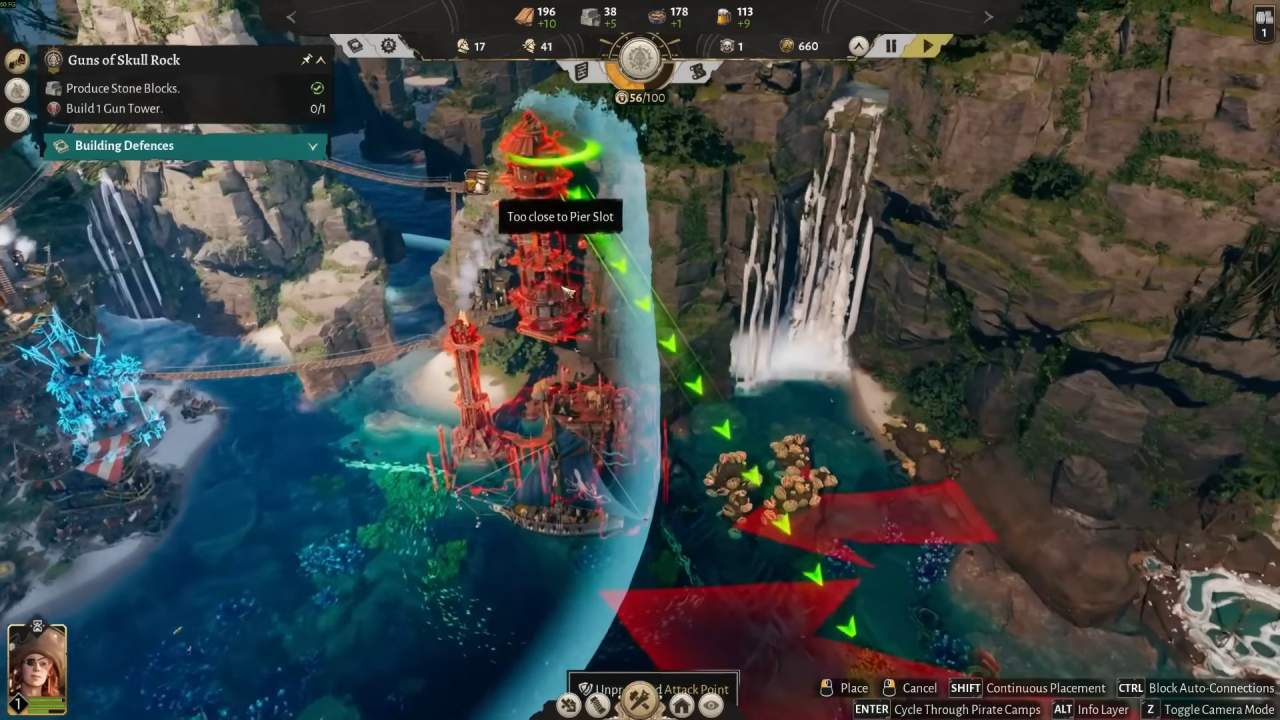
Ladders, rope bridges, zip lines, cranes, and eventually elevators connect the different elevations your camp sprawls across, and this isn't just for looks. These routes directly affect how quickly your pirates can move goods around.
That's the core of Corsair Cove's vertical build system: a ladder that worked fine early on becomes a genuine bottleneck once your economy scales up. You'll find yourself tearing out old connections to make room for faster ones. Your population isn't uniform either.
Vagabonds are happy with ale and gruel, skilled pirates want bread and better housing, and elite sea wolves start demanding tobacco, pistols, and eye patches before they'll lift a finger. Ignore those demands for too long and camp satisfaction drops, which eventually spills into a status called Outrage, and from there it's a short walk to a full-blown riot, complete with knife fights breaking out across your settlement.
Progression runs through something called the tech compass, split across those same four Principles rather than one single tree.
Instead of grinding an abstract currency, that's basically how Corsair Cove wants you to move forward, unlocking new buildings, ships, and connectors by completing deeds tied to actual play, things like building a set number of warehouses, hitting a population target, or pulling off a successful raid.
Missions completed out on the water also feed points back into the compass, letting you upgrade production and unlock new ship types. It ends up being less of a traditional XP grind and more a natural byproduct of just playing the game the way you want to, though pushing all four Principles evenly at once tends to spread your camp too thin, since it means juggling too many pirate types demanding too many different resources at the same time.
Sending ships out is where Corsair Cove stops feeling like a pure city builder. You crew your ships using drifters pulled straight from your camp's population, so every sailor aboard is one less worker back home, and every ship needs a captain assigned to it too.
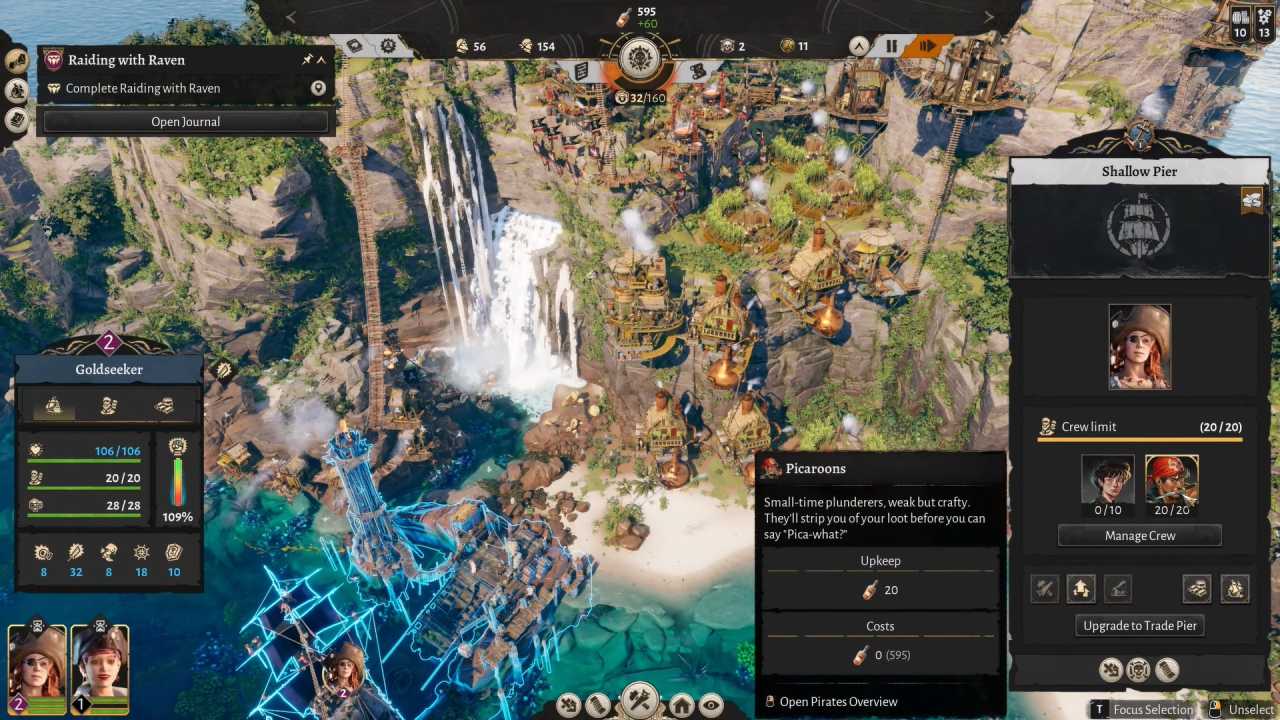
You'll have options like Teach, clearly modeled on Blackbeard, along with Kanja, Scarlet, and Honorata, with more captains unlockable through further quests, up to eleven in total. Each captain brings bonuses tied to specific ship classes, so pairing the right one with the right vessel changes how a mission actually plays out.
All that progression and crewing means nothing until your ships actually leave the harbor.
Out on the water, you'll run into treasure fleets, Crown fortresses, smuggling runs, prisoners waiting to be freed, and legendary sea creatures worth hunting, and sailing into a new region usually triggers a short cutscene that sets the tone for whatever you're about to get into.
Encounters in Corsair Cove use a card-based system that leans closer to tabletop RPG logic than an actual card game. Each card represents an action, but what really decides outcomes is your ship's stats: gun damage, armor, boarding damage, maneuverability, and speed.
Most fights come down to reducing an enemy's health and crew below a set threshold, picking actions based on what your captain and crew can bring to the table while managing supplies that get spent every time you use an ability. Some outcomes roll dice for a range of damage rather than a fixed number, which adds a layer of unpredictability to nearly every exchange.
If your crew count drops to zero mid-fight, your ship sinks, and you're forced to choose between saving your crew or your captain, since losing either one benches them for a while afterward. That combat system has real strengths, mainly in how tightly it ties into the captains and the wider story, and in how much personality it adds to encounters through dialogue and voice work. But it's also one of the shakier parts of Corsair Cove.
Ships come out heavily specialized rather than balanced.
A Prowler is great at maneuvering but weak almost everywhere else; a Destroyer hits hard but is only really suited to direct combat; a Hunter is built purely for speed; and a Reaver excels at boarding while its other stats lag behind. That specialization means plenty of ships end up nearly useless outside their one lane, and fights can boil down to simply dealing maximum damage rather than anything more tactical or nuanced.
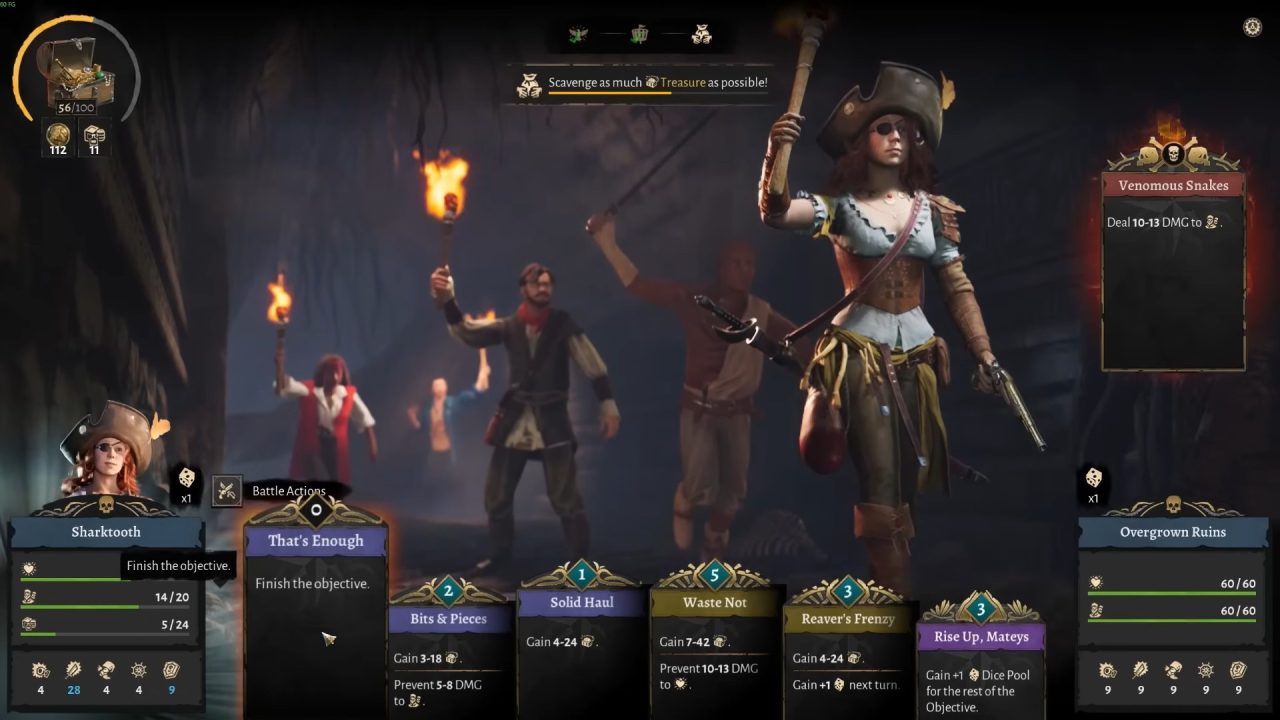
The randomness baked into the dice rolls doesn't always help either. Sometimes no combination of cards can save a bad roll, and the only real option left is reloading a save rather than out-thinking the encounter. Corsair Cove holds up well visually. The island is colorful and detailed, full of movement, with pirates hauling cargo, ships pulling into harbor, and buildings that slot naturally into cliffsides instead of sitting on generic flat ground.
The vertical construction is really what sets it apart, since no two settlements end up looking the same once you've stacked ladders, bridges, and platforms across different elevations. It's not chasing photorealism, mostly because you're viewing everything from a bird's-eye angle anyway, but the cutscenes and combat animations carry real weight, especially during bigger set pieces like the whaling missions.
Performance is generally solid, with only occasional hiccups: brief freezes during cutscene transitions and some audio stuttering on first launch, likely tied to shader compiling rather than anything ongoing. The soundtrack does a lot of heavy lifting for the atmosphere. Between the music, the voice acting on captains and quest dialogue, and the ambient sound of a busy camp, everything reinforces the pirate fantasy without tipping into parody.
Combat quirks aside, it's worth stepping back from the ship deck to look at how the rest of the experience holds together.
It's consistently one of the things people bring up when talking about what Corsair Cove gets right, since it makes even routine building sessions feel like part of a bigger adventure rather than background noise. Not everything about the game lands cleanly, though. The biggest complaint circling around Corsair Cove is variety, or the lack of it, once the initial charm wears off.
There are only three maps total, and the main campaign keeps you locked to Skull Island the entire way through, which starts to feel repetitive after enough hours, especially since there's no larger campaign structure taking you to fresh islands with new pressures to solve. Logistics, satisfying early on, become genuinely tedious to maintain as your camp grows; this is because older connections need manual replacing as production scales up.
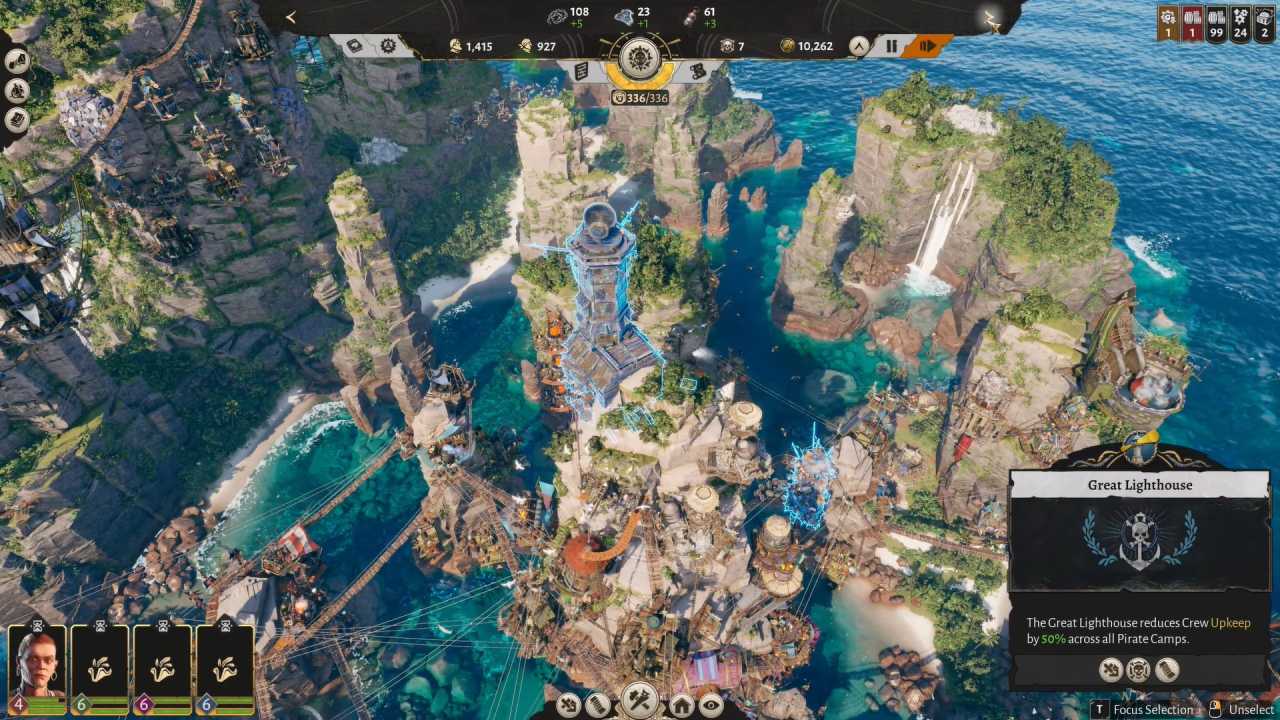
The game's auto-connection system has a habit of drawing resources from oddly distant buildings for reasons that aren't always clear, leaving you to hunt down and manually sever weird supply lines you never asked for. Bridges and paths can be finicky too, with snapping issues, short maximum bridge lengths that force awkward, clustered layouts, and the occasional bridge that visually connects but actually sits at the wrong elevation.
Some early production chains also feel oversimplified, conjuring goods like stew or ale without much visible resource chain behind them, and a few upkeep warnings can be vague enough to leave you hunting for the real problem instead of fixing it outright.
There's also the matter of resource redundancy.
Goods you spent hours building supply chains for, like rum for early-tier picaroons, can become obsolete once you're chasing raid goods like tobacco or working toward higher-tier crews that want prosthetics, fancy clothing, jewelry, and pistols instead.
Combined with a learning curve that ramps up fast once multiple production chains, transport routes, and naval logistics start stacking on top of each other, Corsair Cove can feel intimidating if you're newer to the genre, though anyone who's spent time with Anno or Tropico should adjust quickly. The price also feels a bit steep for what's on offer, even with launch discounts factored in.
Where Corsair Cove really succeeds is in making the whole experience feel distinctly its own, blending the calm, methodical satisfaction of running a settlement with genuine danger and consequence once you're out on the water. Camp satisfaction and Cohesion sit at the center of that balance, and letting either one collapse doesn't just slow you down; it can end the run entirely, dissolving your camp and forcing a full restart from scratch.
If you're coming from something like Anno, which watches every household's whims closely, or Factorio, where logistics get taken to obsessive depths, Corsair Cove sits somewhere more relaxed in between, closer to Fabledom in tone but with sharper teeth.
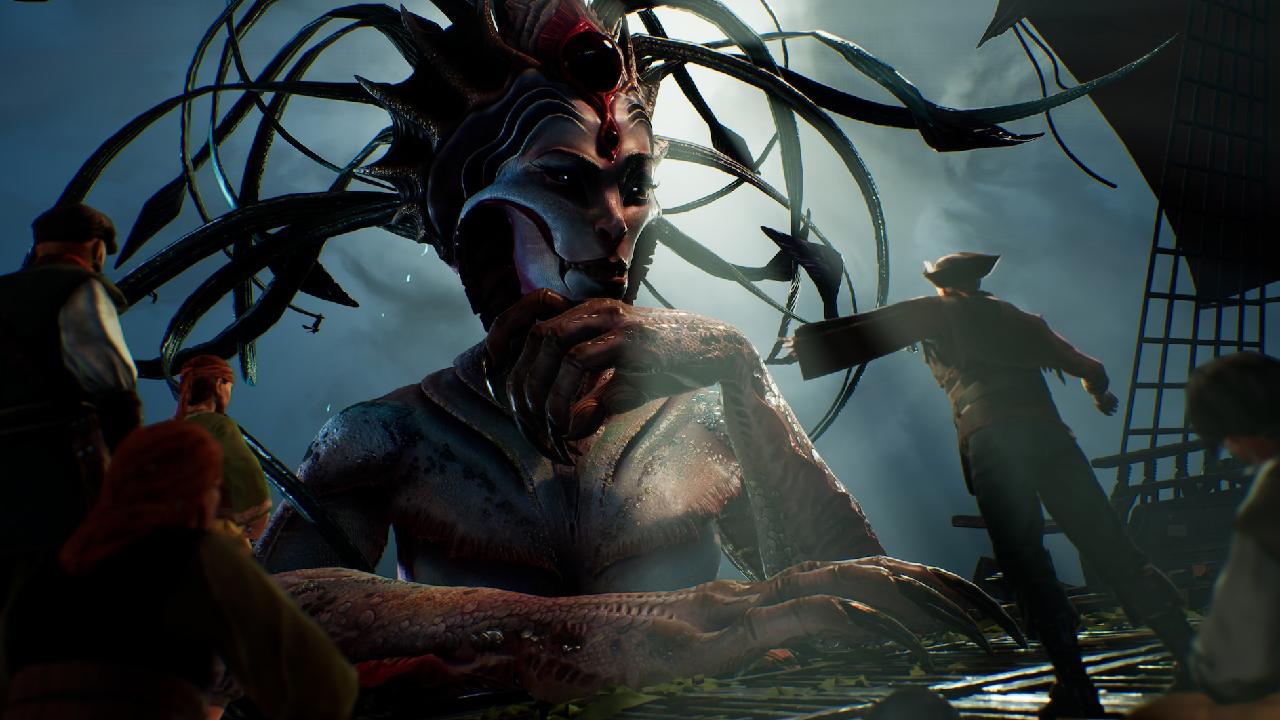
That stakes-driven tension, paired with the freedom to chase whichever Principle appeals to you, gives the game a good amount of replay value. Especially with multiple starting islands and enough build variety that your second settlement rarely resembles your first.
Even with rough edges around logistics management, ship balance, and limited map variety, Corsair Cove manages to carve out a clear identity in a genre that too often recycles the same medieval or industrial settings.
It commits fully to its pirate premise, from the ramshackle cliffside camps to the captains bickering over which fight to pick next, and that commitment carries it a long way even when individual systems don't quite live up to the whole.
Editor, NoobFeed
Verdict
Corsair Cove has a strong identity and a lot of heart, and while a few systems like logistics and ship balance still need some smoothing out, there's clearly a great pirate city builder here.
79
Related News
No Data.