
Go-Go Town! Review
PC
A quirky, adorable little town that finds a way to make chores fun.
Reviewed by Asura Kagawa on Jul 18, 2026
The coziness of such games tends to blend into one after some time. You till, you water, you sell, you sleep, and you start all over again the next day. So when a town-builder shows up promising mining, farming, fishing, forestry, tourists, automation, and a chaotic garbage crisis all stitched into one map, it's fair to raise an eyebrow.
Go-Go Town! Just left early access behind and landed its full 1.0 version on PC and Switch, and after spending real hours inside it, the short version is this: it earns most of that ambition, even when it occasionally trips over its own scope. Here's what actually happens once you step into the role of mayor and start dragging a broken-down patch of land into something worth visiting.
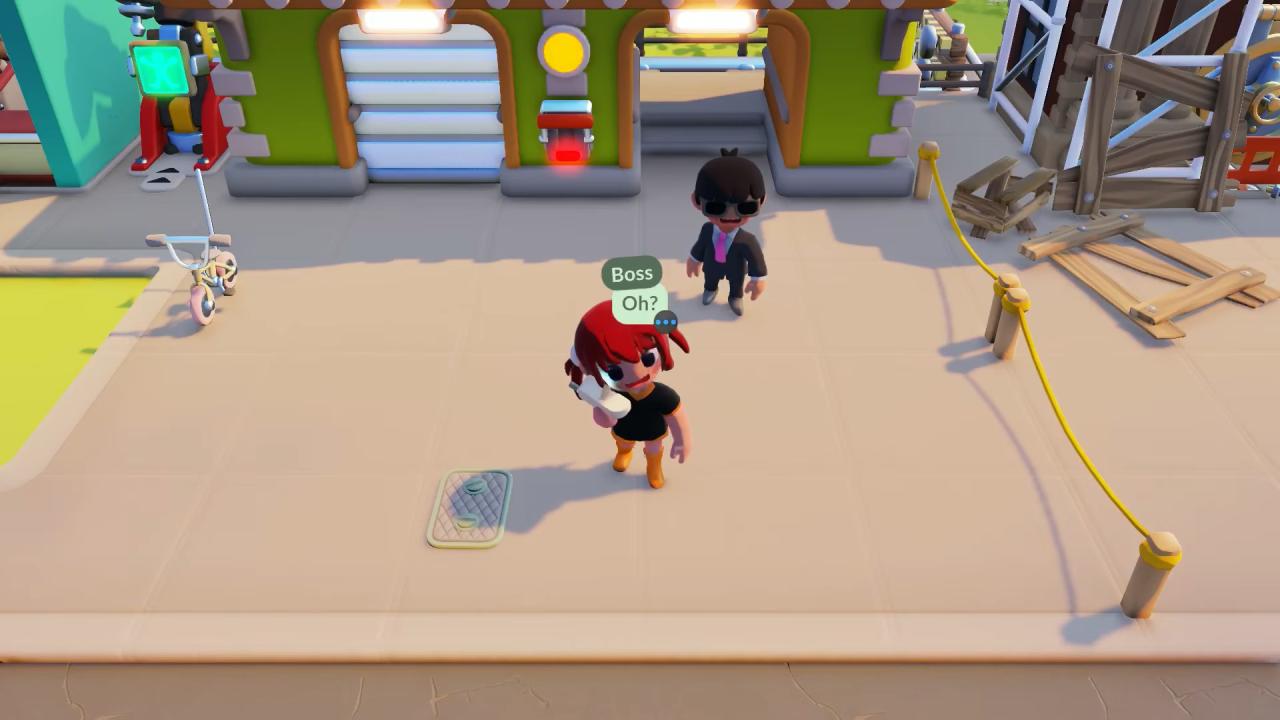
Before you even touch a single road tile, Go-Go Town! hits you with a setup that's a little stranger than the average life sim.
You're not inheriting a farm from a grandparent or moving to the countryside for a fresh start. What you do instead is you fall for a suspicious internet offer that says you can "be your own boss" and then get yourself packed into a bag by some mysterious organization known as TownCo and taken out in a van to this dilapidated and nearly uninhabited piece of land and told to build a city out of it.
It's a goofy, mildly sinister spin on the usual cozy-game opening, and it sets a tone that stays present throughout, where things are never quite as gentle or wholesome as the pastel art style might suggest. The studio behind it, Prideful Sloth, is an indie team out of Brisbane already known for warm, whimsical projects like Yonder: The Cloud Catcher Chronicles and Grow: Song of the Evertree.
You can feel that same sensibility here, even as the game reaches for something busier and more systems-driven than either of those earlier titles. The road to get there was no easy task either. The development process began in 2023, when the early iterations of the game required players to be just common citizens, not the ones in control of the entire city.
Those early tests pointed toward a stronger direction, so the team pivoted and put you in the mayor's chair instead, the version later shown at PAX East and PAX Aus. It hit Steam Early Access in mid-2024, keeping the core mechanics while reworking the map and pacing.
Over roughly two years, the developers leaned on an open, community-facing development style.
They rolled out six major content updates that reworked the phone-based tech tree, expanded the map, and ultimately introduced online multiplayer. The recent 1.0 launch brought highly anticipated features like sandbox mode, a rebuy system, and console optimization, alongside an exclusive upgrade pass for the new Switch 2.
Once you're actually dropped into your town, the plot mostly steps aside and lets the simulation take over, though that TownCo framing lingers in the background as a light narrative thread rather than a story you're actively following scene to scene.
What takes over instead is the sheer amount of stuff you're responsible for. You start with almost nothing: a barren plot split around four dedicated resource zones for mining, forestry, fishing, and farming, plus a central core that's yours to design however you like.
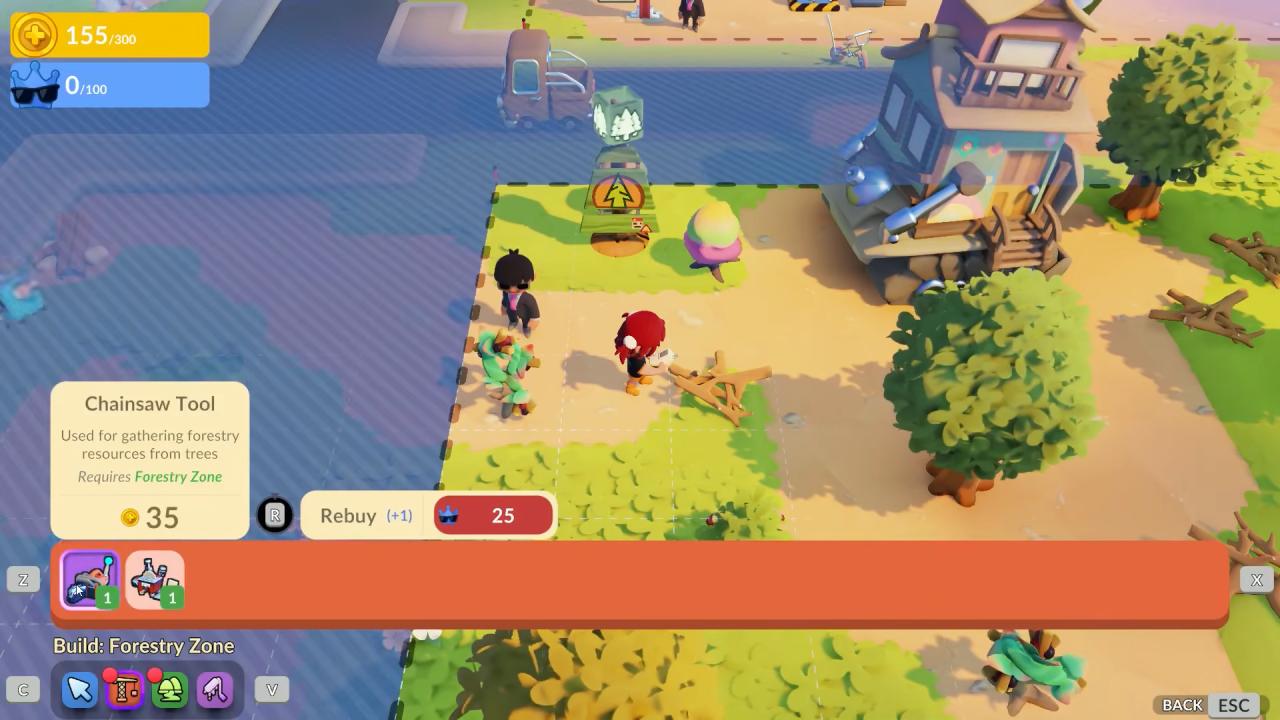
Visitors start rolling into your new town almost immediately, arriving by train, and some of them will have a little question mark hovering over their heads. Talk to those people, and they'll usually ask for something specific, like a craft shop or a coffee stand. Build it, and you can invite them to settle down permanently, at which point you're building them a house or an apartment, and they officially become Townies of your town.
That is when Go-Go Town! begins to show the system's nature.
After placing the citizens, you can use them for work by sending them to shops to help run them or to resource zones to keep the resources coming in without you having to chop each tree yourself. You'll also get access to trading spaces where outside merchants set up shop temporarily and sell items you can't get any other way, which gives you a reason to keep checking back on your own town even after the initial building rush slows down.
As you move forward, you'll earn couriers that actually transport the goods from the resource zones to your shops, which will mark the true moment where the game becomes really open-ended, as now you won't have to take care of each delivery yourself but have the ability to do something else.
Terraforming itself is handled through a drone, so you're not required to stand in the exact spot you want to build as you would in something like Animal Crossing; you can shape waterways, drop in floating houses, or lay down boardwalk areas from wherever you happen to be standing, and it feels fast and responsive rather than fiddly.
On top of building, you're also given a small fleet of vehicles to zip around in: skateboards, bikes, motorbikes, and cars, along with parking areas so your streets don't end up cluttered with abandoned rides. Later on, you can unlock a subway system that connects different regions of the map together, which matters a lot once you realize just how much of Go-Go Town! actually exists outside your starting area.
There's also a proper co-op mode, supporting both local split-screen and online multiplayer for up to four people.
It noticeably changes the pace of the game, turning what could be a solitary management sim into something closer to organized chaos with friends, whether you're splitting up tasks efficiently or just running each other over with delivery carts for fun.
Oddly, that split-screen option is managed through the Town Hall terminal instead of sitting up front on the main menu where you'd expect it, so it's easy to miss unless someone tips you off or you go looking for it yourself. One detail that sets Go-Go Town! apart from many of its peers is how physical everything feels.
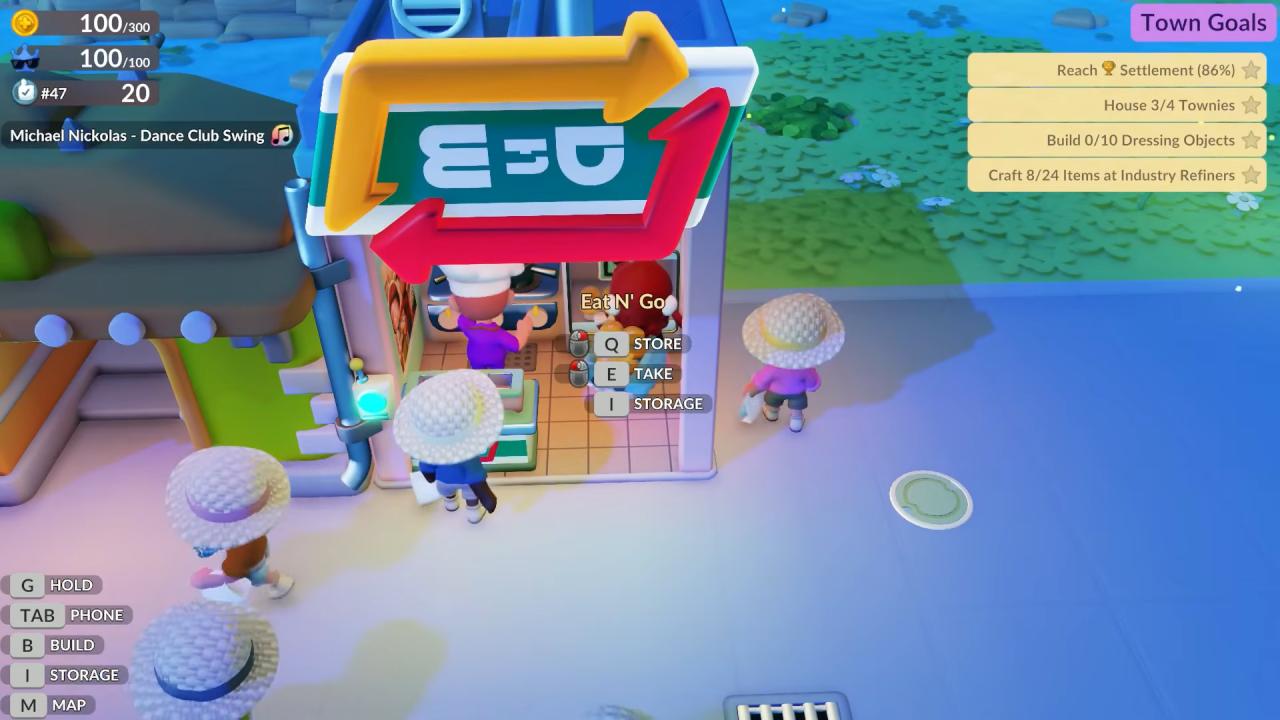
Rather than goods vanishing into some invisible inventory the moment you collect them, every plank, crate, and raw material genuinely exists somewhere in the world and has to be carried, driven, or hauled to wherever it needs to go. It is a subtle change that adds tangibility to your supply chain rather than leaving it abstract, and this is one reason why watching the delivery route work seems to be such an accomplishment after building it yourself.
Later on, the new Town Hall adds display cases where you can show off rare finds and collectibles you've picked up while exploring, and you're not limited to keeping them indoors either, since plenty of those same items can be placed around your streets and yards as decoration if you'd rather turn your whole map into a trophy case.
If Go-Go Town! has a stand-in for combat or a central challenge system, it's the trash.
Visitors litter constantly, so a big part of running your town comes down to placing bins in sensible spots and building a proper disposal facility where you can empty and incinerate everything you collect. Early on, before you can hire any cleaners, this job falls entirely on you, and it's one of the more tedious stretches of the early game.
Let your town get too dirty for too long, though, and things escalate: you'll get swarmed by these obnoxious Garbirds that terrorize tourists, actively steal your items and resources, and scatter garbage everywhere they go, which just compounds the mess you already have.
Getting rid of trash means physically running them down with your bike, skateboard, or car, and it usually takes several hits before one finally gives up and flies off, so a bad swarm can turn into you circling your entire town trying to clear them all out.
There's a satisfying flip side to all this filth, too: an Ego Washer that works like a little power washer, letting you scrub down dirty roads or spray off Townies who have gotten visibly stinky from the mess around them.
Whether or not the aforementioned cycle of waste/birds works out to be a positive development hinges greatly on one’s needs.
Many gamers appreciate the cleaning itself because collecting and disposing of waste is productive rather than tiresome, which contributes to the realism of the town’s appearance. The birds are a more controversial element of gameplay.
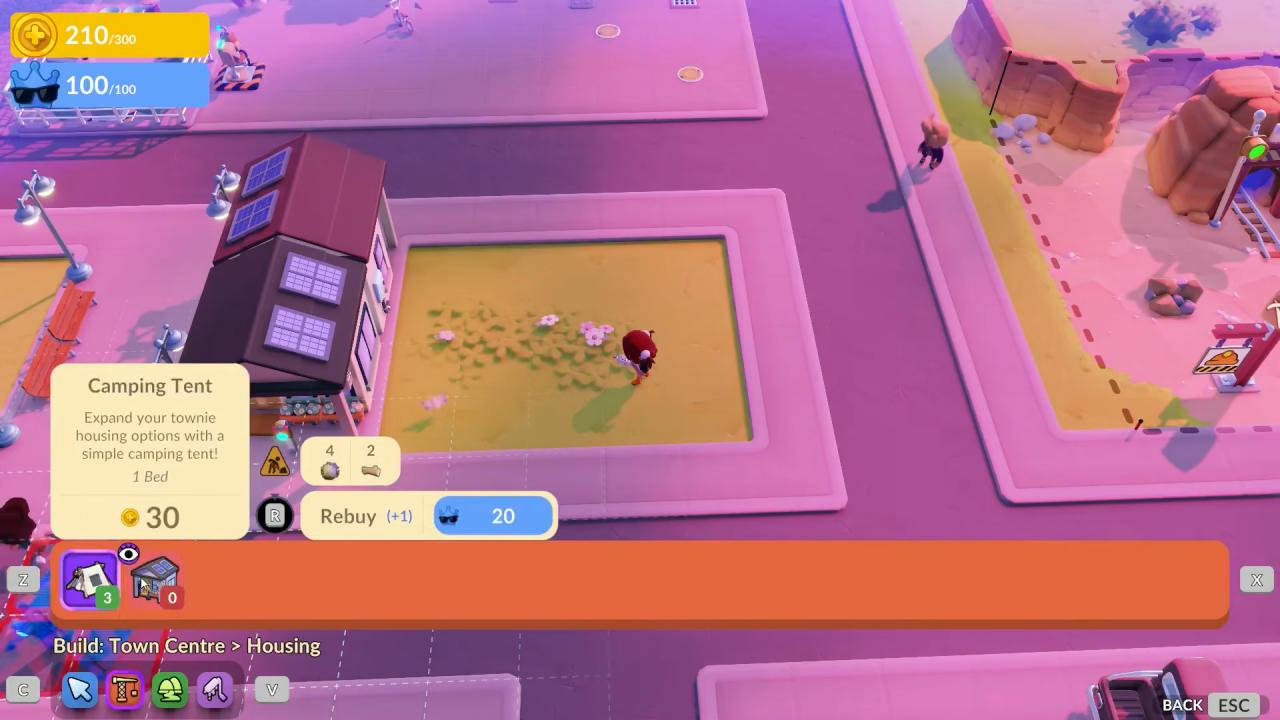
If you're playing for a relaxed, low-stress evening, getting yanked out of decorating to go chase down a pack of aggressive birds can feel like an unwelcome interruption, especially since there's currently no setting to turn that particular challenge off entirely. It's not a difficult system to deal with once you understand it, but it does ask you to be reactive rather than purely creative, and that tonal shift won't land the same way for everyone.
Progression in Go-Go Town! runs on a resource called Ego, which you earn primarily from tourists, and it's the currency that unlocks new buildings and features as you go. The way it's structured is tied to a tier system: while you're sitting in a given tier, both your money and your Ego are capped, and once you hit that ceiling, you simply stop earning until you've spent enough and completed enough objectives to push into the next tier, at which point the cap rises.
There's also a built-in cost increase for building the same structure repeatedly, presumably there to stop your whole map from turning into two thousand identical potted plants, but in practice, it means something like apartment buildings get noticeably pricier the more of them you put down, until you're only able to afford a couple before you have to stop and let resources rebuild.
The pacing of that climb feels genuinely good for the first stretch of the game.
Ranks one through five keep introducing new mechanics and buildings at a rate that keeps you engaged, and there's rarely a moment when you're not chasing something. Ranks six through ten are a noticeably different story, though, where the new unlocks slow to a trickle and a lot of what you're doing boils down to placing more of what you already have and waiting for numbers to climb.
Exploration follows a similar curve: the map has a lot of ground to cover, including regions plenty of players won't touch for dozens of hours, along with hidden extras like a bunker and an underground sewer system tucked away for people willing to dig, but the readily accessible exploration content can be fully cleared in around an hour, well before you're anywhere near the later ranks.
The tutorial deserves a mention on its own, because it's one of the rougher edges in an otherwise well-paced game. Rather than easing you into systems as you actually unlock them, Go-Go Town! front-loads a lot of instruction early, before you've had a chance to see why any of it matters, and it leaves the impression that hiring Townies will immediately lighten your workload when, in practice, they're not much help until several hours in.
That gap between what the game tells you and what you actually experience in the opening stretch means the first couple of hours can feel more overwhelming than they need to, particularly if you're playing solo and trying to keep every plate spinning by yourself. Giving the system a fair shot within the two- to five-hour time frame makes a huge difference, as this is when the automated processes begin to do their work and the load becomes manageable.
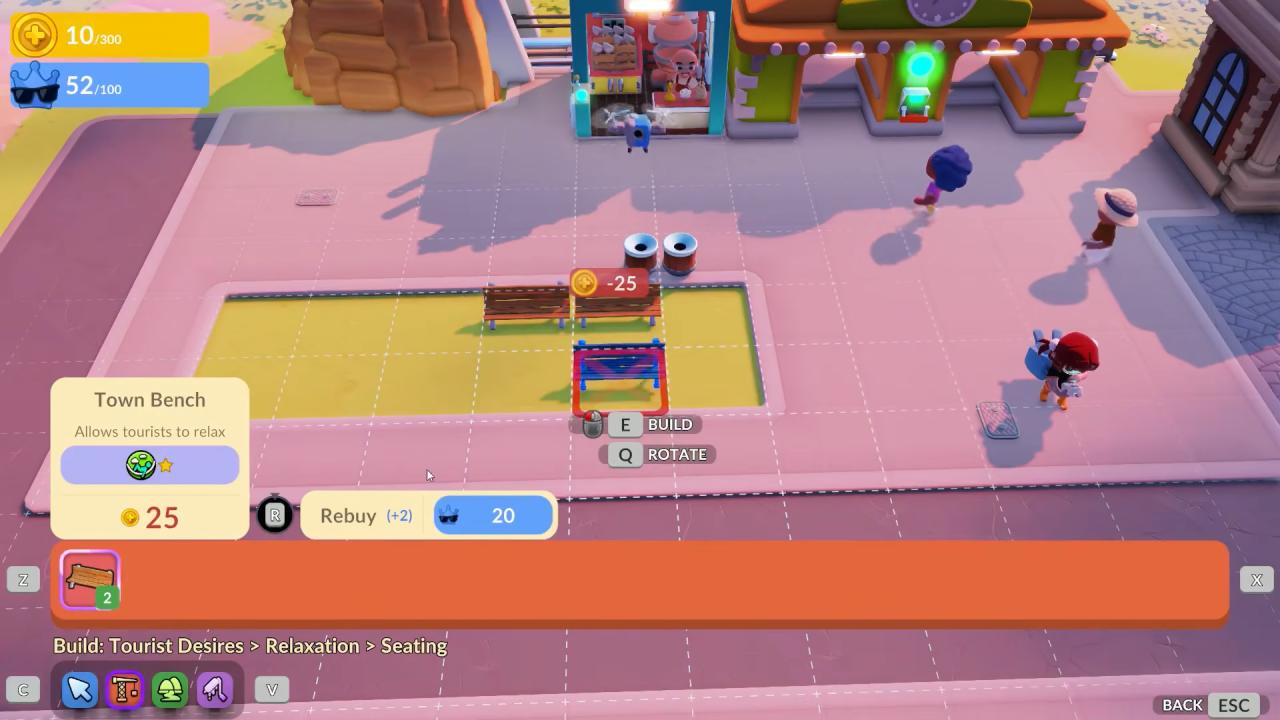
As far as visual style goes, this is one area where Go-Go Town! shines brightly.
It uses a rounded art style that fits perfectly into its warm world, and the animations reflect it very well. From building construction to a tourist visiting a new store, everything looks nice and clean, with great visual feedback. Customization runs deep, too, covering your character, your buildings, your sidewalks, your plants; basically anything you can place gets some kind of cosmetic option attached to it.
There’s also an amusing and downright bizarre element whereby you get to design your own mascot for the town once you have achieved a certain ranking, and they end up being pretty darn funny-looking rather than professional-looking, which is consistent with the quirky nature of the game. There is also a degree of visual variety with the vehicles, as some of them are capable of performing minor tricks.
In terms of audio, Go-Go Town! seems like more of a hit-or-miss game, where opinions will definitely be split a bit here as well. Namely, the soundtrack is rather upbeat in general, but may feel out of place in the context of running a town at your own leisurely pace. It often happens that the player simply turns off the music and relies on the ambient sound effects.
And here we have yet another great element of Go-Go Town! – ambient sound design that goes along quite nicely with the actions of the player. The sounds of crushed rocks, construction machinery, fishing, bike and skateboard engines- everything fits perfectly into this soundtrack. Luckily, this is rather easy to fix by turning the music volume down in the settings menu.
Go-Go Town! is a game that front-loads its best material, and it's clear the years spent in early access went toward making that opening phase as strong as possible.
This beginning stage has a tempo that ensures your whole afternoon goes unnoticed by the arrival of new buildings, new townies, and new systems, just when you are getting used to the old ones. The controls take some time to get familiar with, especially when you are using the Switch, since there are many menus and options to deal with before muscle memory starts to kick in.
The tutorial itself is very slow, and it doesn’t sell you the loop until you’ve been playing for a couple of hours already. Once things do click, though, the combination of hands-on building and background automation is genuinely satisfying to watch come together, and the four resource zones feeding directly into your shops give the whole town an almost farm-to-table logic that's easy to appreciate.
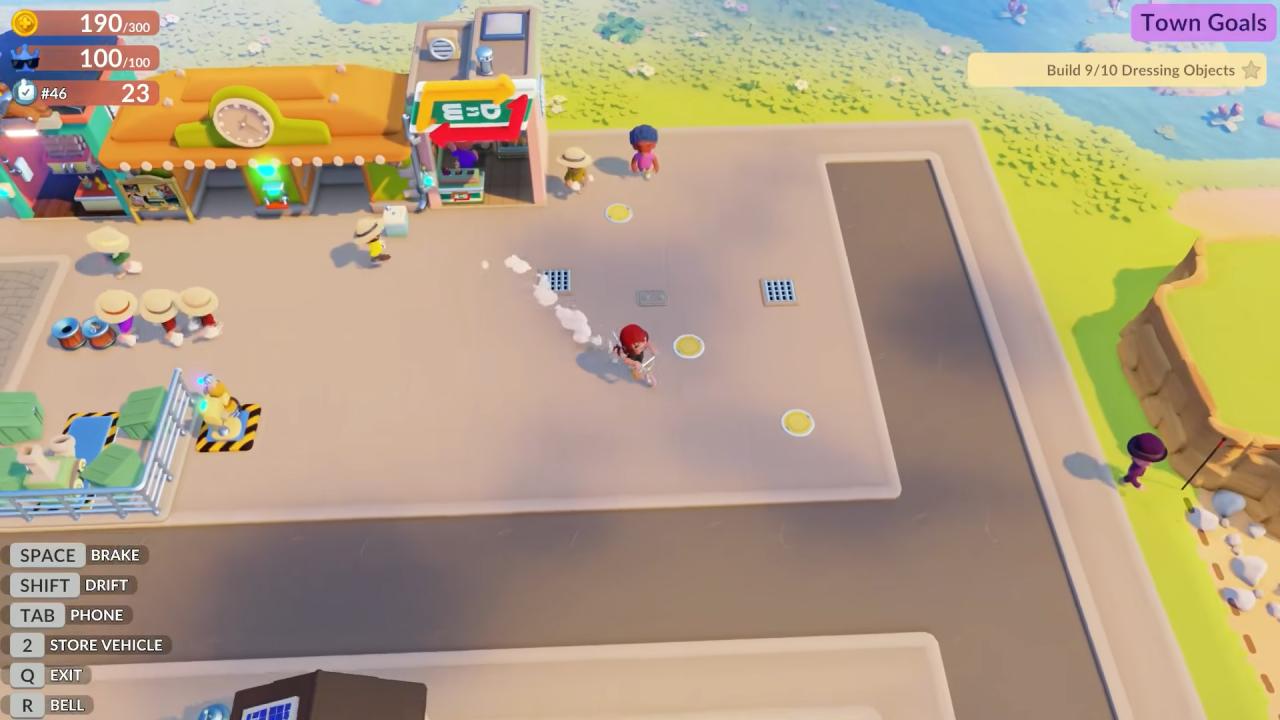
Where it loses some steam is in the back half, once the tier caps, the ballooning costs, and the thinner unlock schedule start turning play sessions into waiting games rather than building ones. That's not necessarily a dealbreaker, since a lot of players won't push far enough into the late ranks to feel it, and the developers' track record of steady post-launch updates suggests some of this could still be smoothed out.
For the asking price, you're getting a town-builder with real personality, a surprising amount of systems layered on top of each other, and a co-op mode that makes it easy to recommend to a friend or a family member looking for something low-stakes to dig into together.
Whether Go-Go Town! is worth your time really comes down to how much you enjoy watching a town run itself once you've done the work of setting it up. If that specific kind of satisfaction appeals to you, there's a strong chance you'll sink far more hours into this than you originally planned, and you'll likely find yourself thinking about your next building project long after you've put the controller down.
Staff Writer, NoobFeed
Verdict
Charming and chaotic in all the right ways, Go-Go Town! hooks you fast and holds on for dozens of hours, settling into a calmer rhythm once the town starts running itself.
83
Related News
No Data.