
Starsand Island Review
Nintendo Switch 2
A cozy paradise let down by a broken port.
Reviewed by Asura Kagawa on Aug 20, 2026
Starsand Island appears in a market already flooded with comfortable farming and living simulators with the all-too-familiar yet attractive premise of forgetting the stresses of daily life, returning to your childhood’s quiet island, and building a new life at your own speed. Seed Sparkle Lab’s Starsand Island plainly tries to mix the cozy formula of a farming sim with RPG-like advancement, adventure, crafting, relationships, and plenty of customization.
The bright presentation and Studio Ghibli aesthetic immediately evoke the kind of relaxed excursion that might easily eat up dozens of hours. Sadly, the Nintendo Switch 2 version feels like a rushed port launched before it was ready. The main issue is that Starsand Island is trapped between two very distinct identities.
Under the technical issues is a very fun, snug sandbox with plenty of material and a few interrelated systems.
On Switch 2, that experience is marred by terrible asset pop-in, choppy performance, long loading screens, graphic glitches, crashes, and weird vehicle behavior. There's even a day-one patch to fix certain visual faults, but plenty of bugs remain. This makes Star Sand Island a really challenging game to review, because there is definitely something wonderful behind the flaws. Still, the version on Nintendo's platform does not yet live up to that promise.
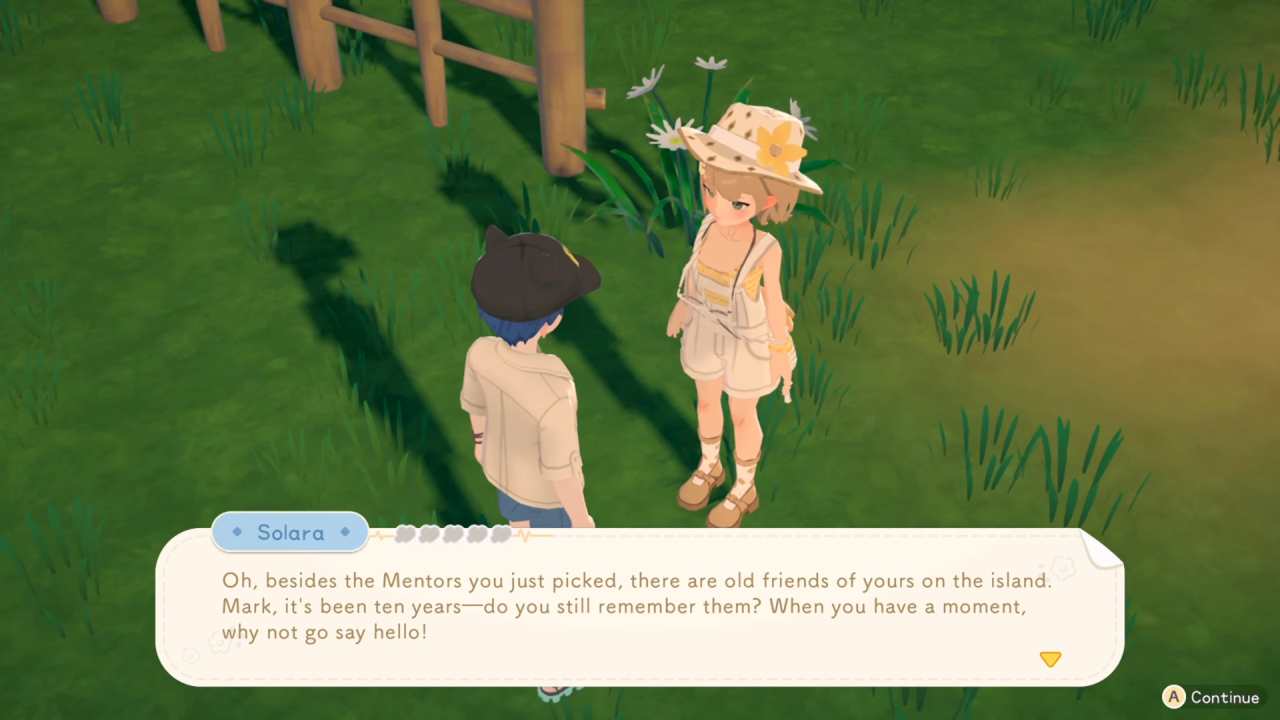
The narrative follows the standard comfortable life-sim pattern. Your character is tired of their normal city life and gets a chance to return to the island where they spent part of their youth. Upon arrival, you reunite with familiar people and settle into your own piece of land that immediately becomes the hub of your new life. From then on, it's less about dramatic twists and turns and more about what kind of life you want to establish.
The island offers you a ton of freedom. You can farm, breed animals, fish, gather resources, explore risky places, create buildings, accomplish missions, make friends, and eventually grow your humble homestead into something much bigger. It’s not always a big bad guy or corporation pushing the story forward. Indeed, advancement is built into the island's people, occupations, tasks, and your own ambitions.
Relationships are very crucial. There are 14 romanceable individuals, each with their unique devotion progression, side missions, backstory material, and extra sequences. Gifting and fulfilling requests will slowly build these ties, and some interactions will also help your overall progress. The characters are mostly likable, but some may feel somewhat typical for the genre.
If you’ve played a handful of other farming simulations, the tale itself won’t surprise anyone, but the easygoing tone is a good fit with the general concept of the game. Starsand Island's gameplay structure is undoubtedly its best feature. The game has 5 interlocking careers instead of one straight path: farmer, angler, artisan, rancher, explorer. You can invest in all five or focus on one. That flexibility is one reason the game feels meatier than a typical farming sim.
.jpg)
Farming does what it should. You plow the field, sow the seeds, water the plants, wait for them to grow, and harvest them when they are ripe. Later upgrades and assistant robots alleviate some of the repetitive work. There’s a range of seasonal crops. Ranching is similar: you can rear animals and eventually use some of them for transportation. Fishing and collecting are other methods to earn money and harvest resources. Crafting becomes more vital as you level up.
Crafting is one of the game’s most amazing mechanics because it goes much deeper than just manufacturing a stronger ax or watering can.
Materials and goods are fed into each other through several crafting stations, forming a production chain that gets more and more convoluted in the later game. You might explore and acquire resources, process them through a machine, and use the results in another station to eventually develop advanced equipment or artifacts for your farm.
Crucially, tool durability isn’t always the problem. Instead of constantly fixing instruments, you might concentrate on enhancing them and obtaining more powerful equipment, such as chainsaws. This makes resource collection less tedious and encourages you to explore other areas of the island. The world-building system is another strong point.
You may shape your land, make structures, change topography, decorate rooms, and arrange furniture using a grid-based system. That’s where Switch 2’s mouse capabilities on the controller come in handy, as it may be tricky to line up smaller items with regular controller inputs. Even gamers who aren’t inclined to decorate naturally could spend most of their time elsewhere, yet the creative latitude is surprisingly vast.
The island is big enough, too, that transportation matters. There are lots of ways to get around using roller skates, scooters, motorbikes, hoverboards, sports vehicles, alpacas, etc. Sadly, here is also where some of the Switch 2 port’s issues become particularly noticeable. Some vehicles are weird, and the skateboard can be broken in an almost hilarious way, bouncing continuously even when the player is only holding forward.
.jpg)
Fighting is primarily associated with the Explorer profession and takes place in locations such as the Moonlit Forest and ancient ruins. Starsand Island provides a simple, ranged combat approach, eschewing a complex action system. Players can employ weapons like slingshots, bows, and crossbows, with elemental ammo coming later.
Simplicity can be both a virtue and a weakness.
No blocking, no rolling, no fancy dodge mechanism. Instead, you fight at a distance and dodge oncoming assaults. Combat is easy to grasp and keeps the game from becoming overly combat-heavy, which might appeal to gamers who are mostly looking for a pleasant farming experience. However, anyone anticipating deeper RPG combat is probably going to be disappointed.
Enemy encounters are not as sophisticated as in a dedicated action RPG, and foes are not encountered often enough to make battle a main pillar of the experience. Dungeon exploration is far more fun than battle. Ancient ruins are big, with many valuable resources and secrets, and they inspire frequent visits because crafting always creates a need for older materials.
Where Starsand Island really shines is in that exploratory loop. You’ll find maps, gather resources, kill foes, look for helpful goods, go back to crafting stations, and then head out again. Unfortunately, this fun system also suffers from technical problems on Switch 2. Lights can appear to load in when you get closer to a place, while certain visuals display right in front of you.
Entering and exiting dungeons can also cause very long loading times, with one transition reportedly taking about 65 seconds. Progression blends classic farming-sim progression with an RPG-like career system. Each of your five professions has its own progression, and you are encouraged to try diverse activities rather than keep repeating the same work.
Farming becomes better with farming, exploring gets better with dungeon crawling, crafting gets better with production, etc. You earn Star Sand by completing bulletin board tasks, career milestones, and transporting goods. Then you can spend it on more land and a large talent tree. These talents offer quality-of-life improvements and potent skills that can drastically affect how effectively you perform specific tasks.
.jpg)
This approach works so well because everything you do has a reason. If you want more inventory space, you could have to collect resources from another craft. For greater crafting capabilities, exploration can provide you with the resources you require. Therefore, relationships, missions, professions, and farming all feed into each other rather than feeling like distinct systems.
Stamina System – Starsand Island has one, too. If you run out of all your stamina, your character will pass out. Stamina drain can be repeated and incur additional penalties. Food and sleep restore stamina, and the 2 am bedtime limit forces players to manage their days carefully. Each in-game day takes around 25 minutes in the real world, which is enough to get a few things done but not enough for days to drag on.
Starsand Island has a nice visual base.
The bright colors, pastel backgrounds, stylish characters, and soothing views provide exactly the kind of vibe you would expect from a modern cozy game. The island can be stunning, especially when the game runs well. But sadly, the Nintendo Switch 2 version doesn’t always hit that visual quality. Starsand Island has quality and performance presets; however, the execution is perplexing. Quality mode usually looks better.
Sharper presentation. Stronger detail. More attractive colors. Performance mode prioritizes frame rate but sacrifices so much detail that the world can become incredibly blurry, especially when playing docked on a television. The most noticeable graphics flaw is asset pop-in. When you're already incredibly close to buildings, foliage, environmental elements, textures, and other items, you may then see them.
It’s much more pronounced when you’re utilizing automobiles, because moving swiftly makes the world have a hard time keeping up. Sometimes, until you get close, constructions can seem unfinished. There are also weird animation and visual problems. Things can just disappear rather than animate properly, characters can behave oddly, and some monsters have been described as moving in weird ways.
.jpg)
Dungeons have their own challenges, with lights often only emerging when the player gets close enough. The audio is far more successful. Star Sand Island features happy, peaceful music that matches the low-stress mood. The compositions are nice and help strengthen the idea of being part of a quiet island community.
But the music can get a bit boring, with some tracks looping too much and not enough differentiation between times of day or seasons. Sound effects are variable as well. Some activities lack sound feedback, while other effects sound generic. Some discovery moments use familiar presentation principles with no particularly memorable audio design, and cars can lose their engine noise without warning.
The voice acting is a bit overdone but matches the game's humorous tone.
The sound design generally accomplishes its job but rarely becomes a noteworthy feature. Starsand Island is a disappointing example of a fantastic game being dragged down by a lousy port. The core experience has real strengths.
The five professions provide a pleasant gameplay loop; crafting has more depth than you’d anticipate; exploring gives you a reason to keep accumulating resources; relationships add personality; and the building system allows for incredible creative freedom. There’s plenty here to keep die-hard aficionados of the cozy-game genre busy for a very long time.
The problem is that the Nintendo Switch 2 version feels incomplete right now. Performance is uneven, visual quality can be surprisingly poor, asset and texture pop-in is extreme, loading times are far too long, cars can behave weirdly, menus can break, and crashes can happen during gameplay. Even the simple pleasure of navigating the island might be disturbed by things popping up in front of you.
A game that's meant to be relaxing shouldn't keep reminding you that something is technically broken. The developers recognize that the console version requires fixing, and the review materials apparently had a long list of known concerns. That is good news, because it means these concerns aren't being neglected.
.jpg)
With future updates promising big performance, loading, pop-in, and stability improvements, Starsand Island might be a much stronger recommendation. The core game deserves a chance to shine without technical issues getting in the way.
But for now, it's tough to endorse the Nintendo Switch 2 version at full price. Starsand Island has the foundation of a really fun farming and life simulator, but the current port doesn't do that foundation justice. Star Sand Island is not a horrible concept or necessarily a bad game on any platform. It just needed more time before it made it to Switch 2.
Staff Writer, NoobFeed
Verdict
Starsand Island has an addictive farming, crafting, exploration, and relationship loop, but its Switch 2 port is plagued by poor performance, extreme pop-in, long loading times, glitches, and crashes. Wait for the patches.
60
Related News
No Data.