
Top AVN & Adult Games of 2026 on Steam
All the standout AVNs and adult games on Steam of the year so far, full releases and Early Access titles alike.
Games by John Snow on Sep 01, 2026
2026 has been a strong year for adult visual novels on Steam, with everything from apocalyptic survival dramas to demonic harem intrigue landing on the platform. Whether you're after slow-burn romance, high-concept sci-fi, or straightforward fan service, there's been no shortage of quality releases to sink hours into.
Below, we've rounded up the standout AVNs and adult games of the year so far, full releases and Early Access titles alike, covering what each one gets right, where it stumbles, and who it's likely to click with.
Attention: The content of this article may not be suitable for users under the legal age of 18. There is graphic, sexually explicit stuff here that is only appropriate for adults. No matter what you do after reading this post, we won't be held liable.

Moonripple Lake
Moonripple Lake drops you and your girlfriend Suzie (names customizable) into a cheap rental house in a small lakeside town, the kind of deal that's cheap for a reason: the place was the site of a mass murder twenty years earlier, and your landlady was the only survivor. What starts as a fresh start quickly tangles into small-town mystery and supernatural horror, all wrapped around a cast of oddball locals.
The relationship at the center of Moonripple Lake leans into hotwife and stag-and-vixen territory, and reviewers consistently point out that it handles this with more care than most of the genre. Rather than framing things around jealousy, humiliation, or a cuck dynamic, the game treats it as a couple exploring a kink together, with the player choosing how far Suzie's encounters go rather than watching helplessly.
Gameplay is a linear visual novel with light sandbox touches. You'll poke around town collecting hidden polaroids, unlock scenes across three separate galleries, and chase 24 Steam achievements that require multiple playthroughs to see everything. Choices exist, but they mostly steer which content you see rather than reshaping the plot itself, and toggles let you opt out of futanari/femboy content or jump scares entirely.
On presentation, Moonripple Lake is one of the standout entries this season, with hand-corrected AI art giving it a polish few competitors match.
Backgrounds and character drafts started as AI output, but the developer has gone back over nearly everything by hand, and it shows in the environmental detail and consistency of the cast. A few critical reviews still point out stray inconsistencies between episodes, particularly in facial proportions, but the overall presentation holds up well against the rest of the genre.
Audio backs this up well, too, with partial voice acting and a soundtrack spanning over 60 tracks, giving Moonripple Lake more atmosphere than most AVNs bother to build. At six to nine hours depending on how thoroughly you explore, pacing is the game's most divisive element.
Several reviewers enjoy how the story takes its time building tension and relationships, while others feel the dialogue drags on longer than necessary and that the decisions carry less weight than advertised. Update frequency has also drawn criticism, with some players noting long gaps between content drops during Early Access.
Even so, Moonripple Lake earns its spot at the top of the list. Reviewers consistently praise the writing, the chemistry between the leads, and Suzie in particular as one of the stronger AVN heroines in recent memory, enough to carry it past its rough edges and land it a "Very Positive" rating from nearly 90% of reviewers.

Survivor Strain – Season 1
Survivor Strain – Season 1 drops you into a South American country two years after a viral outbreak has reduced most of civilization to infected stragglers. You're not a soldier or a chosen hero, just a tourist who got stranded when the world ended, and the game wastes no time making that vulnerability felt: an early supply run goes wrong, allies are lost, and the employer who sent you on the job tries to take everything you have left.
From there, the story shifts into faction politics and community survival, with a cast of women each carrying their own backstory and reason for still being alive. Gameplay leans more toward a visual novel than a sandbox, with a light hub area for checking in on companions and nudging relationships forward through dialogue rather than grinding.
A codex tracks faction standing and infected types, while a Warlord-versus-Peacemaker alignment system quietly shapes how the story reads back your choices. Romance routes run in parallel, with Anais typically opening up first.
Visually, this is one of the stronger showings in the genre this season, with genuine texture work on the 3D models.
The environmental art sells the "protected pocket of civilization in a dead world" feeling better than most AVNs manage. Animation is inconsistent, and there's no voice acting, leaving gunfire and ambient noise to carry the atmosphere.
Pacing splits opinion: relationships escalate quickly, plot threads get dropped without follow-through, and unclear time jumps leave some players unsure if a scene is happening now or in flashback. Still, for a reported solo developer's first release, it punches above its weight; its distinct world-building and solid QoL features earn it a 95% positive rating.
Game of Hearts
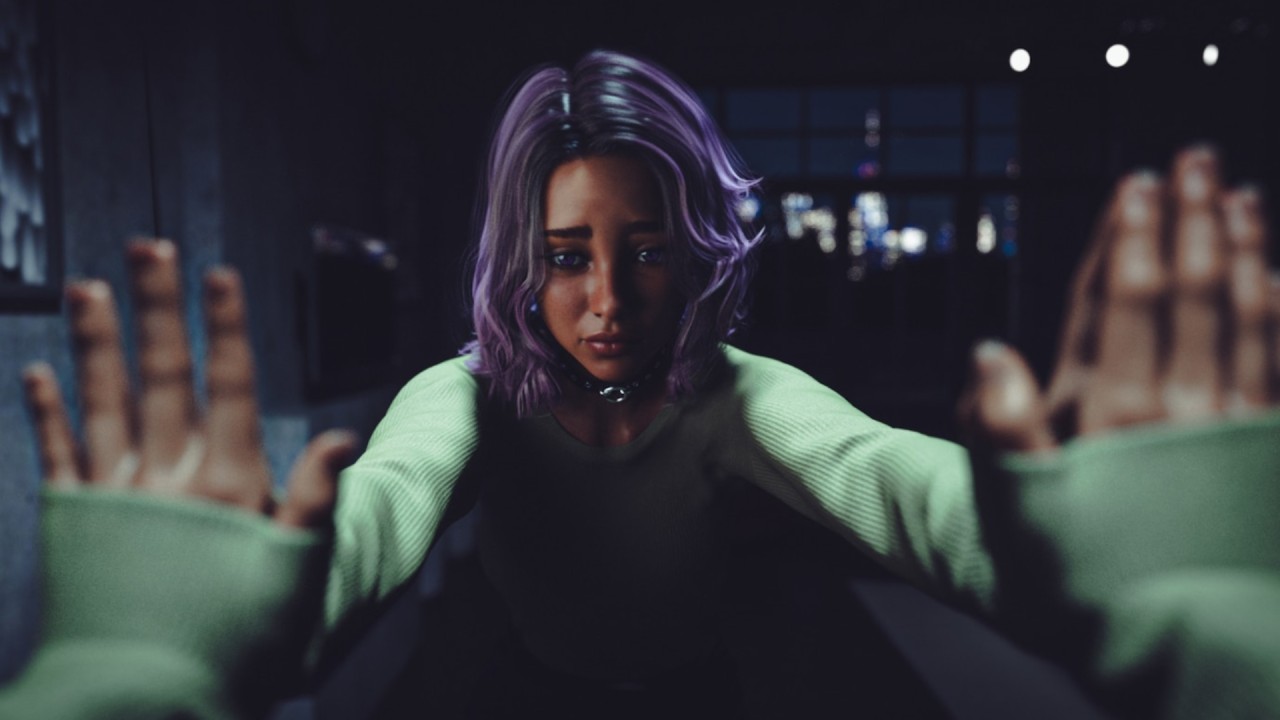
Game of Hearts casts you as Red, a young man already entangled with a married woman named Maxime when an assassination attempt reveals his demonic bloodline. Sent to the House of Hearts under Julia's guidance, he's tasked with using mind-reading and demonic charm to turn women into loyal followers, starting with Meredith, a faithful wife whose guilt and resistance make her the story's emotional centerpiece.
Dialogue choices steer pacing more than outcomes; there are two endings and enough dialogue variation to reward a second look, though Red stays locked into a fairly agreeable, soft-spoken default regardless of choices made. Energy and power systems let you deploy demonic abilities mid-scene to intensify the corruption, and a status tracker keeps tabs on how far things have gone.
The writing and presentation earn the strongest praise, with the mind-reading conceit giving real weight to internal conflict.
Scenes run long, weaving story directly into intimacy rather than cutting between "plot" and "porn," and the 3D renders lean toward grounded, realistic character designs rather than uniformly ultra-model looks. No voice acting or sound effects during scenes is a recurring gripe, along with occasionally exaggerated expressions at climaxes.
Reception is split on expectations: players seeking a fuller demonic-corruption power fantasy find the premise underused, with much of the runtime spent on grounded relationship drama rather than darker, higher-stakes intrigue. Others are simply tired of paying for a complete first chapter that ends on a cliffhanger, no matter how well it's written.
At 10-12 hours, it treats its small cast with real care rather than padding the runtime with forgettable side characters, clearly knowing where it's going even as it asks players to trust the wait.
Astra: Ardent Show
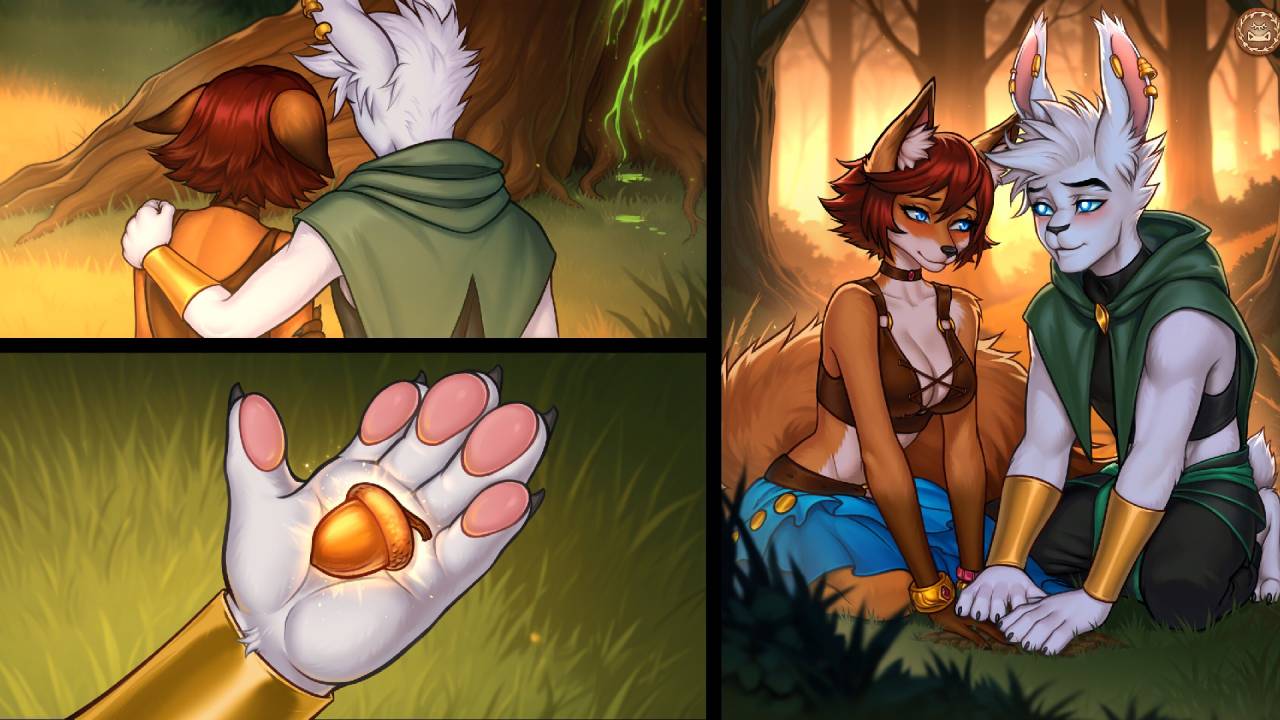
A Lyndaria spin-off from Lustration Team and Furlough Games, Astra: Ardent Show follows fox princess Astra as she walks away from royal life and a marriage to Saffron in pursuit of freedom, on an island now caught up in ongoing conflict.
It's noticeably shorter and more linear than its predecessor, Lyndaria, trading sprawling exploration for a tighter, more focused story that unfolds almost entirely at the center of the action rather than leaving players to wander empty locations.
Beyond the visual novel dialogue, Astra mixes in light turn-based combat and puzzle segments as alternate paths through key encounters, letting players lean on whichever they prefer, though neither can be skipped outright and unlocking every gallery card typically means engaging with both. A full playthrough runs somewhere in the two-to-three-hour range if played at a normal pace.
Art is praised nearly unanimously, with detailed character designs and a clear step up in animation from the studio's earlier work.
The anthropomorphic cast, more than twenty characters deep, gives the island real personality. Sound design and music generally match the tone, though some players have noted repetitive effects and occasional mismatches between dialogue and on-screen animation.
Where opinion splits sharply is the writing. A vocal contingent feels the choice system is largely cosmetic, unlocking scenes rather than meaningfully branching outcomes, and takes issue with how Astra and Saffron's relationship is handled.
Others push back hard, praising the same arc as a nuanced take on autonomy and the cost of freedom. Even critics tend to frame complaints as "great foundation, uneven execution," matching its Very Positive rating, a compact, visually strong entry for Lyndaria or furry AVN fans.

Getting Inside: Hentai Story
Getting Inside: Hentai Story casts you as an unremarkable office worker whose life takes a turn after a reckless séance summons Astaroth, a demon who ends up bonded to him rather than tormenting him. The payoff is a mind-reading ability that lets the protagonist hear what women around him are actually thinking.
From there, the story becomes a lighthearted, comedy-driven pursuit of six distinct heroines: the bossy boss, the busty MILF with a secret, a gyaru, a tomboy athlete, a gamer girl, and a childhood friend. The structure is straightforward visual novel fare with a nonlinear twist: dialogue choices determine which routes open and which close, so a wrong answer can lock you out of a given ending.
Two small minigames, an office filing sort and a maze puzzle, break up the pacing, though neither can be skipped, and more than one player has found them tedious. A full playthrough runs 5-7 hours, closer to 9-10 for full completion.
Production polish is where the game consistently earns praise, staying visually consistent while reading as genuine motion.
Character art holds up well; models stay consistent scene to scene, and the roughly twenty sex scenes come fully voiced in English, with reviewers calling the voice work unusually committed for a budget title. Content leans mostly vanilla, with variety coming more from the six heroines than fetish range.
The recurring criticism lands squarely on the writing: the plot is thin by design, and localization quality is inconsistent across versions. There's no cloud save, and the scene gallery is locked behind separate paid DLC, both of which are frequently cited as avoidable annoyances.

Sex, Secrets & Used Tech
Sex, Secrets & Used Tech casts you as a computer repair guy who doubles as an amateur detective, cracking open people's phones and digging into a city where surveillance, corrupt officials, and a shady government presence sit just beneath the surface of an otherwise goofy, self-aware hentai premise.
It's an unusual pairing of tones, part parody, part genuine commentary on privacy and control, following a cast built around two standout leads: the teasing Ivy and the endearingly dim, golden-retriever-energy Maya, alongside a wider supporting roster.
Gameplay sits closer to a point-and-click adventure than any kind of sim: you move around the city on a day/time schedule to trigger conversations and story beats, mixed with a handful of recurring minigames that stay simple throughout rather than scaling in difficulty.
A full playthrough runs anywhere from 6 to 11 hours, depending on how much side content you chase, and while an early demo reportedly promised meaningfully divergent "freedom" versus "police" paths, the full release has those threads crisscross rather than stay properly separate.
Art and city design are consistently well-regarded, and voice acting draws some of the strongest praise here.
That's the catch, though: voice-acting coverage is inconsistent, and the animated scenes range from genuinely fluid to static images cut together in a slideshow, with more than one review flagging scenes that abruptly jump into explicit content. Background NPCs using flat, uncolored sprites is a recurring smaller complaint.
Story reception is where things diverge most. A solid contingent found real substance here, while others found the writing thin and the side-quest structure bare-bones enough to drag the main plot's momentum down.

Returning to Mia
Inceton's sequel to Summer with Mia picks up two years after the first game, sending the now-22-year-old protagonist back to spend the summer with Grace and Mia, this time leaving girlfriend Sadie behind.
It's substantially longer than its predecessor, with playthroughs commonly reported in the 20-40 hour range across ten chapters plus epilogue, built around a branching structure of over 180 choices and multiple distinct endings depending on which relationships you commit to.
The trademark Inceton features return here: an X-Ray toggle and rotatable camera angles on key scenes, a recap option for players jumping in fresh, and returning characters from the studio's other titles making cameo appearances. A gallery system tracks both replayable animated scenes and a large collection of standalone images.
Reception is genuinely split over the writing, particularly how the story handles its central relationships.
A meaningful share of players call this the strongest entry in Inceton's catalog, praising real character depth and a protagonist who finally faces consequences rather than being rewarded regardless of his choices. Others are considerably more critical.
Some describe the plot as bloated by the midpoint; others take issue with the game's structural insistence on infidelity, since the story doesn't allow you to simply end things cleanly with a partner before pursuing someone else.
Technically, the game is generally well-regarded for its visuals, with over 35,000 images and roughly 490 animations. However, the narrator's voice acting seemed AI-generated and widely described as noticeably synthetic. Later reviews also flag real technical problems, including save-breaking bugs and unresponsive developer support.

Lust Manor: Leona's Secret
Lust Manor: Leona's Secret, from Kinky Business Group, casts you as an operative going undercover as a maid to infiltrate the mysterious Amadeus Manor and track down a set of hidden blueprints. What starts as a straightforward espionage job quickly tangles into a web of suspicious residents, personal relationships, and secrets that unravel gradually rather than all at once.
This gives the story a stronger sense of identity than most maid-fantasy AVNs manage to achieve. It helps that no men live in the household besides the disguised protagonist, a setup the story leans into to justify how much attention Leona draws once the eight resident heroines start noticing her.
Presentation is a consistent strength, with stylized anime art and a mystery-driven pacing that keeps players guessing about who to trust.
The gameplay stays firmly in visual novel territory: dialogue choices shape relationships and unlock scenes, with a light icon-based system that lets you pick a conversational approach and steer how each character reacts. A handful of simple minigames break up the pacing, and player decisions ultimately funnel into one of three endings.
The cast, while not deeply written on an individual level, covers a reasonable spread of personalities, from a strict head maid to a mysterious lady of the house, and keeps interactions varied across the mansion. The game draws consistent criticism for its length and value.
This is a short experience, commonly cited as 2-5 hours, and many reviews consider it overpriced for what it delivers, recommending it mainly when on sale. No manual save option and no way to fast-skip already-seen dialogue compound the frustration for replay-minded players.

Wings of Empire
Wings of Empire, from Droid Productions (the studio behind Love of Magic), imagines a milscifi alternate history where the Roman Empire never fell and eventually reached the stars alongside a surviving Han Chinese-Japanese power bloc.
You play a former Legionnaire whose combat injury and cybernetic leg redirect him into the Imperial Navy as a space fighter pilot, right as a newly annexed frontier world becomes the flashpoint for a brewing conflict that pulls his fast-attack carrier into the middle of it.
The lore is the game's calling card. Reviewers consistently praise how deeply realized the alternate Rome feels, right down to in-text tooltips explaining Latin terminology and military rank structures, giving the impression of a setting built by someone who genuinely knows Roman history.
That depth comes with a trade-off: some players find the jargon and repeated exposition genuinely taxing. Currently in Early Access, the game covers 75 to 92 "days" of content across four planned acts, with total playtime landing anywhere from 10 to 20+ hours.
Turn-based space combat, fully skippable, lands as a satisfying addition for most players.
Reception is mixed but leans positive; several reviewers call it a satisfying, appropriately weighted addition rather than filler. That said, a vocal minority reports real technical problems, including NPC allies flying off-screen and blocking mission progress entirely.
Love interests are widely praised for being visually distinct and well-written, with a toggle between harem and monogamous routes for each character. But a meaningful contingent feels the explicit scenes themselves lag behind the rest of the production, citing limited scene variety relative to genre leaders.

Paradise Lust 3
Paradise Lust 3, developed by Flexible Media, closes out the trilogy that began with the original Paradise Lust, reuniting Jack and the cast on Tuva Tuva Island for what the developer has billed as the series' final chapter. This entry swaps the previous game's resource-management focus for a lighter, beauty-pageant premise.
Jack now runs the island's contest operations, juggling stage prep, contestant management, and daily logistics while romance develops as a byproduct of keeping the event running smoothly. Familiar faces sidelined in the second game, including fan-favorite Reyna, return alongside newcomers like Freya, while returning antagonist Hunter fills the "person to root against" role.
QoL has clearly gotten attention, with fast travel, time-skip, and a cleaner task interface improving on prior entries.
Gameplay stays close to the point-and-click, task-driven structure the series is known for, layering in a rotation of simple minigames that function more as pacing breaks than genuine challenges. As an Early Access title, current content runs a few hours deep, with players reporting 7+ hours already available and more promised as updates continue.
The strong consensus across reviews is that this is a genuine course correction after a second entry that many longtime fans found lacking. The tone sits closer to the beloved first game, and visually, the art has been bumped up again, with over 15 animated H-scenes using Live2D-style animation and solid voice work.
Not every reaction is glowing: a vocal minority takes issue with the adult content, arguing scenes have been reduced to single-position, single-motion sequences, and another thread argues player choices currently carry no real narrative weight.

Kiss of Sin: Rewinding Flame
Kiss of Sin: Rewinding Flame, from developer L7team (also behind Fashion Business and MILFs of Sunville), puts you in control of Ariette, a proud, sharp-tongued noblewoman and skilled swordswoman whose plans to seize control of a monastery unravel almost immediately after she arrives in the volatile city of Havenport.
A chance encounter nets her a forbidden ring capable of rewinding time, but the power comes at a cost: every rewind is fueled by sexual energy, tying the game's central mechanic directly to its themes of temptation, pride, and slow-building corruption as political intrigue between the Inquisition, local guilds, and supernatural forces closes in around her.
The presentation earns the strongest praise, with detailed environments and fluidly animated cutscenes.
Structurally, this is a visual novel with light sandbox and free-roam elements layered on top; a quest panel, codex, map, and fast travel keep navigation simple, and stats like temptation level and faction trust track your standing in the background.
Currently in Early Access, the build is short; most reviews report 2 to 4 hours of content, and dialogue choices, while present, still don't branch the story much at this stage. The recurring, well-documented sticking point is the scope of content, specifically how little Ariette herself has been directly involved in the game's explicit scenes so far.
Most of the current adult content centers on secondary characters or scenes Ariette observes rather than participates in, which the developer has openly attributed to this build being focused on prologue and setup, with updates already in progress. Reactions to that gap split in an unusual way: many reviewers are frustrated and want to see the corruption arc reach the protagonist, while a smaller group has specifically praised the restraint.

Shana – Priestess of Tona
Shana – Priestess of Tona, from Lustration Team (the studio behind Lyndaria), swaps that series' visual novel format for something different: an adult roguelike auto-battler. You play Shana, a priestess sent to root out a spreading corruption threatening the land of Lynderia.
You're joined by Maya (a returning face from Lyndaria) and newcomer Victoria as she carves through five dungeon levels across three difficulty tiers, defeating monsters not just with combat but by seducing and draining them through sex, tying the game's central gimmick directly into its story hook.
The presentation earns near-universal praise, with detailed art and fluid animation in both combat and intimate scenes.
Mechanically, this is a genuine auto-battler: combat resolves automatically once a run starts, with player input limited to pre-run choices, equipping gear, selecting passive buffs, choosing spells and companion builds, and occasional in-battle ability triggers.
Several reviewers appreciate the strategic layer of stacking debuffs and optimizing builds between runs, while a substantial contingent feels the genre framing was misleading, citing shallow itemization, unclear stat scaling, an inability to equip companions mid-run, and a restrictive currency system for what it can be spent on.
The roughly 24-25 main sex scenes (plus a dozen-plus shorter in-battle animations) cover a decent range of positions and partners, mostly Shana, with Maya and Victoria getting fewer scenes each. The recurring criticism that cuts across almost every negative review is the writing and localization.
The plot is thin by design, and multiple reviewers report broken or nonsensical English throughout the dialogue, which several attribute to AI-assisted translation that extends into the base English text itself.
Toro 7
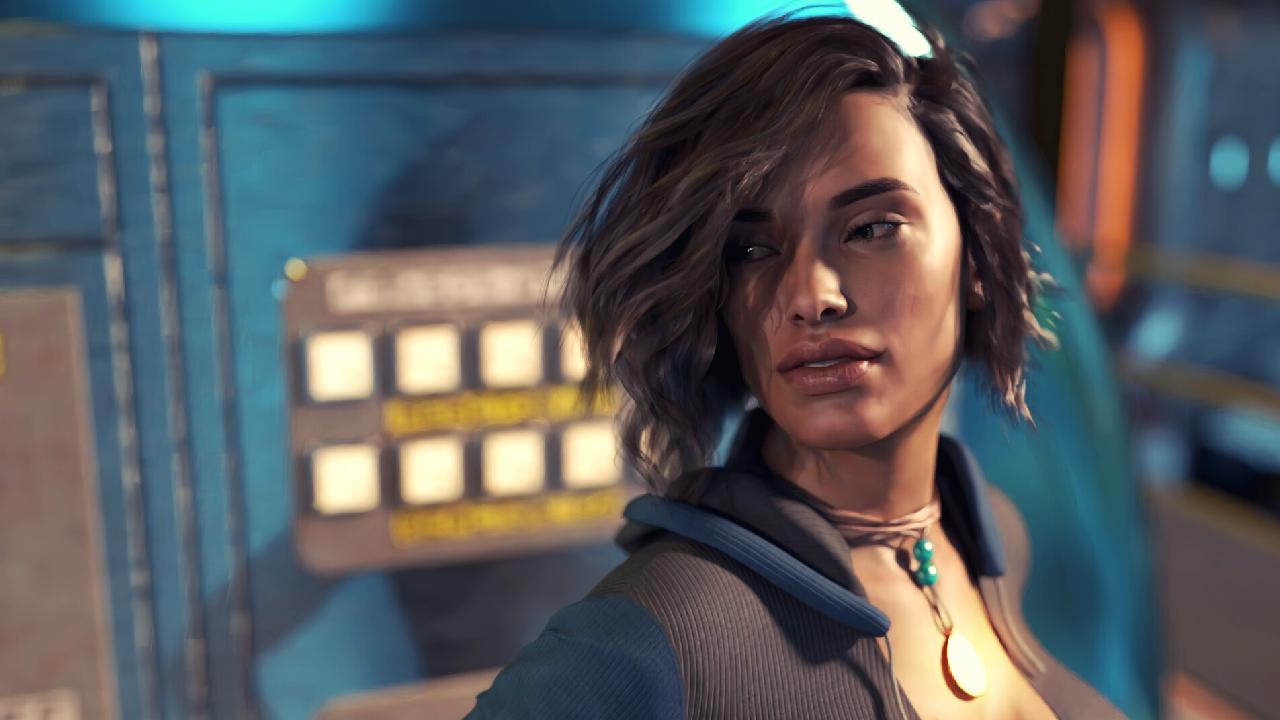
Toro 7 drops you into the role of a newly assigned security specialist at a research station, investigating whether your predecessor's death was really the routine medical incident it was reported as.
It's a mystery-first AVN; corporate corruption and a genuinely unsettling atmosphere drive the plot forward, and the game distinguishes itself early by letting you choose your protagonist: a straight male, a straight female, or a lesbian female, expanding the pool of possible romance routes well beyond the genre norm.
The most divisive element is that you can pursue only one romantic partner per playthrough, regardless of protagonist.
Reactions split cleanly down the middle. A meaningful share of players single this restriction out as the reason they refunded or soured on the game, feeling shortchanged given the size of the cast on offer. Others found it a genuine strength, arguing that the tighter focus lets the chosen relationship develop with greater depth and more organic pacing than the sprawling, harem-adjacent structure most AVNs default to.
Visually, character and environment art are consistently praised as well above average for the genre, with detailed, distinct designs that avoid an obvious harem-filler look, and are notably not AI-generated, according to more than one reviewer. That said, the intimate scenes themselves are static stills rather than animated sequences, the second major recurring complaint.
Several players feel the game's asking price doesn't match its runtime of around two hours and its scene count, which is on the lighter side. Opinions on the writing are generally positive; most reviewers call the mystery plot well-constructed, though a couple flag noticeable inconsistencies in physics and physiology that pull them out of immersion.
Loot Line – Season 2
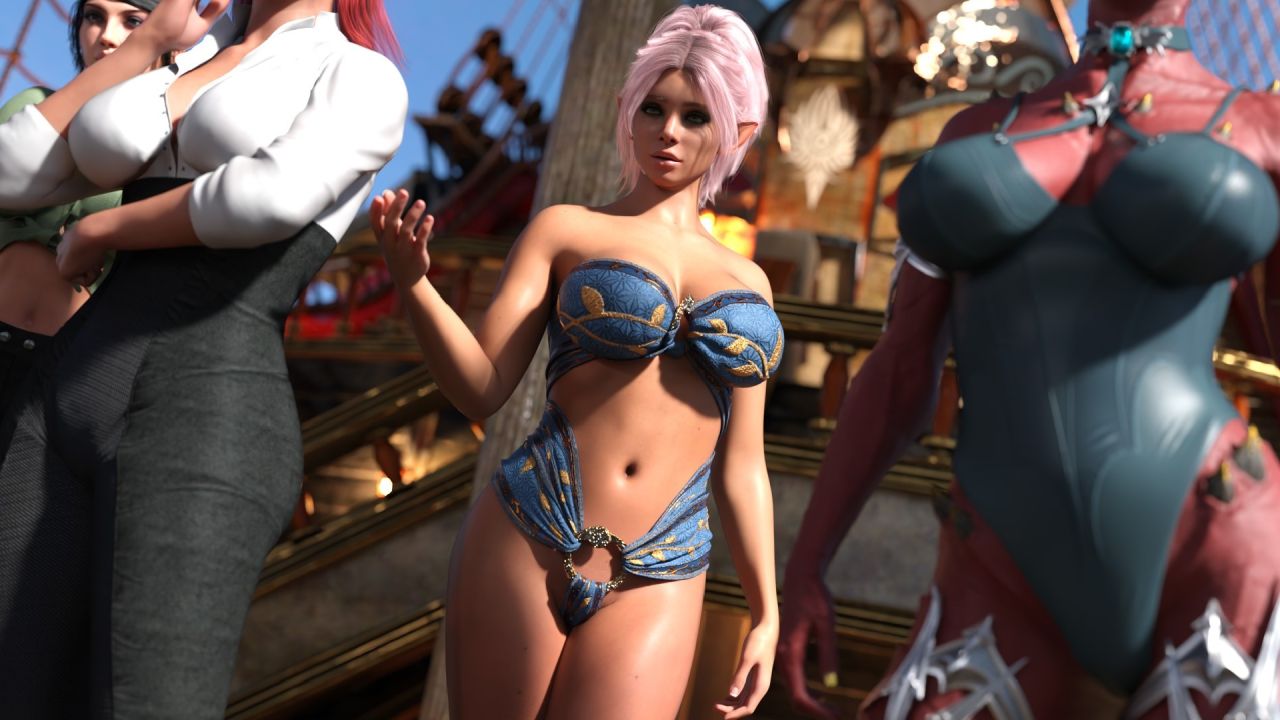
Loot Line – Season 2, from Candylight Studio, continues the pirate-themed series with a lighter, more adventure-comedy tone: colorful fantasy locales, a quirky and memorable crew, and a structure that encourages multiple playthroughs. The developer has also expanded the kink range for this entry, including optional NTR-flavored endings tied to specific routes alongside the more straightforward romance paths.
Presentation is the clear strength, with some of the genre's best animation according to multiple reviewers.
More than one review also appreciates the choice to move away from anime-style character models in favor of a more grounded look, and localization, a specific complaint about Season 1, is reported by several reviewers as noticeably cleaned up here, with smoother English on replay.
The season draws real, consistent criticism for its scope and structure. Season 1 ran a substantial 7 hours; this entry lands closer to 4, and many reviewers feel calling it a "season" oversells what's really a single, shorter episode.
That compression shows up mechanically too: the game locks you into one love interest for the full playthrough, decided at the very start, and multiple reviewers report that scenes and dialogue repeat nearly identically across different girls once you're on a route, undermining the sense that character choice meaningfully changes the experience.
A smaller but vocal group of longtime fans of the studio expresses real frustration with this pattern, feeling it mirrors a previous release in which a strong first entry was followed by a rushed or underdeveloped sequel, to the point of saying they're done supporting future titles from the developer.

Lust Theory Season 3
Lust Theory Season 3, from Inceton Games, closes out the trilogy by directly confronting the time-loop mystery the series has built around since its first entry. The Season 2 "simulation" explanation proves false, and the story instead centers on Alice, a new neighbor whose broken time experiment is revealed as the real cause of the repeating days.
The protagonist wakes up with no memory of the events of the previous two games' Thursday and Friday, now tasked with untangling the fallout of his own actions and deciding which relationships, if any, he can still salvage.
That retcon, plus an extended prologue introducing Alice, is repeatedly singled out as some of the series' weakest writing.
Several reviewers explicitly advise pushing through this opening because the game reportedly improves considerably once it reaches the free-roam section proper. Structurally, the game keeps the series' established loop-and-choice format.
A hint system nudges you toward each heroine's route, a revamped map and collectible system (Polaroids, VHS tapes) unlock bonus gallery content, and the story branches into as many as 12 different endings depending on final relationship choices.
Visuals and animation quality are widely regarded as the strongest in the series so far, but this entry is also shorter and thinner on content than Season 2, with a widely cited scene count around 25, fewer missions per character, and multiple reports of most activities being locked to the morning time slot only.
Voice acting is a near-universal sore point, too, with several reviewers reporting that voiced lines cut out entirely after the introduction. The game lands well in its ending. Multiple reviewers single out specific character send-offs; Ellie and Zoe's routes come up often as genuinely emotional payoffs that justify sticking with the story.

Intertwined – Season 1
Intertwined – Season 1, from developer ValeriaNyx, follows an 18-year-old protagonist returning to live with his mother after spending several years away with his father. The story alternates between his present life and memories that gradually reveal his past, former relationships, and complicated connection with a character named Erynn.
Although the player can pursue several women, the game still follows a central storyline, and characters are closely connected through friendships, family ties, and rivalries, so romantic choices, lies, and alliances can affect how others treat the protagonist.
Cheating, lying, or juggling connected love interests can permanently close routes, a rarity in the genre.
With more than 26,000 renders, the visual presentation is a consistent highlight; several erotic scenes use particularly striking camera angles and convincing body movement rather than basic back-and-forth loops, and the animated sequences extend beyond intimate scenes to include broader story moments like travel and dance.
A first playthrough runs approximately 10-20 hours, with several dozen additional hours available for players chasing the full gallery. The women are one of the game's greatest strengths in nearly every review; each has her own personality, vulnerabilities, and connections to the rest of the cast, and Valeria and Lexi repeatedly come up as fan favorites.
Criticism is relatively light: some scenes are difficult to unlock without a guide, and the distribution of scenes among characters is uneven. Season 1 ends on a deliberate cliffhanger that a handful of reviewers find frustrating in principle, even as most say it effectively hooks them for Season 2.
Our Red String
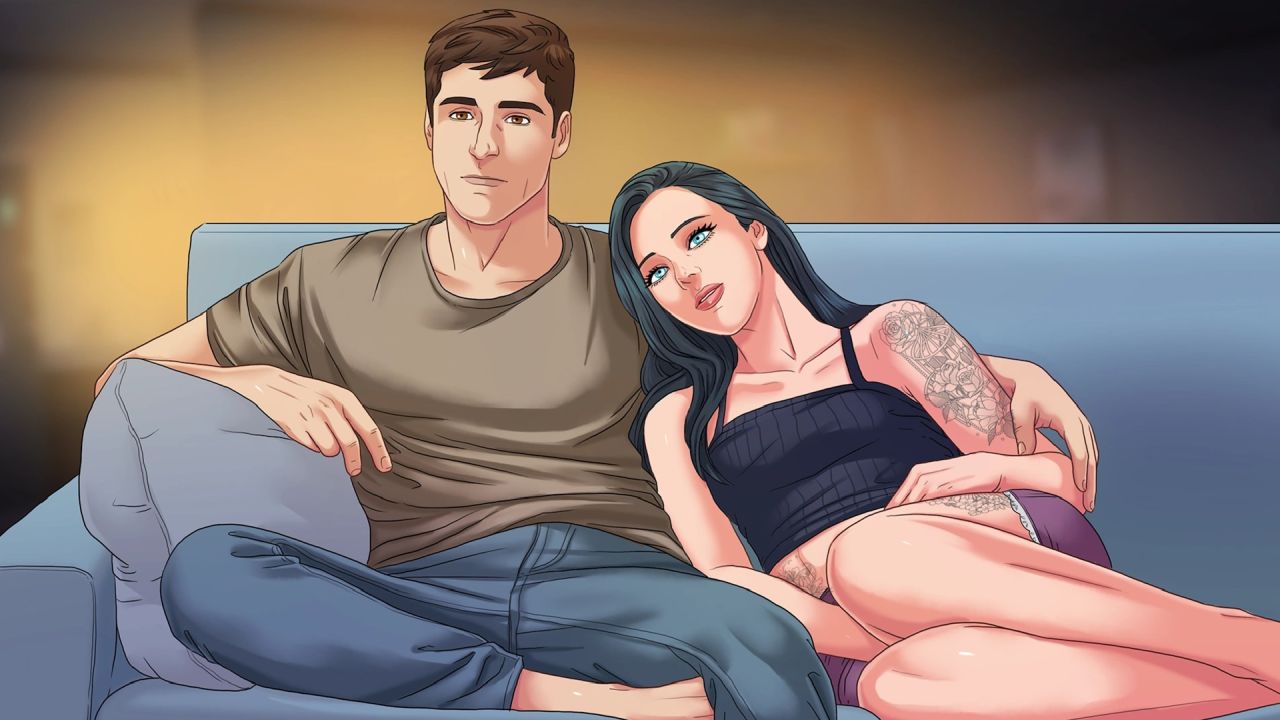
Our Red String, from Eva Kiss (creator of Good Girl Gone Bad) and published by TinyHat Studios, follows Ian and Lena, two strangers who meet outside a nightclub and reconnect six months later, each dealing with a recent breakup and navigating a large, tightly interwoven cast of friends, rivals, and potential partners.
The game alternates between their perspectives chapter by chapter, and choices made as one character genuinely ripple into the other's story, a structural hook reviewers consistently call rare for the genre.
A stat system gates dialogue and story paths, meaning early decisions can meaningfully close off later content.
Four core attributes (Wits, Charisma, Athletics, Lust) plus secondary Money and Will resources gate dialogue options and story paths, meaning early decisions can meaningfully close off or open up later content. With 14+ episodes and reportedly around 270 scenes at the time of most reviews, content volume is substantial even in Early Access.
The range of routes- faithful, unfaithful, throuple, corruption-leaning, or entirely avoidant of explicit content- gives it unusually high replay value. Writing and character work are the clear standouts across nearly every review. The supporting cast (Holly, Ivy, Cindy, and others) is repeatedly singled out as memorable rather than filler, and several reviewers who also played Eva Kiss's earlier title consider this a clear step up in narrative depth.
Hand-drawn 2D art is a defining stylistic choice, distinct from the 3D-rendered look dominant in the genre. Criticism is comparatively light: animation is minimal or absent in many scenes, and a handful of reviews flag missing quality-of-life features at the time of writing, though the developer has since partially addressed them.

Come Home
Come Home, developed by R.J. Rhodes and distributed free on Steam with an optional paid DLC/premium tier, follows a young man who returns to his hometown after his father goes mysteriously missing, moving in with his stepmother and stepsister while reconnecting with a very large cast of potential partners.
The game launched into Early Access in 2021 and reached full release this year, and reviews across that span show it growing considerably in scope, eventually incorporating a mystery plot involving a parallel-universe twist and, in the endgame, light RPG-style battle mechanics.
A toggle system lets you disable content for any character, a design choice reviewers consistently praise.
With upwards of 16-20 romanceable characters spanning a wide range of personalities and backgrounds, the game lets you pursue as many or as few relationships simultaneously as you'd like, with no monogamy penalty. Writing quality is generally well regarded: characters feel distinct and cared for rather than interchangeable, and several reviewers note that they become genuinely emotionally invested in specific routes.
Presentation is a mixed bag, depending on which stage of development a review reflects. Animation quality draws frequent criticism, with multiple reviewers describing most scenes as basic looping motion. Sound design is a consistent weak point too: generic or repetitive background music and inconsistent voice-acting timing come up in several reviews spanning different years.
Two more substantial threads of criticism appear: several reviewers feel the writing leans into broad stereotyping for certain characters, and a notable controversy centers on full completion; several achievements are tied to content some players want to avoid, which the developer has publicly defended.
Also, check our other articles on adult games and female protagonists below:
- Top Adult Games (AVN) to Play on Steam in 2026
- Best AVN and Adult Games of 2025 on Steam
- Top Adult Games (AVN) of 2025 on Steam Early Access
- Top Adult Visual Novels of 2024 on Steam Early Access
- Top Adult Games of 2024 on Steam
- Top Adult Simulation & Visual Novel Games of 2024 on Steam
- Top 5 Upcoming Dating Sim Games
- Top 15 Playable Video Games Female Protagonists
- Top Five Adult Games on Steam of 2023
- Which Adult Visual Novels to Play When There Are Too Many on Steam (2023)
- Top 10 Video Games Female Protagonists You Didn’t Know Existed
Moderator, NoobFeed
Latest Articles
No Data.