

CPU Apocalypse 2026: Why AI Agents Could Trigger Massive CPU Shortages
Consumer CPU pricing could surge as manufacturers prioritize lucrative enterprise and hyperscale markets.
Hardware by Godrics01 on Apr 28, 2026
When it comes to AI infrastructure, most of the talk has been about training, and particularly with GPUs. Training models are well-suited for GPUs due to their parallel processing capabilities. However, new AI is changing the mix.
The new work being brought on by AI agents is less dependent on parallel processing and more dependent on orchestration, task management, and uninterrupted processing. And that's bringing CPUs back to the forefront.

AI Agents Are Changing Compute Requirements
Large language models respond to prompts by performing extensive parallel computation, which GPUs excel at. AI agents work differently. Rather than simply processing a prompt-response sequence, they solve complex problems over long time scales.
An AI agent can collect information, simulate and interact with other processes using intensive CPU operations (such as biological or physical processes), fine-tune, and so on, until it produces satisfactory results. This coordination is largely a CPU task. Agent-based coding revenue has increased from about $2 billion to more than $10 billion in the last six months. This has led to a huge spike in demand for CPUs in the cloud.
Cloud Providers Are Running Out of CPUs
The shortage has already started. Microsoft has sold out all of its extra CPUs to Anthropic and OpenAI. Amazon has tripled its annual CPU order volume, but it still can't keep up. Two years ago, the power budget of AI datacenters was 100MW of GPUs to 1MW of CPUs.
Now this ratio is shifting. All database queries, cron jobs, web pages, and job orchestration occur on CPUs. Now, CPU and GPU power consumption in AI data centers are equal. TSMC already announced that it will only meet 80% of server CPU wafer orders this year. Server CPU prices have already risen 50%.
Consumer CPUs Could Be Next
If the GDDR6 and server RAM shortages have shown us anything, it's that demand for enterprise products impacts consumers. With growing demand for server CPUs, more silicon will go to the enterprise.
AMD's chiplet design is more likely to increase this. Consumer chiplets can be used to build EPYC server chips. Even if a consumer part is available, the company can resell it to servers.
Financially, it's a no-brainer. After all, why sell a consumer CPU at a discount when server CPUs can be sold at a premium? There's no reason for AMD and Intel not to cater to the enterprise.
CPUs Are Key To AI
CPUs are used in AI datacenters to orchestrate the use of accelerators, manage memory and storage, and schedule work. CPUs are evolving as the management plane for networking, storage, and AI accelerators.
As AI agents become more sophisticated, more coordination is needed. The rise of OpenClaw and other autonomous systems has led to this. We are increasingly headed towards a future in which the CPU and GPU are used roughly in equal proportions.
ARM Is Entering The Server CPU Race
ARM has seen this trend and launched a new range of products for agentic AI. The new AGI CPU has 136 Neoverse V3 cores spread across two dies in a dual-die package, fabricated on TSMC's 3nm process. Unlike AMD chiplets, the dies are side-by-side. The dies have memory and I/O, removing many of the round-trip chiplets.
The AGI CPU also has PCIe Gen6 400GB support for accelerators such as Nvidia's Blackwell. ARM's design maximizes throughput, latency, and power efficiency - the key attributes required for orchestrating AI. Data doesn't have to travel as far because the dies have I/O. That results in lower latency and power than AMD's existing EPYC designs.
A liquid-cooled rack with 200kW of power can reportedly host 336 AGI CPUs, for a total of 45,000 cores per rack. ARM says this could give almost twice the performance of today's x86 systems while using half the power. That's important to today's power-constrained data centers.
NVIDIA is moving to the CPU future, too. NVIDIA launched Vera, a line of CPU-based systems, for agentic AI applications at GTC. NVIDIA's vision is shifting from GPU-centric to 1:1 CPU: GPU deployments. This is a big deal for a GPU-focused company. When Nvidia talks about CPUs like this, everyone takes notice.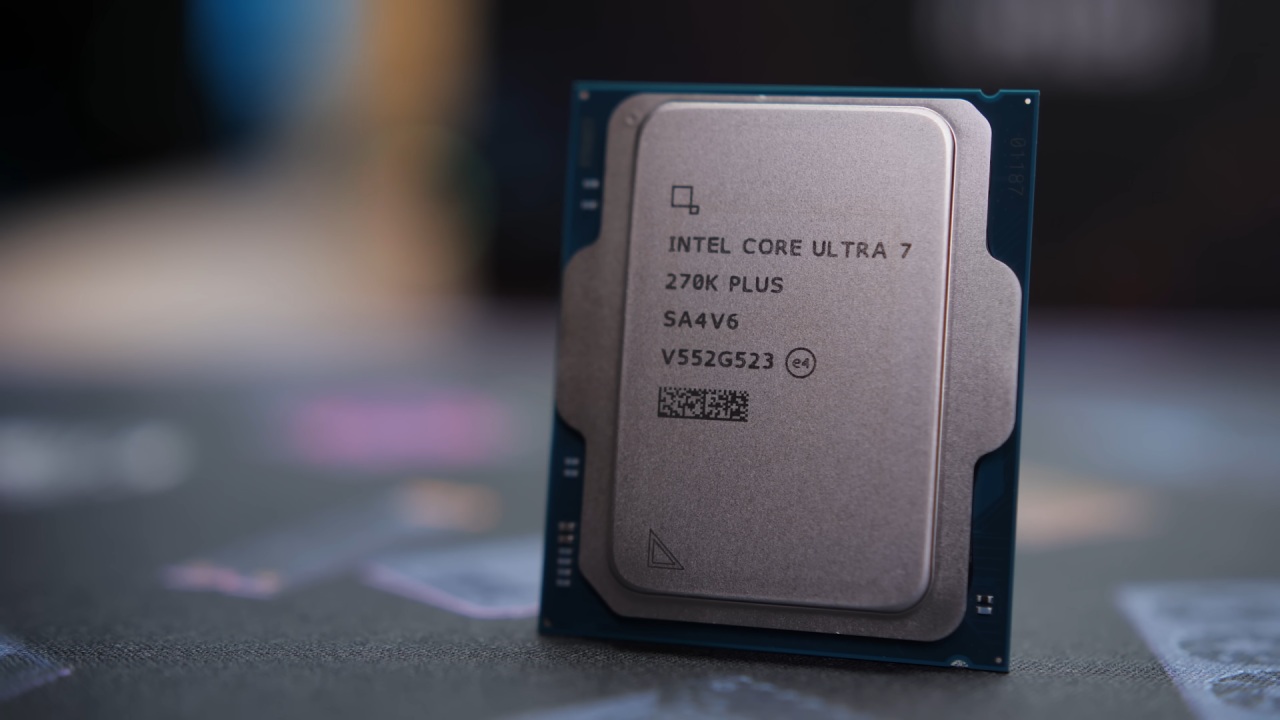
Intel Is Preparing For The Shift
Intel is well-prepared for this shift. Intel's new Xeon processors have AMX (Advanced Matrix Extensions) instructions for agentic AI. Intel has posted results showing that the Xeon 6 performs up to twice as fast as AMD Turion on Llama 3.1 workloads.
Intel's manufacturing gains another key element. Its 18A process is approaching high volume, and Tesla is reportedly a 14A customer. Nova Lake will be largely made by Intel, which could be advantageous for Intel in future shortages.
Amazon And Meta Are Scaling Fast
Earlier this month, Amazon announced that Meta will use tens of millions of Graviton CPU cores on AWS for agentic AI. The reasoning is straightforward. While AI models are still trained on GPUs, AI agents create enormous CPU workloads as they interact in real time to reason, generate code, search, and orchestrate steps in a process. This is only increasing.
Even Qualcomm is back to server CPUs. Despite initially giving up its server aspirations after the Nuvia acquisition, it's now back in the server business. ARM-based consumer adoption has not taken off as quickly as anticipated. Still, the server market is too hot to ignore. All of the major players are now taking a run at it.
What It Means For Consumer CPUs
We've already witnessed a sudden increase in RAM prices. The same might happen with CPUs. Prices may be steady now, but that can change in a hurry as server demand consumes wafer production.
Product shifts can cause stockouts in as little as a month. We could also see supply constraints in the future for new products such as Zen 6 and Core Ultra 400, with launches bottlenecked by server demand.
Should You Upgrade Now
Waiting might cost you. If you need a new CPU, there are some good choices now. The Intel Core Ultra 270K Plus offers performance similar to much more expensive processors at around $330. Core Ultra 250K Plus also delivers excellent multi-tasking and gaming performance for just above $200.
AMD is still best for gaming. Ryzen 7 9800X3D still offers the best gaming performance at around $460, and the Ryzen 7 7800X3D remains a great value at around $350. But we would still wait for Computex, particularly since NVIDIA is rumored to announce its consumer ARM solution. But after that, waiting might not be the best idea.
The next generation of AI isn't all about GPUs.
With the rise of AI agents, CPUs are once again the central computing device. Don't take today's low CPU prices for granted. The same dynamics that sent RAM and GPU prices spiraling are now at work in the CPU market. If demand growth continues, we could be looking at a shortage of consumer CPUs next.
Editor, NoobFeed
Latest Articles
No Data.