
DLSS 4.5 Outperforms FSR and Native Graphics in 6 Real-World 4K Games
Gamers overwhelmingly prefer DLSS 4.5 for sharper, clearer visuals compared to FSR and native rendering in modern 4K titles.
Hardware by Mitsuba Miyu on Mar 01, 2026
A recent three-way blind test of six new games found a result that many gamers might not like. When people were asked to rate the overall quality of an image, they mostly chose DLSS 4.5 over both FSR and native rendering. The difference wasn't small, and the sample size was big enough that it was hard to say that the result wasn't true.
NO17, Arc Raiders, Cyberpunk2077, Horizon: Forbidden West, Satisfactory, and The Last of Us Part II were some of the games. These aren't fake standards or demos for niche markets.
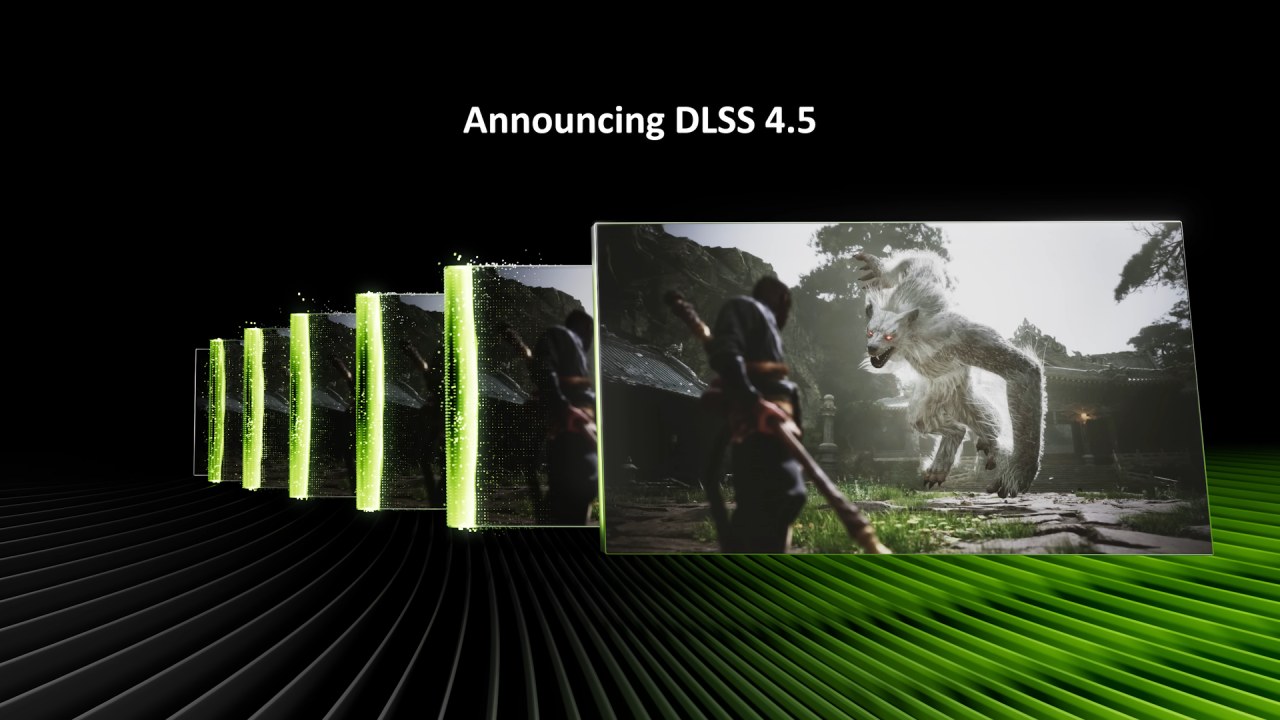
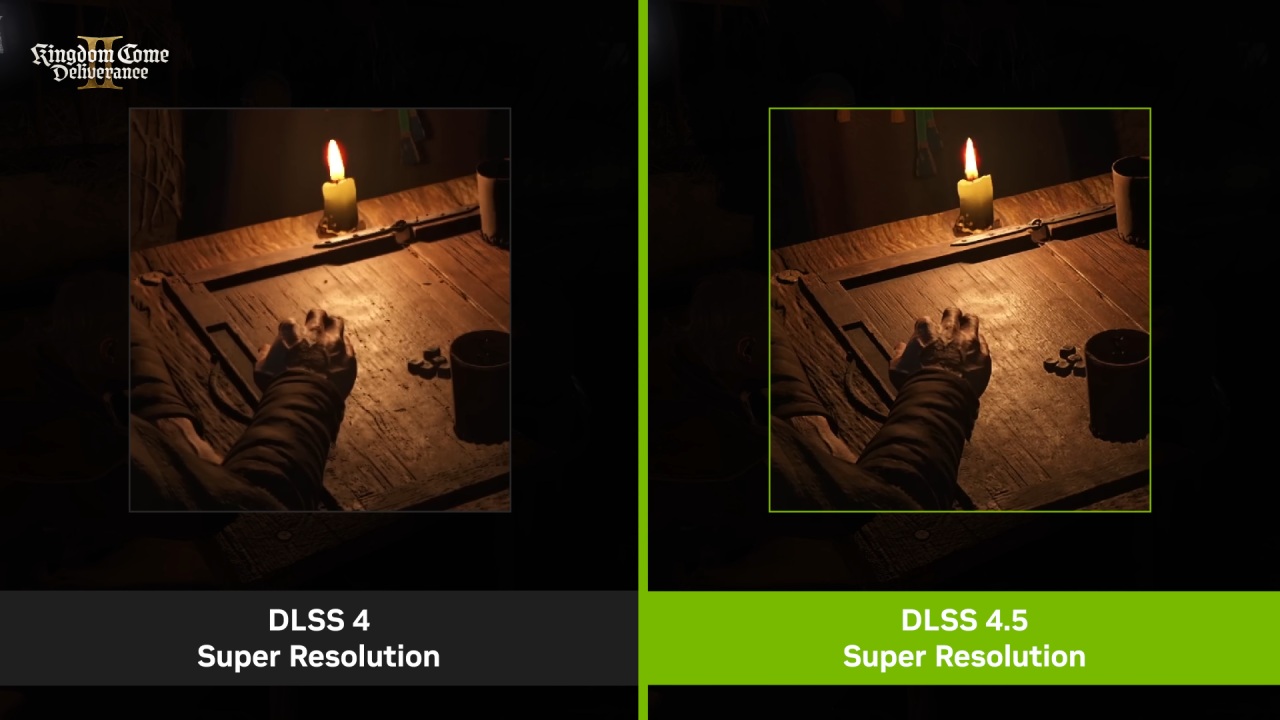
They are real games that are hard on the eyes, played by people. All the games were tested at 4K resolution with upscaling set to Quality mode, and people were asked to pick the one they thought looked the best.
Out of the 6,747 votes that were cast, 48% went to DLSS. Native rendering came in second with 24%, and FSR came in third with 15%. Another 12.8% of respondents thought the choices were the same. It didn't matter how the choices were ranked; DLSS won every game played.
DLSS Beating Native Rendering
Not just the fact that DLSS beat FSR was the most surprising result. In every game, DLSS also did better than native graphics. Native quality has been considered the best way to achieve clear images for years. People have always thought that methods for upscaling are trade-offs, giving up some accuracy for speed.
Still, almost half of the people who took this blind test chose DLSS as better, even when it was directly compared to native output. A difference of 48% to 24% is not small. If the numbers had been closer, like 25% vs 25% vs 20%, it would have been easy to say that most gamers couldn't tell the difference. But 48% of the vote is enough to decide.
About eight people who voted said that all three choices looked the same. That leaves a large majority of people who were sure enough to pick a winner.
Real Games, Real Conditions
Keep in mind that these weren't tech demos that were tweaked to favour one technology over another. Games like Cyberpunk2077 and Horizon: Forbidden West are very detailed and hard to understand. Even Satisfactory, which has a different style, has difficult drawing situations.
All tests were performed at 4K with Quality mode enabled. We're not talking about speed settings that are too aggressive and drastically lower internal resolution. These were settings that aim to preserve high fidelity. That being said, DLSS still came out on top in that situation.
Some people might say that watching clips instead of participating live adds more variables. But if you only care about upscaling and not frame generation, delay issues don't really matter. When DLSS upscaling is used, the input delay that comes with frame creation is not added. In fact, you can often get more frames per second while keeping the same quality because the GPU renders at a smaller internal resolution.
Are We Really Surprised?
We can criticise the way it was done. Every test has different parts. From the presentation format to the group's demographics, there are always things to argue about. Taking a step back, though, the result is not a surprise.
Years ago, when Nvidia started making RTX devices with AI acceleration built in, it set the stage for this direction. The company committed to rendering based on machine learning long before the right software environment was fully formed. The gear and tools were new and not fully developed at the time, and it wasn't clear how developers would react to them. Still, the way was clear.
These kinds of changes don't take eight or nine years to happen. It takes much longer for big changes to occur in most technology fields. In less than ten years, we can see how a rendering model has changed.
The gaming industry has come together around upscaling and frame generation, regardless of whether players like "fake frames" or traditional rendering methods. Both AMD and Intel are putting all of their money into their own options. The race is no longer about whether AI-generated graphics are possible. It's about who does it the best.
What This Means for Hardware and Gaming
You can try these technologies out for yourself if you have current hardware, such as a GPU from the RTX 4000 series. And when you do, you might feel confused. Not because the tech doesn't work, but because it does.
When a solution consistently offers higher frame rates and better image quality at 4K, it challenges long-held beliefs. Native rendering isn't always the best way to test something anymore. Upscaling with AI help is no longer a backup for gear that isn't very good. It's quickly becoming the best option, even among fans.
This change will definitely affect the tech strategy. If upscaling can be done safely without compromising image quality, GPU makers can change how they use their silicon. Performance gains may depend more on AI acceleration than on brute-force rasterisation. That changes how products are made, how prices are set, and how they are positioned in the market.
Final Thoughts
It's easy to see a trend in the data: DLSS currently delivers better image quality than native rendering in real-world gaming. The margin is big enough that it can't just be written off as statistical noise or human error.
You might not like what it means. We might not be sure what this means for standard rendering. But it looks like the path is set. Upscaling and graphics powered by AI are no longer just testing extras. They are very important to the creation of modern GPUs and to playing games.
The business world already knows where it wants to go. There is no longer any doubt that this shift will happen. The only question now is how quickly everyone else can catch up.
Also, check our other hardware articles:
- AMD Ryzen 9 9950X3D Review: Setting The Standard For 2025 Gaming CPU
- Amazon Luna 2025 Review: Is Prime Gaming's Cloud Service Your Go-To For Casual Fun?
- AMD RX 9070 XT Review: AMD's RDNA 4 Champion for 1440p Gaming
- GeForce Now Ultimate: Ditching Your Gaming PC For Cloud RTX 4080 Power?
- NVIDIA GeForce RTX 5080 Review (2025): Still A 4K Gaming Powerhouse?
- Intel Core Ultra 9 285K Review And Performance Breakdown (2025)
- AMD Ryzen 7 9800X3D Review: 3D V-Cache Goes God Mode with Stunning Gaming Performance
- Intel Core Ultra 9 285K vs AMD Ryzen 7 9800X3D: In-Depth Gaming Performance and Benchmark Comparison
- NVIDIA GeForce RTX 5080 Super Performance In Cyberpunk 2077: Path Tracing & DLSS 4.0 Tested
- AMD Radeon RX 9070 XT In Cyberpunk 2077: Ray Tracing & FSR 4.0 Tested
- Intel Arc B580 Review: The $250 GPU Revolutionizing 1440p Gaming
- Intel Arc B570 Vs. B580: Value, Specs, And Real-World Gaming Performance
- RTX 5090 Laptop Vs. M4 Max MacBook Pro: Ultimate Raw Performance Vs. Battery Endurance
- Intel Arc b580 Vs. RTX 4060: Game Performance And Value Analysis
- RTX5090 Hell Is Us Demo 4K Ultra Benchmark: DLSS Vs. Native Performance Guide
- NVIDIA RTX 5070 Review: Mid-Range Muscle or Marketing Hype?
- Nintendo Switch 2 Review: Handheld Performance, Features & Value Breakdown
- RTX 5070 Ti Review: Performance, Thermals & Power Efficiency Tested
- Samsung Odyssey OLED G81SF Review 2025: Ultimate 32-Inch QD-OLED Gaming Monitor
- AMD RX 9070 Performance Review: Thermals, Clocks, and Real-World FPS
- AMD Ryzen 5 7600 Review: Best Budget Gaming CPU of 2025?
- AMD Radeon RX 7800 XT Review: RDNA 3 Power For Midrange Gaming
- Asus ROG RTX 5090 Astral OC Vs. Founders Edition: The 4K Gaming Benchmark
Editor, NoobFeed
Latest Articles
No Data.