
Intel Arc A750 in Mid 2026: Is This $150 GPU Still Worth Buying
Each Xe core includes a dedicated ray tracing unit capable of twelve BVH tests per clock cycle.
Hardware by Shinji Okazaki on Jul 13, 2026
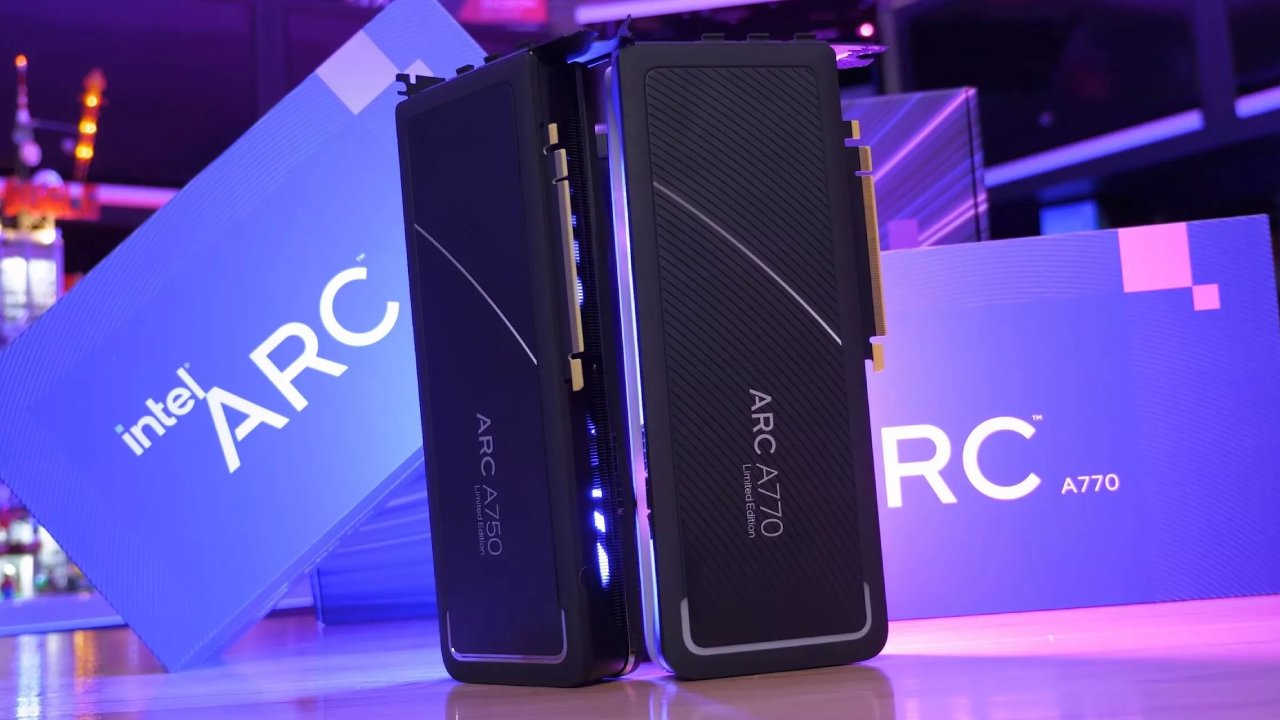
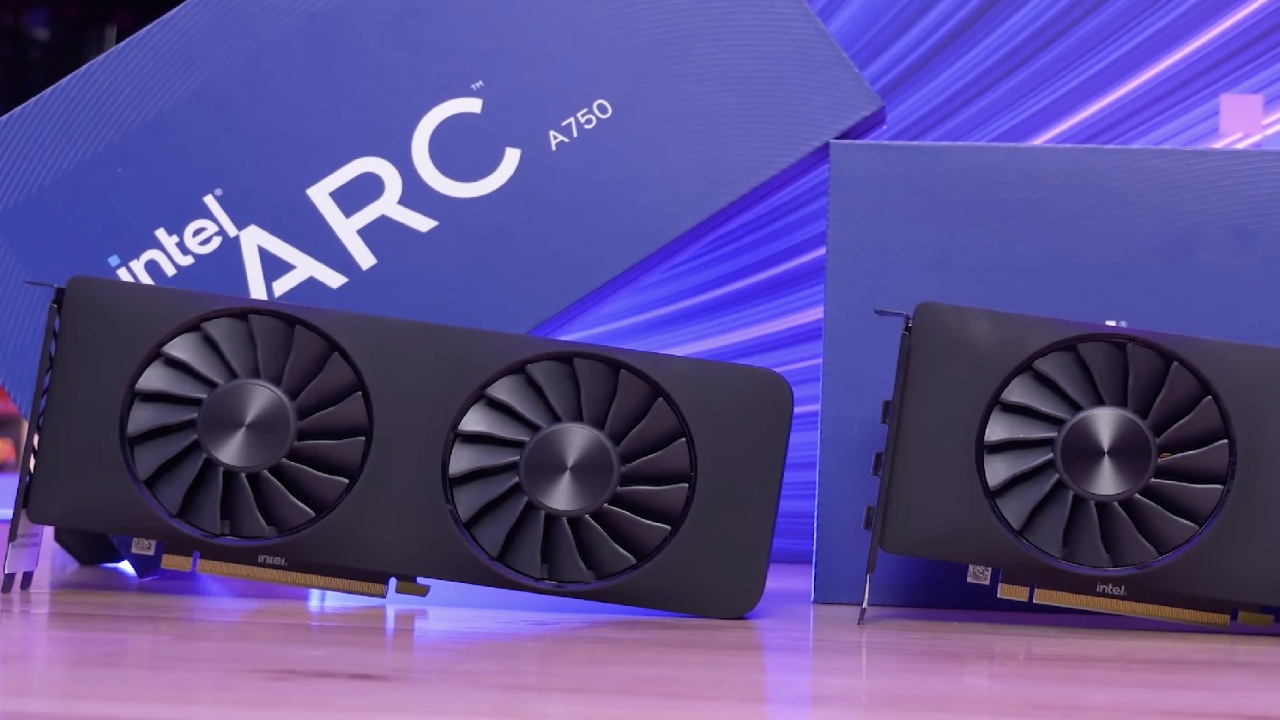
Intel Arc A750 has settled into an unusual spot in the GPU market. It sits below the A770 in Intel's Alchemist lineup, typically sells for less, and now, roughly four years after its rocky launch, raises a fair question: Does it still make sense to buy one, and if so, for what kind of build? Understanding where the A750 stands starts with looking at how it's actually built.
The A750 is built on the high-performance graphics branch of Intel's Xe microarchitecture family, distinct from the more power-efficient mobile-focused branch used elsewhere in Intel's lineup. The design choices behind this branch lean heavily toward raw computational throughput, sometimes at the expense of scheduling flexibility and the efficiency with which that throughput is actually used in practice.
That tradeoff mirrors a challenge AMD ran into with its older GCN architecture. Intel clearly put thought into addressing the issue in Alchemist, but the fix wasn't fully realized until Battlemage's hardware revisions.
A750 uses a cut-down version of the DG2-512 core, with 448 vector engines active out of a possible maximum of 512, resulting in 28 Xe cores. That still provides 3584 FP32 and INT32 data paths, along with 224 texture-mapping units and 112 rasterization-operation pipelines.
Xe Core and Ray Tracing Design
Each Xe core includes a single ray-tracing unit, capable of performing 12 BVH tests and 1 triangle intersection per clock cycle. Intel also includes a structure called a thread-sorting unit, which groups ray-tracing shaders to maximize data locality. On the surface, that sounds similar to the shader execution reordering capability found in Nvidia's Ada and Blackwell architectures.
Still, it functions somewhat differently under the hood, appearing to only accelerate ray tracing cores rather than standard shaders more broadly. It behaves more like a priority queue than true out-of-order execution. Each Xe vector engine also includes an Xe Matrix Extension core, which functions as a dedicated compute block rather than directly resembling Nvidia's tensor cores.
These are 1024-bit units capable of performing operations on low bit-depth integers, half-precision floats, and brain floating-point formats, accessible through the joint matrix structure in oneAPI's DPC++ language. This kind of hardware is primarily useful for AI workloads, which admittedly aren't the focus for an 8GB card like this one, though it is used within Intel's Xe Super Sampling upscaling algorithms.
The Xe vector engines are SIMD in nature, achieving SIMT-style processing by masking off inactive lanes. From a programmer's perspective, code targeting Intel and NVIDIA hardware looks essentially identical, but under the hood, these blocks behave more like an AVX2 unit on an x86 CPU.
Sixteen of these units need to be fed data, with only the higher-level Xe core handling instruction decoding, a structure similar to Nvidia's SM and warp architecture. However, it enables more individual operations to run concurrently on Intel hardware.
Cache Hierarchy
Additional cache resources within each Xe core include a 192KB shared local memory pool, used to store both instructions and data, and a 64KB texture cache that supports the texture mapping units. This private memory pool is larger than the equivalent in Nvidia's streaming multiprocessors and faster, since it performs direct memory operations rather than requiring a search.
That gives programmers a sizable space to hold both program code and working data, backed by a healthy supply of registers. The last-level cache is 12MB, functioning similarly to a public L3 cache in a CPU and incurring a search penalty when accessed. It's still considerably faster than accessing GDDR memory, though slower than the smaller, deterministic shared local memory closer to the processing elements.
The A750 has 8 GDDR6 memory controllers and physical interfaces operating at 16 GB/s per pin. Each memory module can handle only 8 gigabits (1 GB). But when combined, they can handle 8GB of memory over a 256-bit interface, which means they can transfer 512GB of data per second.
Compared to Nvidia hardware from when this card came out, the bandwidth number is higher than the RTX 3070's while meeting its total capacity. A750 was priced similarly to the RTX 3060, but the two aren't even close. RTX 3060's 192-bit bus, which ran at 15 gigabits per second, didn't have the memory controller configured to reach the same bandwidth levels.
Clock Speeds
The A750's base clock is 2050 MHz, though it consistently ran closer to a 2400 MHz boost clock in practice. Using the tuning sliders available in Intel's Arc Control software, it was possible to reach a stable 2616MHz before instability set in, with the card immediately blue-screening once clocks reached 2800MHz.
Sticking with out-of-the-box clocks is probably the smarter choice here, since pushing further trades away from stability without delivering a consistent performance gain. A750 can do more than 17 trillion floating-point operations per second and about the same number of integer operations at stock boost clocks.
It also does a good job with packed half-precision workloads, reaching just above 34.5 teraflops for that data type, which is a lot of shader throughput. The card can create close to 269 gigapixels per second and sample textures at more than 537.5 gigapixels per second.
This means it should be able to shade billions of pixels per second, which should translate to good performance at higher resolutions. Real-world software, on the other hand, imposes limits on that theoretical ceiling, keeping it from fully showing up in games.
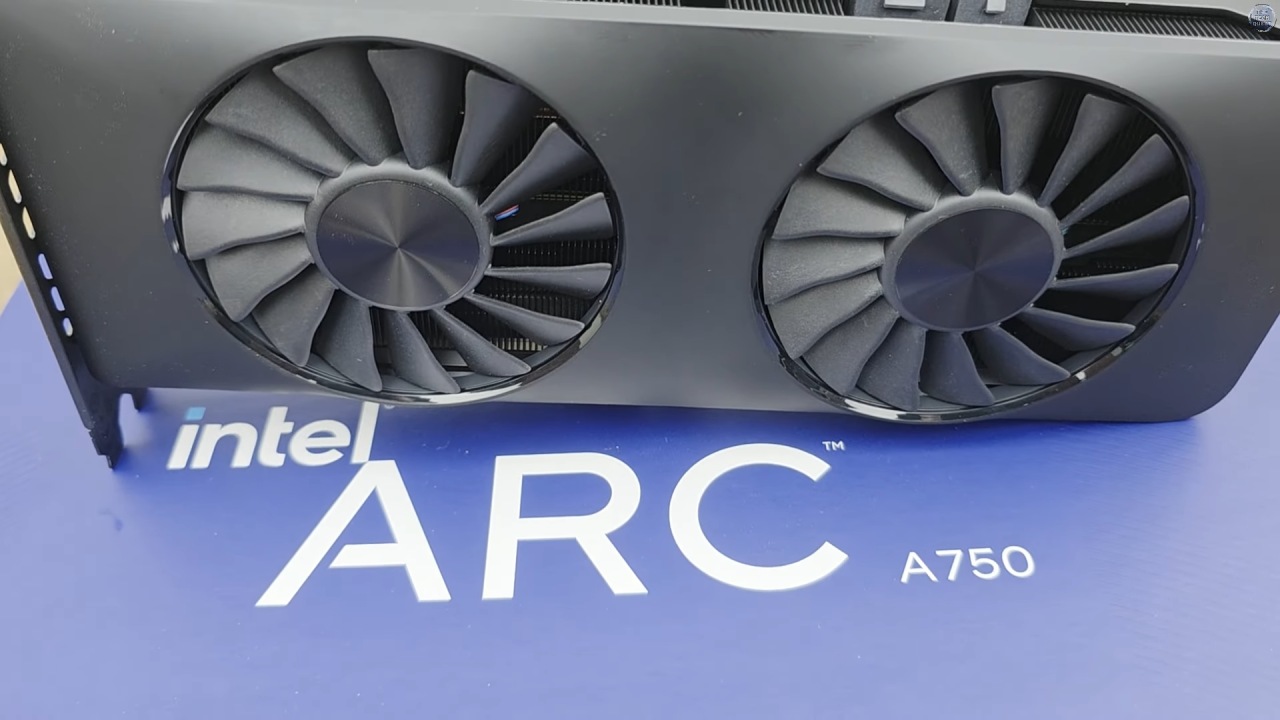
A750 has come a long way since its rough, underwhelming launch nearly four years ago.
The card can now handle DirectX 11 and DirectX 9 titles cleanly, including classic games running without graphical errors, something that wasn't true at launch. That said, it's hard to recommend picking one up unless you already have a main system you're happy with and are simply curious how Intel's graphics hardware holds up today.
For gaming specifically, Arc still isn't likely to become anyone's first choice, even within the budget segment, since plenty of similarly priced used cards from other manufacturers offer better performance, lower power draw, and more mature upscaling support, such as DLSS. A750 really shines for business and creative tasks, especially when it's used and costs $150 to $180.
The card's powerful computing power and media engines make it a great, low-cost tool for speeding up video production jobs in programs like DaVinci Resolve or Premiere Pro. For a Linux-based build, DXVK is also an interesting choice if you know how to use it.
At the end of the day, the A750 is better as a cheap production tool than a game card. Whether you should buy it depends on what you want to use it for.
Editor, NoobFeed
Latest Articles
No Data.