
Nvidia DLSS 4.5: Next-Level AI Upscaling and What Gamers Should Know
Exploring the Magic of DLSS 4.5 and How It Significantly Upscales Low-Resolution Images to Near-4K Quality.
Hardware by Mitsuba Miyu on Mar 01, 2026
This new version of Nvidia's Deep Learning Super Sampling (DLSS) is a huge step forward. It offers speed and visual improvements that were hard to imagine just a few years ago. The technology seems almost magical in its ability to improve low-resolution images to near-4K quality.
Still, there are serious problems with it that can't be ignored. When used with Nvidia's second-generation Transformer model, DLSS 4.5 has increased frame generation by up to 6x, enabling users with average hardware to achieve significant FPS boosts.
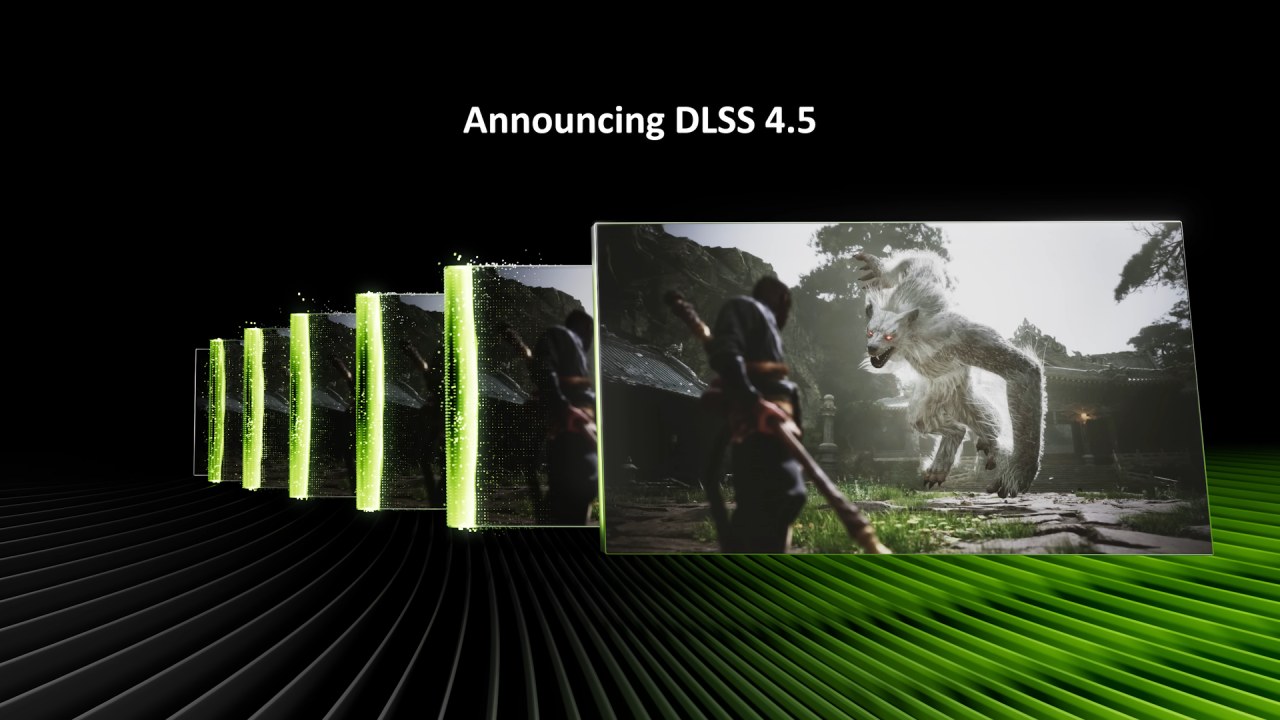
But the rise of these software-driven performance boosts makes us think about the future of game hardware, software optimisation, and how we judge GPU performance.
DLSS in Action: Low Res Upscaling and Usable Performance
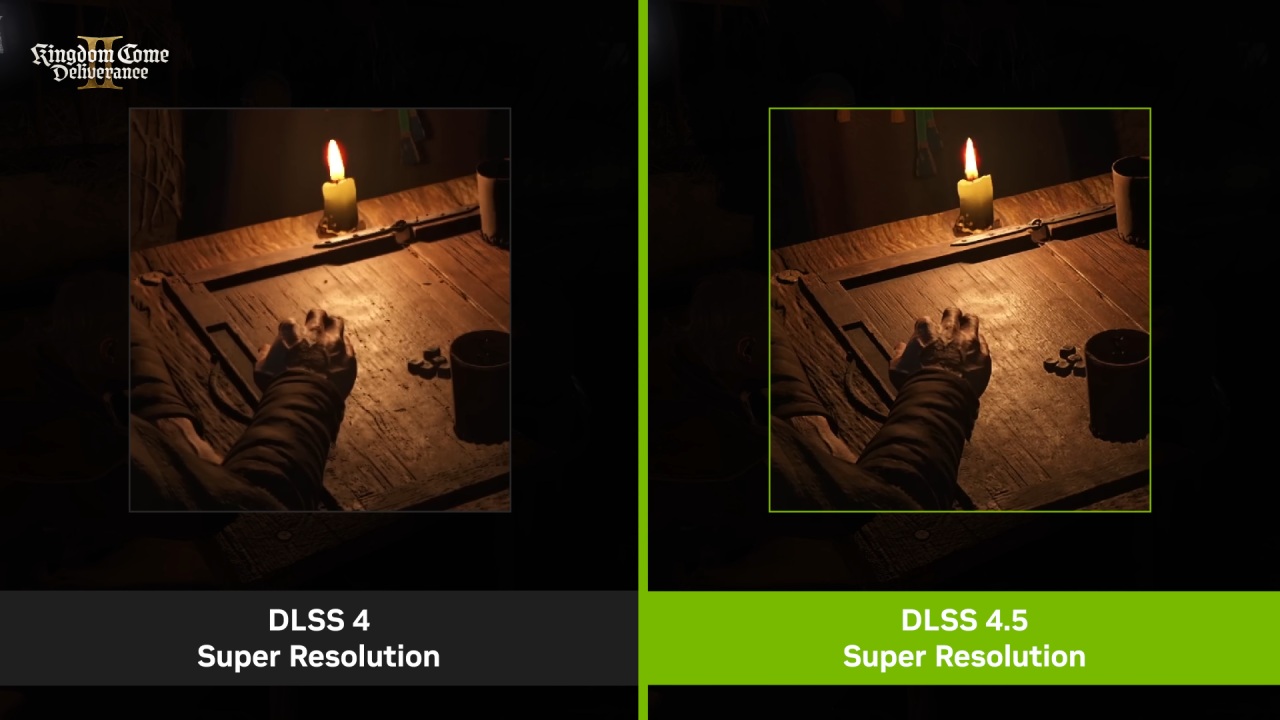
In some tests, DLSS 4.5 was pushed to its limits, with games rendered at incredibly low internal resolutions and then upscaled to 4K. When pictures are produced at only 38x22, they can't be used. Even so, DLSS makes the graphics look much better than the original image, even at 136x76.
Surprisingly, games look usable at 764x430, which is about 20% of 4K and offers good clarity and frame rate despite having such a low base resolution.
The fact that this feature is available shows how powerful DLSS is at improving games without using GPU power. On the other hand, it suggests that coders and hardware makers might rely more on software innovation than on new hardware.
Hardware Reality: Why DLSS Becomes Necessary
We need to be aware of what current hardware can't do. Moore's Law is pretty much dead, and it's getting harder and more expensive to make meaningful speed gains in GPUs and CPUs. New packing ideas, chiplet designs, and 3D V-Cache all help, but TSMC's 2nm node, which shrinks transistors even more, costs almost twice as much as the older 5nm technology.
At the same time, ray tracing is becoming more popular, increasing the need for GPUs with significant processing power. Even though gamers might care more about art style than realism, accurately simulating natural light takes a lot of calculations that can't be done with regular rasterisation.
DLSS and similar AI-based technologies offer an alternative that enables higher FPS and better visual quality without requiring major hardware upgrades.
Risk of Software Becoming the Crutch
It's clear that DLSS is very useful, but there is a chance that both coders and hardware makers could overuse it. DLSS can be used by game creators to avoid more in-depth optimisation, and GPU makers can use it to make hardware look more powerful than it really is.
The worry is simple: if software turns into a GPU's main selling point, new hardware might stop being made. Imagine spending $1,000 on a card that doesn't really perform any better than a mid-level card from the last generation just because it supports the newest DLSS improvements. As gamers get higher FPS, the hardware industry might lose sight of its main goal: making real hardware better.
How to Protect Against Misleading GPU Claims
As gamers, there are ways we can be responsible. First, we need to expect that businesses be open and honest. NVIDIA and other GPU makers should make it clear the difference between speed boosts that are caused by software and real hardware improvements. I
f they mention frame rates or picture quality, they need to be clear about whether they use upscaling or frame generation technologies.
Second, competition drives new ideas. Supporting AMD, Intel, or any other company helps real tech progress. Because of competition, GPUs keep improving at the hardware level rather than just the software level. Competing goods force businesses to come up with new ideas quickly and keep prices fair.
Last but not least, we choose what we buy. It's not enough to buy a GPU just because it claims to have better FPS through DLSS. DLSS shouldn't be the main thing; it should be a perk. When software improvements are the main selling point, hardware becomes unnecessary, and the balance of game innovation can shift in a negative direction.
Final Thoughts: Balancing Innovation Between Hardware and Software
While DLSS 4.5 shows how powerful AI can be in games, it also serves as a warning that hardware is important. We should be happy about technological advances, but we should also be careful about how they are marketed and used.
The best ways to ensure that software improvements stay improvements and don't become replacements for real hardware progress are openness, competition, and smart buying decisions.
Both new hardware that pushes the limits of speed and smart software that improves what hardware can already do are important for the future of gaming. We can only keep this balance if we want to make real progress, keep prices fair, and keep games fun.
Also, check our other hardware articles:
- AMD Ryzen 9 9950X3D Review: Setting The Standard For 2025 Gaming CPU
- Amazon Luna 2025 Review: Is Prime Gaming's Cloud Service Your Go-To For Casual Fun?
- AMD RX 9070 XT Review: AMD's RDNA 4 Champion for 1440p Gaming
- GeForce Now Ultimate: Ditching Your Gaming PC For Cloud RTX 4080 Power?
- NVIDIA GeForce RTX 5080 Review (2025): Still A 4K Gaming Powerhouse?
- Intel Core Ultra 9 285K Review And Performance Breakdown (2025)
- AMD Ryzen 7 9800X3D Review: 3D V-Cache Goes God Mode with Stunning Gaming Performance
- Intel Core Ultra 9 285K vs AMD Ryzen 7 9800X3D: In-Depth Gaming Performance and Benchmark Comparison
- NVIDIA GeForce RTX 5080 Super Performance In Cyberpunk 2077: Path Tracing & DLSS 4.0 Tested
- AMD Radeon RX 9070 XT In Cyberpunk 2077: Ray Tracing & FSR 4.0 Tested
- Intel Arc B580 Review: The $250 GPU Revolutionizing 1440p Gaming
- Intel Arc B570 Vs. B580: Value, Specs, And Real-World Gaming Performance
- RTX 5090 Laptop Vs. M4 Max MacBook Pro: Ultimate Raw Performance Vs. Battery Endurance
- Intel Arc b580 Vs. RTX 4060: Game Performance And Value Analysis
- RTX5090 Hell Is Us Demo 4K Ultra Benchmark: DLSS Vs. Native Performance Guide
- NVIDIA RTX 5070 Review: Mid-Range Muscle or Marketing Hype?
- Nintendo Switch 2 Review: Handheld Performance, Features & Value Breakdown
- RTX 5070 Ti Review: Performance, Thermals & Power Efficiency Tested
- Samsung Odyssey OLED G81SF Review 2025: Ultimate 32-Inch QD-OLED Gaming Monitor
- AMD RX 9070 Performance Review: Thermals, Clocks, and Real-World FPS
- AMD Ryzen 5 7600 Review: Best Budget Gaming CPU of 2025?
- AMD Radeon RX 7800 XT Review: RDNA 3 Power For Midrange Gaming
- Asus ROG RTX 5090 Astral OC Vs. Founders Edition: The 4K Gaming Benchmark
Editor, NoobFeed
Gaming Hardware Updates
No Data.