
Steam Deck OLED vs. Lenovo Legion Go S vs. ROG Ally: Which Handheld is Worth Buying?
Discover the ultimate guide to 2025’s top PC gaming handhelds, comparing Steam Deck OLED, Lenovo Legion Go S, and ROG Ally.
Hardware by Tanisha Aria on Dec 16, 2025
It shouldn't be so hard to buy a handheld PC game. Not because there are bad choices, but because there are a lot of really good ones for the first time. This issue is really a good thing. This probably won't make a bad choice with any of the handhelds.
Some playstyles and budgets work better with some gadgets than with others. There have been many comparisons over the last year, and this guide is the final word on which PC game handheld is the best choice for 2025.
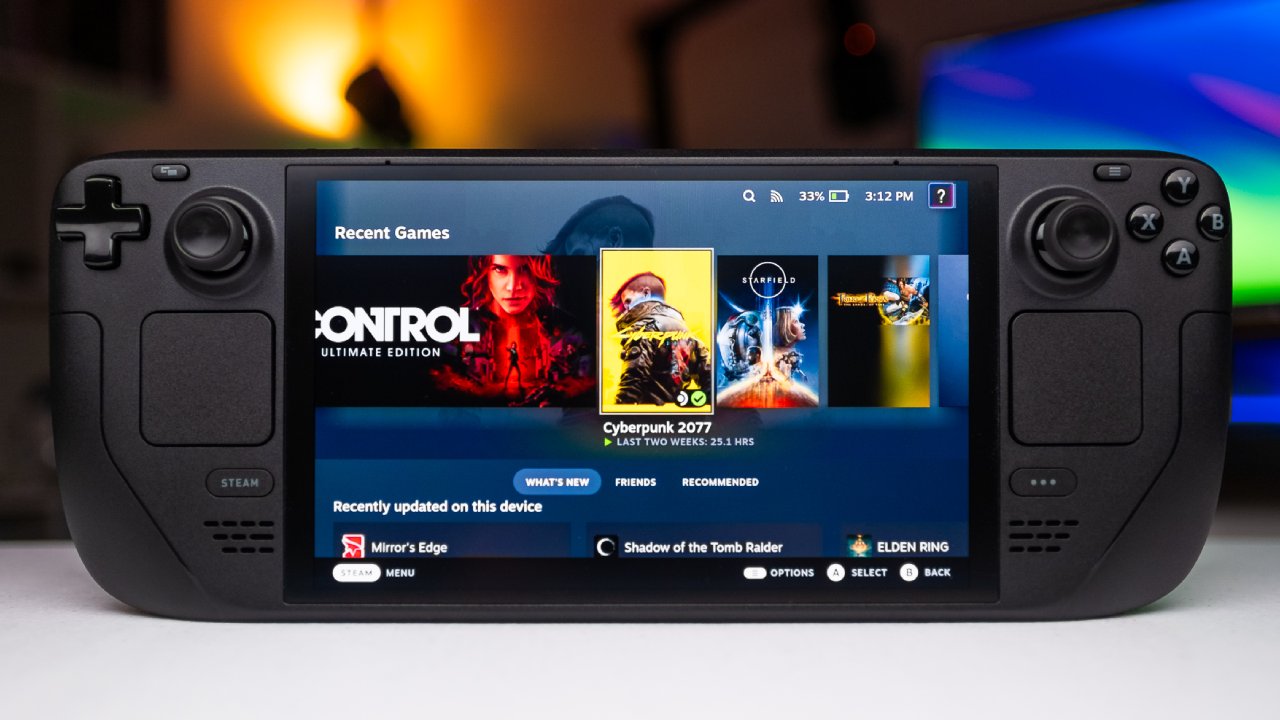
Steam Deck OLED: The Best Entry Point
We are starting with the Steam Deck OLED, one of the first handheld PCs for gaming that helped drive the market's rapid growth. There are two kinds of Steam Deck: the older LCD type and the newer OLED version.
The OLED type is obviously the better one of the two. It has a larger OLED screen, a longer-lasting battery, and newer parts throughout. Since it's been out for some time, you can usually get it at a good price used.
The 512GB Steam Deck OLED model costs $549, but the 1TB model with a dark, anti-reflective display (which we really like) costs $649. The LCD version starts at $399, but the OLED model is definitely worth the extra $150 for the screen quality, better battery, and overall experience.
SteamOS is what makes the Steam Deck OLED unique. Valve, the company that created Steam, designed a Linux-based operating system for it to work on.
Since Valve handles both hardware and software, games run very smoothly, and the experience is very much like a console. The technology isn't as powerful as many newer handhelds, but games often run better thanks to great optimization.
Another big strength is comfort. The Steam Deck OLED is easy to hold for a long time because it is light, balanced, and comfy. The grips fit easily in the hands, and the trackpads make RTS games and other genres much easier to play than on other handhelds. It's easy to reach and use the buttons, triggers, and paddles on the back.
The Steam Deck OLED features Wi-Fi 6E, LPDDR5-6400 RAM, and a 7.4-inch OLED display with a 90Hz refresh rate and HDR support. Most of the time, the resolution is lower than the competition's. Still, on a screen this size, clarity, contrast, and color saturation make it mostly unimportant. The smaller resolution also uses less power, which is better for the battery.
The AMD Zen2 CPU and RDNA2 GPU are more than good enough together, even if they're not the newest tech. The way the game feels and plays is still one of the best on any small system. The battery has a 50Wh capacity and lasts for 3 to 12 hours, based on the game.
There are problems. Some games with anti-cheat methods just won't work on SteamOS since it isn't Windows. Some newer sports games and large online games might not work together. Some very hard games won't run either due to technical limitations. Even so, there are a ton of games that can be played in the huge Steam library.
In general, it's hard not to suggest the Steam Deck OLED. It offers one of the best values and most fun handheld experiences for PC games, both on its own and with other consoles.
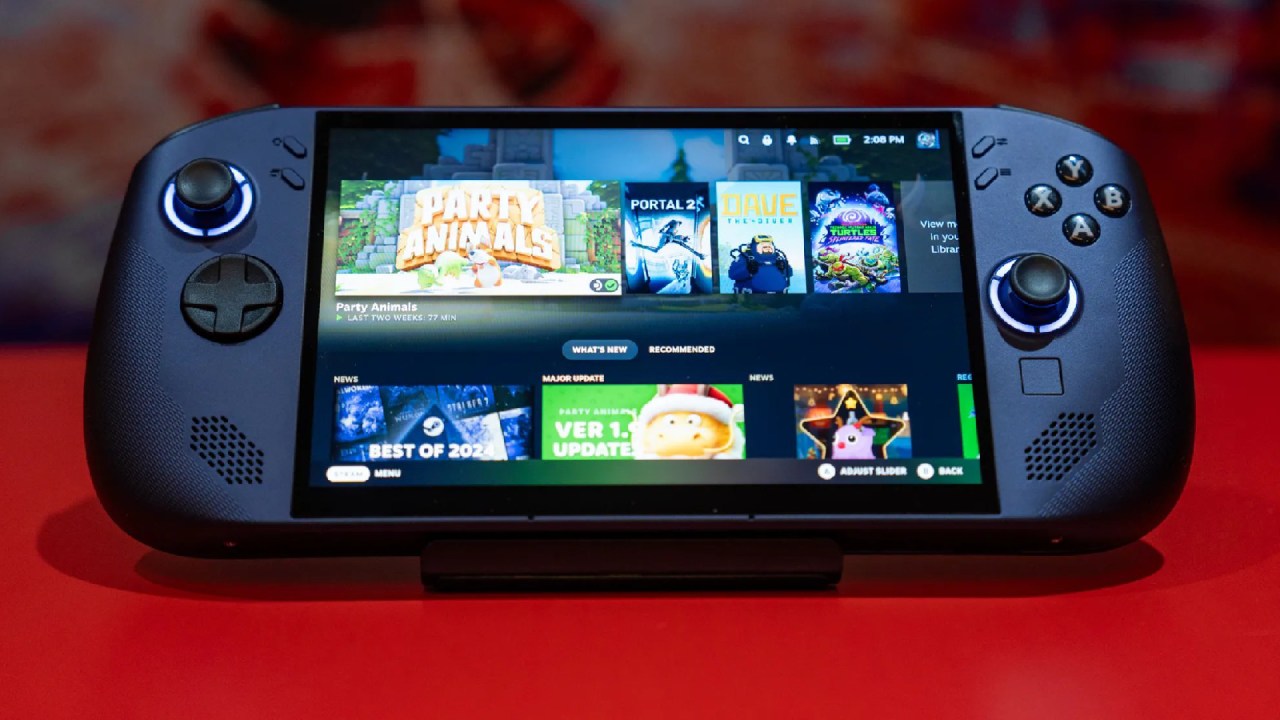
Lenovo Legion Go S: A More Powerful SteamOS Alternative
The Lenovo Legion Go S is an interesting device because it comes in different versions. Both SteamOS and Windows versions are available at different speeds. The SteamOS model is especially important because it is the first mobile device from a company other than Valve to run SteamOS by default.
The base version of SteamOS costs $649. It has an AMD Z2 Go processor, 16GB of RAM, and 512GB of storage. It has an 8-inch screen with a 1920x1200 resolution and a 120Hz frame rate. It still looks great, even though it's not OLED. It's a little better than the Steam Deck OLED in performance, but Valve's own hardware is still smoother overall.
The better models have 32GB of RAM, 1 TB of storage, and a Z1 Extreme engine. The $900 SteamOS model with the Z1Extreme is especially interesting because it delivers almost the best performance for a price lower than many newer devices.
The battery can hold about 50 watt-hours (wh), which gives you between 2.5 and 7 hours of playtime, based on the game. The small screen in the front doesn't work well, but the headset is comfortable. The device is in an odd middle ground in the market, and some settings seem overpriced compared to similar products.
If you want a more powerful SteamOS handheld made especially for you, the SteamOS Legion Go S is a great choice. For Windows users, there are better options further down the list.
ASUS ROG Ally and ROG Ally X: Console Feel with Windows Power
ASUS's two main models are the ROG Ally and the ROG Ally X. The normal model usually starts at $600, but it can often be bought for a lower price. While using Windows, it gives you a similar speed to the Steam Deck OLED. It has 16GB of RAM, 512GB of storage, and a Ryzen Z2A chip.
The most important thing is comfort. The grips feel like a normal game controller, and some might say they're the best of any handheld. The 7-inch 1080p IPS monitor looks good, but it isn't as bright as OLED panels.
The ROG Ally X is the high-end version that costs $999. It has a 1TB hard drive, 24GB of RAM, an 80Wh battery, and a Z2Extreme AI engine. The battery can last from 2.5 to 6 hours. The speakers are great, they face forward, and they're among the best of any small device.
It supports additional GPUs even though it only has one USB4 port. The gadget is powerful, easy to use, and portable. Despite others offering more RAM, real-world speed is pretty much the same.
This is one of the best choices for a Windows handheld that feels like a regular game mouse.
.jpg)
MSI Claw 8AI Plus: Intel Power Done Right
An Intel Core Ultra7 processor and an Intel Arc GPU power the MSI Claw 8AI Plus. At first, there were concerns about how well this device would work with games, but over time, it has become one of the best Windows handhelds for gaming.
It has an 8-inch 1080p IPS screen with a 120Hz frame rate and VRR support. With 32GB of RAM, a 1TB NVMe drive, and an 80Wh battery, this device performs very well. The battery lasts as long as other high-end handhelds.
The device is strong, but it's big and hard to carry. This one is okay in terms of comfort, but the lower grip design makes it less user-friendly than the ASUS ones. The fan is very good at cooling, but it is clearly noisy.
This is one of the best handhelds available; it has great speed, a Thunderbolt 4 port, a fingerprint reader, an SD card slot, and more. In terms of both price and power, it is near the top of the list.
.jpg)
Lenovo Legion Go: The Ultimate Premium Option
The Lenovo Legion Go is the priciest tablet on this list, costing up to $1500. The better models with the Z2Extreme processor, 32GB of RAM, and 1TB or 2TB of storage are the suggested options.
Its most important feature is the huge 8.8-inch OLED screen with a 144Hz frame rate. It's the biggest, fastest, and most beautiful screen of any mobile device. The colors, brightness, and sharpness are great, but the reflections are pretty clear.
The device has two USB-C ports, a microSD card slot, a kickstand, and detachable controls. The performance is great, and on par with the MSI Claw and ROG Ally X. The main problems are the weight, the removable remote flex, and too many buttons that feel awkward when held by hand.
Even with these problems, the comfort level is fairly high, and for many people, the display makes the high price worth it. This is the best mobile device if money doesn't matter and the goal is to get the one with the most features.
Final Thoughts
The Steam Deck OLED is still the best starting point for a budget-friendly and high-quality experience. The MSI Claw 8AI Plus and ROG Ally X have great performance for people who want the most power with Windows. If display quality is most important and price doesn't matter, the Lenovo Legion Go offers the best experience.
People don't really need more than one tablet. Your budget, your chosen operating system, your comfort, and the games you want to play will help you choose the right one.
Also, check our other articles below :
- ASUS ROG Ally X Handheld Review: Double the Battery, Double the Comfort
- Nintendo Switch 2 Vs. Original Switch 1: A Full Comparison
- How To Connect A Camera And Join Voice Chat With Nintendo Switch 2
- Nintendo Switch 2 Review: Handheld Performance, Features & Value Breakdown
- ROG Xbox Ally X Vs. ROG Ally X: Display, Battery & Controls
- ASUS ROG Ally X vs. Steam Deck OLED: Display, Battery & Gaming Benchmarks
- MSI Claw 8 AI+ Review: Display, Controls & Gaming
- Nintendo Switch 2 vs. Steam Deck OLED: Gaming, Performance, Battery, Display and Value
- PlayStation Portal Review: Remote Play, Cloud Streaming & Travel Gaming
- PlayStation Portal vs. Lenovo Legion Go: Best Portable Gameplay
- Cyberpunk 2077 Patch 2.3 FPS Test on MSI Claw 8 AI+
Contributor, NoobFeed
Latest Articles
No Data.