
Steam Machine VRAM Debate: Why 8GB May Limit Future Performance
Steam Machine hardware faces uncertainty as evolving AAA development trends push higher VRAM requirements for consistent visual quality.
Hardware by Tanvir Kabbo on Nov 29, 2025
People have been arguing a lot over the Steam Machine's 8GB VRAM, and supporters have a lot of questions. Some people are curious if the fact that devices like the Switch 2 and forthcoming handhelds have relatively little memory bandwidth has anything to do with Valve's choice.
Some people wonder if Valve would add an RDNA5-based "Gabecube Ultra" to the lineup in the future to compete with new platforms. As we draw closer to the next generation of consoles, many concerns arise about memory limits, performance goals, and long-term sustainability.
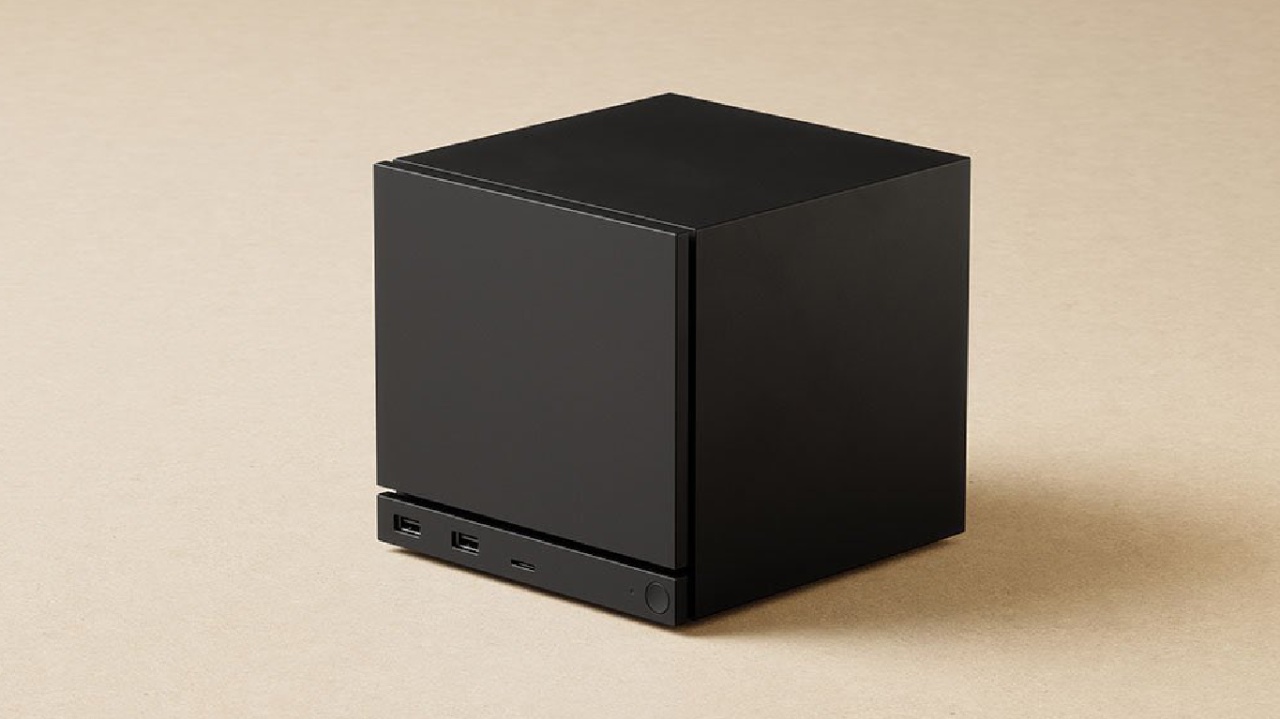
VRAM Efficiency and Future Hardware
We keep hearing people worry about the device's 8GB of VRAM, especially since some think Valve's SteamOS environment uses VRAM more efficiently than Windows at the same settings. Supporters ask whether Valve is relying on this efficiency to justify the 8GB configuration and whether rasterization workloads may remain fine while ray tracing and upscaling—which typically require more VRAM—could become significantly constrained.
There is also interest in whether manufacturers made a justified cost-saving choice, given that GDDR6 pricing trends place 8GB around $28. Some people wonder if modifications to the structure or architecture would cost more than just RAM.
Console-Like Approaches to VRAM Management
Some people wonder if the Steam Machine could use a memory scheme more like a console's to get around VRAM limits. We see questions about whether a fixed-architecture environment paired with a guaranteed fast SSD and curated "Steam Machine Verified" settings could reduce reliance on large VRAM allocations.
The idea is that limiting user tinkering might streamline performance and reduce overhead while allowing stored assets to be managed more intelligently.
Why 8GB VRAM Still Raises Concerns
We strongly feel that the device should have included more VRAM, back in 2020, when GPUs like the 3070 launched with 8GB, many were already disappointed because future scalability appeared limited. Certain GPU tasks simply do not scale down. Hardware ray tracing requirements remain strict, and modern titles—especially those using forced RT—demand higher memory capacity that cannot be sidestepped.
Texture scaling is another concern. While textures can be scaled, many games lack automated systems and rely on manual settings. Some may load with incorrect defaults that degrade image quality. Developers typically focus on making games work best on consoles like the PS5.
Even though the PS5 has less RAM overall, it has flexible unified memory and doesn't need to rely on PCIe streaming as much. On the other hand, PC versions typically don't include lower-spec console settings or options that look worse than even basic PC hardware.
Because texture resolution scales exponentially (2K→4K, 3K→6K), allocations increase in large jumps rather than small increments. Therefore, it rarely matters whether a device has an extra 300 MB. Most titles either run acceptably at 8GB or require 10GB or more. This rigidity makes future-proofing difficult.
.jpg)
Persistence of 8GB VRAM in the Market
It looks like 8GB will be the new standard, just as 6GB was before. Nvidia and AMD both say that these setups are affordable, and Valve seems to be using the same logic. Most of the current collection works okay with 8GB, but new AAA releases are often changing, which makes things unstable.
Users may need to reduce texture quality—sometimes drastically. The issue is whether regular people will get these changes, especially if they don't know that decreasing texture settings can make things run faster at the expense of visual quality. This dynamic makes things harder for consumers.
Potential Mitigations Through SteamOS and Vulkan Optimizations
There may be saving graces. Vulkan optimizations, GameScope's ability to use less memory, or faster scanout pathways could all assist. With just one performance goal, developers could also improve their games' performance on Steam Machine hardware. If the default settings are good, you might not need to tune them by hand as much.
VRAM fragmentation remains a problem, and these changes may not fully address it. While esports titles and older blockbusters like GTA5 or Fortnite will perform comfortably, the upper tier of AAA development—especially games heavy in RT—remains at risk.
Implications Beyond 2027
The Steam Machine launches in 2026, which places it near the next console cycle. By late 2027 or 2028, we could see new Xbox and PlayStation systems based on architectures far beyond current hardware, widening the performance gap. With its modest step beyond 2020-era consoles, the Steam Machine may appear less competitive from a future-proofing perspective.
Pricing will ultimately determine whether the trade-offs are acceptable. Until that information becomes available, discussions about VRAM constraints, longevity, and performance expectations will continue to shape perceptions of the device.
Also, check our other Console articles:
- PS5 Pro vs. PS5 Slim: Frame‑Rate, Graphics & Performance
- PS5 Pro vs. Radeon RX 9060 XT vs RTX 5060 Ti: Ultimate $700 Gaming Showdown
- ASUS ROG Ally PS5 Remote Play | How to do Remote play on PS5 Using Sony's Official Remote Play App
- Stream PS5 Games on Steam Deck OLED: Step-by-Step Installation and Configuration
- AI Upscaling on PS5 Pro: Can PSSR Finally Match DLSS?
- PS5 Pro vs. PS5 Slim vs. PS5 — Design, Storage, Specs, and Gaming
- PS5 Pro vs. Xbox Series X: Specs, Price, Storage, Customization, and Gaming
- PS5 Pro vs. PC Gaming: Comparison of Graphics, Frame Rates, and Price
Senior Editor, NoobFeed
Gaming Hardware Updates
No Data.