
AMD CES 2026 Overview: AI, Helios AI Rack, Ryzen 9850X3D, and Robotics Updates
AMD CES 2026 keynote focuses on AI, compute growth, and enterprise-scale innovations overshadowing consumer products.
Hardware by Tanisha Aria on Jan 12, 2026
The Consumer Electronics Show became very focused on artificial intelligence. AMD made sure Nvidia couldn't beat them by making AI the main focus of its booth.
At the start of the keynote, big but apparently modest claims were made about how AI could be used to create clean energy sources as powerful as the sun, while still adhering to "the laws of physics."
This quickly turned into the idea that the amount of computing power in each area will determine future economic growth. At an electronics show, this was shown as a message that people should understand, even though the link felt tense.
AI Modesty, Grand Claims, and Familiar Faces
In an effort to keep things light, AMD brought on stage Greg Brockman, head of OpenAI. He joked about having slides made by AI, complete with study and sources, and he thought that AI might one day be able to cure baldness.
The humor wasn't always funny, especially when the story started talking about how people might be less smart as their minds focused on hair loss. There was a lot of irony in the speech, but it was never fully acknowledged.
The tone then shifted to a government-level desire. A "whole of government" strategy was described as a historic use of resources because it combined world-class supercomputers and datasets into a single AI platform that operates in a closed loop. It was sold as progress, even though it had very little to do with consumer goods.
Policy on Stage at a Consumer Show
By bringing on stage a high-level technology policy director from a presidential office, AMD made it even harder to tell the difference between a technology show and a policy discussion.
The main topic of discussion was how to speed up AI development by removing regulatory hurdles, giving the federal government greater control over data center construction, and prioritizing large-scale AI infrastructure.
We were told that this would eliminate barriers to innovation, make it easier to obtain data center permits, and support all energy sources, including advanced nuclear ones.
The message focused on three strategic priorities: removing barriers to innovation, quickly expanding AI infrastructure and energy output, and using diplomacy to send AI technologies to other countries. This was sold as innovative leadership, but it didn't feel like what most people expect from an event geared toward consumers.
Compute Hunger and Rising Costs
When the topic turned to business leaders, one thing that kept coming up was the need for more computing power. People joked about how often this demand is made, even though it drives up the prices of consumer goods. It was hard to miss the inconsistency.
In one way, AI was seen as a game-changer for medicine, parenting, and daily life. On the other hand, it was accepted that the same need for computing power is driving up the cost of hardware for the very people the show is meant to serve.
The Missing Consumer Announcement
Even with all the talk about AI racks, policy, and working together with the government, one big thing was missing. The Ryzen 7 9850X3D, a big consumer product, was announced at the same time as the event but wasn't mentioned at all during the keynote.
This absence became a symbol of AMD's goals, as AI and enterprise projects took precedence over consumer hardware.
Ryzen 7 9850X3D: Specs That Finally Matter
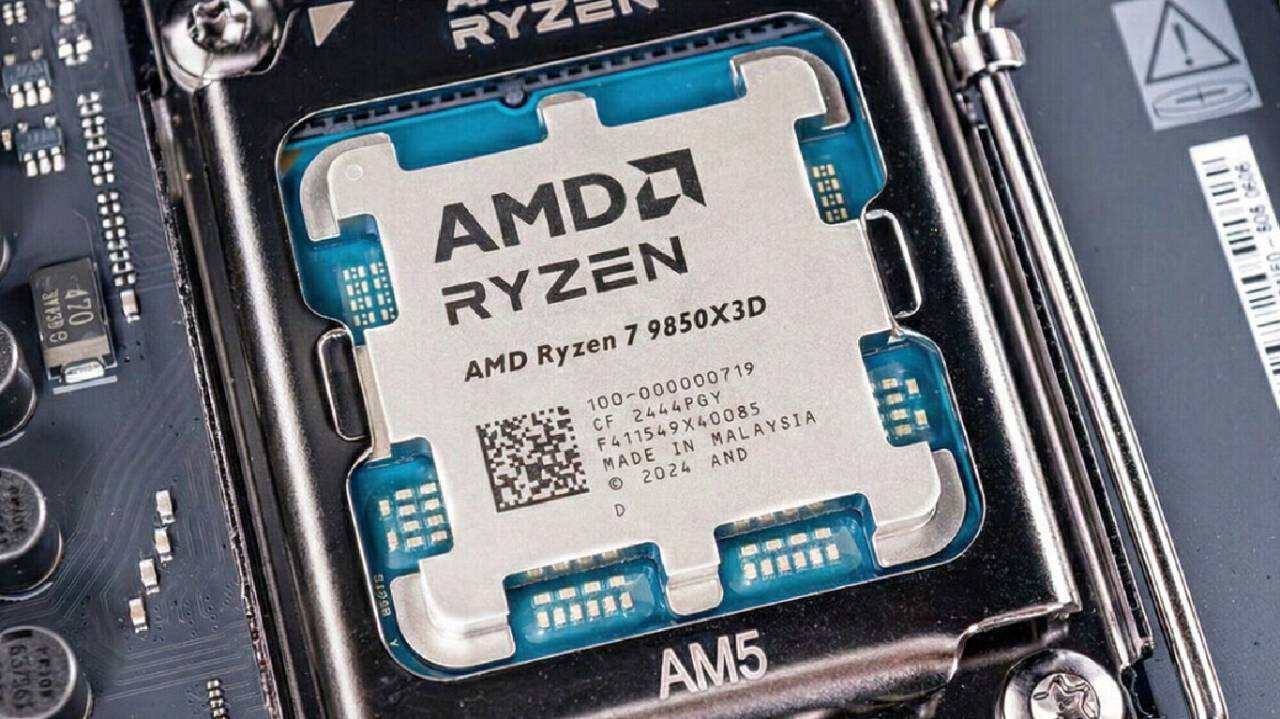
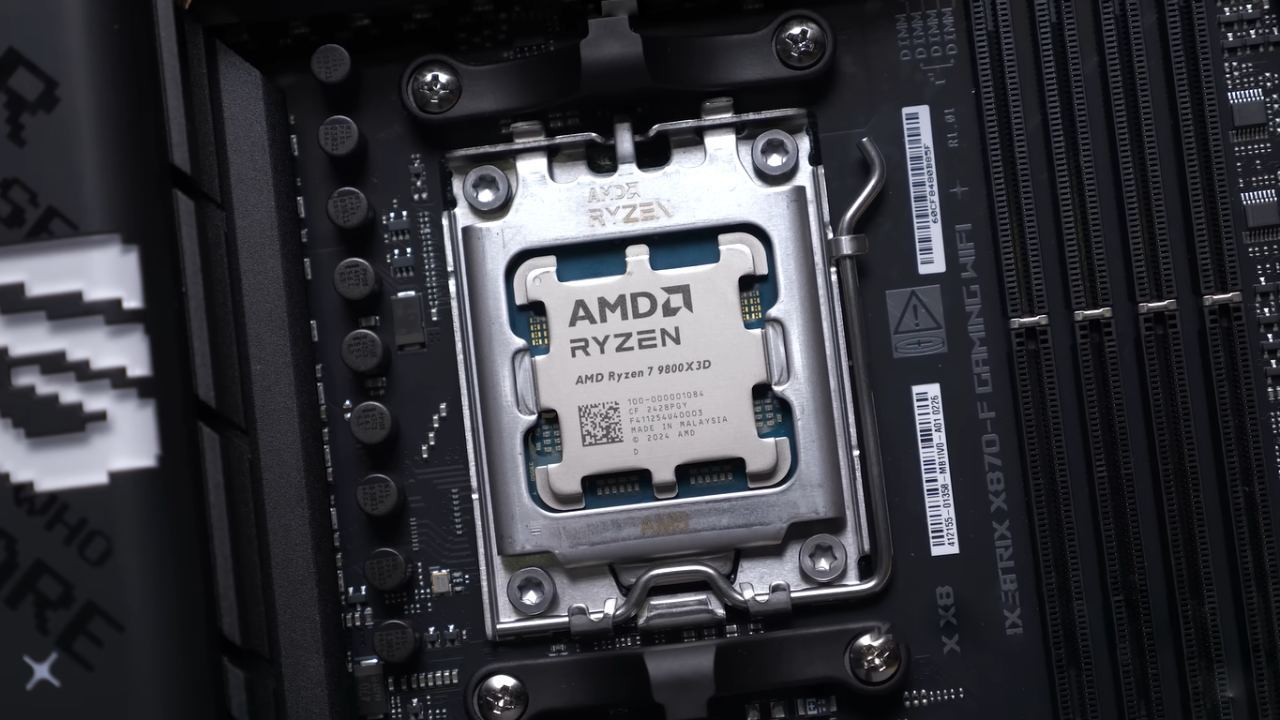
The Ryzen 7 9850X3D turns out to be the most important desktop news when we finally get to the part that people care about. With 96MB of L3 cache, the processor has 8 cores and 16 threads.
The only thing that makes these specs different from the current 9800X3D is the frequency. The 9850X3D has a highest boost clock of 5.6GHz, while the 9800X3D's is 5.2GHz. It still has the same 4.7GHz base clock and 120W TDP.
This points to better binned data rather than a major architectural change. We expect the power to behave similarly, with gains coming from better voltage and frequency properties.
AMD's own tests show that it is 27% faster than Intel's 285K, while the 9800X3D is 24% faster. In real life, this could mean anything from a small margin error to a 7% increase in some titles.
Performance, Pricing, and Value Questions
This means that the 9850X3D might be 1.7% to 4.9% faster than the 9800X3D in game workloads, based on reconstructed scenarios. The value is still unclear without official prices.
The 9800X3D costs about $470 right now, and reports that the 9850X3D will cost about $100 more make people nervous. If the increase stays in the single digits, it might be hard to justify a higher price unless the older model's price drops significantly.
Mobile Processors and Naming Fatigue
AMD also showed off its Ryzen AI 400 line for mobile devices, which is based on the Zen5, RDNA3.5, and XDNA2 architectures. These chips come in CTDP configurations ranging from 15W to 54W and feature Radeon 800M graphics.
The top-of-the-line Ryzen AI 9 HX475 has 12 cores, a boost clock of 5.2GHz, 36MB of cache, support for 8533MT/s memory, 60NPU TOPS, and a Radeon 890M GPU with 16CUs that can boost to 3100MHz.
At the base level, the Ryzen AI 5 430 has 4 cores, a boost clock of 4.5 GHz, 12 MB of cache, support for 8000 MT/s memory, 50 NPU TOPS, and a Radeon 840M GPU. AMD's own benchmarks show that their products are up to 29% faster at multitasking, 71% faster at content creation, and 12% faster in games at 1080p low settings than competing parts. However, we all know how unreliable these claims can be without third-party testing.
Desktop AI and Copilot Ambitions
To achieve the goal of a Copilot Plus desktop processor, AMD plans to add these AI-focused processors to desktops in the second quarter of 2026. It depends on you whether this is important, especially since a specific Copilot key might replace other keys you use often.
Ryzen AI Max Plus and Mini PCs
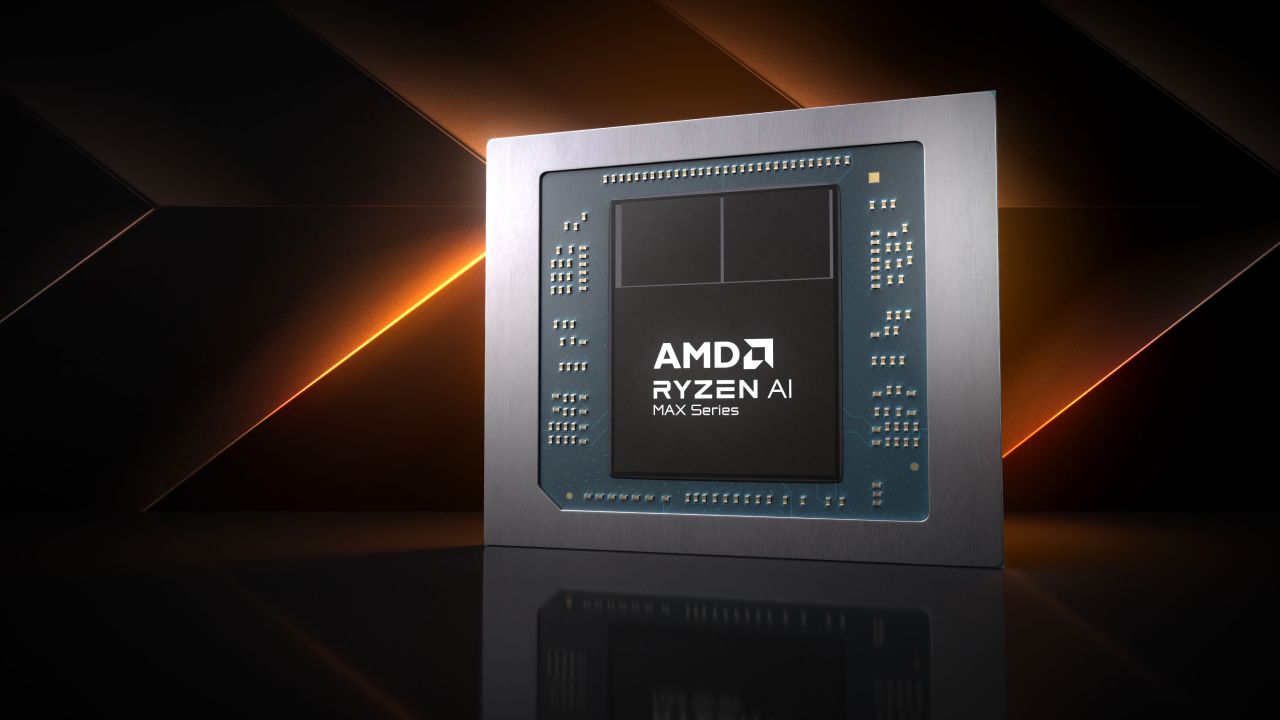
The company also added the 392 and 388 models to its Ryzen AI Max Plus line. These processors have up to 40 GPU compute units, Radeon 8060S graphics, boost clocks up to 5GHz, and CTDP ranging from 45W to 120W. Soon, these processors will be in laptops.
Next, AMD will release the Ryzen AI Halo small PC, which it markets as a local LLM development machine. Actually, it's just a small computer that can handle many different tasks.
Helios AI Rack Takes Center Stage
The real thing that AMD came to show off was its Helios AI rack. It has 18 compute trays that can hold a total of 72 MI455X GPUs and weighs almost 7,000lb. It was made to open the rack's wide standards. There are 4GPUs, an EPYC Venice CPU, high-speed Pensando networking, and liquid cooling in every box.
AMD says the entire rack has 43 TB/s of connectivity, 18,000 GPU compute units, 4,600 Zen 6 CPU cores, and 31 TB of HBM4 memory. This is meant to be a single, very big computer unit made for very large AI workloads.
Robotics and the Closing Act
The keynote ended with a robotics segment featuring Gene One, a robot that looks like a person and can feel. The company that made it stressed touch, pressure, and intention as important qualities that set it apart, suggesting possible uses in patient care.
The talk focused a lot on reassuring people that this wasn't science fiction but a real product made possible by AMD's technology.
Final Thoughts
It was easy to see the pattern after listening to hours of keynotes from different businesses. Hardware for consumers received less attention than AI infrastructure, policy alignment, and large systems used by businesses.
There were real reveals that were worth paying attention to, like the Ryzen 7 9850X3D, but they were buried under a lot of AI chatter. We sat through it all so you wouldn't have to, and if there's one thing you should remember, it's that at this show, consumers feel like an afterthought more than the crowd.
Also, check our other hardware articles below:
- AMD Ryzen 9 9950X3D Review: Setting The Standard For 2025 Gaming CPU
- Amazon Luna 2025 Review: Is Prime Gaming's Cloud Service Your Go-To For Casual Fun?
- AMD RX 9070 XT Review: AMD's RDNA 4 Champion for 1440p Gaming
- GeForce Now Ultimate: Ditching Your Gaming PC For Cloud RTX 4080 Power?
- NVIDIA GeForce RTX 5080 Review (2025): Still A 4K Gaming Powerhouse?
- Intel Core Ultra 9 285K Review And Performance Breakdown (2025)
- AMD Ryzen 7 9800X3D Review: 3D V-Cache Goes God Mode with Stunning Gaming Performance
- Intel Core Ultra 9 285K vs AMD Ryzen 7 9800X3D: In-Depth Gaming Performance and Benchmark Comparison
- NVIDIA GeForce RTX 5080 Super Performance In Cyberpunk 2077: Path Tracing & DLSS 4.0 Tested
- AMD Radeon RX 9070 XT In Cyberpunk 2077: Ray Tracing & FSR 4.0 Tested
- Intel Arc B580 Review: The $250 GPU Revolutionizing 1440p Gaming
- Intel Arc B570 Vs. B580: Value, Specs, And Real-World Gaming Performance
- RTX 5090 Laptop Vs. M4 Max MacBook Pro: Ultimate Raw Performance Vs. Battery Endurance
- Intel Arc b580 Vs. RTX 4060: Game Performance And Value Analysis
- RTX5090 Hell Is Us Demo 4K Ultra Benchmark: DLSS Vs. Native Performance Guide
- NVIDIA RTX 5070 Review: Mid-Range Muscle or Marketing Hype?
- Nintendo Switch 2 Review: Handheld Performance, Features & Value Breakdown
- RTX 5070 Ti Review: Performance, Thermals & Power Efficiency Tested
- Samsung Odyssey OLED G81SF Review 2025: Ultimate 32-Inch QD-OLED Gaming Monitor
- AMD RX 9070 Performance Review: Thermals, Clocks, and Real-World FPS
- AMD Ryzen 5 7600 Review: Best Budget Gaming CPU of 2025?
- AMD Radeon RX 7800 XT Review: RDNA 3 Power For Midrange Gaming
- Asus ROG RTX 5090 Astral OC Vs. Founders Edition: The 4K Gaming Benchmark
- Intel Core i5-13400F Gaming Performance: Still Worth It in 2025?
- ASUS GeForce RTX 5090 LC Liquid Cooled GPU Review: Unmatched Silence & Speed
- ASUS ROG Ally X Handheld Review: Double the Battery, Double the Comfort
- Lenovo Legion Go S Review: The Ultimate Steam Deck 2 Alternative
- Sapphire NITRO+ AMD Radeon RX 9070 XT Review: The Ultimate 4K Gaming GPU
- Alienware 16 Area 51 Review: The Ultimate 2025 Gaming Laptop
- Alienware Area-51 Review: Unmatched 4K, Thermal, and Acoustic Performance
- AMD Ryzen 7 7800X3D: Delivers Gaming Performance Far Beyond Expectations
- AMD Ryzen 9 7900X Review: Powering the AM5 Era with DDR5 & PCIe 5.0
- Intel Core i9‑14900K vs. AMD Ryzen 7 7800X3D: Power Profiles & Gaming Benchmarks
- Intel Core i9 14900K: Specs, Benchmarks, and Competitor Comparison
Contributor, NoobFeed
Gaming Hardware Updates
No Data.