
AMD FSR 4 Support Expands to Steam Deck and Older Radeon GPUs
Steam Deck gains potential access to AI upscaling improvements through upcoming official FSR 4 implementation.
Hardware by Nahe Yan on May 17, 2026
Upscaling technology is becoming one of the most crucial tools for enhancing gaming performance on handheld devices. Upscaling compresses the resolution of the games being played and then uses algorithms to create a higher-resolution image, which decreases the workload on the computer hardware while keeping games moving at a smoother speed.
On the Steam Deck, AMD's FSR 3 technology has proven to be one of the most popular features. In contrast, FSR 4 may represent a new approach to improving image quality and performance on RDNA 2 and RDNA 3 devices.
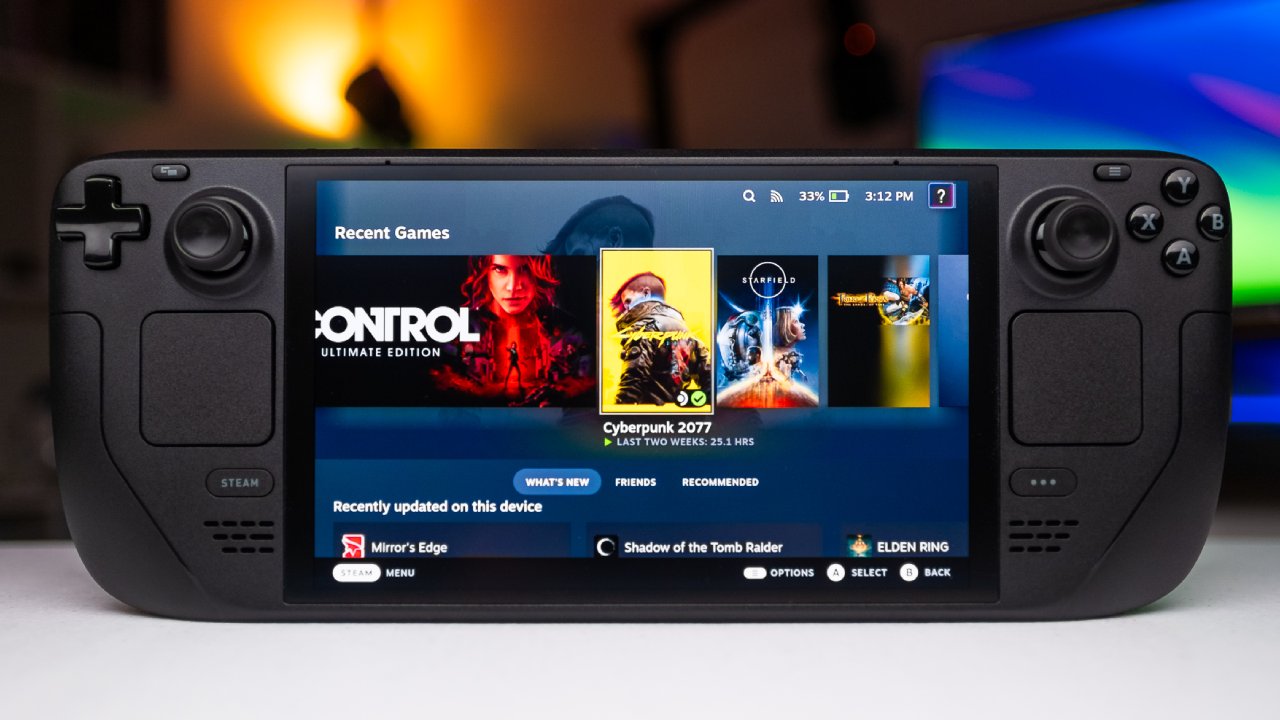
As a result of FSR's dependence on special hardware cores to efficiently perform AI upscaling, it was initially released for AMD's RDNA 4 GPUs. The technology is based on FP8 calculations, enabling the upscaling algorithm to run faster without significant performance degradation.
AMD is Extending FSR 4 Support to the RDNA 4 Series
However, faster designs like RDNA 3 and RDNA 2 used the older INT8 standard instead of FP8. This made FSR 4 slower and needed more performance resources. Because of this, AMD didn't support FSR 4 on older GPUs when it first came out.
AMD has confirmed that FSR 4 support will now extend to RDNA 3 and RDNA 2 GPUs. Radeon RX 7000 series, built on the RDNA 3 architecture, is expected to be supported in July, while the Radeon RX 6000 series, built on the RDNA 2 architecture, is expected to be supported in early 2027. Certain Game Support features on the Steam Deck might be more compatible with the Steam version of FSR 4.
As the Steam Deck now features RDNA 2 graphics architecture, FSR 4 support for the console may be coming to the Steam Deck in the future. That should enhance the quality of the displayed image in games now using FSR 3, particularly those that exhibit noticeable image instability and/or shimmering.
There's also a rumor that AMD will add support for other officially unsupported GPU series. Although the two handheld gaming devices shown on screen do not directly use the Radeon RX 6000 or RX 7000 series GPUs, multiple of them were displayed during AMD's presentation. That has sparked optimism that AMD could end up with a wider implementation that works across several RDNA 3 and RDNA 2 devices.
Steam Deck may see Greater FSR 4 Compatibility and Optimization
Community Plugins have also added FSR 4 to the Steam Deck, which is now available. An unofficial FSR 4 version for RDNA 2 and RDNA 3 was leaked by AMD earlier. Ever since, modders and plugin creators have created viable versions for the Steam Deck. Plugins and community-made automation tools for approved games can be used to play games with FSR 4. The implementation slows many games and significantly affects image quality.
If you are using FSR 4, then the performance of some games may drop below playable levels, especially for already sub-30 fps titles. The image reconstruction is cleaner than with FSR 3, but the current unofficial implementation isn't necessarily best for less capable setups.
Hopefully, AMD's official launch will reduce the performance burden seen on RDNA 2 GPUs. As it's being developed internally, future releases of It would be better if FSR 4 worked better with older GPUs and handheld devices.
This could let the Steam Deck use AI upscaling while sacrificing little speed and improving picture quality. It might also be easier to install and work with other games if writers could add FSR 4 as a mod instead of adding it by hand.
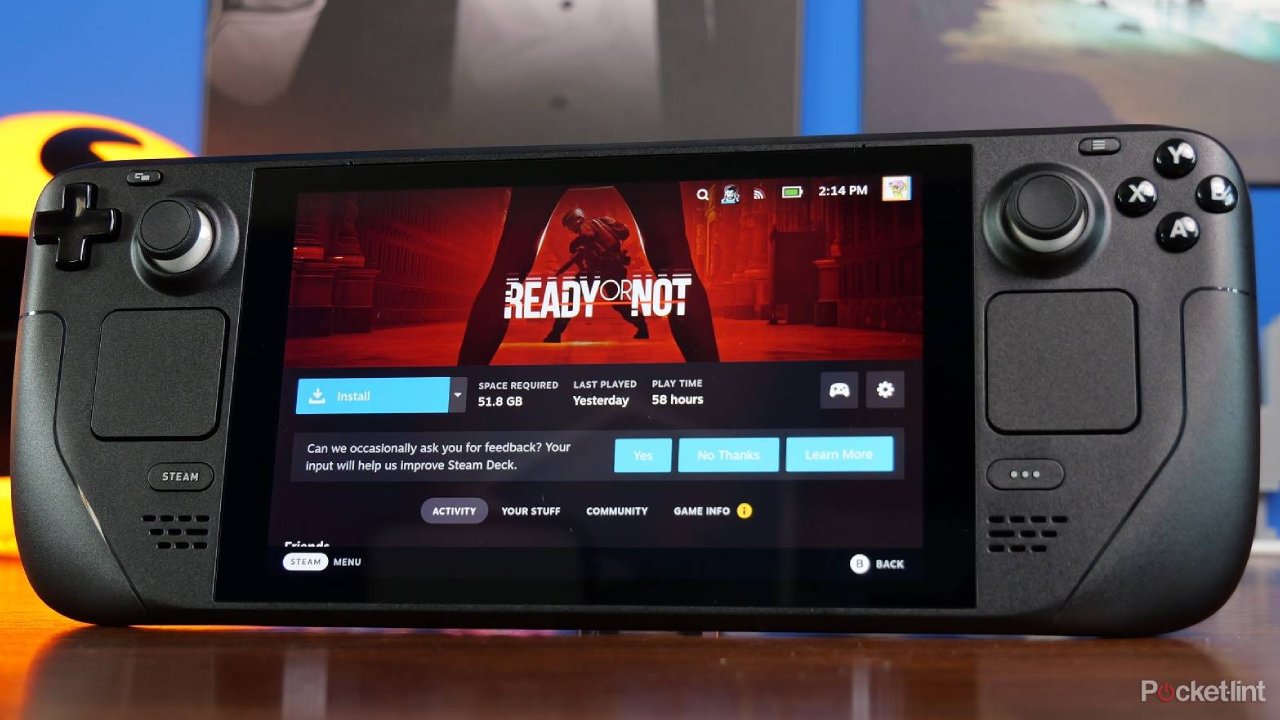
The developers explicitly support FSR 4, so it might be possible to enable it in-game without using community tools.
The feature is also significant for future handheld gaming devices with RDNA 3 graphics. With RDNA 3 powering the Steam Machine, official support for FSR 4 may become an industry standard for future Steam Machines. That would give newer handhelds the ability to directly benefit from AMD's AI upscaling technology and support older RDNA 2 and RDNA 3 GPUs already in use.
FSR 4 might improve the graphics on handheld game systems while keeping the frame rate the same. Even though true RDNA 2 support might not happen until early 2027, AMD's news that compatibility work will be done for older hardware is great news for Steam Deck users.
The current community implementations already show that it is possible to achieve great improvements in image quality with FSR 4. The technology would be a viable solution for handheld gaming consoles or for older Radeon GPUs if AMD can minimize the performance penalty in an official optimization.
Editor, NoobFeed
Gaming Hardware Updates
No Data.