
AMD RX 9060 XT vs. Nvidia RTX 5060: Five Years of $300 GPU Battles
A five-year rivalry at the $300 tier highlights AMD's value-driven strategy against Nvidia's feature-focused approach.
Hardware by Tanvir Kabbo on Sep 22, 2025
AMD and Nvidia have been engaged in a fierce competition at the $300 graphics card pricing point for the last six months. This market niche, often referred to as the "sweet spot" for gamers, has consistently produced GPUs that strike a balance between reasonable pricing and good performance.
From the RX 5600 XT and RTX 2060 showdown in 2020 to today's clash between the RX 9060 XT and RTX 5060, the rivalry has showcased how both companies approach budget-oriented gaming.
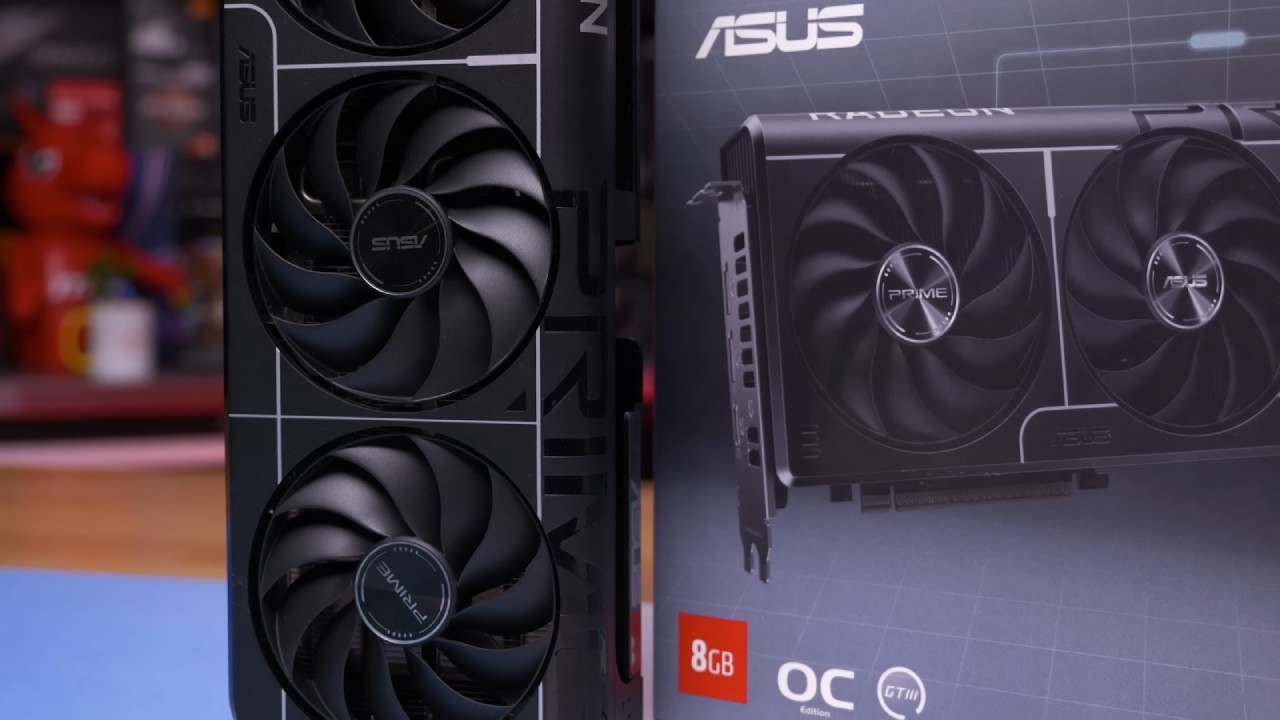
A Five-Year Journey at $300
In 2020, the competition kicked off with AMD's RX 5600 XT and Nvidia's RTX 2060. AMD impressed with raw rasterization performance, while Nvidia leaned on features like ray tracing and DLSS, even though adoption was still in its infancy.
By 2021, the RX 6600 vs RTX 3060 contest showed AMD winning in pure efficiency and affordability, while Nvidia maintained a stronger ecosystem. Moving forward, the 2023 battle between the RX 7600 and RTX 4060 highlighted a shift—Nvidia began leaning heavily on frame generation and DLSS 3, while AMD offered more value upfront for traditional rasterized gaming.
Now, in 2025, the RX 9060 XT vs RTX 5060 face-off feels like the culmination of this long rivalry. Both cards target the same $300 market, but Nvidia is betting on AI-powered technology, while AMD is focusing on classic raster performance per dollar.
Performance across Games
An evaluation of these GPUs across seven well-known games provides a clear picture of their performance.
Call of Duty: Black Ops 6 – AMD's RX 9060 XT takes a narrow lead, averaging 91 fps against Nvidia's 86 fps.
Cyberpunk 2077: Nvidia pulls ahead slightly, with the RTX 5060 averaging 71 fps to AMD's 68 fps.
Horizon Zero Dawn Remastered: Both cards perform nearly identically, sitting around 95–96 fps.
Kingdom Come 2: AMD edges forward at 64 fps versus 61 fps on the RTX 5060.
Rainbow Six Siege: AMD dominates here, hitting 369 fps compared to Nvidia's 314 fps.
Space Marine 2: Nvidia claws back with 87 fps, outpacing AMD's 83 fps.
Shadow of the Tomb Raider – AMD again leads at 104 fps versus 96 fps.
When averaged across the suite, the RX 9060 XT holds a small but consistent 3% performance advantage.
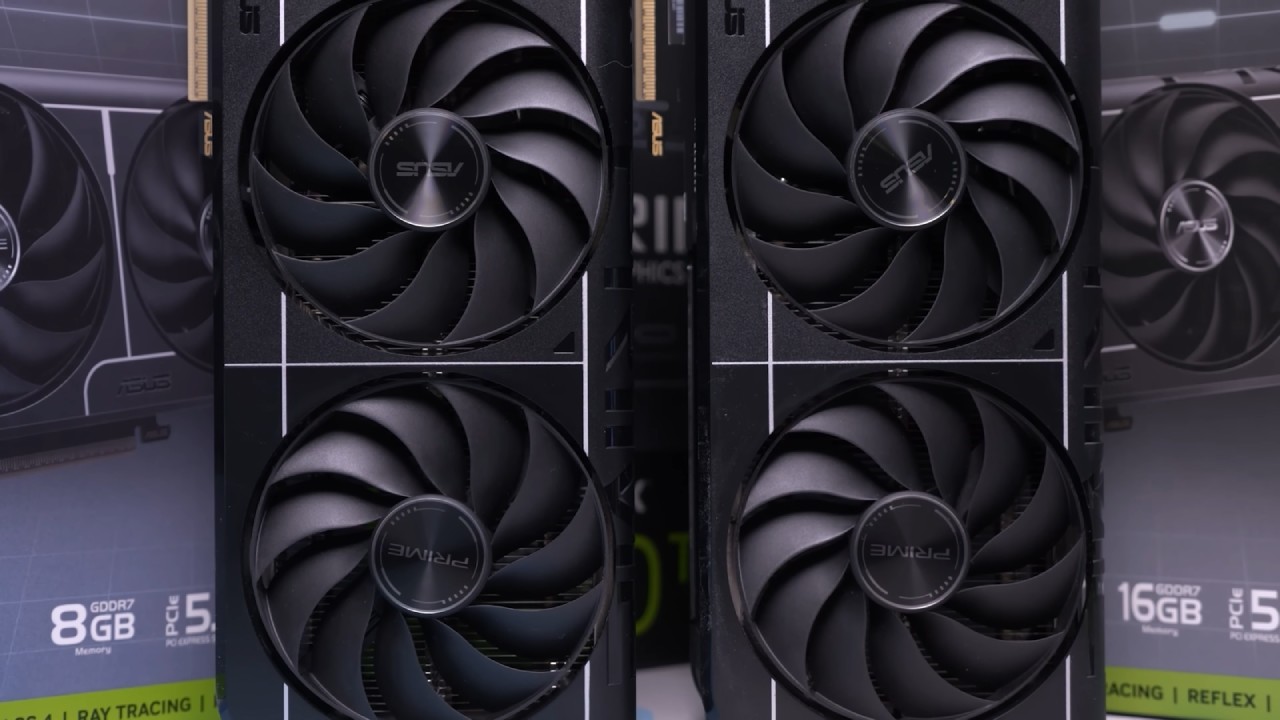
What About Ray Tracing?
Ray tracing remains a dividing line between these two cards. Nvidia continues to provide stronger ray tracing performance, often outperforming AMD in demanding titles that lean heavily on the technology. With DLSS 3.5 frame generation, Nvidia offers smoother gameplay in scenarios where raw raster performance alone isn't enough.
AMD, however, still appeals to gamers who prioritize traditional performance without extra software layers. The RX 9060 XT delivers excellent results in rasterization-first titles and offers a slightly higher baseline framerate in most benchmarks.
Value and Ecosystem
Beyond performance numbers, the broader ecosystem matters. Nvidia's DLSS is far more widely adopted than AMD's FSR, and while FSR 3 is catching up, the gap in implementation remains. Along with extra capabilities like Nvidia Broadcast for streamers, Nvidia also provides improved support for games that use ray tracing.
AMD's message is straightforward: get more performance for your money. Because of its consistently reduced power draw and somewhat bigger VRAM allocations, the RX 9060 XT is a popular choice for gamers on a tight budget looking for a simple upgrade.
Final Thoughts
AMD has always delivered great value at the $300 price point over the previous five years. Nvidia, on the other hand, has always been the leader in new features and cutting-edge technology. The RX 9060 XT's small win in raw averages shows that AMD is still the best at conventional gaming performance.
That said, Nvidia's RTX 5060 remains extremely competitive thanks to its superior ray tracing capabilities and DLSS 3.5 integration, which can extend its longevity in next-gen titles.
For gamers choosing in 2025, the decision comes down to priorities: Choose AMD if you want the best pure framerates for your money. Choose Nvidia if you value ray tracing, DLSS, and a mature software ecosystem.
Either way, this fifth and perhaps final round in the $300 GPU battle proves that budget gamers are the true winners.
check our other hardware articles:
- AMD Ryzen 9 9950X3D Review: Setting The Standard For 2025 Gaming CPU
- Amazon Luna 2025 Review: Is Prime Gaming's Cloud Service Your Go-To For Casual Fun?
- AMD RX 9070 XT Review: AMD's RDNA 4 Champion for 1440p Gaming
- GeForce Now Ultimate: Ditching Your Gaming PC For Cloud RTX 4080 Power?
- GeForce RTX 5090 Unleashed: Is NVIDIA's New Flagship the Ultimate 4K Gaming GPU?
- NVIDIA GeForce RTX 5080 Review (2025): Still A 4K Gaming Powerhouse?
- Intel Core Ultra 9 285K Review And Performance Breakdown (2025)
- AMD Ryzen 7 9800X3D Review: 3D V-Cache Goes God Mode with Stunning Gaming Performance
- Intel Core Ultra 9 285K vs AMD Ryzen 7 9800X3D: In-Depth Gaming Performance and Benchmark Comparison
- NVIDIA GeForce RTX 5080 Super Performance In Cyberpunk 2077: Path Tracing & DLSS 4.0 Tested
- RTX 5090 Performance Testing In GTA 5 – 1080p, 1440p, and 4K Max Settings Benchmark
- AMD Radeon RX 9070 XT In Cyberpunk 2077: Ray Tracing & FSR 4.0 Tested
- Intel Arc B580 Review: The $250 GPU Revolutionizing 1440p Gaming
- Intel Arc B570 Vs. B580: Value, Specs, And Real-World Gaming Performance
- Intel Arc B570 Review: Efficient Xe2 Performance At An Affordable Price
- RTX 5090 Laptop Vs. M4 Max MacBook Pro: Ultimate Raw Performance Vs. Battery Endurance
- Intel Arc b580 Vs. RTX 4060: Game Performance And Value Analysis
- RTX5090 Hell Is Us Demo 4K Ultra Benchmark: DLSS Vs. Native Performance Guide
- NVIDIA RTX 5070 Review: Mid-Range Muscle or Marketing Hype?
- Nintendo Switch 2 Review: Handheld Performance, Features & Value Breakdown
- RTX 5070 Ti Review: Performance, Thermals & Power Efficiency Tested
- Samsung Odyssey OLED G81SF Review 2025: Ultimate 32-Inch QD-OLED Gaming Monitor
- AMD RX 9070 Performance Review: Thermals, Clocks, and Real-World FPS
- AMD Ryzen 5 7600 Review: Best Budget Gaming CPU of 2025?
- AMD Radeon RX 7800 XT Review: RDNA 3 Power For Midrange Gaming
- Asus ROG RTX 5090 Astral OC Vs. Founders Edition: The 4K Gaming Benchmark
- ASUS ROG Astral RTX 5090 OC Edition Review: 32GB GDDR7 & 4K Gaming Benchmark
- Intel Core i5-13400F Gaming Performance: Still Worth It in 2025?
- ASUS GeForce RTX 5090 LC Liquid Cooled GPU Review: Unmatched Silence & Speed
- ASUS ROG Ally X Handheld Review: Double the Battery, Double the Comfort
- Lenovo Legion Go S Review: The Ultimate Steam Deck 2 Alternative
- Sapphire NITRO+ AMD Radeon RX 9070 XT Review: The Ultimate 4K Gaming GPU
- Alienware 16 Area 51 Review: The Ultimate 2025 Gaming Laptop
- Alienware Area-51 Review: Unmatched 4K, Thermal, and Acoustic Performance
- AMD Ryzen 7 7800X3D: Delivers Gaming Performance Far Beyond Expectations
- AMD Ryzen 9 7900X Review: Powering the AM5 Era with DDR5 & PCIe 5.0
- Intel Core i9‑14900K vs. AMD Ryzen 7 7800X3D: Power Profiles & Gaming Benchmarks
- Intel Core i9 14900K: Specs, Benchmarks, and Competitor Comparison
- Sapphire PURE AMD Radeon RX 9070 XT Review: Cooling, Specs & Gaming Benchmarks
- ASRock Radeon RX 7800 XT Challenger OC Review: Best Price-to-Performance GPU of 2025
Senior Editor, NoobFeed
Gaming Hardware Updates
No Data.