
AMD Ryzen 9800X3D Single-CCD CPU Setter Optimization Tests
Single-CCD configuration testing highlights how thread targeting shapes game performance and background task management efficiency
Hardware by Nahe Yan on Nov 28, 2025
A few weeks ago, on the channel, testing was performed with an application called CPU Setter. The application allows changes to thread allocation behaviour and workload distribution. Most of the initial testing focused on a Ryzen CPU with two CCDs, which raised questions about the benefits of a single-CCD processor like the 9800X3D.
The following covers behaviour when a processor is limited to a single CCD, along with observations taken through manual CCD disabling.
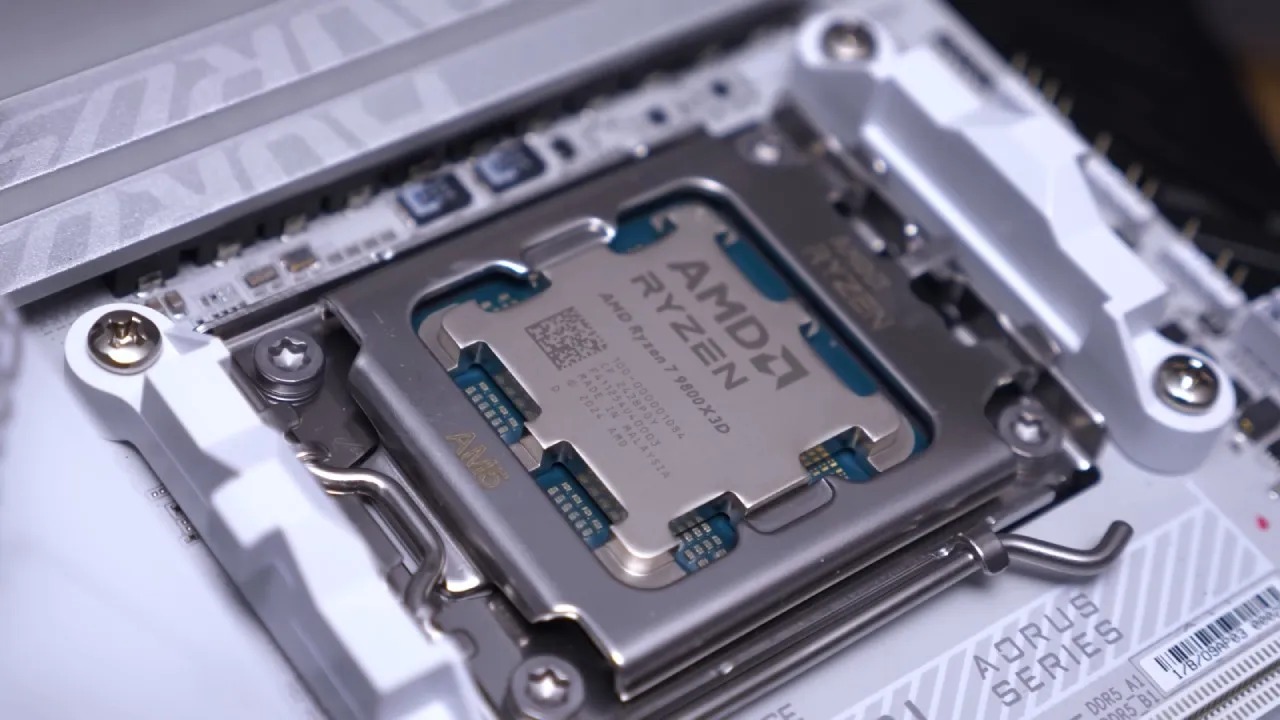
Understanding the CCD Configuration and Test Setup
We use a Ryzen 9 9950X3D with the second CCD disabled through Ryzen Master to mirror the behaviour of a single-CCD processor like the 9800X3D. Only CCD0 is addressable, giving access to eight cores and sixteen threads.
This setup allows us to analyse performance changes and the way CPU Setter interacts with a restricted CCD layout. Before focusing on single-CCD behaviour, we also wanted to check how CPU Setter impacts games like Call of Duty Black Ops 7 on the 9950X3D.
The system uses an Asus Astral RTX1590 on Windows 11 with updated drivers. Memory consists of 48GB at 7600MTS. The Call of Duty test runs DLSS at Ultra Performance to reduce GPU load as much as possible, making CPU behaviour easier to observe.
Default distribution spreads work across both CCDs, with CPU9 on the second CCD receiving heavy bursts of activity. Average performance is around 400 fps, with a near-50 % split between CPU and GPU bottlenecks.
After switching to a single X3D CCD, the work becomes more focused, and performance improves, with around 580 fps observed in some cases. Gains continue when CPU Setter is applied, with average values rising roughly 10% and low values improving.
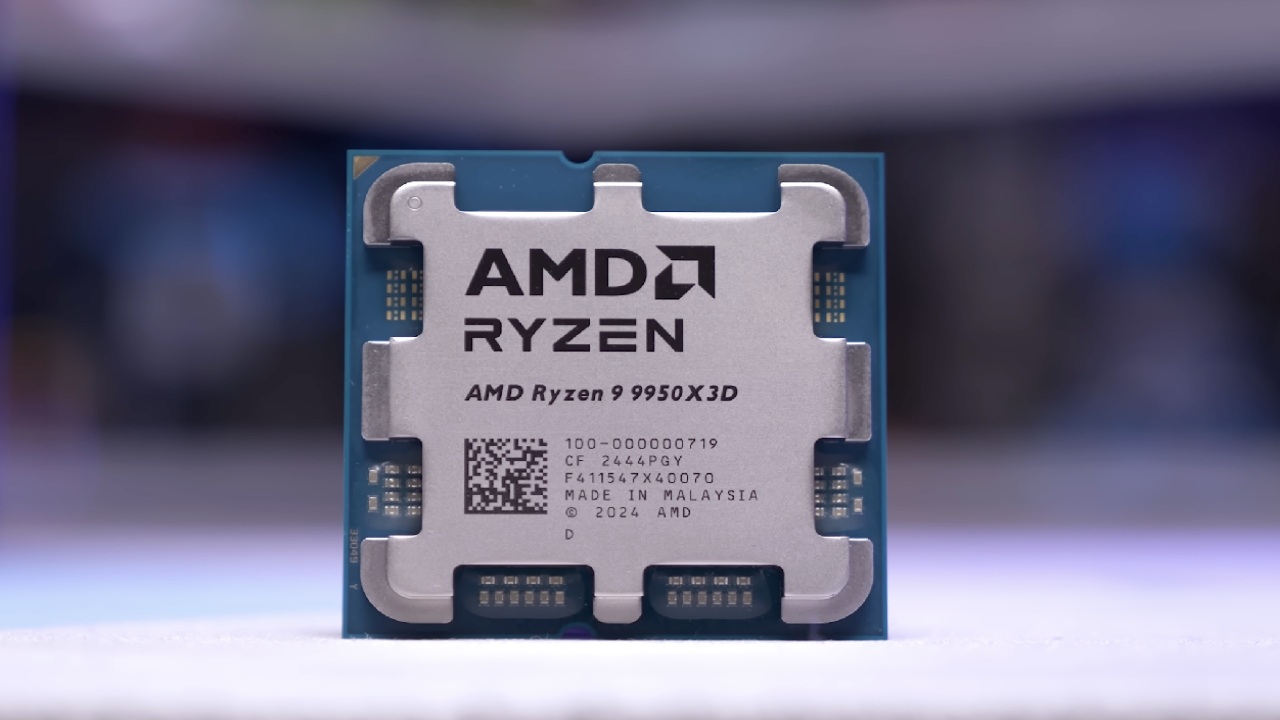
Single-CCD Behaviour and CPU Setter Profiles
With eight physical cores and sixteen logical processors, CPU Setter shows them as CPU0-CPU15. Custom profiles allow selection of specific thread groups, such as 0-7, 8-15, even, or uneven.
In the 0-7 profile, four physical cores and their SMT threads are used. In the 8-15 profile, the remaining four physical cores are used. Even selects the first thread of each core, and uneven selects the other thread. Work can still spill over when necessary because CPU Setter cannot block mission-critical tasks.
Spider-Man 2 Testing and Thread Allocation
We run Spider-Man 2 at 1440p with frame generation disabled and ray tracing set to high. When switching profiles in real time, we can see the behaviour change in the CPU graphs. Assigning 0-7 drops results in slightly lower performance than the default.
Switching to 8-15 produces similar performance. Selecting even causes Spider-Man 2 to run with one thread per core, which slightly improves performance. Uneven unexpectedly performs even higher, giving a noticeable uplift. Results vary depending on what the engine demands, but the profile behaviour demonstrates how thread targeting influences CPU load.
We can also run background workloads. For example, Cinebench can be assigned to specific threads while Spider-Man 2 runs on the remaining ones. With only one CCD, flexibility is more limited compared to a dual-CCD processor. However, you can still run exports, encoding, or background work on isolated threads while gaming if frame rate caps are applied.
Cyberpunk 2077 Behaviour on Different Thread Sets
Cyberpunk 2077 initially runs around 250fps. When selecting the uneven profile, performance rises toward 380-390fps. Switching to even brings it down to around 440-450fps.
Returning to the default mode results in a few fps loss. Selecting only 8-15 or 0-7 results in noticeable performance drops to around 370-380fps and even lower for 0-7. Uneven remains the highest performer in these tests.
.jpg)
Final Thoughts
We included two reference points from previous tests: default 9950X3D behaviour and CPU Setter targeting the X3D CCD. Together, they show how CPU Setter influences performance patterns across different CCD arrangements.
We appreciate the feedback and support on the previous content. Work continues on new projects, optimisations, and experiments that will be presented in future uploads.
After finishing testing, it is time to take a break and handle a certain cat that has decided to demand attention. Take care and see you soon.
Also, check our other AMD articles below:
- AMD Ryzen 9 9950X3D Review: Setting The Standard For 2025 Gaming CPU
- AMD Ryzen 7 9800X3D Review: 3D V-Cache Goes God Mode with Stunning Gaming Performance
- AMD RX 9070 Performance Review: Thermals, Clocks, and Real-World FPS
- AMD Ryzen 5 7600 Review: Best Budget Gaming CPU of 2025?
- AMD Radeon RX 7800 XT Review: RDNA 3 Power For Midrange Gaming
- Sapphire NITRO+ AMD Radeon RX 9070 XT Review: The Ultimate 4K Gaming GPU
- AMD Ryzen 7 7800X3D: Delivers Gaming Performance Far Beyond Expectations
- AMD Ryzen 9 7900X Review: Powering the AM5 Era with DDR5 & PCIe 5.0
- Intel Core i9‑14900K vs. AMD Ryzen 7 7800X3D: Power Profiles & Gaming Benchmarks
Editor, NoobFeed
Gaming Hardware Updates
No Data.