
DLSS Multi-Frame Generation Explained: 240 fps, Latency, and Pulsar Insights
Latency behavior challenges assumptions linking higher frame rates directly to lower input response times.
Hardware by Shinji Okazaki on Feb 21, 2026
NVIDIA has begun moving its CES demos to other locations, showcasing technology that points to a bigger change in how graphics performance is delivered.
A hands-on look at DLSS multi-frame generation shows how machine learning-based rendering, new display technology, and latency management are all coming together to create a new type of GPU.
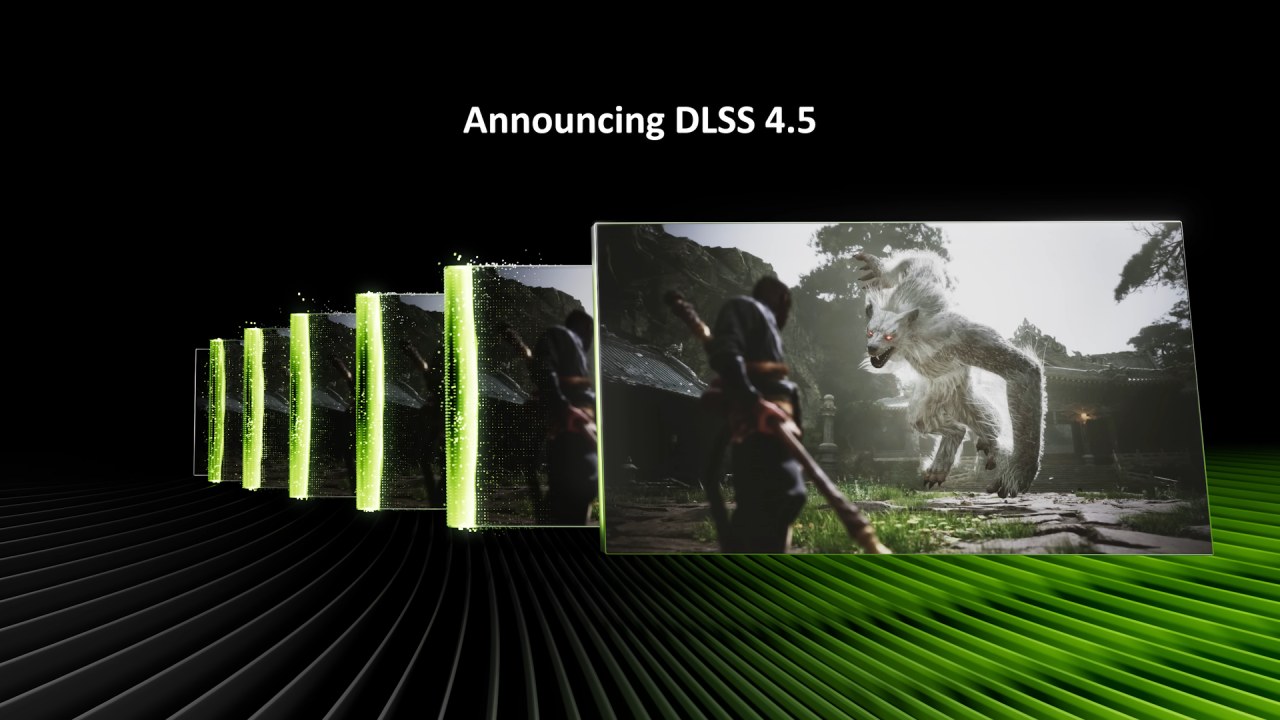
DLSS Multi-Frame Generation at 240 fps and 4K
We got to observe NVIDIA DLSS multi-frame generation for the first time in a demo of The Outer Worlds 2. The configuration was running at 4K with a frame rate of 240 fps, which was locked or almost locked. The latency indicator on the screen showed about 40ms, which is good in this case.
There has been some resistance to frame creation, but, as with upscaling, it will be part of the GPU's output in the future. The price of silicon and the cost of building GPUs are both going up. Because of this, machine-learning-based features are becoming increasingly important for what many people term performance gains. It is better to call them frame rate enhancements.
Things are making sense. On one side, multi-frame creation is pushing 240 fps. G-Sync Pulsar is modifying how high frame rates are shown right next to it. When you view a screen that doesn't blur details, your idea of what a high frame rate is changes. With increased motion clarity, the idea of what a high frame rate looks like changes.
A More Comprehensive Perspective on GPU Performance
We need to start thinking about how a GPU operates as a whole and how it interacts with emerging display technologies. Latency is one of the things that makes that happen.
We found that games can feel laggy without Nvidia Reflex when we tested it. A lot of people think that frame generation causes too much lag, but what really happens is that frame generation with Reflex lies between games that don't have Reflex and games that do.
We added a Radeon 1970 and 1970 XT to the NVIDIA 5070 for more testing of Cyberpunk 2077. NVIDIA 5070 had the lowest raw frame rate, at around 38 fps. Even with ray tracing turned on, the 9070 and 9070 XT were faster than the NVIDIA card. Even though they had higher frame rates, their latency was worse than that of the NVIDIA card, which had a lower frame rate.
This goes against the common belief that a higher frame rate necessarily means a lower latency. That association is true to some extent, but the data demonstrates that there is more to it. The ultimate experience is affected by base performance, base latency, frame-generation latency, and vendor-specific variances.
9070 XT is better than the 5070 on average by 12 fps, but it has higher input lag. That doesn't make sense. Testing the AMD cards with driver-level anti-lag didn't help, indicating that anti-lag is already enabled at the driver level.
Differences in Experience and Gaps in Vendor Features
Comparing experiences with Nvidia, Intel, and AMD is getting harder as we move into this time. NVIDIA and Intel are both improving multi-frame generation, anti-lag technologies, ray tracing, and DLSS 4.5, the best upscaling solution on the market. In some ways, AMD is like other companies, but not in all of them.
When you play a high-end PC game like The Outer Worlds 2, the combination of dynamic multi-frame generation at 240fps, Pulsar, and ray reconstruction gives you an experience that other companies can't match right now. The technology stack is clearly different, even if the demo part doesn't show how the complete open-world gaming works.
In some ways, Intel seems more like Nvidia than AMD when it comes to pursuing these features. Feature convergence may occur as the next generation of console hardware approaches, whether in 2027 or 2028. At the moment, AMD's planned products for Project Redstone don't have the same features as Nvidia's.
What DirectX Does and Where the Industry Is Going
Microsoft made it easy to compare GPUs in the past by setting standards through DirectX. There hasn't been much movement at that level since DirectX12 Ultimate. NVIDIA has made progress in machine learning technologies on its own, in the absence of competition.
Because of this, DirectX is no longer the main topic of discourse. Vendor-specific technologies now have a bigger impact on the experience than common API standards.
G-Sync Pulsar and the Frame Rate You Think You See
Pulsar affects how people see frame rate. When you view it directly, it's evident that motion clarity influences the perceived frame rate. A demo running at 120 fps on Pulsar revealed motion clarity that changed how that frame rate looked a lot.
It looks right when you play at 60 fps on a CRT. A high-persistence sample-and-hold flat display makes 60fps look blurry. Pulsar and other low-persistence displays eliminate that haze. Frames with lower frame rates can look more stable and clear.
Pulsar works with VRR, so you don't have to limit the frame rate. The display keeps motion clear, no matter what it shows. Firmware upgrades are currently being made to add options for lower refresh rates, which should make it more flexible.
Final Thoughts
When you look at the latency test as a whole, the 9070 XT has the highest frame rate and latency, which is only slightly higher than the NVIDIA card. In some cases, the 9070 XT is the strongest option. But the bigger point is that frame rate and latency alone don't determine GPU experience.
You should consider the base frame rate, base latency, produced frame latency, and the quality of the frames produced. At 240 fps, each frame lasts about 4 milliseconds. That gives some room for the quality of frame generation. Still, it also makes you wonder how consistent it will be in more difficult situations.
Testing was done at native 1440p to get useful metrics. When you utilize DLSS with path tracing on NVIDIA hardware in the real world, AMD users could choose other settings. As usage patterns become more diverse, it is getting harder to make exact comparisons.
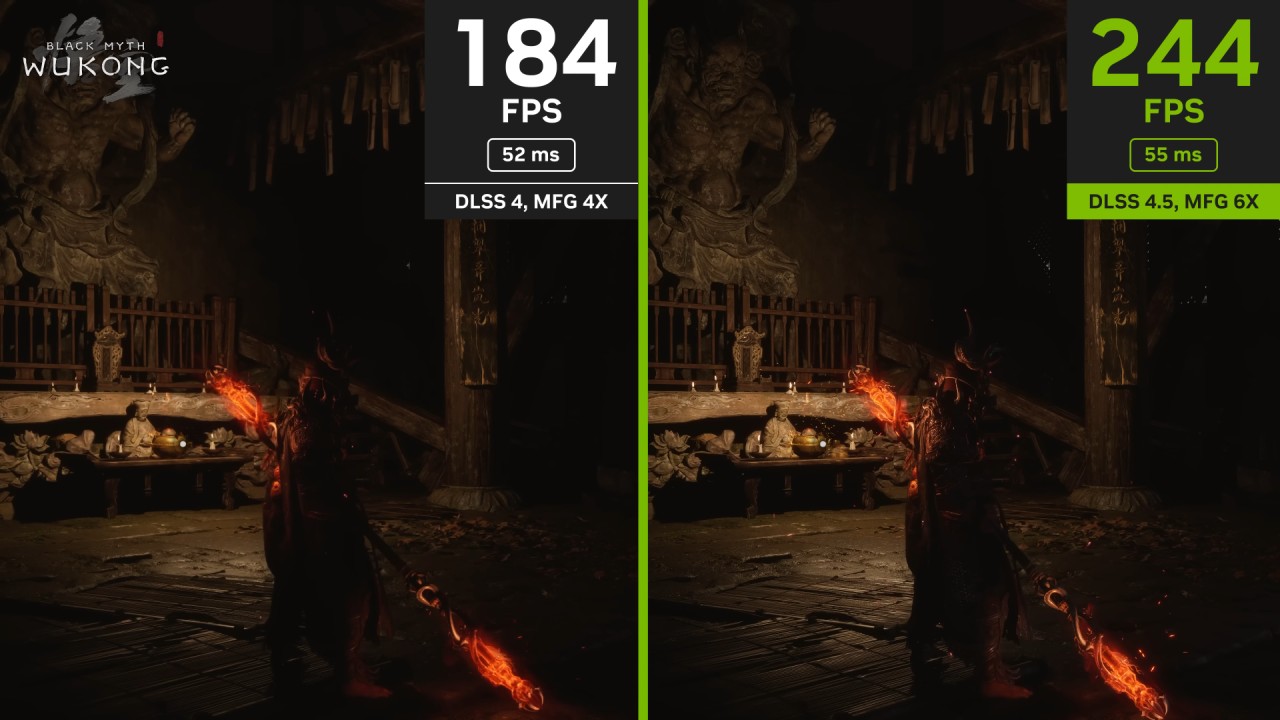
The business is going into new terrain. In a 6x multi-frame generation situation, a dynamic frame rate of 240 fps means a base frame rate of about 40 fps. It is also unclear if that base performance will give the same experience across different types of material.
It's evident where things are going. Frame generation, display technology, and latency management are now all important factors in how well a GPU performs.
Also, check our other hardware articles:
- AMD Ryzen 9 9950X3D Review: Setting The Standard For 2025 Gaming CPU
- Amazon Luna 2025 Review: Is Prime Gaming's Cloud Service Your Go-To For Casual Fun?
- AMD RX 9070 XT Review: AMD's RDNA 4 Champion for 1440p Gaming
- GeForce Now Ultimate: Ditching Your Gaming PC For Cloud RTX 4080 Power?
- NVIDIA GeForce RTX 5080 Review (2025): Still A 4K Gaming Powerhouse?
- Intel Core Ultra 9 285K Review And Performance Breakdown (2025)
- AMD Ryzen 7 9800X3D Review: 3D V-Cache Goes God Mode with Stunning Gaming Performance
- Intel Core Ultra 9 285K vs AMD Ryzen 7 9800X3D: In-Depth Gaming Performance and Benchmark Comparison
- NVIDIA GeForce RTX 5080 Super Performance In Cyberpunk 2077: Path Tracing & DLSS 4.0 Tested
- AMD Radeon RX 9070 XT In Cyberpunk 2077: Ray Tracing & FSR 4.0 Tested
- Intel Arc B580 Review: The $250 GPU Revolutionizing 1440p Gaming
- Intel Arc B570 Vs. B580: Value, Specs, And Real-World Gaming Performance
- RTX 5090 Laptop Vs. M4 Max MacBook Pro: Ultimate Raw Performance Vs. Battery Endurance
- Intel Arc b580 Vs. RTX 4060: Game Performance And Value Analysis
- RTX5090 Hell Is Us Demo 4K Ultra Benchmark: DLSS Vs. Native Performance Guide
- NVIDIA RTX 5070 Review: Mid-Range Muscle or Marketing Hype?
- Nintendo Switch 2 Review: Handheld Performance, Features & Value Breakdown
- RTX 5070 Ti Review: Performance, Thermals & Power Efficiency Tested
- Samsung Odyssey OLED G81SF Review 2025: Ultimate 32-Inch QD-OLED Gaming Monitor
- AMD RX 9070 Performance Review: Thermals, Clocks, and Real-World FPS
- AMD Ryzen 5 7600 Review: Best Budget Gaming CPU of 2025?
- AMD Radeon RX 7800 XT Review: RDNA 3 Power For Midrange Gaming
- Asus ROG RTX 5090 Astral OC Vs. Founders Edition: The 4K Gaming Benchmark
Editor, NoobFeed
Gaming Hardware Updates
No Data.