
New Foundational Hardware Tier Emerging Around PS5-Level Performance
Emerging hardware trends indicate a long cross-generational period with performance bands near PlayStation5 levels across multiple devices.
Hardware by Tanvir Kabbo on Dec 03, 2025
A discussion has been forming about whether a new foundational hardware power tier is taking shape at a level comparable to the PlayStation 5.
With devices such as Steam Machine, PS6 handheld, PS5 Power Saver, Steam Deck 2, and others arriving in close proximity, many of them appear positioned to support new games well into the future.
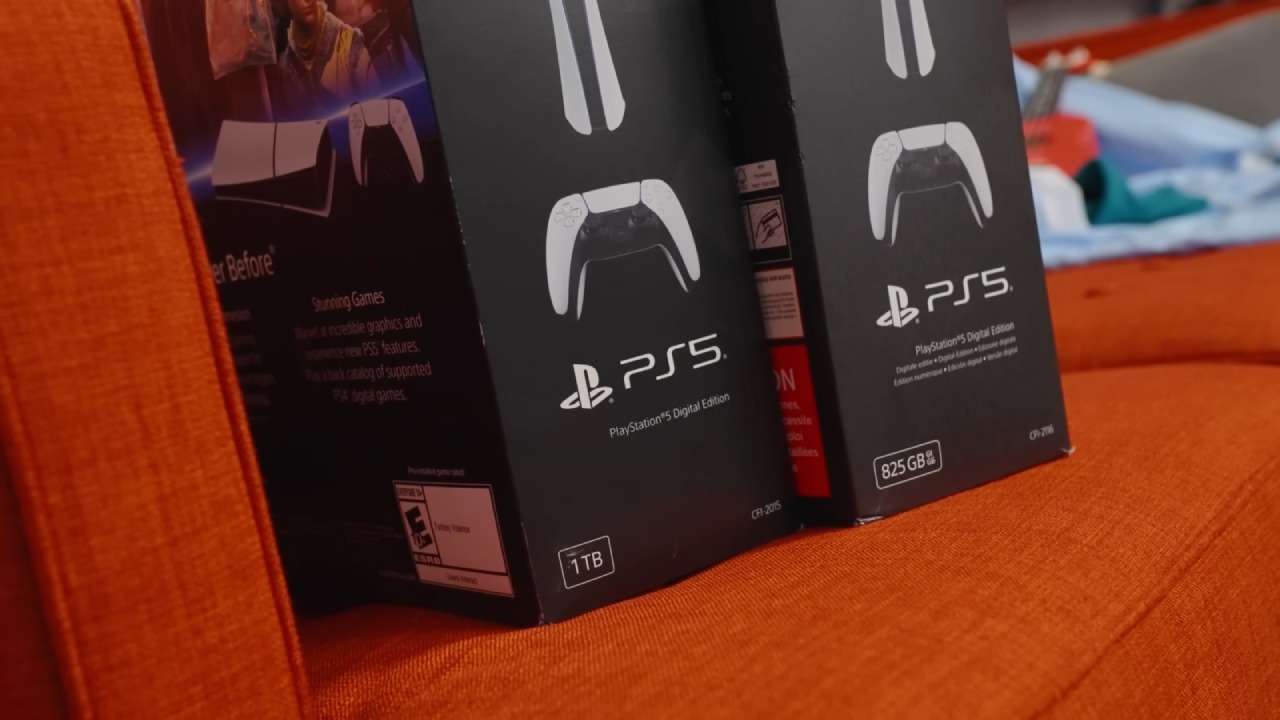
Hardware Clustering Around PlayStation 5-Class Performance
We observe that several devices occupy a range that sits loosely around the PS5's capabilities, though some sit well below it. Steam Deck, for example, clearly trails that power level. Still, there is a case to be made for a very long cross-generational period even after new hardware appears. By that point, PlayStation 5 installed base will likely exceed 100 million units, creating a natural baseline specification developers may choose to target.
Steam Machine's direction reinforces this, effectively aligning with the same broad category. Much of this trend connects to manufacturing realities. A lot of hardware depends on AMD, and the present fabrication nodes make a range of devices that are the cheapest and most competitive.
Die shrinking has slowed down and becoming more expensive, therefore some SOC sizes are now cheaper than larger Series X-class designs. The pricing disparity between PS5 and Series X is a good example of this split. A specific processor scale simply becomes more cost-effective than going bigger.
Reality of Cross-Generation Development
We acknowledge a simple truth: cross-gen is not going away. The economics of modern game development favor shipping on as many devices as possible. As a result, developers inevitably target a wide range of devices—Steam Machines, PS6 handhelds, Switch-class devices, Steam Decks, and more. A band of performance will naturally form around a sub-PS5 level in traditional rasterization.
However, new devices will still diverge sharply in other areas. Ray tracing performance and machine learning capabilities could set a PS6 handheld apart from something like a PS5 running in power-saving mode.
If RDNA5 delivers what is expected, the gap will be significant. That difference may enable support for modern techniques, such as advanced ray tracing or even path tracing, that would be impractical on standard PlayStation 5 hardware. A capable RDNA 5 handheld combining ray tracing, reconstruction technologies, and efficient RT hardware could achieve what older devices cannot.
.jpg)
Balancing Longevity With Next-Gen Features
We see a delicate balancing act ahead. New hardware must justify its existence by enabling developers to tap into machine learning, ray tracing, and other forward-looking features. Yet gaming hardware also needs to remain viable for much longer spans for economic reasons.
Cyberpunk provides a useful example: RT Overdrive presents a dramatically different experience compared to the version running on a Switch-class system. Even so, the fundamental game remains the same. This illustrates both the potential and the challenge.
Developers have to make games that work on a wide range of platforms, but this could stifle innovation. Studios like id Software have made it plain that they want to move beyond rasterization, but they may have to stick with older platforms for now.
In the end, developers will have to decide how to move forward by balancing broad compatibility with new technology. The need to serve a wide range of hardware introduces obstacles, but we look to developers to shape solutions that enable progress without leaving large audiences behind.
Also, check our other Console articles:
- PS5 Pro vs. PS5 Slim: Frame‑Rate, Graphics & Performance
- PS5 Pro vs. Radeon RX 9060 XT vs RTX 5060 Ti: Ultimate $700 Gaming Showdown
- ASUS ROG Ally PS5 Remote Play | How to do Remote play on PS5 Using Sony's Official Remote Play App
- Stream PS5 Games on Steam Deck OLED: Step-by-Step Installation and Configuration
- AI Upscaling on PS5 Pro: Can PSSR Finally Match DLSS?
- PS5 Pro vs. PS5 Slim vs. PS5 — Design, Storage, Specs, and Gaming
- PS5 Pro vs. Xbox Series X: Specs, Price, Storage, Customization, and Gaming
- PS5 Pro vs. PC Gaming: Comparison of Graphics, Frame Rates, and Price
Senior Editor, NoobFeed
Gaming Hardware Updates
No Data.