
GPU Prices Surge as Memory Shortages Disrupt RTX 5070 Ti and RTX 5080 Supply
Constrained memory supply is reshaping GPU production priorities and limiting access to midrange and high-VRAM models.
Hardware by Masaru Hoshino on Jan 24, 2026
There is a huge scarcity of memory chips around the world, and it's starting to affect the whole consumer electronics business. Anything that uses memory chips, like computers, TVs, and more, is being affected. It will be harder to find and more expensive, though.
Reports that OpenAI has gotten around 40% of the raw materials needed to make memory seem believable, and the effects on real products are starting to show.
.jpg)
Early Signs in the GPU Market
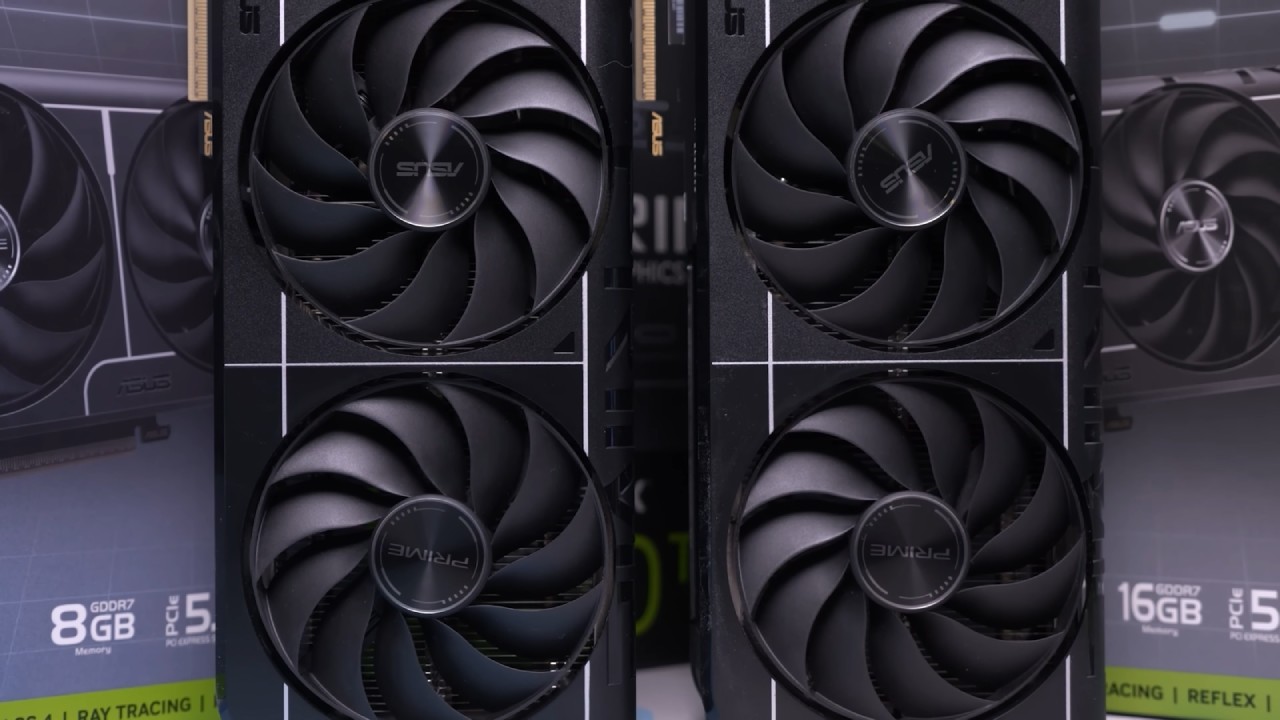
A recent claim from Hardware Unboxed that said the RTX 5070 Ti has been "effectively killed off" is the most obvious flashpoint so far. Later, the article was changed to say it was "maybe killed off." ASUS has said that the RTX 5070 Ti would not be refilled, which means that the RTX 5060 Ti 16GB variant could also not be restocked.
This set out flags right away because it showed that memory problems were directly affecting the availability of GPUs.
NVIDIA Responds to Supply Concerns
We contacted Nvidia for more information in response. NVIDIA said that demand for GeForce RTX GPUs is high and that memory supply is limited. However, they stressed that all GeForce SKUs are still being shipped.
NVIDIA also indicated that it is working closely with its suppliers to make sure there is as much memory as possible. This admits the limit, but it also suggests that the official lineup is still the same, at least on paper.
Conflicting Statements From ASUS
After a number of public clarifications, the issue got more and more complicated. At first, ASUS seemed to concur with Nvidia, but it didn't totally take back what it had said about the RTX 5070 Ti before. Later, ASUS made another statement that went back on a lot of what had been said before. The end result was a series of announcements that were at odds with each other, leaving both consumers and the media confused about what was really going on.
Later, Hardware Unboxed gave a full history of how things happened. They asked ASUS and other partners for samples of the RTX 5070 Ti. A PR person from ASUS said that they couldn't send samples since they didn't have enough of them and that their models were reaching the end of their life.
ASUS said that the RTX 5060 Ti 16GB was similarly at the end of its life when asked. We called stores to check on availability, and they said they didn't have any. Based on official statements from ASUS and confirmation from retailers, Hardware Unboxed published their video.
Subsequently, Nvidia stated that all GeForce SKUs were still being shipped. ASUS then followed up, saying Nvidia had told them the RTX 5070 Ti was not end of life, but that ASUS was streamlining certain models.
ASUS later issued yet another statement claiming the RTX 5070 Ti was not discontinued or end of life, directly contradicting the original message. Hardware Unboxed immediately requested RTX 5070 Ti samples again, but received no response.
At this stage, the only real test is the supply itself. We simply cannot tell which statement is accurate until we see whether these cards consistently appear on shelves over the coming months.
AIB Economics and Memory Allocation
We do not doubt that Hardware Unboxed accurately reported what they were told. At industry events, it is common to hear that AIB partners prefer to focus on higher-margin products. The RTX 5070 Ti uses a similar memory configuration to the RTX 5080, yet the RTX 5080 generates more profit. In a constrained memory environment, it makes sense for partners to shift limited memory resources toward higher-margin GPUs.
When ASUS referred to models as end of life, that only reflected ASUS’s own production decisions. ASUS cannot speak for other AIBs, which is where part of the confusion originated.
Founders Edition Problem
A key issue here is that neither the RTX 5070 Ti nor the RTX 5060 Ti 16GB has a Founders Edition card. NVIDIA does not directly produce these models. That means the entire supply depends on AIBs. If AIBs decide not to make them because of low margins or a lack of supplies, the cards will no longer exist, no matter what Nvidia says.
This makes for an odd situation where Nvidia may say the product exists, but customers can't buy it because no one wants to make it.
Prices Rising in Real Time
The proof is already showing up in prices. You can still get RTX 5070 Ti cards, although the costs have gone up a lot. Cards that were supposed to sell for $750 are now closer to $886. The RTX 5070, which has a suggested retail price of about $550, is still available for a little more than that, but resellers are charging more and more.
The market for the RTX 5080 is much worse, with prices between $1,268 and $1,850. That pushes pricing into territory that was previously associated with much higher-tier GPUs. The higher-end and higher-memory models are clearly under the most pressure.
A Shrinking Window for PC Gamers
We warned before that if you had the means and wanted a new GPU, there was a narrow window where pricing made sense. That window now appears to be closing. Prices are going up, supply is getting tighter, and there isn't enough transparency. There are a lot of levels involved, from Nvidia to AIBs to retailers. Each step adds more markup before the product gets to you.
GPUs, on the other hand, add costs at every stage, unlike vertically integrated products, which may prevent unneeded modification. Custom coolers, factory overclocks, and designs that are too big often don't do anything in the real world but raise prices a lot.
.jpg)
Broader Implications for the PC Gaming Hobby
This seems like just the start. We are probably seeing the initial signs of a far worse memory problem. Over the next year, more product lines could be affected, pushing prices even higher and making PC gaming increasingly inaccessible.
Consoles have already crossed a line where prices rise instead of falling over time. PCs, which were already more expensive, are now following the same path with added scarcity. As local hardware becomes harder to justify, more companies will inevitably push cloud-based solutions. While cloud gaming can be a good option for some, it is not a replacement for owning local hardware.
Where Things Stand Now
At the moment, the RTX 5070 still looks attainable and reasonably positioned at its intended price. The RTX 5070 Ti is a good deal at $750, but at $886, it gets too close to the RTX 5080 price range. The price of the RTX 5080 itself is getting close to being ridiculous.
We're left watching the supply levels to see if these GPUs really come back in large numbers or just slowly disappear. Until then, all signs point to constrained supply, rising prices, and a market that may get worse before it gets better.
Also, check our other NVIDIA articles below:
- NVIDIA GeForce RTX 5080 Review (2025): Still A 4K Gaming Powerhouse?
- NVIDIA RTX 5070 Review: Mid-Range Muscle or Marketing Hype?
- RTX 5070 Ti Review: Performance, Thermals & Power Efficiency Tested
- ASUS GeForce RTX 5090 LC Liquid Cooled GPU Review: Unmatched Silence & Speed
- MSI GeForce RTX 5090 32GB SUPRIM SOC Review: Power Efficiency, Cooling, and Gaming Performance
- INNO3D RTX 5060 Ti 16 GB X2 Review: Gaming Benchmarks, Temps, and Power Efficiency
- HP Omen 45L Review: RTX 5090 Performance, Thermals, and Value Analysis
- ASUS TUF Gaming GeForce RTX 5060 Ti Review: DLSS 4, Power Efficiency, and Gaming
- ASUS Prime RTX 5060 Ti OC 16GB Review: DLSS 4, Ray Tracing, & Thermals Tested
- NVIDIA GeForce RTX 5060 Review: Specs, Gaming, and Cost per Frame
- MSI GeForce RTX 5090 GAMING TRIO OC Review: A Monster Power GPU
Editor, NoobFeed
Gaming Hardware Updates
No Data.