
Intel Arc B580 and GeForce RTX 5050 Gaming Comparison
A concise breakdown of how the RTX 5050 and Arc B580 differ in gaming performance, upscaling behavior, and VRAM handling.
Hardware by Nahe Yan on Dec 06, 2025
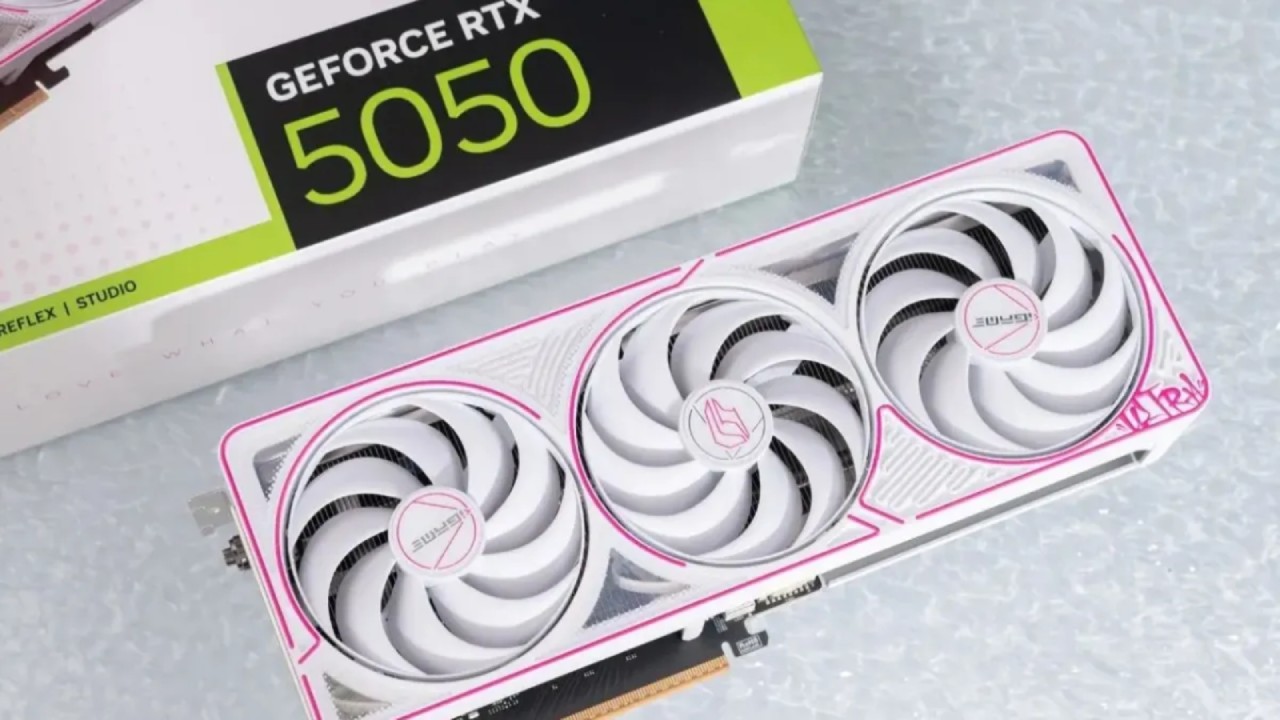
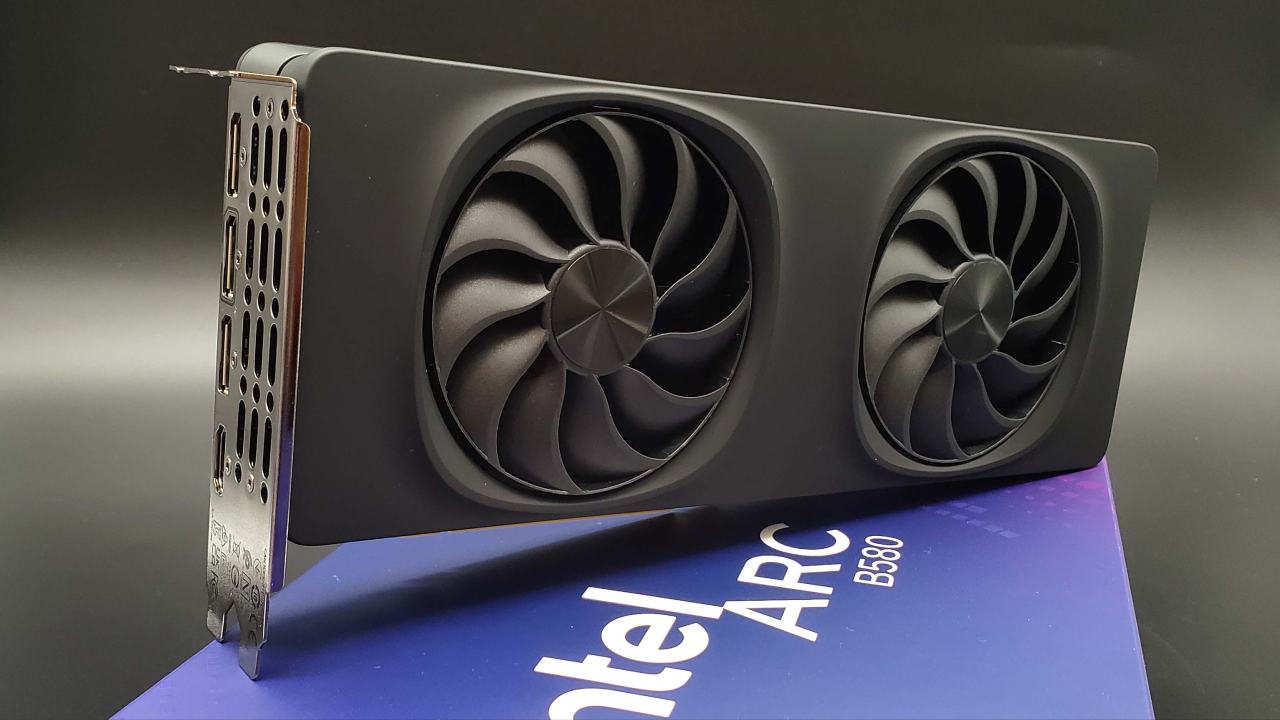
Both Nvidia's GeForce RTX 5050 and Intel's Arc B580 are priced at $250, which is the sweet spot for entry-level gamers who seek good 1080p performance. At first, it looked like B580 would be an easy win.
Still, further in-depth testing indicates that the battle is far more complex, with factors such as VRAM capacity, driver polish, performance scaling, upscaling quality, and game-to-game inconsistency. This article examines these points using a wide range of real-world benchmarks at 1080p, both in native and upscaled modes.
Big Differences Between DLSS4 and XeSS
RTX 5050 uses DLSS 4, and the Arc B580 uses XeSS with its high-quality XMX model, which is only available for Intel GPUs. DLSS 4 always gives you clearer images, improved temporal stability, and finer detail at 1080p. XeSS works; however, it looks a lot like the quality of DLSS 3-era, especially since its main model hasn't changed much since 2024.
The way mode scaling works is also different: Instead of 1.5×, XeSS quality utilizes a 1.7× multiplier. This means that to get similar render resolutions, you need to choose XeSS Ultra Quality instead of Quality. In general, DLSS is the best for upscaling quality, followed by FSR 4, and XeSS XMX is about on par with DLSS 3.
VRAM needs for new games
About two-thirds of modern workloads at 1080p ultra settings require more than 8 GB of VRAM. This puts the RTX 5050 at a disadvantage right away because its 8 GB buffer can sometimes cause stuttering, lower 1% lows, or noticeable texture loss. Arc B580, on the other hand, has a 12 GB buffer that stops these bottlenecks from happening at all.
This means that most games have more stable frame times and higher texture presets. Some titles, such as Hogwarts Legacy, Star Wars Outlaws, and Borderlands 4, exceed 9–10 GB at 1080p, making the RTX 5050 less powerful, even with DLSS enabled. One of B580's best real-world features is its higher VRAM capacity.
Gaming Performance
B580 is 40–70% better than the other games, such as Ghost of Tsushima, Battlefield 6, Cyberpunk 2077, and F1 25. But the RTX 5050 often performs better in Unreal Engine games, sometimes by a lot, because Intel's UE optimizations aren't as good, and upscaling performance isn't always consistent.
Some games, such as Mafia: The Old Country and The Alters, exhibit poor scaling and lower average frame rates on B580 even when VRAM demand is low. This makes the suite's differences much bigger than usual when comparing AMD and Nvidia.

Native Performance and Resolution
Arc B580 is 14% faster in native 1080p and 11% faster when comparing equal render-resolution options (DLSS Quality vs. XESS Ultra Quality) across 16 similar titles. B580 pulls ahead by about 20% when comparing modes with the same name (Quality vs. Quality) because XESS Quality renders at a lower internal resolution.
1% lows always benefit B580 since it has less VRAM delays. But the Unreal Engine findings lean toward the RTX 5050, suggesting that the B580's advantage depends heavily on the engine.
How Well Does Ray Tracing Work
Ray-tracing workloads at 1080p are demanding for low-end GPUs. RTX 5050 is generally unusable in games that use a lot of RT since VRAM usage goes through the roof, far exceeding 8 GB even with DLSS on.
However, B580 can run titles like Cyberpunk 2077 RT Ultra at playable levels, which is an impressive feat for a low-end card. Both GPUs have limited raw RT capability, but the B580 has more VRAM, which lets you try out RT capabilities that the RTX 5050 can't really run.
Nvidia Still has the Edge in Driver Polish
Nvidia performs better across more games, has fewer artifacts, and offers more consistent frame pacing. Intel has come a long way from the first Arc generation. However, there are still problems with some engines, settings menus, and interfaces in upscaling mode.
Some games need to be restarted when XeSS is turned on, and some graphical problems keep happening. Still, most of these problems don't impede gameplay once they're fixed, and the driver team's development shows that things are getting better.
Final Thoughts
Both GPUs are worth $250, but the Arc B580 usually gives a superior experience. It works better, has lower 1% lows, and includes a 12 GB VRAM buffer, making it more stable in recent games.
People who want the best image quality from DLSS 4 or need the most stable, mature engine-level performance can still use the RTX 5050. But B580 is the more versatile and forgiving GPU when it comes to raw power, higher settings, and future-proofing in VRAM-heavy games.
Also, check our other NVIDIA articles below:
- NVIDIA GeForce RTX 5080 Review (2025): Still A 4K Gaming Powerhouse?
- NVIDIA RTX 5070 Review: Mid-Range Muscle or Marketing Hype?
- RTX 5070 Ti Review: Performance, Thermals & Power Efficiency Tested
- ASUS GeForce RTX 5090 LC Liquid Cooled GPU Review: Unmatched Silence & Speed
- MSI GeForce RTX 5090 32GB SUPRIM SOC Review: Power Efficiency, Cooling, and Gaming Performance
- INNO3D RTX 5060 Ti 16 GB X2 Review: Gaming Benchmarks, Temps, and Power Efficiency
- HP Omen 45L Review: RTX 5090 Performance, Thermals, and Value Analysis
- ASUS TUF Gaming GeForce RTX 5060 Ti Review: DLSS 4, Power Efficiency, and Gaming
- ASUS Prime RTX 5060 Ti OC 16GB Review: DLSS 4, Ray Tracing, & Thermals Tested
- NVIDIA GeForce RTX 5060 Review: Specs, Gaming, and Cost per Frame
- MSI GeForce RTX 5090 GAMING TRIO OC Review: A Monster Power GPU
Editor, NoobFeed
Gaming Hardware Updates
No Data.