
Intel Core i7-13700K vs. Ryzen 7 7700X: Gaming, Productivity, and Value Comparison
Intel Core i7-13700 K's balanced performance across gaming and productivity workloads, maintaining manageable power consumption and thermals.
Hardware by Masaru Hoshino on Aug 31, 2025
Intel Core i7-13700K presents itself as a strong option for gaming and productivity. Core i9-13700K, which follows the power-hungry Core i9-13900K, is more manageable while still delivering outstanding performance on various tasks.
By bridging the gap between efficiency and raw speed, it offers consumers looking for high-end performance without excessive power consumption or heat production a viable alternative.
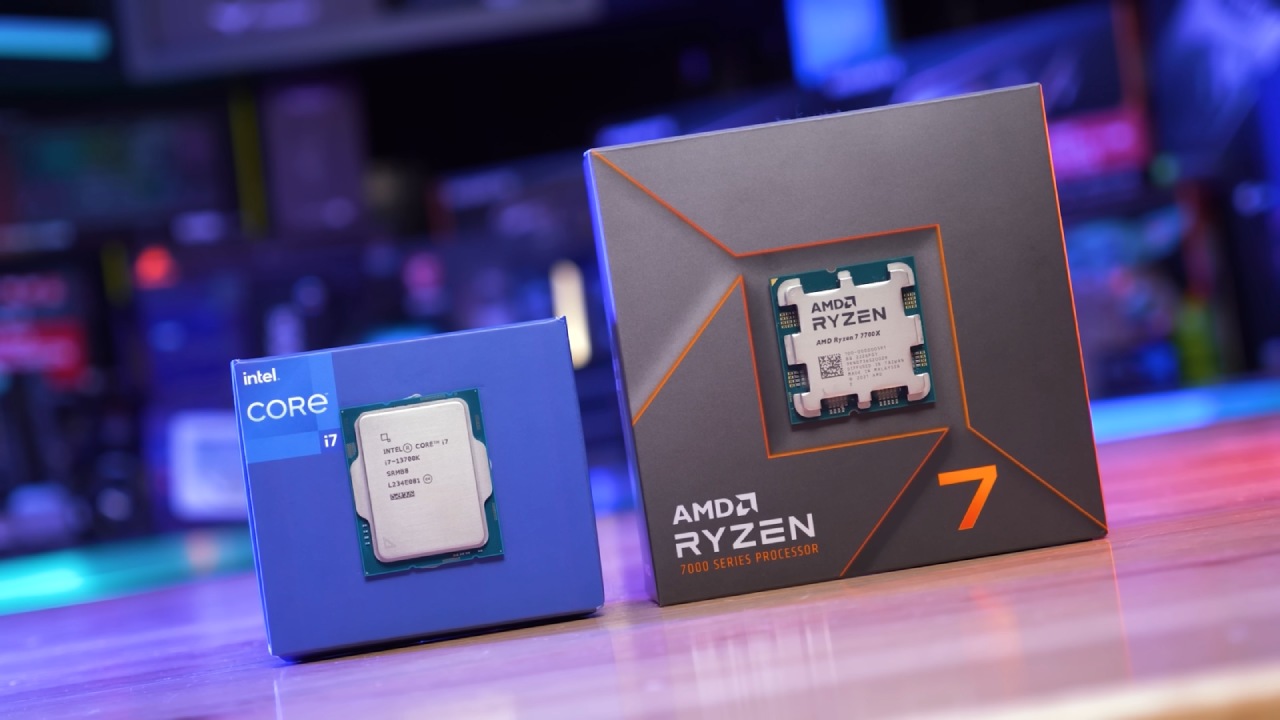
Price and Specifications
Core i7-13700K has an MSRP of $420, though in retail, the typical price is closer to $450. This makes it $50 more expensive than the Ryzen 7700X but $100 cheaper than the Ryzen 9 7900X, positioning it in an interesting price-performance category.
In terms of specifications, 13700k introduces several upgrades over its predecessor, 12700k. The P-core L2 cache per core increased from 1.25 MB to 2 MB, raising the total L2 cache to 16 MB. The E-cores were doubled to eight, with the L2 cache per cluster upgraded from 2MB to 4MB, totaling 32 MB.
The L3 cache also increased from 25MB to 30MB. Clock speeds were also boosted, with peak core frequencies increasing from 5 GHz to 5.4 GHz. DDR5 memory support improved from DDR5-4800 to DDR5-5600, while DDR4 support remained at 3200. The CPU continues to support 16 lanes of PCIe 5.0 and 4 lanes of PCIe 4.0.
It is important to note that Intel's stated 253W max turbo power limit is not enforced. All Z690 and Z790 motherboards support the 12th and 13th Gen Core Series processors, allowing them to run without power limits, which results in higher performance but also increased power consumption.
Test System and Methodology
For testing, AM4 platforms were equipped with 32GB DDR4-3600CL14 dual-rank memory on MSI MPG X570S Carbon Max Wi-Fi motherboards, while AM5 setups used 32GB DDR5-6000CL30 on MSI MEG X670E Ace motherboards. Intel 12th and 13th gen CPUs were tested with DDR4-3600 dual-rank CL14 memory and DDR5-6400 single-rank CL32 memory.
All GPU testing was performed using the NVIDIA GeForce RTX 4090, with Windows 11 and Resizable BAR enabled. All benchmark data are current as of two weeks before testing.
Clock Frequencies
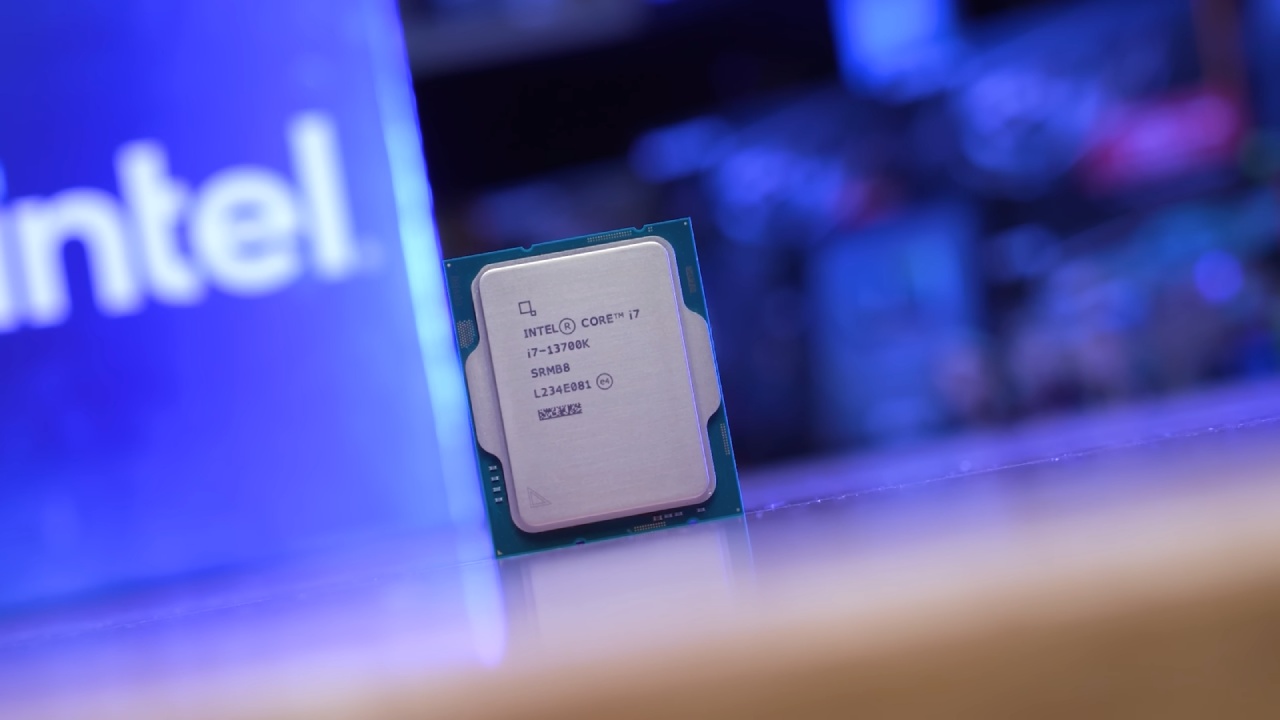
Within an hour of the Cinebench R23 multi-core load, 13700k maintained 5.2GHz for P-cores and 4.1GHz for E-cores with the MSI Core Liquid S360 installed. Single-core workloads achieved 5.3 GHz under load, slightly below the advertised 5.4 GHz, which was only briefly observed in hardware monitoring tools.
Productivity Performance
In Cinebench R23 multi-core, 13700k scored 29045 points, placing it on par with the Ryzen 9 7900X and providing a 46% improvement over 12700k. Single-core P-core performance matched the 7950X, slightly outperforming the 7900X and 7700X.
In 7-Zip compression, 13700k outperformed the 7900X by 8% and 7700X by 30%, though decompression gains were smaller, outperforming 7700X by 17%. Blender Open Data testing revealed that 13700k was 36% faster than 12700k and 9% slower than the 7900X. In Corona 1.3, it completed workloads 48% faster than 7700X but 25% slower than the 13900K.
Adobe Premiere Pro and Photoshop benchmarks demonstrated strong single-core performance, with 13700k slightly slower than the 7900X in Premiere Pro but matching it in Photoshop. After Effects and Chromium code compilation also highlighted the processor's ability to handle single-threaded tasks efficiently, edging past 7700X in most cases.
Gaming Performance
In Factorio, 13700k nearly matched 12700k and slightly outpaced the 7900X and 7700X. Watch Dogs: Legion showed it was 3% slower than the 13900K but 7% faster than both Ryzen CPUs. Rainbow Six Extraction delivered over 450 fps, putting it on par with the 7900X. Hitman 3 favored Ryzen CPUs, with the 7900X leading by 9% at DDR5 speeds.
Far Cry 6 performance reached 189 fps with DDR5 and 193 fps with DDR4, exceeding both 7700X and 7900X by up to 6%. F1 22 averaged 384 fps with DDR5, 13% faster than both Ryzen models. Spider-Man Remastered and Shadow of the Tomb Raider benchmarks reinforced strong gaming performance, with 13700k outperforming the Ryzen N4 series by 3-6%.
Horizon Zero Dawn and Cyberpunk 2077 favored Ryzen CPUs in certain scenarios, but 13700k still delivered competitive results, particularly with DDR5 memory. Assetto Corsa Competizione and The Riftbreaker showed near parity with 7700X and 7900X, with minor deficits in one-percent lows.
Counter-Strike: Global Offensive performance was slightly weaker, at 470 fps with DDR5, 9% slower than the 7900X.
.jpg)
12-Game Average
Across 12 games at 1080p with RTX 4090 and 13700k with DDR5, performance was similar to that of 7700X, averaging just 2% faster than the 7900X. Using DDR4-3600, performance matched that of the 5800X3D, but was slightly slower than the 7600X, while still outpacing the 12700k. At 1440p, 13700k averaged 227 fps, slightly slower than the 13900K but 5-10% faster than previous-generation CPUs.
Power and Cooling
Power consumption under all-core workloads remains high, similar to the 12900K, though 100W less than the 13900K. Cooling with the MSI Core Liquid S360 saw temperatures reach TJ Max within three minutes, reducing all-core frequency from 5.3GHz to 5.2GHz.
Compared to 12700k, which peaks at 80°C, 13700k runs hotter but remains manageable with adequate cooling.
Value Analysis
When you only look at the cost of the CPU, 13700k costs almost 30% less per frame than the 13900K and 21% less than the 7900X. When you take into account the pricing of motherboards and memory, DDR5 systems save 5% per frame compared to the 7700X. DDR4 configurations improve total value by enabling comparable performance at reduced costs.
5800X3D is still a good option for builds that are strictly gaming-related and on a tight budget.
Final Thoughts
13700k is a practical, balanced processor, behaving more like 12700k in terms of thermals and manageability while delivering productivity and gaming performance close to that of the Ryzen 7700X. For users who combine gaming with productivity workloads, it offers excellent all-around performance, although power consumption remains higher than that of Ryzen alternatives.
13700k and 7700X trading blows are seen in gaming alone; both provide impressive performance, contingent on platform pricing and memory setup.
AMD's 3D V-cache Zen4 CPUs are expected to come out early next year. They may offer better gaming performance at a higher price. In general, 13700k is a good choice for high-end designs since it offers balanced performance without the Core i9's high power and heat requirements.
Also, check our other hardware articles:
- AMD Ryzen 9 9950X3D Review: Setting The Standard For 2025 Gaming CPU
- Amazon Luna 2025 Review: Is Prime Gaming's Cloud Service Your Go-To For Casual Fun?
- AMD RX 9070 XT Review: AMD's RDNA 4 Champion for 1440p Gaming
- GeForce Now Ultimate: Ditching Your Gaming PC For Cloud RTX 4080 Power?
- GeForce RTX 5090 Unleashed: Is NVIDIA's New Flagship the Ultimate 4K Gaming GPU?
- NVIDIA GeForce RTX 5080 Review (2025): Still A 4K Gaming Powerhouse?
- Intel Core Ultra 9 285K Review And Performance Breakdown (2025)
- AMD Ryzen 7 9800X3D Review: 3D V-Cache Goes God Mode with Stunning Gaming Performance
- Intel Core Ultra 9 285K vs AMD Ryzen 7 9800X3D: In-Depth Gaming Performance and Benchmark Comparison
- NVIDIA GeForce RTX 5080 Super Performance In Cyberpunk 2077: Path Tracing & DLSS 4.0 Tested
- RTX 5090 Performance Testing In GTA 5 – 1080p, 1440p, and 4K Max Settings Benchmark
- AMD Radeon RX 9070 XT In Cyberpunk 2077: Ray Tracing & FSR 4.0 Tested
- Intel Arc B570 Vs. B580: Value, Specs, And Real-World Gaming Performance
- Intel Arc B570 Review: Efficient Xe2 Performance At An Affordable Price
- RTX 5090 Laptop Vs. M4 Max MacBook Pro: Ultimate Raw Performance Vs. Battery Endurance
- Intel Arc b580 Vs. RTX 4060: Game Performance And Value Analysis
- RTX5090 Hell Is Us Demo 4K Ultra Benchmark: DLSS Vs. Native Performance Guide
- NVIDIA RTX 5070 Review: Mid-Range Muscle or Marketing Hype?
- Nintendo Switch 2 Review: Handheld Performance, Features & Value Breakdown
- RTX 5070 Ti Review: Performance, Thermals & Power Efficiency Tested
- Samsung Odyssey OLED G81SF Review 2025: Ultimate 32-Inch QD-OLED Gaming Monitor
- AMD RX 9070 Performance Review: Thermals, Clocks, and Real-World FPS
- AMD Ryzen 5 7600 Review: Best Budget Gaming CPU of 2025?
- AMD Radeon RX 7800 XT Review: RDNA 3 Power For Midrange Gaming
- Asus ROG RTX 5090 Astral OC Vs. Founders Edition: The 4K Gaming Benchmark
- ASUS ROG Astral RTX 5090 OC Edition Review: 32GB GDDR7 & 4K Gaming Benchmark
- Intel Core i5-13400F Gaming Performance: Still Worth It in 2025?
- ASUS GeForce RTX 5090 LC Liquid Cooled GPU Review: Unmatched Silence & Speed
- ASUS ROG Ally X Handheld Review: Double the Battery, Double the Comfort
- Lenovo Legion Go S Review: The Ultimate Steam Deck 2 Alternative
- Sapphire NITRO+ AMD Radeon RX 9070 XT Review: The Ultimate 4K Gaming GPU
- Alienware 16 Area 51 Review: The Ultimate 2025 Gaming Laptop
- Alienware Area-51 Review: Unmatched 4K, Thermal, and Acoustic Performance
- AMD Ryzen 7 7800X3D: Delivers Gaming Performance Far Beyond Expectations
- AMD Ryzen 9 7900X Review: Powering the AM5 Era with DDR5 & PCIe 5.0
- Intel Core i9‑14900K vs. AMD Ryzen 7 7800X3D: Power Profiles & Gaming Benchmarks
- Intel Core i9 14900K: Specs, Benchmarks, and Competitor Comparison
- Sapphire PURE AMD Radeon RX 9070 XT Review: Cooling, Specs & Gaming Benchmarks
- ASRock Radeon RX 7800 XT Challenger OC Review: Best Price-to-Performance GPU of 2025
Editor, NoobFeed
Gaming Hardware Updates
No Data.