
Intel’s New Panther Lake Chip Targets Budget Handhelds
Intel’s 4 XE3 Panther Lake chip targets lower-power handhelds with reduced graphics performance and potentially lower system prices.
Hardware by Nahe Yan on Aug 21, 2026
Intel is preparing a lower-power Panther Lake handheld processor with 4 XE3 graphics cores and a configurable 8W to 25W TDP range. The chip is expected to sit below the existing Arc G3 lineup and could target handheld hardware at a lower price point. As handheld gaming devices get more expensive, a lower-power, lower-cost processor could fill a market gap.
There have been a few articles popping up over the past couple of days and especially in the past 24 hours about rumors, leaks, and information when it comes to Intel's 4 XE3 Panther Lake handheld chip. It is supposed to target the 8W to 25W TDP range and hopefully be in a more affordable piece of hardware.
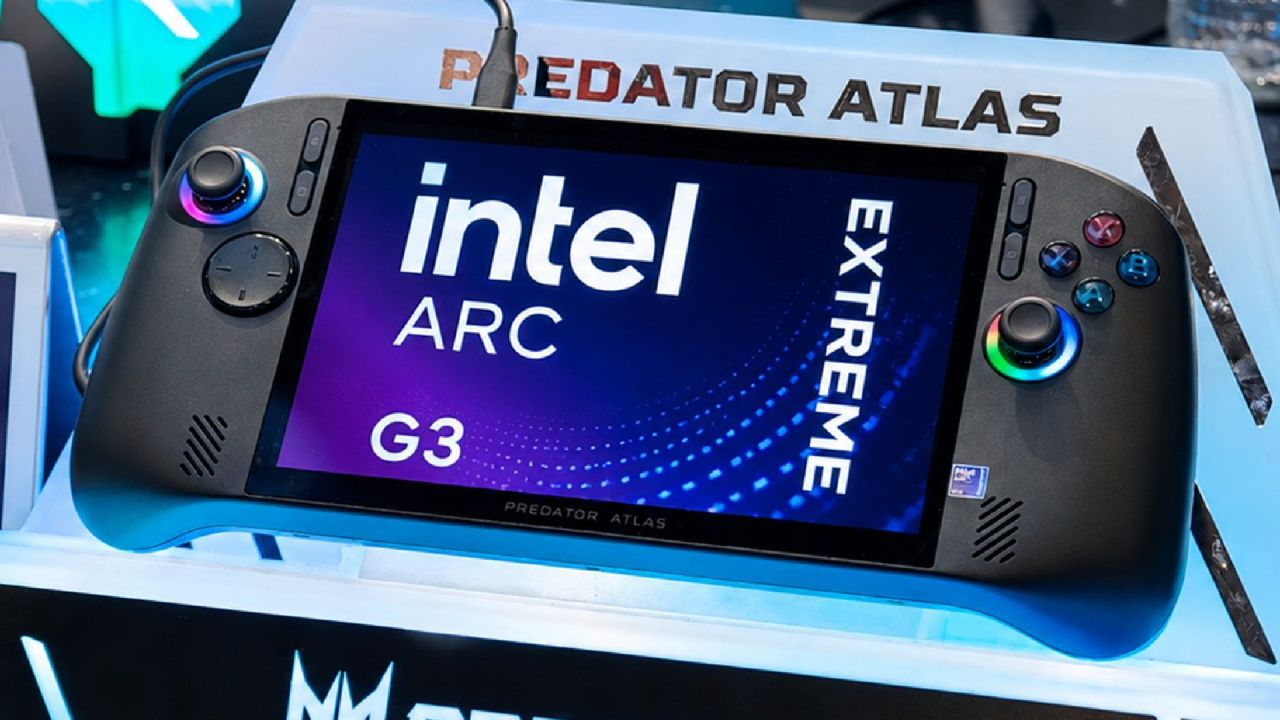
Intel Panther Lake Handheld Chip Targets 8W to 25W
Intel's 4 XE3 Panther Lake handheld chip targets 8W to 25W. Intel prepares a lower-power Panther Lake handheld chip with 4 XE3 cores. This will be interesting, as the G3 Extreme has 12 XE3 cores. I believe the G3 will have 10 XE3 cores. That would make it about a third of the XE3 cores the G3 Extreme has.
Intel is expanding its Panther Lake handheld processor family below Arc G3. The previously reported 4P0E4LP and 4 XE3 configurations have a configurable TDP range of 8W to 25W. This clearly indicates where the processor will sit compared with Intel's official Arc G3 family.
Arc G3 operates between 8W and 30W, while the Arc G3 Extreme extends the upper limit to 35W. Both official processors have 14 CPU cores and substantially larger 10-core and 12-core XE3 graphics configurations when compared to the 4 cores being discussed here.
Eight CPU Cores and Four XE3 Graphics Cores
The new processor instead has 8 CPU cores split between 4 performance cores and 4 low-power efficiency cores. There are no standard E-cores. Its 4 XE3 cores also represent a large reduction from Arc B370 and Arc B390, which use 10 and 12 XE3 cores respectively.
Intel has not confirmed the name of this processor or whether it will join the Arc G3 family. They may call it the G3 Mini or something like that, or they may not use the G3 branding at all. Given that this is Panther Lake, it's the same architecture and all of that, they are likely to stick with Arc and G3 and just put some kind of other naming with it.
The 8W to 25W range places the new processor below both existing G3 models. Its maximum configurable TDP is 5W lower than Arc G3 and 10W below G3 Extreme. The minimum remains 8W across all 3 configurations. With 8 CPU cores, roughly 3 fewer than the XE3, and reduced GPU performance compared to the flagship Arc G3 Extreme chip, we are looking at the budget handheld segment, almost certainly below $1,000.
Intel currently has no such chip, and even the last-generation Lunar Lake handhelds from MSI Claw are priced above that range. Only Meteor Lake-based variants often appear at lower prices, and those are not the ones you want. The V140V, or something like that, wasn't a great handheld. The second generation was great from Intel, and I assume the third generation would be too.
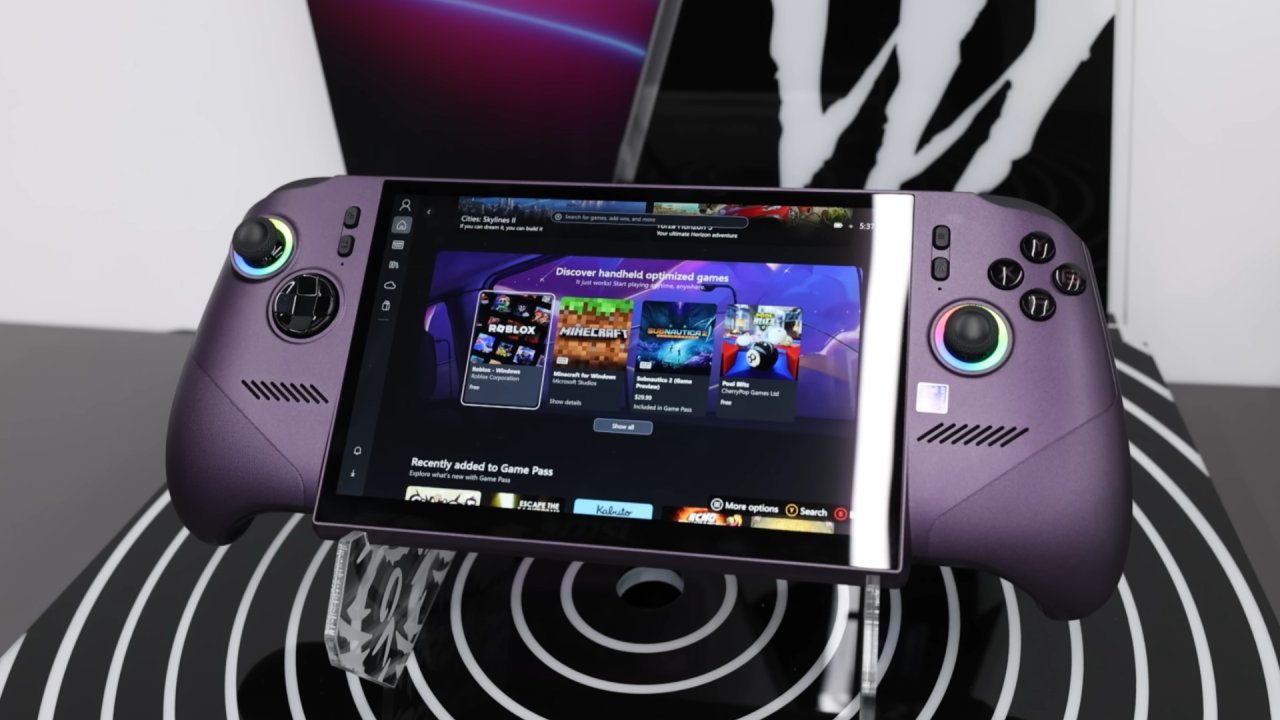
G3 Extreme has been reviewed well. Intel is supposed to release their G3 Extreme and G3 models with less RAM and storage, plus other changes to help with cost. It'll be interesting to see what they're going to do with this G3 Mini or this cut-down G3 and what they decide to call it, and what kind of hardware eventually winds up in it or who's going to support it and make a budget-friendly handheld.
Handheld Prices Continue to Rise
With the Steam Deck's recent price increase to $789 for the 512GB model and $949 for the 1TB model, and that being a 4-year-old, over 4-year-old device now, the market and AI and storage and RAM and all of that have become a real issue. It's caused even things like this to increase a lot across all kinds of other tech. That would make it about a third of the XE3 cores the G3 Extreme has.
What's been surprising is that the ROG Ally, the white version, has held that $599 price range at least so far, and it's going to be coming up on a year out here in a couple of months. It's one of the few that has held it. The X version for $999 has still held as well.
Those could change any day, and we've said that before, but this is one of the most affordable at $600 in this market right now. It's probably the most capable and affordable handheld that you can just straight up buy, not used or off-market or anything like that, and start using. Even the Steam Deck is really high now and doesn't perform quite as well in some games as the ROG Ally.
A Lower-Cost Intel Handheld Could Fill the Gap
It would be interesting to me to see Intel come in and maybe be able to partner up with someone and put out something in that $600 range with specs that would at least be good enough to run a bunch of indie games, older games, some easier-to-run stuff, maybe low-resolution upscale on some newer stuff, and pull off some of that.
For the people that really maybe already have console PCs, whatever, and they just want the handheld to fill the gap and play some of their games while either away from home or on the couch or whatever the case, use it for streaming, stream on PC, stream the console, or use cloud gaming, there are a lot of things that something like this would still be useful for.
Even if the enthusiast or someone like me or you who wants the G3 Extreme or wants the most performance and power we can get doesn't care about that, this is something that would kind of fill the gap a lot, like I think the white ROG Ally does. It seems to sell pretty well and review pretty well, and I reviewed it on the channel before.
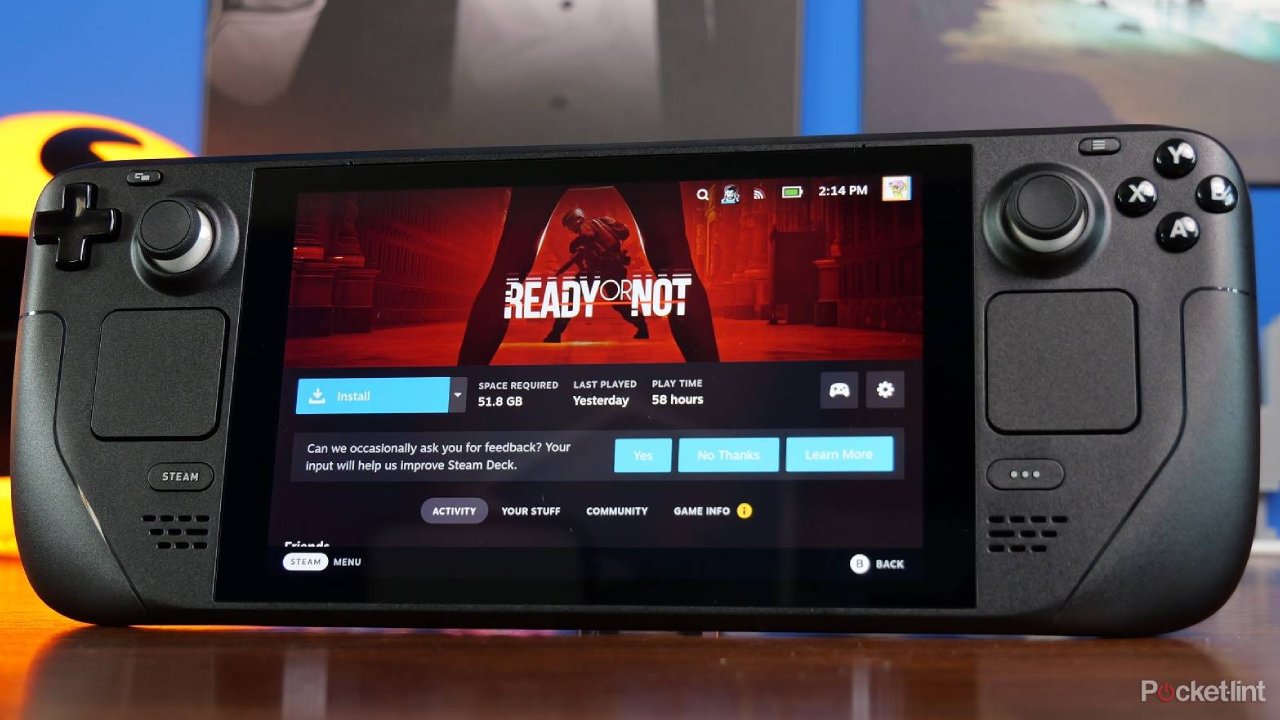
That kind of price range is pretty good, and with the Steam Deck being again $799 to $949, if Intel could come in around that lower-end price range of the $700 or $800 range, they might actually have something that could be compelling. It wouldn't be for the enthusiast looking for the most power out of Intel Arc, but it could serve another part of the handheld market.
In a time when everything in tech keeps getting more expensive, it's been disheartening to see how much of this stuff. Future consoles, handhelds, and the slowdown of the market that we were really gaining from 2022 to 2025, with 2027 and into 2028 not necessarily looking any better when it comes to pricing, are expected to get worse.
So, I'm all for anything that anyone can do to bring even more budget-friendly, or at least what we would say under $1,000, when it comes to handhelds. It's just getting out of hand with how expensive everything is. It makes it very difficult to get and knocks a lot of people out of being able to get and enjoy these things.
The 4 XE3 Panther Lake chip could let Intel target a different part of the handheld market.
It honestly puts something like the Switch 2, which is still $450 to $500, in a good position even if that's not necessarily your cup of tea for the price range. A lot of people are more used to spending $400 to $800 for a decent handheld experience than paying much more.
It's certainly difficult in a market like this, and this thing would probably need 16GB of RAM and a 512GB SSD, along with this cut-down Arc chip and all that, to even come down to $599 to $799 or something like that. With an 8W to 25W TDP, 8 CPU cores, and 4 XE3 graphics cores, the processor would sit below the current G3 models.
If Intel can find a partner willing to build around it and keep the system in the $600 to $800 range, the chip could give the handheld market another option as memory, storage, and hardware prices continue to affect the cost of gaming devices.
Editor, NoobFeed
Gaming Hardware Updates
No Data.