
16GB vs. 32GB RAM in 2026: Real Gaming and Editing Performance Comparison
Gaming benchmarks show minimal performance differences between 16GB and 32GB of system memory across modern titles
Hardware by Nahe Yan on Jan 21, 2026
DDR5 memory is still hard to get, and it's getting harder to find at a good price. Anyone who is thinking about building a new gaming PC should ask themselves this critical question: Do you absolutely need 32GB of RAM, or can 16GB work for now? Since 32GB is now the standard for many builds, it's worth considering whether 16GB may still work well without causing severe problems.
To find out, several gaming benchmarks were run on well-known games such as Indiana Jones, Call of Duty, ARC Raiders, Cyberpunk 2077, and a few Unreal Engine games, including Fortnite, The Finals, and Expedition 33. We utilized different GPUs and resolutions to investigate if memory capacity made a difference.
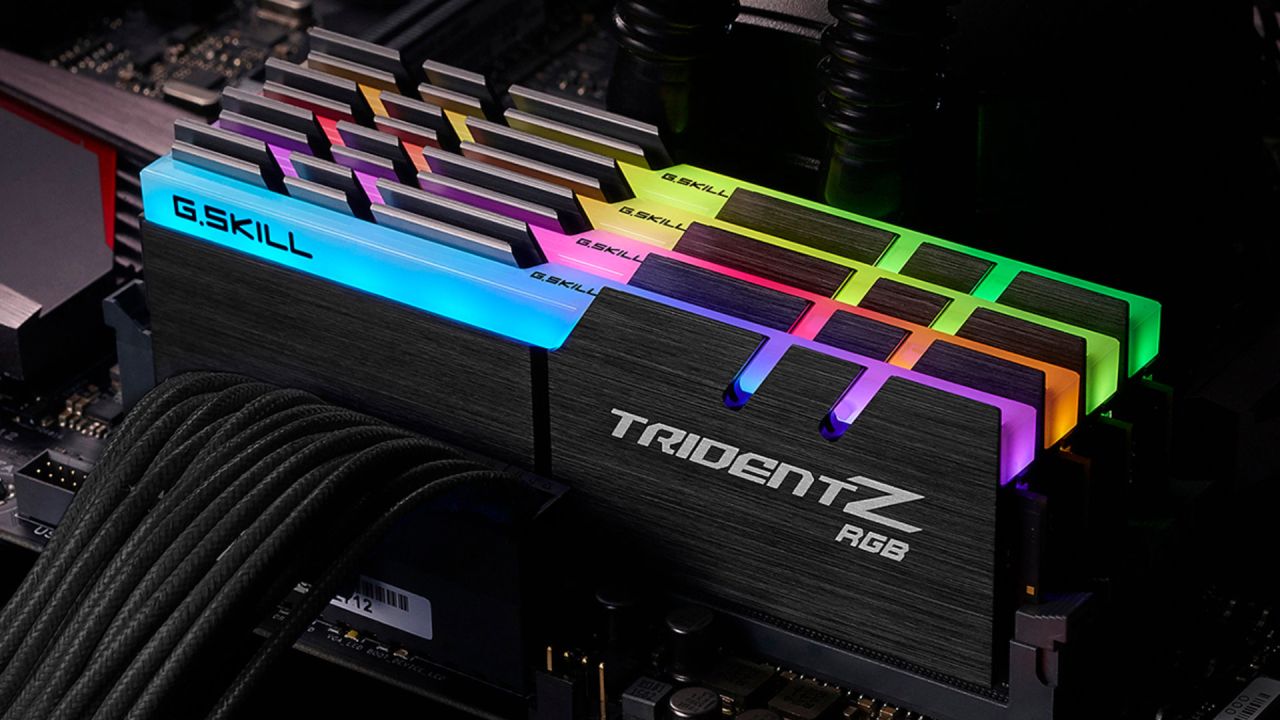
We tested the systems with one 16GB DDR5 DIMM and then again with two 16GB DIMMs for a total of 32GB. We didn't use 8GB DDR5 modules because they are rare and not the best choice for future upgrades.
Setting up the Test and Choosing the Right Hardware
RTX 5080 was used for high-end performance testing. It is the best of the best when it comes to mainstream GPUs. 9070 XT was chosen for the mid-range test since it was popular, while the 9060 XT with 16GB of VRAM was used for the lower-end test to prevent GPU memory bottlenecks. The idea was to focus on system memory performance rather than be constrained by the CPU or visual memory.
How well it Plays Games at 1080p
At 1080p, system memory would have less of an effect, especially on lower-end systems. In Call of Duty: Black Ops 7 Zombies, 16GB of RAM averaged 149 fps, whereas 32GB raised this to 156 fps. The difference was less than 5%, which isn't a big shift in how the game is played.
There were even smaller variations in Cyberpunk2077. The 16GB system got 128 fps, whereas the 32GB setup got 129 fps. The 1% and 0.1% lows, on the other hand, improved with 32GB, making the game run more smoothly, even though the average frame rate didn't change much.
ARC Raiders had mixed results. The 16GB version had slightly higher average fps than the 32GB version; the 32GB version again had better low frame rates. With more RAM, Indiana Jones did the same thing, with only a 0.3fps change in averages and no gains in low frames.
When it came to Fortnite, The Finals, and Expedition33, there wasn't much difference between 16GB and 32GB. With 1080p, 16GB was plenty, especially for cheap builds where saving money on RAM could mean getting a better GPU.
Gaming Performance at 1440p
Testing with the 9070 XT went on at 1440p. In Black Ops7, 16GB got 166fps, while 32GB got 177 fps, which is an increase of roughly 11.5fps, or less than 10%.
Cyberpunk 2077 had the same average frame rate of 145.5 fps across both memory setups, indicating the problem wasn't with the RAM.
ARC Raiders Showed Strange Results
16GB delivered a better average fps than 32GB. But 32GB had considerably lower 1% and 0.2% lows, making the frames more consistent.
Indiana Jones's averages were only 1 frame per second different, and 16GB even did a little better at low frame rates.
In general, Fortnite, The Finals, and Expedition 33 showed very little difference again. At 1440p, 16GB was still a good choice, especially if the money could be used on something else.
Performance of 4K Gaming
RTX 5080 was used to determine whether increasing resolution would reveal RAM limits at 4K. In Black Ops 7, 16GB got 103 fps , and 32GB got 101 fps. Cyberpunk 2077 had a similar pattern, with 92 fps for 16GB and 90.9 fps for 32GB.
ARC Raiders again preferred 16GB for average fps, but 32GB made the low-end performance smoother. Indiana Jones was the only 4K title where 32GB made a discernible difference, with an increase of just over 4 fps. Still, the low frame rates were slightly worse.
When Fortnite, The Finals, and Expedition 33 were added, 16GB was a little faster in certain circumstances and a little slower in others. At 4K, the system memory wasn't the main problem; the GPU performance and VRAM were more important.
Speed of Virtual Memory and Storage
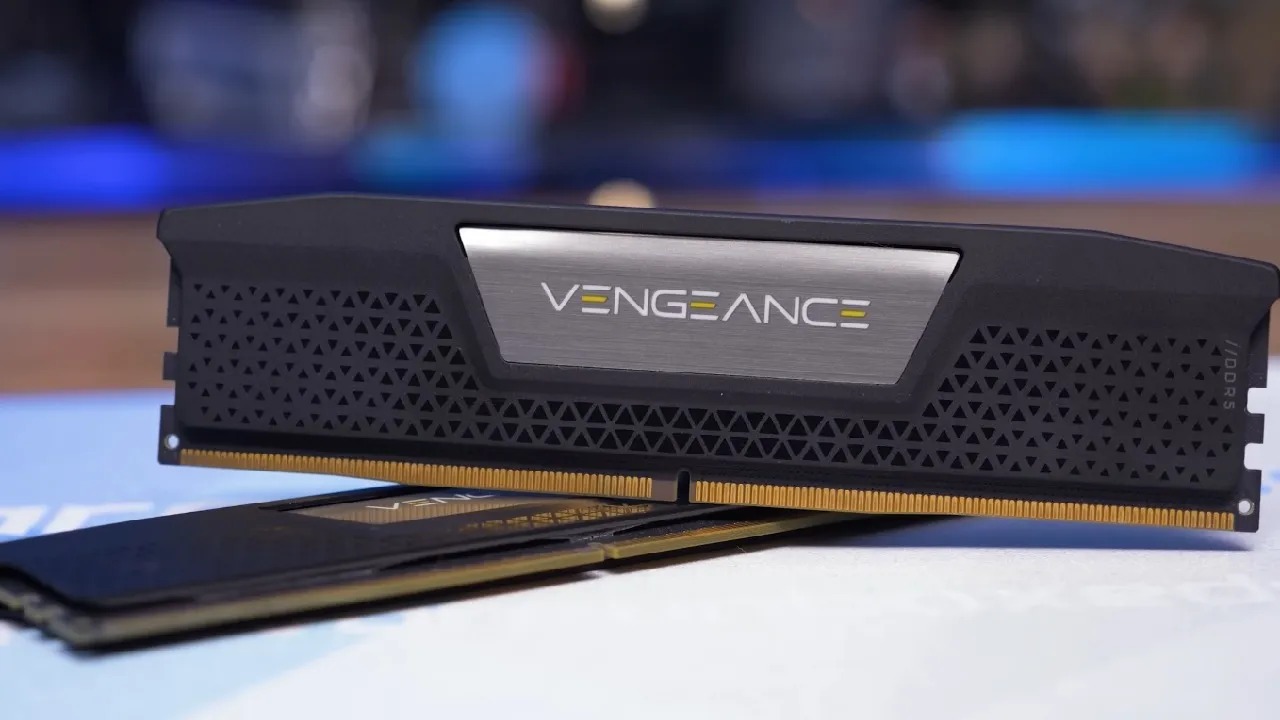
When the computer's RAM runs out, it uses virtual memory from storage. This isn't perfect, but contemporary NVMe SSDs with speeds of about 7000MB/s do a much better job of handling this than older hard drives. This faster storage speed is one reason 16GB systems don't slow down much in many recent games.
Games also use more visual memory than system RAM, which makes having less DRAM for gaming even less of a problem.
Making things and Being Productive
A PC may be used for more than just gaming. Heavy multitasking, video editing, and streaming might put extra strain on system memory. To test this, rendering tasks were run in DaVinci Resolve.
It took 1m54s with 16GB and 1m52s with 32GB to make a short clip with 3D tracking and effects. A lengthier video took 28m14s with 16GB and 27m18s with 32GB. The differences were minimal, showing that 16GB can still be useful in many situations, even for creating content.
Final Thoughts
32GB of RAM is still the goal for gaming and productivity in the long run. Still, current memory pricing makes it harder to justify for budget setups. If you can spend more on the GPU, 16GB is a good temporary fix for entry-level and mid-range PCs.
It's crucial to pick a popular memory kit with common speeds and timings if you want to start with 16GB and then upgrade later. This makes it easy to identify a module that will work with your current setup in the future.
Also, check our other NVIDIA articles below:
- NVIDIA GeForce RTX 5080 Review (2025): Still A 4K Gaming Powerhouse?
- NVIDIA RTX 5070 Review: Mid-Range Muscle or Marketing Hype?
- RTX 5070 Ti Review: Performance, Thermals & Power Efficiency Tested
- ASUS GeForce RTX 5090 LC Liquid Cooled GPU Review: Unmatched Silence & Speed
- MSI GeForce RTX 5090 32GB SUPRIM SOC Review: Power Efficiency, Cooling, and Gaming Performance
- INNO3D RTX 5060 Ti 16 GB X2 Review: Gaming Benchmarks, Temps, and Power Efficiency
- HP Omen 45L Review: RTX 5090 Performance, Thermals, and Value Analysis
- ASUS TUF Gaming GeForce RTX 5060 Ti Review: DLSS 4, Power Efficiency, and Gaming
- ASUS Prime RTX 5060 Ti OC 16GB Review: DLSS 4, Ray Tracing, & Thermals Tested
- NVIDIA GeForce RTX 5060 Review: Specs, Gaming, and Cost per Frame
- MSI GeForce RTX 5090 GAMING TRIO OC Review: A Monster Power GPU
Editor, NoobFeed
Gaming Hardware Updates
No Data.