
Modern Upscaling Showdown: How PSSR2 Holds Against DLSS 4.5 and FSR4 in Real-World Games
PSSR2 Delivers Sharp 4K60fps Performance Across Most Scenes, While Maintaining Stability in Motion Without Ghosting
Hardware by Tanisha Aria on Mar 02, 2026
The modern 4K60fps experience is still defined by tools like image reconstruction and upscaling. A promise to deliver a clear picture at high frame rates has become an important part of positioning new hardware.
Real-world implementations have been very different across titles, even though standards were high, especially when it came to advanced console upscaling solutions. Sometimes, the results finally live up to the promise, giving a 4K display picture that feels sharp, stable, and satisfying. In some cases, the experience has been slowed down by poor image clarity.
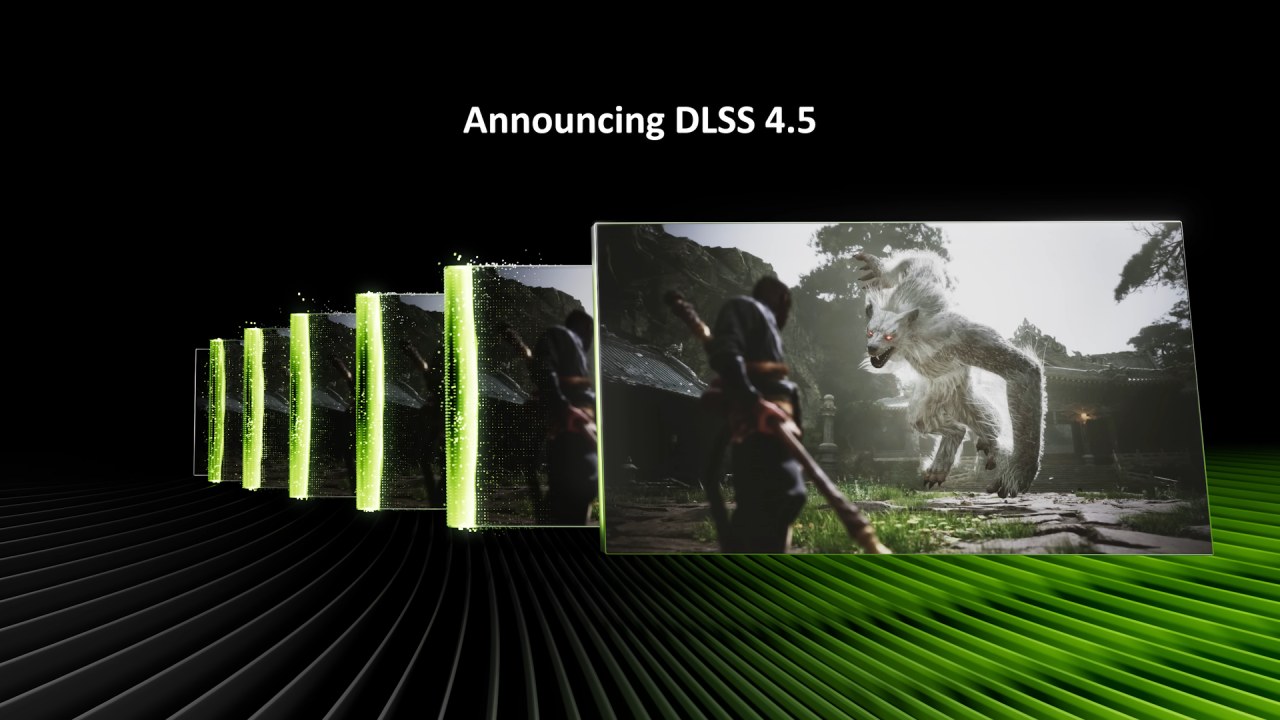
Overall Image Quality and First Impressions
In general, we think that this solution works very well given the circumstances. It produces a pretty sharp picture that looks good, which seems right for 4K60fps gaming. In fact, it does something that many games before it struggled to do.
In earlier versions, we wanted greater stability and clarity. This case, on the other hand, delivers image quality that feels good enough, even compared to PC upscalers.
In a way that didn't happen often with older versions, we were truly happy with the presentation. The changes can be seen and felt. Before we even look at side-by-side comparisons, the stability and clarity during normal games are already noticeable in a good way.
Ray Tracing Noise and the Denoiser Limitation
At first glance, it looked like ray tracing noise was still a problem. At first, we were worried that the same problems were still happening. However, a closer look revealed that the problem lies in the game's internal denoiser, not the upscaler itself.
All of the upscalers in this game exhibit the same noise seen in ray-traced global illumination and reflections. The marks are the same whether you use DLSS 4.5 or FSR 4. One approach might seem to resolve details better at first glance in some scenes, such as when moving objects reflect light.
The same speckled noise pattern is observed regardless of the blockage. This shows that the problem lies in how the denoiser is used, not in the reconstruction methods. So, even though ray tracing noise can be seen, it is unfair to blame it on a single upscaling method.
Motion Handling and Aliasing Differences
Indeed, there are occasions when motion handling differs. In our experiments, we observed that some reconstruction methods exhibit more aliasing than others as things move.
For example, as we observed the body moving back and forth over small pieces of work, such as armrests or slim metal frames, we realised that we might gradually begin to notice figure and resolution limitations.
Moving objects maintain their anti-aliasing better in some versions. During action, edges stay smoother, and high-resolution detail looks better. Other methods, on the other hand, make things sparkle or shimmer a little as they move.
When playing at full speed in real time, these flaws are not very noticeable. It's more likely you would notice a brief sparkle than a clear degradation. But the differences are easier to see when you pay close attention to how motion changes.
We zoomed in on these parts because they caught our attention while we were playing. The aliasing isn't too bad, but you can see it when you look closely at small features like thin frames or edges.
Ghosting Behaviour and Frame Retention
Interestingly, not every trade-off leads to the same answer. When things moved forward and backwards in scenes, such as when handheld items moved across the screen, we observed ghosting effects with some reconstruction methods. These look like faint lines that stay in the present frame from earlier frames.
In this case, different versions do a better job of keeping track of time than others. We didn't see any noticeable ghosting in those situations, but in others, we saw faint white trails following moving items. This means that each technology may balance maintaining information and maintaining motion stability in different ways.
It looks like some methods hold on to previous frame data more tightly, reducing aliasing but potentially causing ghosting. Others drop that data more quickly, which stops ghosting but makes aliasing in motion more obvious.
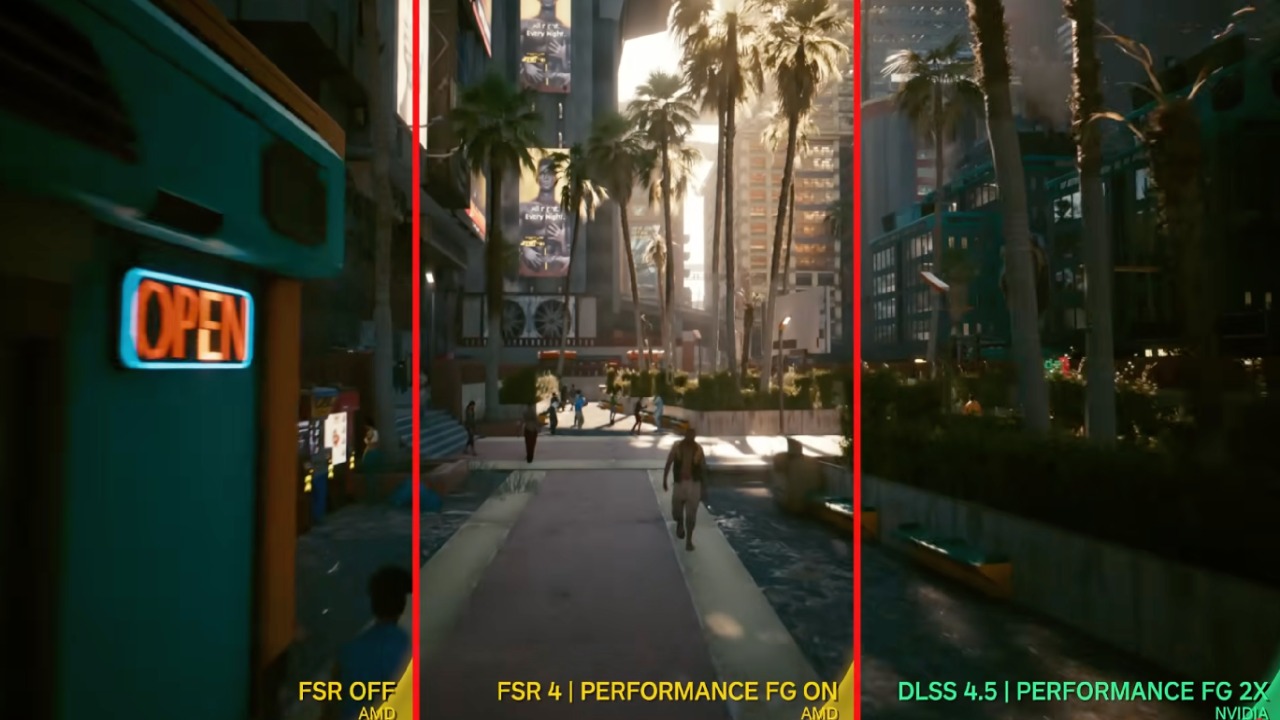
Sharpness and Detail Retention
The sharpness is also different according to the composition of the scene. Other upscalers display smoother, finer detail where indoors is involved, particularly in the details in the background, such as small text or elaborate decorations on walls.
It's common for one reconstruction method to have the best text readability and microdetail clarity, with another method coming in close behind. A third method may look noticeably softer.
The rankings can change, though, when players move into open game areas. In outdoor scenes with more light, bigger shapes, and faraway details, one upscaler may look about the same in terms of sharpness and stability.
In contrast, another may look a little smoother. This really stood out to us when we were looking at faraway buildings, environmental detail, and geometry with strong contrast.
Another important difference is line finish. In thin geometric structures, power lines, and chain-link fences, some upscalers fully recreate where fine lines meet. Others have a little trouble, which makes the line description less clear. These are small things, but they add to the general confidence and clarity of the picture.
Depth of Field and Global Limitations
Depth of field adds another barrier that applies to everyone. When depth-of-field effects are enabled, image quality drops significantly across all upscalers. Surfaces that are in focus retain detail, but areas affected by the effect show aliasing and noise. The edges of the face and the fuzzy background look rougher than the rest of the frame.
This behaviour remains the same regardless of the rebuilding method used. Everyone's sense of resolution drops when upscaling and depth-of-field effects are enabled. It becomes clear that this problem is caused by the way the game renders, not by the upscalers themselves.
Environmental Factors Affecting Comparisons
The way the game is presented as a whole makes straight comparisons harder. It has the dark, low-contrast look typical of horror. In dark scenes, edges tend to blend together naturally, and small changes in details are hard to see. Less contrast makes it harder to see the pros and cons of fine rebuilding.
It's also hard to separate reconstruction quality from post-processing effects because sharpening settings aren't fully adjustable across systems. Changes in tone mapping or internal sharpening could affect how clear something seems. Because of this, even though there are important changes, this title is not the best choice for pure upscaler analysis.
Final Thoughts
Overall, this program works very well and is very similar to current PC reconstruction programs. The console version does surprisingly well, but PC upscalers still have a slight edge in anti-aliasing stability and in rendering fine details.
On the other hand, the fact that it doesn't ghost in some motion situations is one of its best features. There are trade-offs among the methods when it comes to controlling aliasing, maintaining a stable timeline, preventing ghosting, and reconstructing lines.
When looked at as a whole, the results are good in every way. Even though both ray tracing denoising and depth-of-field rendering have their flaws, the picture quality at 4K60fps is really satisfying in this case. Even though it's not perfect, it's a big step forward and an interesting example of how current reconstruction technologies are still changing.
Also, check our other hardware articles:
- AMD Ryzen 9 9950X3D Review: Setting The Standard For 2025 Gaming CPU
- Amazon Luna 2025 Review: Is Prime Gaming's Cloud Service Your Go-To For Casual Fun?
- AMD RX 9070 XT Review: AMD's RDNA 4 Champion for 1440p Gaming
- GeForce Now Ultimate: Ditching Your Gaming PC For Cloud RTX 4080 Power?
- NVIDIA GeForce RTX 5080 Review (2025): Still A 4K Gaming Powerhouse?
- Intel Core Ultra 9 285K Review And Performance Breakdown (2025)
- AMD Ryzen 7 9800X3D Review: 3D V-Cache Goes God Mode with Stunning Gaming Performance
- Intel Core Ultra 9 285K vs AMD Ryzen 7 9800X3D: In-Depth Gaming Performance and Benchmark Comparison
- NVIDIA GeForce RTX 5080 Super Performance In Cyberpunk 2077: Path Tracing & DLSS 4.0 Tested
- AMD Radeon RX 9070 XT In Cyberpunk 2077: Ray Tracing & FSR 4.0 Tested
- Intel Arc B580 Review: The $250 GPU Revolutionizing 1440p Gaming
- Intel Arc B570 Vs. B580: Value, Specs, And Real-World Gaming Performance
- RTX 5090 Laptop Vs. M4 Max MacBook Pro: Ultimate Raw Performance Vs. Battery Endurance
- Intel Arc b580 Vs. RTX 4060: Game Performance And Value Analysis
- RTX5090 Hell Is Us Demo 4K Ultra Benchmark: DLSS Vs. Native Performance Guide
- NVIDIA RTX 5070 Review: Mid-Range Muscle or Marketing Hype?
- Nintendo Switch 2 Review: Handheld Performance, Features & Value Breakdown
- RTX 5070 Ti Review: Performance, Thermals & Power Efficiency Tested
- Samsung Odyssey OLED G81SF Review 2025: Ultimate 32-Inch QD-OLED Gaming Monitor
- AMD RX 9070 Performance Review: Thermals, Clocks, and Real-World FPS
- AMD Ryzen 5 7600 Review: Best Budget Gaming CPU of 2025?
- AMD Radeon RX 7800 XT Review: RDNA 3 Power For Midrange Gaming
- Asus ROG RTX 5090 Astral OC Vs. Founders Edition: The 4K Gaming Benchmark
Contributor, NoobFeed
Gaming Hardware Updates
No Data.