
Why are MSI and ASUS Skipping New Intel Motherboards for AeroLake Refresh?
Market demand and hardware compatibility reduce the need for new Intel motherboard models during AeroLake refresh cycle.
Hardware by Nahe Yan on Apr 11, 2026
When people talk about new gear, they often use news stories instead of facts. This makes it hard to know what's really going on in the business. People have responded to recent news about motherboard makers and new CPU platforms in ways that don't match how hardware communities really grow.
We saw reports that MSI and ASUS are not making new motherboards for the AeroLake update. At first glance, that sounds important, but upon closer examination, we see that the situation is not what it seems. A lot of people see the headline and think that these businesses are completely leaving Intel. That's not true.
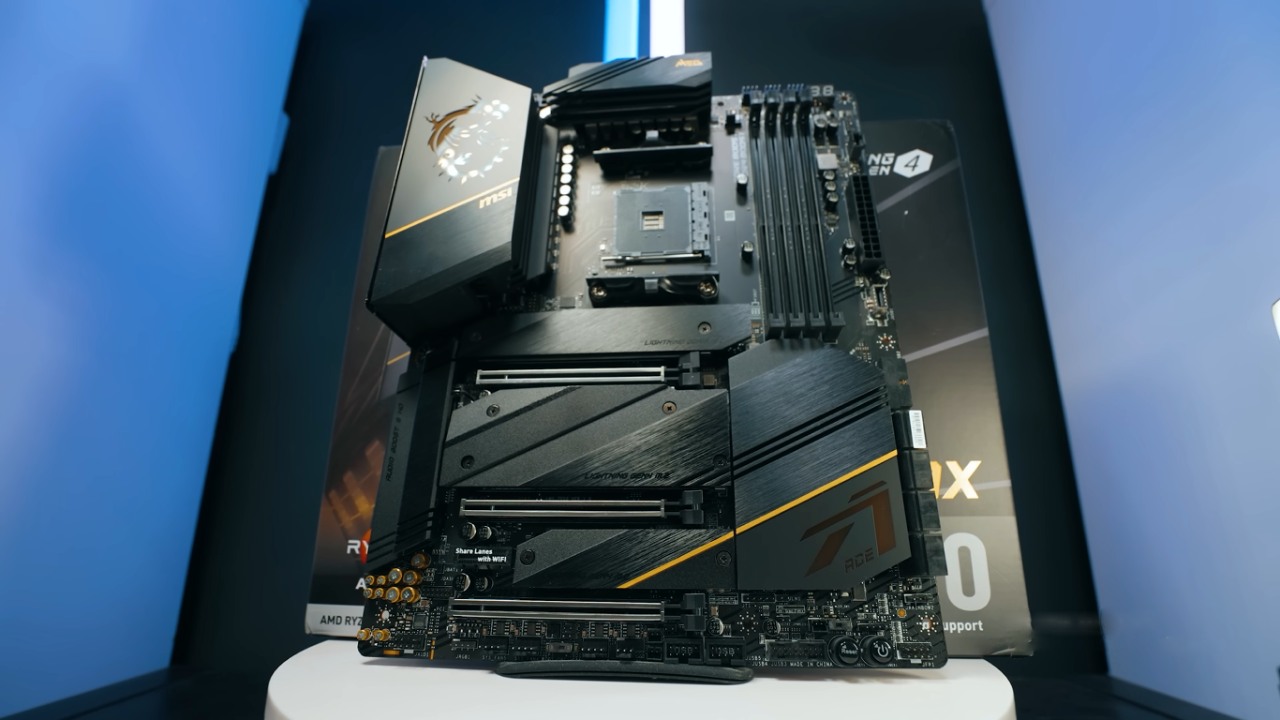
Headlines that are Hard to Understand
It's clear why new motherboards aren't a priority when you look at what Intel has previously said about the Core Ultra 200S Plus CPUs. These CPUs are designed to work with 800-series motherboards already in use. When new CPUs come out, it's common to need to update the BIOS. Because of this, there isn't a strong reason for companies to introduce completely new lines of motherboards.
Why You Don't Need New Motherboards
We should ask ourselves a basic question: why make new motherboards if the current ones operate well with the CPU? It doesn't make sense from a practical point of view. In most circumstances, a new board won't give you any further performance gains. Instead, you usually pay for small improvements to the look or new features.
In many cases, motherboards have gotten more expensive without making any real gains. You might see new design features, displays, or materials, but the basic performance stays mostly the same. It's much harder to rationalize paying extra for a new motherboard when RAM prices are already high.
Current Market Conditions
You can see that there are already enough motherboard solutions for Intel platforms on the market. There are now 16 different models of the Z890 motherboard. That is already more than what is needed for a platform that isn't selling as well as its rival.
AMD platforms, on the other hand, have about 24 X870 and X870E versions. That figure is too high. We don't need that many different versions for one generation. We used to have only a few categories: entry-level, mid-range, high-end, and sometimes high-performance desktops. That was enough.
You can see why companies aren't rushing to make new Intel boards. There just isn't as much demand. You would also focus on what sells more often if you were in charge of a business.
There is a lot of Confusion about DDR4 and DDR5 Support.
Memory support is another topic that has made things even more confusing. We are seeing manufacturers explore ways to make motherboards that support both DDR4 and DDR5 memory. Before, you could only choose between a D4 or D5 board, even if the CPU could work with both.
We think it makes sense to put both alternatives on one board, especially since RAM prices are so high right now. There are engineering problems, though, especially when it comes to designing memory controllers and ensuring signals remain strong. These issues are not simple, but it looks like manufacturers are getting through them.
Shortage of DDR5 and its Effects on the Market
There is also talk of how DDR5 shortages are hurting choices. If memory is already hard to find or expensive, making new motherboards that work better with it isn't very useful. Even if more memory support is possible, the time isn't right.
This supports the premise that not releasing new motherboards doesn't mean you're giving up on a platform. It's just a smart choice based on how the market is right now.
Doubtful Claims About DDR3's Return
Some sources say firms might bring back DDR3 motherboards because DDR4 prices are rising. That makes me very worried. You would have to ask yourself who these products are meant for.
It's already hard to get DDR3 RAM that works with your system. It doesn't make sense to expect customers to construct new systems around old technology when software and gameplay needs have changed. Newer apps and games need much more power than older platforms can provide.
It's hard to picture many people using these kinds of items, even if they come out. To resume DDR3 hardware production, they would also have to bring back production methods that had previously been phased out.
The Direction and Reality of the Industry
Right now, businesses are getting used to changes. Things in the industry will never be the same again. Instead, it is heading toward a new baseline influenced by factors such as the rise of AI and a lack of supply.
Instead of making too much, manufacturers are making choices based on survival and efficiency. That implies making sure to only make things that sell, not things that aren't needed.
.jpg)
Trends in the Market and how People Buy Things
There are significant patterns in how people buy things. More people are choosing AMD CPUs over Intel ones. At the same time, people are buying Nvidia GPUs more often than AMD GPUs, especially after the prices of several models went up.
These patterns directly affect what producers put first. Companies will allocate their resources based on how many AMD CPUs they sell. If Intel demand is low, making more motherboard types isn't as appealing.
Final Thoughts
We need to look at these findings in perspective. Companies are not giving up on a platform just because they are skipping new motherboard releases to renew their CPUs. It just shows that the current hardware already fits the needs.
The present hardware ecosystem already has more options than it needs at the end of the day. Manufacturers are opting to work with what they already have instead of making it bigger, which is a smart and expected choice.
Also, check our other hardware articles:
- AMD Ryzen 9 9950X3D Review: Setting The Standard For 2025 Gaming CPU
- Amazon Luna 2025 Review: Is Prime Gaming's Cloud Service Your Go-To For Casual Fun?
- AMD RX 9070 XT Review: AMD's RDNA 4 Champion for 1440p Gaming
- GeForce Now Ultimate: Ditching Your Gaming PC For Cloud RTX 4080 Power?
- NVIDIA GeForce RTX 5080 Review (2025): Still A 4K Gaming Powerhouse?
- Intel Core Ultra 9 285K Review And Performance Breakdown (2025)
- AMD Ryzen 7 9800X3D Review: 3D V-Cache Goes God Mode with Stunning Gaming Performance
- Intel Core Ultra 9 285K vs AMD Ryzen 7 9800X3D: In-Depth Gaming Performance and Benchmark Comparison
- NVIDIA GeForce RTX 5080 Super Performance In Cyberpunk 2077: Path Tracing & DLSS 4.0 Tested
- AMD Radeon RX 9070 XT In Cyberpunk 2077: Ray Tracing & FSR 4.0 Tested
- Intel Arc B580 Review: The $250 GPU Revolutionizing 1440p Gaming
- Intel Arc B570 Vs. B580: Value, Specs, And Real-World Gaming Performance
- RTX 5090 Laptop Vs. M4 Max MacBook Pro: Ultimate Raw Performance Vs. Battery Endurance
- Intel Arc b580 Vs. RTX 4060: Game Performance And Value Analysis
- RTX5090 Hell Is Us Demo 4K Ultra Benchmark: DLSS Vs. Native Performance Guide
- NVIDIA RTX 5070 Review: Mid-Range Muscle or Marketing Hype?
- Nintendo Switch 2 Review: Handheld Performance, Features & Value Breakdown
- RTX 5070 Ti Review: Performance, Thermals & Power Efficiency Tested
- Samsung Odyssey OLED G81SF Review 2025: Ultimate 32-Inch QD-OLED Gaming Monitor
- AMD RX 9070 Performance Review: Thermals, Clocks, and Real-World FPS
- AMD Ryzen 5 7600 Review: Best Budget Gaming CPU of 2025?
- AMD Radeon RX 7800 XT Review: RDNA 3 Power For Midrange Gaming
- Asus ROG RTX 5090 Astral OC Vs. Founders Edition: The 4K Gaming Benchmark
Editor, NoobFeed
Gaming Hardware Updates
No Data.