
Nvidia AI Bubble at CES: Enterprise Focus, No Consumer Hardware
Nvidia’s CES keynote focused on enterprise AI infrastructure while avoiding consumer hardware and gaming announcements entirely.
Hardware by Nahe Yan on Jan 10, 2026
NVIDIA's 93-minute keynote speech at the Consumer Electronics Show had a lot to say. The talk started with comments on how AI will be with humans for the rest of their lives and will remember every conversation. People asked where the money was coming from, and then they talked about how great the past year had been. The keynote speech didn't go well at first since there were technological problems in Santa Clara. The speaker admitted there were problems and kept making things up as they went along.
People said that Nvidia was the most powerful tech corporation in the world and that it ran the world economy. The beginning wasn't very good, but the tone changed to make AI seem less scary by adding funny parts. Jensen Huang showed off a robot helper called Brev that could interact with a virtual pet named Richi and discuss personal preferences. The conversation was meant to be fun, but it showed how AI systems are being made to remember how people act.
Corporate Humor and Irony about the Environment
NVIDIA used humor by putting heavy hardware on stage and making jokes about how heavy it was. Jensen Huang joked about transporting a lot of water into the equipment, even though some data center areas are running low on water. Someone pointed out how ironic it is that water is being brought to a desert area. Yet, data centers use a lot of water.
People were worried about the amount of nitrates and sediment that could build up in water systems because of data center use. Even yet, the keynote speech went on with light jokes and pleasant banter.
NVIDIA discussed its relationship with Palantir, noting that NVIDIA hardware accelerates Palantir's AI and data processing platforms. NVIDIA, on the other hand, saw its technology as the basis for future systems where individuals might even "be born inside these platforms."
What Nvidia's Keynotes Are For
NVIDIA admitted that the main purpose of its keynotes is to boost investor confidence, not to make announcements that are important to consumers. Jensen Huang openly said that Nvidia's keynotes usually boost the company's stock price. This time, Nvidia's stock didn't rise much. However, the keynote still gave 93 minutes of corporate messaging about AI, robots, self-driving cars, and revenue.
The presentation covered many issues but offered little real news for consumers. The focus was on Nvidia's role in updating computer systems and moving the trillion-dollar sector toward AI.
Architecture of the Vera Rubin Platform and Server
NVIDIA talked about its new Vera Rubin platform, which it calls an AI supercomputer. It has six main parts that work together. Rubin GPU, Vera CPU, NVLink6 switch, ConnectX9 SuperNIC, BlueField4 DPU, and Spectrum6 Ethernet switch are all part of this.
Jensen Huang said the new method eliminates 43 wires and simplifies cooling by using only two water tubes. It is said that the time it takes to put things together has gone down from 2 hours to 5 minutes. The system is now completely liquid-cooled, up from 80% in the last version.
Vera CPU has 88 cores, 176 threads, 1.8 TB/s of NVLink bandwidth, 1.5 TB of LPDDR5X memory, and 227 billion transistors. Rubin GPU can handle up to 288GB of HBM4 memory and delivers a bandwidth of 22 TB/s. NVIDIA says that inference performance is 5 times better and training performance is 3.5 times better than Blackwell.
Infrastructure, Memory, and Power Effect
HBM memory costs more than regular DRAM because it requires more wafer area and incurs greater yield losses. NVIDIA's use of large HBM capacities makes it harder for consumers to find memory.
Each Vera Rubin rack can hold up to 500 pounds of water. NVIDIA also noted that power efficiency has improved, but overall energy consumption is still rising as data centers grow.
With 800 Gbit/s Ethernet support and up to 1.66 Tb/s per Rubin GPU, the ConnectX9 SuperNIC is a powerful device. BlueField4 DPUs handle networking, storage, and security services, so GPUs and CPUs can focus on AI workloads.
Improvements to the CPU and Networking
Vera CPU has higher memory bandwidth (1.2 TB/s) and L2 cache (2 MB per core) than the Grace CPU. It also has a more unified L3 cache (162MB). It works with both PCIe Gen 6 and CXL 3.1. NVIDIA added spatial multi-threading, which runs two hardware threads per core by physically splitting resources rather than by time.
The Spectrum6 Ethernet switch can handle 102.4Tb/s of traffic across 512 ports. NVIDIA also discussed its NVLink6 switch tray, which enables all GPUs to communicate at 3.6TB/s.
Data Centers as "AI Factories"
NVIDIA calls data centers "AI factories," which makes them sound more like places where intelligence is made than regular server rooms. The branding is supposed to make AI infrastructure look like a necessary part of business rather than a way for a company to grow.
Even though they have been given new names, the systems remain large-scale data centers that consume significant power, water, and silicon.
CES Has a Limited Consumer Focus
Once again, Nvidia's CES speech didn't include any announcements about consumer devices. There were no new GPUs shown off, and the main presentation didn't have any gaming news. Instead, Nvidia used different channels to convey gaming news.
This change shows that Nvidia cares more about the message to businesses and investors than to its original gaming audience, even if PC gamers helped the company create its brand.
Updates for DLSS4.5 and Gaming
NVIDIA released DLSS 4.5, which features a new transformer model and can generate up to 6x more frames simultaneously. The new transformer model improves image quality by eliminating ghosting and trailing effects common in older versions.
Dynamic frame generation changes the output based on the desired framerates; it only works with whole-number multipliers. Only RTX 50-series GPUs have this feature. All RTX GPUs, even the 20-series, can use the new transformer concept.
Tools for RTX Remix and Modding
Updates to RTX Remix added "Remix Logic," which lets modders start events in the game without needing much code. This makes it easier to incorporate things like finding enemies or changing the surroundings.
The tool keeps improving older games by introducing new visual capabilities and refining rendering processes.
Local AI Agents and VRAM Needs
NVIDIA pushed local AI agents that use GPUs and suggested at least 7GB of VRAM. Many mid-range GPUs have only 8GB of memory, which makes people worry about how little memory consumer cards have.
Cloud Gaming and GeForce Now
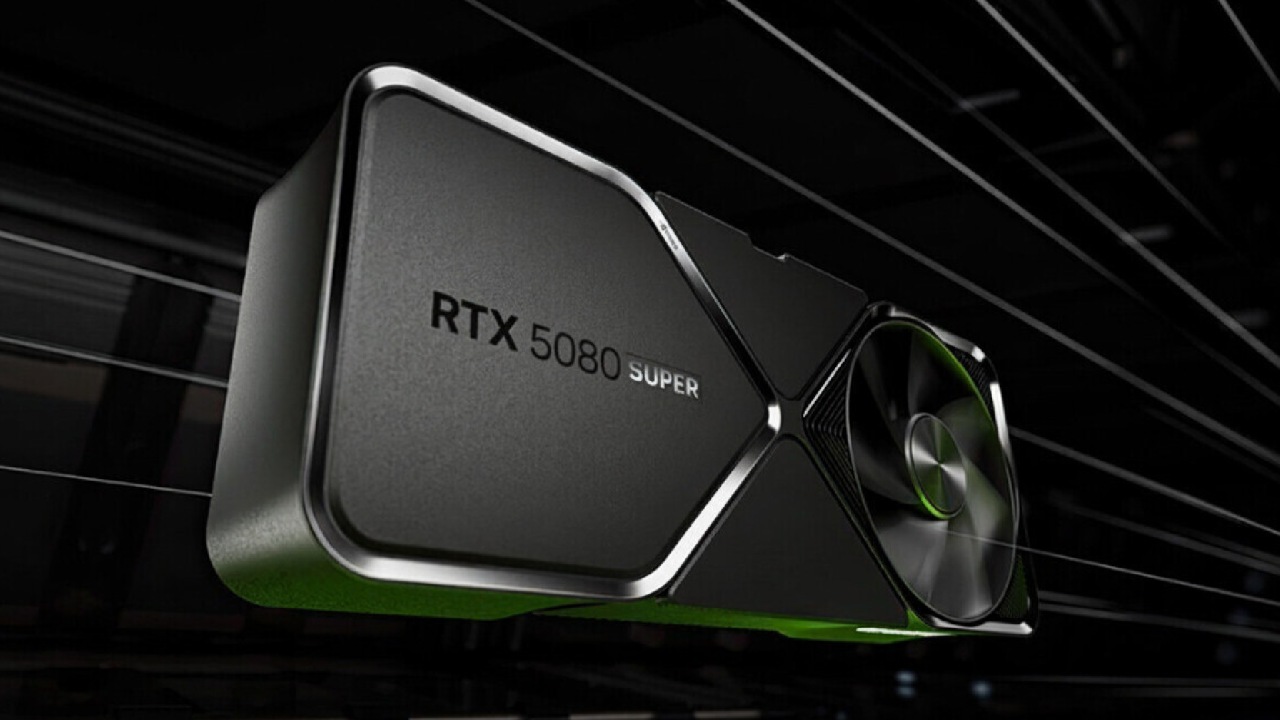
NVIDIA said that the RTX 5080 tier of GeForce Now will support additional titles. But now that prices have changed, users have to pay for more playtime in 15-hour chunks after 100 hours a month.
People are worried that they may lose ownership of their devices when they pay monthly fees to play games in the cloud.
Claims About AI Performance
NVIDIA said that AI workloads were more efficient; for example, NVFP4 reduced the memory requirements of some models from 87GB to 26GB. The assertions are interesting, but the effect in the real world depends on the workloads.
Final Thoughts
Instead of consumer goods, the CES keynote was mostly on enterprise AI, robotics, and infrastructure. NVIDIA downplayed announcements on gaming and consumer products while emphasizing its lead in AI computing.
The presentation was mostly corporate messaging, light humor, and information for investors. Articles and other materials shared outside the speech discussed important technical details.
If you like gaming or consumer electronics, the main presentation didn't give anything of value. Instead, it strengthened Nvidia's move toward big AI systems, data centers, and business solutions.
Also, check our other NVIDIA articles below:
- NVIDIA GeForce RTX 5080 Review (2025): Still A 4K Gaming Powerhouse?
- NVIDIA RTX 5070 Review: Mid-Range Muscle or Marketing Hype?
- RTX 5070 Ti Review: Performance, Thermals & Power Efficiency Tested
- ASUS GeForce RTX 5090 LC Liquid Cooled GPU Review: Unmatched Silence & Speed
- MSI GeForce RTX 5090 32GB SUPRIM SOC Review: Power Efficiency, Cooling, and Gaming Performance
- INNO3D RTX 5060 Ti 16 GB X2 Review: Gaming Benchmarks, Temps, and Power Efficiency
- HP Omen 45L Review: RTX 5090 Performance, Thermals, and Value Analysis
- ASUS TUF Gaming GeForce RTX 5060 Ti Review: DLSS 4, Power Efficiency, and Gaming
- ASUS Prime RTX 5060 Ti OC 16GB Review: DLSS 4, Ray Tracing, & Thermals Tested
- NVIDIA GeForce RTX 5060 Review: Specs, Gaming, and Cost per Frame
- MSI GeForce RTX 5090 GAMING TRIO OC Review: A Monster Power GPU
Editor, NoobFeed
Gaming Hardware Updates
No Data.