
NVIDIA Dominates GPU Market While RTX 5050 VRAM Upgrade and DRAM Shortage Impact Budget Gamers
Memory shortages, rising hardware prices, and supply constraints place growing pressure on the global PC gaming ecosystem.
Hardware by Naheyan Tahmin on Mar 09, 2026
There was a lot of tech news this week, even if most people felt the dog-sitting-in-a-burning-house meme summed it up best. NVIDIA was still the main topic of conversation.
The business still held a large share of the video card market, but it released only minor updates for gamers' GPUs. At the same time, the PC market was unstable, as memory shortages and price surges made it impossible to find hardware.
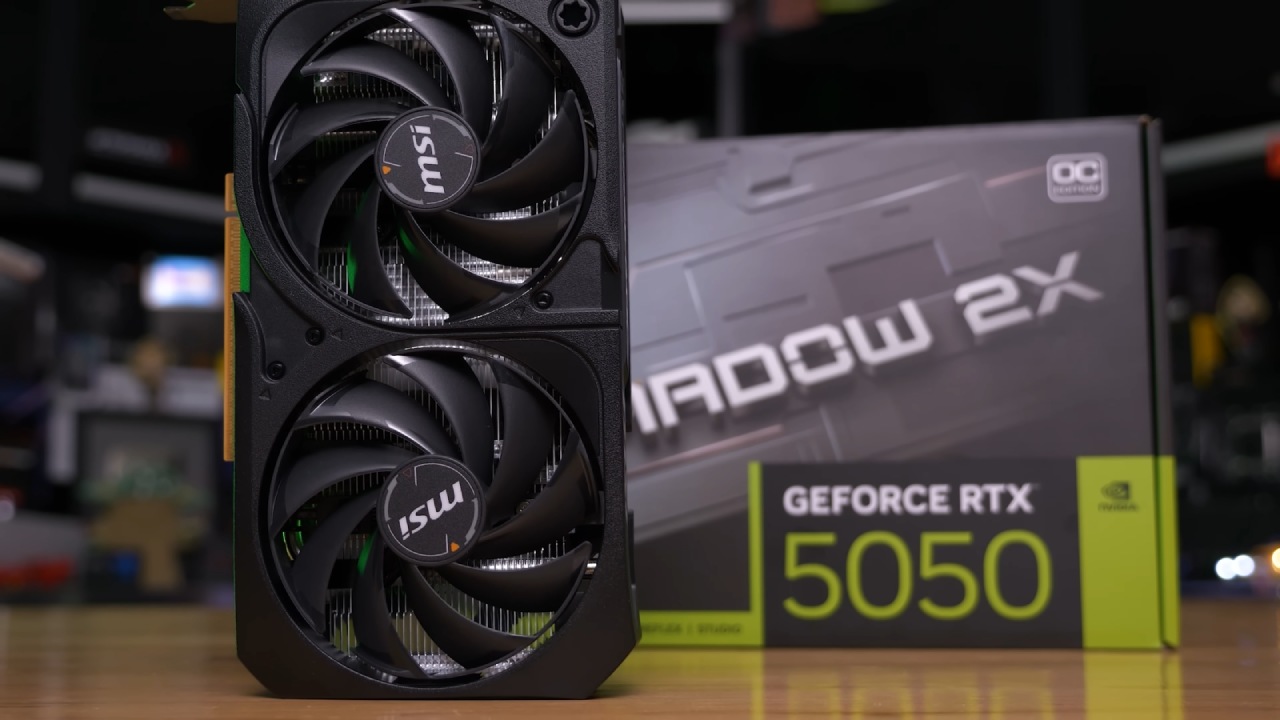
NVIDIA's Control Over the Market
People have rightfully said in the past that we were too harsh in our criticism of NVIDIA. But if it were true that Team Green had been unfairly criticized, gamers all around the world would be looking for other options. A report from John Peddie Research on the PC graphics market share says NVIDIA had 94% of the market in PC graphics add-in board shipments in the fourth quarter of 2025. That number rose from 92% in the third quarter, a 10% increase over the same period last year.
AMD's plan for Radeon GPUs, on the other hand, hasn't worked. The business left the high-end market, leaving it unclear which features would be supported, sold the few 9000-series cards it released above MSRP, and mostly disregarded Radeon GPUs during recent CES keynotes. Intel is still around, with about 1% of the market, and at least it's been consistent.
NVIDIA's Point of View on Leadership
During a talk at the Morgan Stanley Technology, Media, and Telecom Conference, NVIDIA CEO Jensen Huang didn't seem worried about the lack of competition. Jensen said that even when there isn't enough memory, electricity, or other computer hardware, the organization benefits from scarcity. He says that constraints make purchasers choose the best options.
On the consumer side, scarcity changes things. Prices are higher, and fewer items are available to individual consumers. NVIDIA's data center business is what really drives decisions about gaming GPUs, not traditional gaming demand.
AI Investment and the Direction of the Market
In the medium term, an AI slowdown could change the priorities in the hardware business. But the conclusion also depends on what NVIDIA does next. Jensen said the last big investments in OpenAI and Anthropic might have been the recent ones, even though they involved a $30 billion pledge.
During the talk, there were no announcements about GeForce GPUs. Instead, Micron mentioned one reference to "the next wave of discrete GPUs" while discussing new 24Gb GDDR7 memory modules that can reach up to 36 GB/s and offer 50% more capacity than the 16Gb versions. The article discussed how there aren't many GPUs with more memory and that memory scarcity persists.
The information relates to rumors about the RTX 50 Super series. Reports, on the other hand, say that certain GPUs were either canceled or put off.
Rumored Change to RTX 5050 Memory
NVIDIA might take a different approach with the RTX 5050. MegaSizeGPU says that NVIDIA might swap out four 2GB GDDR6 modules for three 3GB GDDR7 modules. That adjustment would increase VRAM from 8GB to 9GB, but the memory bus would drop to 96 bits.
Depending on clock speeds, GDDR7's speed could make up for a narrower bus. The setup might provide you with about 5% more bandwidth and 12.5% more VRAM capacity if the memory speed were 28 Gbps.
We can understand why this adjustment was made, but it also makes us wonder. A 12GB setup with a 128-bit bus on a 5050 or 5060 would make inexpensive systems work better.
More GPU Rumors
There is also a report that the RTX5060 will use a GB205 GPU die that was originally intended for higher-end models. According to reports, the proposal calls for using low-binned RTX5070 silicon and for board partners to make a new PCB for the larger chip.
There are also rumors that the RTX 3060 could return to production. The card came out for the first time in February 2021. It is still unclear whether the returning version will have 8GB or 12GB of VRAM. Still, the availability of memory makes a lower configuration more likely.
All of these changes point to NVIDIA reusing parts that don't work with higher-end devices.
Pressure on the Market for Entry-level PCs
Industry reports indicate that the PC sector is under greater pressure. In a late February report, research firm Gartner said that rising prices for DRAM and SSDs could make the sub-$500 PC segment disappear. When the prices of parts rise, smaller parts makers may leave the market, and system prices may rise as well.
The same estimate says PC shipments will drop by 10.4% and smartphone shipments will drop by 8.4% in 2026.
Bots for DRAM and Scalping
There has also been automated scalping due to a lack of hardware. DataDome, a security company, said it found automated bots targeting stores to monitor DDR5 memory prices and other product listings.
The business received more than 10 million automated inquiries from a bot network seeking pricing information without being caught. Many of those requests were banned, but the action shows how a lack of supply can create opportunities for resellers who want to buy low and sell a little higher.
The Proposed Digital Age Assurance Act
The Digital Age Assurance Act, or AB1043, is another topic attracting significant attention. The law requires age verification, but it is the job of operating system developers to do it.
The plan provides a broad definition of an operating system provider. Still, it doesn't clearly address open-source systems like Linux. It also relies heavily on self-reporting, raising concerns about privacy and enforcement.
Before the law goes into force in January 2027, there is still time to make changes.
Making the Next Generation of Xbox
Microsoft Gaming's management had some good news to share. Asha Sharma said the next Xbox system is being developed under the name Project Helix. The system is supposed to work with both Xbox and PC games, functioning like a PC while still being sold as a console.
This news is important because it shows that Microsoft still sees long-term promise in the console market. A larger install base across both console and PC ecosystems could lead to greater investment from developers.
It also opens the door for future systems to build on that technique.
Workstations with High Monitors
People who are interested in PCs are still interested in big multi-monitor workstations. Some arrangements use arrays, such as five-by-three monitor sets. These systems make you wonder what GPU technology is needed to power them. They also show how hard it is to handle cables and keep the desk stable.
Multi-monitor setups are still a niche, but they are a clear example of extreme PC setups.
Final Thoughts
People still talk about PC hardware in forums and on social media, where they share system builds, performance findings, and their thoughts on what's happening in the industry.
Also, check our other hardware articles:
- AMD Ryzen 9 9950X3D Review: Setting The Standard For 2025 Gaming CPU
- Amazon Luna 2025 Review: Is Prime Gaming's Cloud Service Your Go-To For Casual Fun?
- AMD RX 9070 XT Review: AMD's RDNA 4 Champion for 1440p Gaming
- GeForce Now Ultimate: Ditching Your Gaming PC For Cloud RTX 4080 Power?
- NVIDIA GeForce RTX 5080 Review (2025): Still A 4K Gaming Powerhouse?
- Intel Core Ultra 9 285K Review And Performance Breakdown (2025)
- AMD Ryzen 7 9800X3D Review: 3D V-Cache Goes God Mode with Stunning Gaming Performance
- Intel Core Ultra 9 285K vs AMD Ryzen 7 9800X3D: In-Depth Gaming Performance and Benchmark Comparison
- NVIDIA GeForce RTX 5080 Super Performance In Cyberpunk 2077: Path Tracing & DLSS 4.0 Tested
- AMD Radeon RX 9070 XT In Cyberpunk 2077: Ray Tracing & FSR 4.0 Tested
- Intel Arc B580 Review: The $250 GPU Revolutionizing 1440p Gaming
- Intel Arc B570 Vs. B580: Value, Specs, And Real-World Gaming Performance
- RTX 5090 Laptop Vs. M4 Max MacBook Pro: Ultimate Raw Performance Vs. Battery Endurance
- Intel Arc b580 Vs. RTX 4060: Game Performance And Value Analysis
- RTX5090 Hell Is Us Demo 4K Ultra Benchmark: DLSS Vs. Native Performance Guide
- NVIDIA RTX 5070 Review: Mid-Range Muscle or Marketing Hype?
- Nintendo Switch 2 Review: Handheld Performance, Features & Value Breakdown
- RTX 5070 Ti Review: Performance, Thermals & Power Efficiency Tested
- Samsung Odyssey OLED G81SF Review 2025: Ultimate 32-Inch QD-OLED Gaming Monitor
- AMD RX 9070 Performance Review: Thermals, Clocks, and Real-World FPS
- AMD Ryzen 5 7600 Review: Best Budget Gaming CPU of 2025?
- AMD Radeon RX 7800 XT Review: RDNA 3 Power For Midrange Gaming
- Asus ROG RTX 5090 Astral OC Vs. Founders Edition: The 4K Gaming Benchmark
Editor, NoobFeed
Gaming Hardware Updates
No Data.