
Ray Tracing on Handheld PCs is Becoming More Practical Than Expected
Handheld gaming hardware is beginning to deliver stable ray tracing performance through optimization and advanced upscaling technologies.
Hardware by Shinji Okazaki on May 20, 2026
Whether it was 3ds Max or Photoshop, ray tracing has always been the domain of high-end desktop graphics cards and systems, as well as of high graphics fidelity. It has been a staple of high-power desktop graphics cards, big gaming systems, and graphics fidelity, from 3D Studio Max to Photoshop. It was hard to imagine these lighting effects being achieved on a pocket console, with power restrictions and thermal constraints.
But the times are changing with optimization, upscaling technology, and modern APUs. Developers are working to bring ray tracing capabilities to lower-powered devices, and a smaller system can achieve the same level of high-end graphics features if the game is designed accordingly.
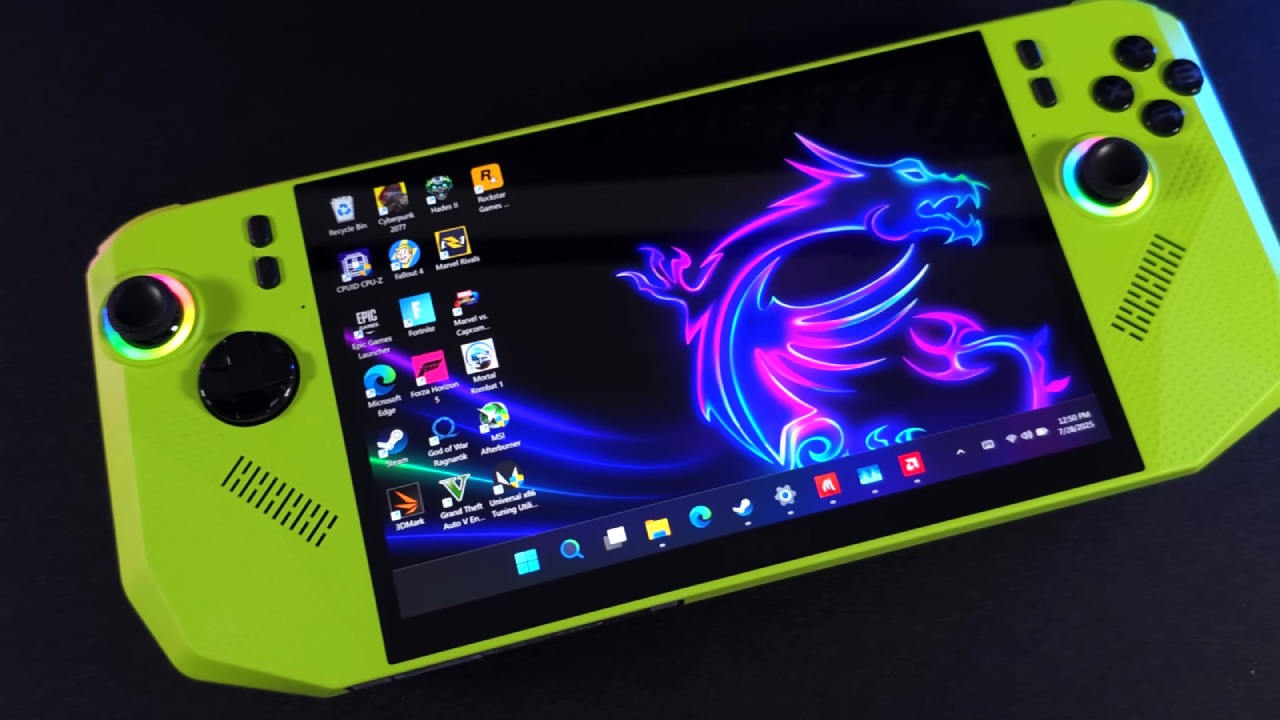
Why Ray Tracing on Handhelds Seems Impossible
The first thing people think of when they hear ray tracing is a desktop graphics card, drawing 300W to 450W on its own. A handheld device, on the other hand, would have a 30W to 35W envelope and execute the game, OS, and all graphics tasks. The challenge on paper is unattainable.
But the bigger problem is not just about hardware capacity. The true question is whether users can tell the difference between the visual enhancements that ray tracing offers. Many gamers say ray tracing isn't helpful because the visual differences can be slight, depending on the game. Many titles are presented with significant enhancements to lighting, reflections, and shadows, while others are virtually unchanged.
That variation has a great impact on perception. The feature doesn't seem to make a huge difference if a player's favorite game doesn't visibly gain from it. The level of implementation will ultimately decide whether or not ray tracing is worth the effort or just another graphics setting to push into the system. Because of its high-end features, it is expected that games such as OnePixel Studio and others built around ray tracing deliver better results.
Doom: The Dark Ages is one of the most easily recognizable successful ray-tracing games, and it's not hard to see why. The game is a good example of the problem that can arise when developers optimize for the technology rather than incorporate it into the development process.
Resolution Becomes the Main Trade-Off
With 1600x1000 resolution, handheld settings, and a 30W TDP, the game can be run at ~45 fps. The resolution is reduced to 800p, which brings the performance closer to 60fps. Optimization really does make a difference when it comes to a 35W handheld running around 30fps with ray tracing.
The main thing is that it's not 4K or 120fps. The objective is to become viable. Build developers can accurately create reflections, shadows, and lighting on low-power devices and enjoy realistic lighting as developers start designing with this feature in mind. Instead of brute-force hardware scaling, smart power management is becoming increasingly important. Ray tracing is well understood, but if it is not implemented well, it doesn't improve the perception of ray tracing quality.
The opposite scenario came up in Borderlands 4. Later updates made it possible to go from 30 fps to 40 fps on handheld, but at first, it wasn't good, leading to criticism of ray tracing. The issue was the game's "style of art". Many players didn't find the ray tracing load worth the added visual quality, since Borderlands was already good-looking.
As the cost of performing the same task doesn't rise in proportion to the visual change, opposition to the technology naturally increases. This is why the case for ray tracing is still up for debate. The technology improves lighting accuracy and scene reality, but players might not notice the benefits if they can't see how the lighting has changed.
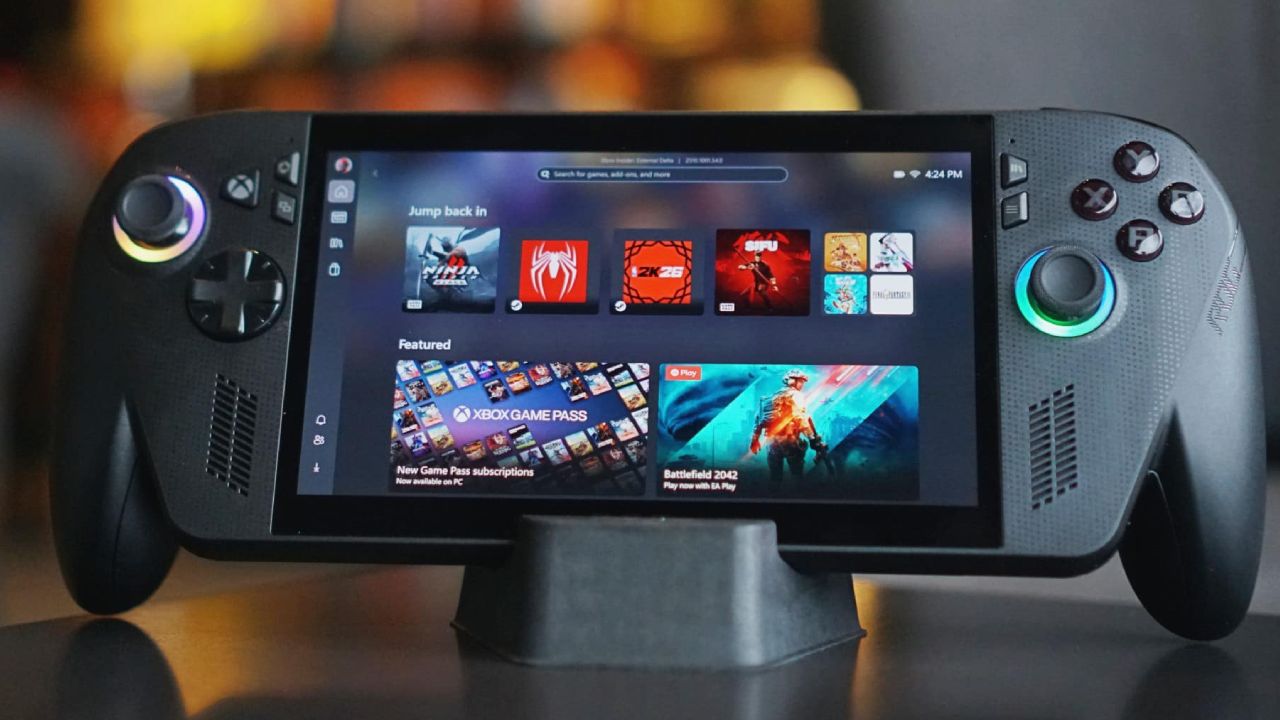
Heavy Games Can Run Ray Tracing on Handhelds
One of the most interesting is Ratchet & Clank: Rift Apart, which pushes hardware just as hard without ray tracing. This was an attempt to determine whether a challenging title built around console hardware can be made playable on a handheld device.
With optimized settings and targeting 30 fps, ray tracing suddenly became a thing on systems powered by the Z2 Extreme. Xbox Ally X averaged somewhere between 36fps and 37fps, while the Legion Go 2 remained near 30fps to 31fps with some occasional highs at the end of the 20s.
It was set up in a way that entailed compromises, especially in resolution scaling, but the results were satisfactory enough to demonstrate feasibility. The shadows from the rays and the global illumination were still usable at high and medium settings, respectively. The reflection appeared more solid, the shadows were more realistic, and the lighting of the surroundings was more realistic.
The upgrades may not seem radical to a typical player, but they do make devs' lives easier when it comes to manual lighting and help to produce more uniform scene rendering. That is a benefit that is more significant in future games, which are increasingly adopting ray-traced pipelines in development. In the move towards ray tracing on mobile, resolution is the biggest sacrifice. Lowering the rendering resolution internally incurs a performance overhead to support advanced lighting features.
Much like the consoles do with balancing performance. APUs share the CPU and GPU resources, and so sometimes more CPU power is needed to perform ray tracing calculations. While the GPU may be powerful enough on its own, the CPU may be the bottleneck. With this constraint in mind, the gameplay of handheld ray tracers becomes much more realistic.
Even when the Ray Tracing is Subtle, it's still Important
Other games, like Marvel's Spider-Man, Marvel's Spider-Man 2, and Marvel's Spider-Man: Miles Morales, demonstrate another facet of ray tracing implementation. The improvements are there, but not so dramatic as those that are fully designed around the feature.
That's all the little details that make many players ignore the feature. The long-term benefits of ray tracing, however, aren't always in dramatic visual improvements. It also makes development processes easier and more natural lighting systems, which grow more accurately over time. Ray tracing could eventually be part of the standard package rather than an optional switch and become the standard for visual fidelity.
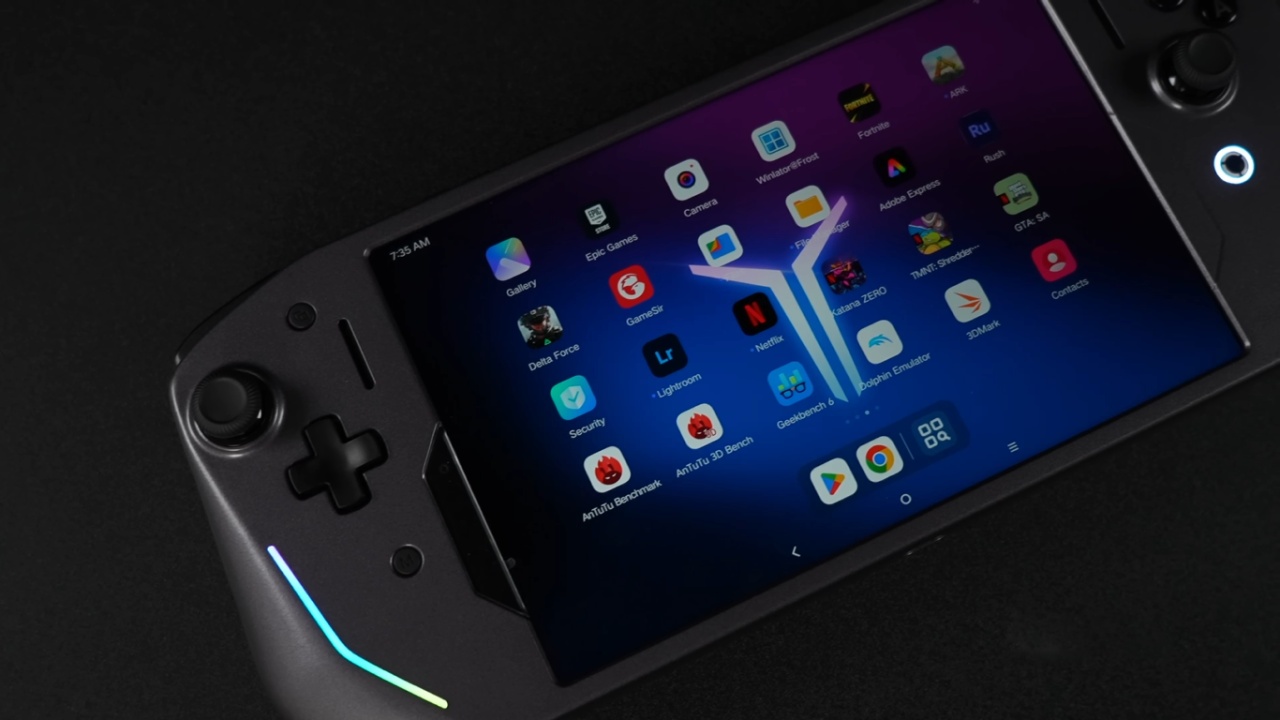
The Upscaling Technology will further advance Handheld Ray Tracing.
Future improvements will heavily depend on upscaling solutions such as AMD FidelityFX Super Resolution 4. Internal resolutions of 720p or 800p, and upscaling to 1080p, leave some headroom for ray tracing without compromising performance.
Things aren't going well, but newer APUs with specialized accelerators are slowly making things better by using more advanced upscaling algorithms. Ray tracing will be more of a fact and less of an experiment as handheld technology gets better. There are still hardware that are having difficulties supporting Ray Tracing.
Not all handhelds are ray tracing the same. Several games refused to run ray tracing at all on the Legion Go S, and the game did not perform well overall. The feature did not work correctly in that configuration with these titles: Ratchet & Clank: Rift Apart and Pragmata.
There also seems to be a significant disparity between SteamOS and Windows regarding ray tracing support and compatibility. The hardware differences between the Z1 Extreme and Z2 Extreme don't seem significant enough to account for the overall discrepancy, either, so there's obviously a software angle to consider as well.
Optimization Determines Success
It's time to rethink the ray tracing conversation; literate minds come to the rescue with Pragmata and Resident Evil Requiem. If the developers think about ray tracing from the beginning, they create games that provide a playable experience.
That's a distinction that can be more important than the hardware's raw power. While Ray Tracing will always be resource-intensive, addressing scalability will have a huge impact on performance.
As more low-end hardware platforms are released by vendors, developers are still being driven to optimize their applications. Scalability is crucial, as developers must create solutions that work across the entire gaming community, including devices like the Switch 2, Xbox Series S, and older console generations.
They have already made many strides, and Ray Tracing on Handhelds is no longer a gimmick.
When developers plan for ray tracing from the ground up rather than as an afterthought, it's possible to implement it on handheld devices. The new generation of handheld devices can run the advanced lighting featured in games such as Doom: The Dark Ages and Pragmata, as long as you play them with the appropriate setup.
As upscaling technology improves and APUs get dedicated acceleration hardware, handheld ray tracing will stop being a novelty and become a standard feature. It's not always necessary to use a lot of electricity for game visualization. In fact, the future of game visualization is moving toward efficient, optimized, and scalable methods.
Editor, NoobFeed
Gaming Hardware Updates
No Data.