
RTX 5060 Ti 16GB Prices Surge Above Faster GPUs as VRAM Costs Rise
Rising VRAM costs push the RTX 5060 Ti 16GB above faster GPUs, creating difficult choices for PC gamers.
Hardware by Nahe Yan on Aug 23, 2026
Memory size and graphics performance are becoming more and more different in the GPU market. RTX 5060 Ti 16GB is now priced higher than faster GPUs. This shows how VRAM costs and supply factors can affect GPU prices. 16GB of memory may be important for some tasks, but it does not improve graphics performance.
PC Gamer checked the price of the RTX 5060 Ti 16GB on August 25 and found it to be around $780. At the same time, an RTX 5070 costs about $763, while AMD's RX 9070 XT costs about $720. RTX 5060 Ti 16GB launched with a $429 price goal, so the comparison is still useful. Prices change by store and model.
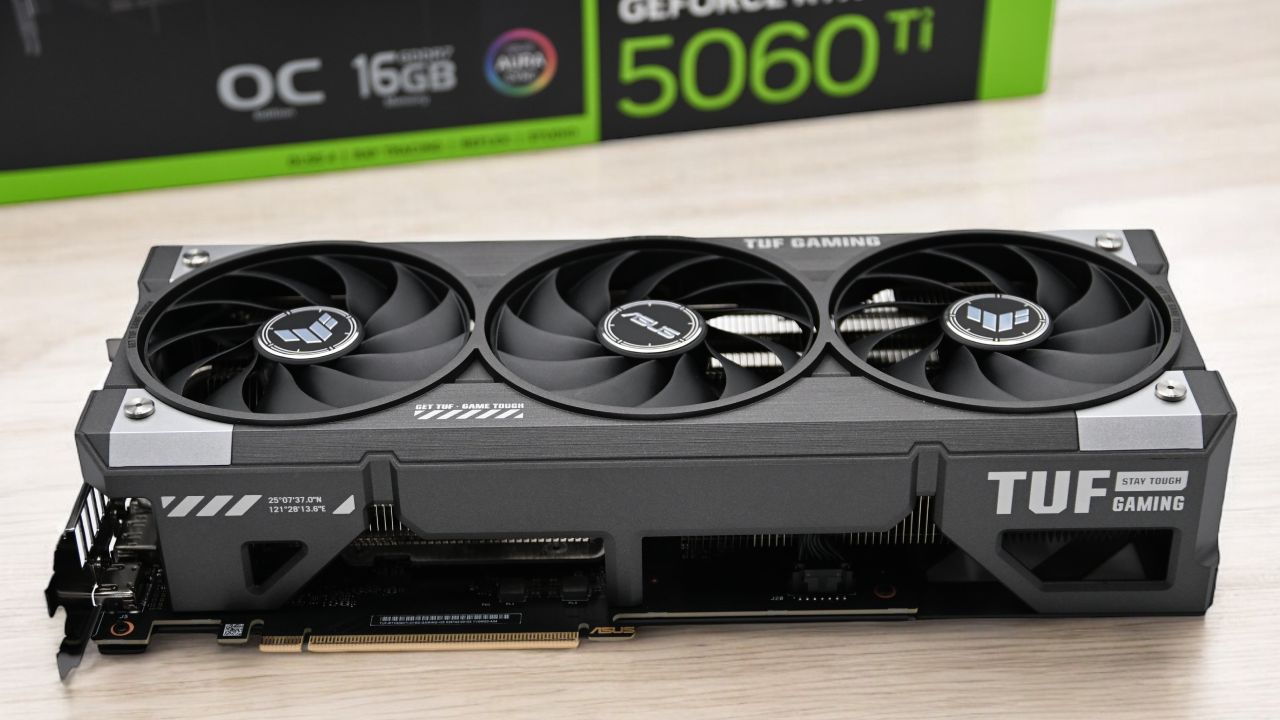
RTX 5060 Ti 16GB Pricing Moves Above Faster GPUs
RTX 5060 Ti uses Nvidia's Blackwell architecture with 4608 CUDA cores, 16GB of GDDR7, a 128-bit memory interface, and 180W of graphics power. It supports DLSS 4, ray tracing, AV1 encoding, and CUDA. The features and memory capacity are there, but the real question is performance and price.
RTX 5070 has only 12GB of VRAM, yet it has 6144 CUDA cores and 50% more memory bandwidth. Tom's Hardware found the RTX 5070 about 31% faster than the RTX 5060 Ti 16GB at 1440p across its gaming tests. Paying more for the RTX 5060 Ti simply because it has 16GB makes very little sense for normal gaming. It has more VRAM, but its gaming value is lower at current prices.
AMD makes the comparison harder. RX 9070 XT has 16GB of GDDR6, a 256-bit memory interface, and 64 compute units. TechSpot measured around 119 fps at 1440p across 18 games during its launch testing. That puts the RTX 5060 Ti 16GB in a difficult position. A mid-range Nvidia card is reaching a price point where faster graphics cards are available, including a Radeon model with the same 16GB of memory.
VRAM and Supply Are Affecting GPU Prices
Memory and supply seem to be the biggest problems. Tom's Hardware looked at the most popular Newegg listings in August and found that the price of an RTX 5060 Ti 16GB rose by up to 39% in a short period, reaching about $805 in that sample. The 8GB model went up by a lot less.
That doesn't mean VRAM is the only reason. Inventory, board-partner prices, store profit margins, and part costs are also important. But GPUs with large amounts of memory are getting more expensive, and it's harder to ignore the differences between models with varying amounts of memory.
16GB is a good amount for gaming because newer games can use more memory at high settings. However, VRAM does not replace GPU performance. It's not always true that a slower graphics processor with more memory is better than a faster card with a little less memory. It's still more important to get the best speed per dollar when gaming than to get the biggest VRAM number.
There is an exception for tasks that depend heavily on memory. The extra space can help with local AI, CUDA workloads, 3D rendering, and other tasks where a project can't fit in 12GB. If a task that needs 14GB or 15GB of memory runs out of memory first, it can't use the faster GPU. Capacity can be more important than FPS for some creators and AI users.
.jpg)
PC Gamer's current tracking also shows the RTX 5090 above $4,000.
Meanwhile, Nvidia recently used limited verified priority access at QuakeCon to sell Founders Edition RTX 5090, 5080, and 5070 cards at their original MSRPs. Buying a GPU at launch price has become a special-event privilege.
RTX 5060 Ti 16GB should not be purchased simply because it has 16GB of VRAM. Near its original $429 target, it can make sense, but around $700 to $800, the value collapses because faster graphics cards enter the same price range. RTX 5060 Ti 16GB is not a bad GPU. It is a good GPU trapped in a difficult market.
Gamers should compare the RTX 5070, RX 9070 XT, and RX 9070 GRE before paying a premium just for memory capacity. The key consideration is performance at the target resolution and the price being paid for that performance. AI and artist users should think about whether they really need more than 12GB. If the work can be done with 12GB of RAM, a faster GPU might be better.
The extra VRAM may be more important than the raw gaming speed if the workload needs 14GB or 15GB. With the RTX 5060 Ti 16GB, you can see why you should consider VRAM capacity alongside GPU performance, memory bandwidth, workload needs, and price. A GPU can handle more tasks when it has more memory, but that doesn't mean that a slower GPU is always better for games.
Editor, NoobFeed
Gaming Hardware Updates
No Data.