
Ryzen 7 5800X3D Delivers Competitive Gaming Results
Ryzen 7 5800X3D delivers competitive gaming performance against the 9800X3D despite running on the older AM4 platform
Hardware by Nahe Yan on Nov 13, 2026
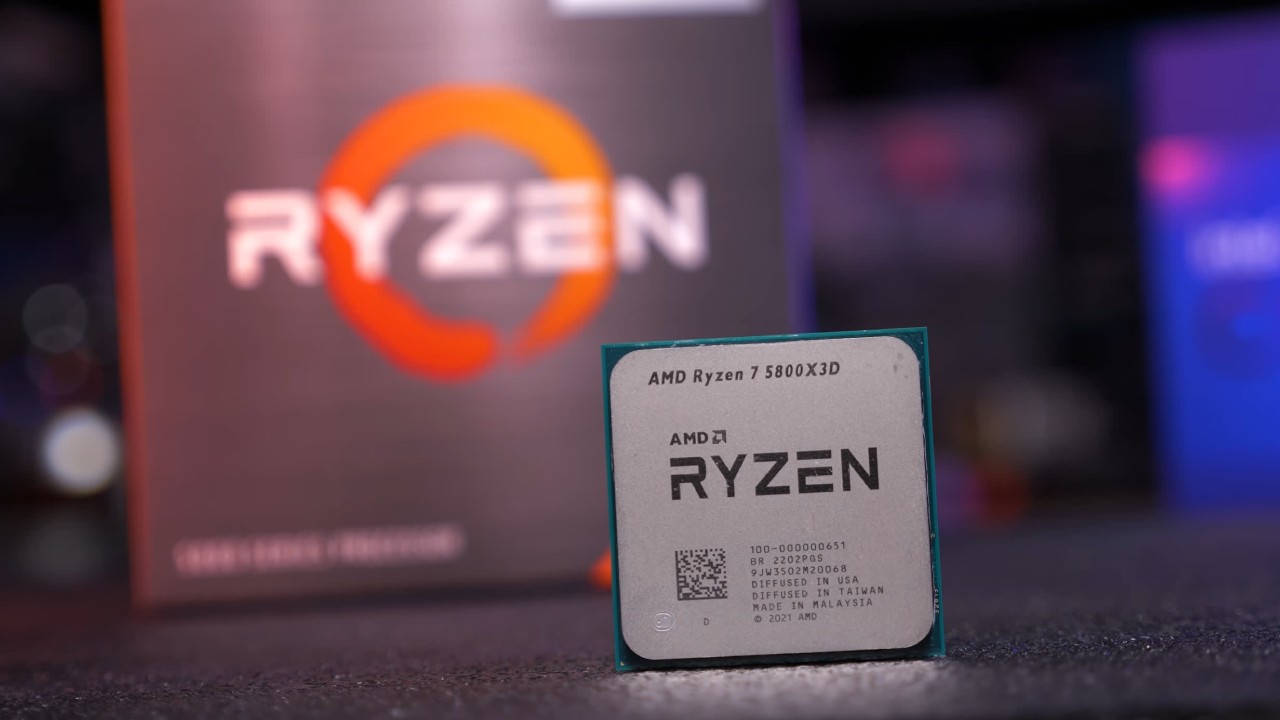
Ryzen 7 5800X3D could make a return to retail stores as an anniversary edition, according to recent rumors. If true, it would give users another chance to buy the processor, which has been hard to find for a long time. For users still running an AM4 system with a non-X3D processor, its return could offer an upgrade option without requiring an entirely new platform.
The main advantage of the 5800X3D is that users with an AM4 motherboard and DDR4 memory can upgrade without moving to AM5. You don't need to buy a new motherboard or DDR5 memory. With DDR5 prices continuing to increase, staying on AM4 has become a more reasonable option. However, how much performance are you leaving on the table compared to a Ryzen 7 9800X3D?
Ryzen 7 5800X3D vs 9800X3D Test Systems
Rather than following the usual CPU comparison approach of running synthetic benchmarks or testing games at 1080p with low settings to isolate CPU performance, these tests focus on gaming at 1440p with high-end graphics settings. Many users buying a high-end CPU will pair it with a capable GPU and play games at higher settings rather than lowering everything to see maximum CPU performance.
We used two systems for the comparison. The first system features a Ryzen 7 5800X3D paired with an MSI B550-A Pro motherboard and 64GB of DDR4 3600 CL18 memory. The second system uses a Ryzen 7 9800X3D with an MSI Pro B850-P Wi-Fi motherboard and 64GB of DDR5 6000 CL30 memory. The tests use 1440p resolution with high-end graphics settings, including DLSS where appropriate.
The main question is whether the 5800X3D remains a reasonable AM4 upgrade or whether the performance difference with the 9800X3D is too large to ignore. Starting with Forza Horizon 6, the first test uses the medium graphics preset with TAA enabled and no upscaling. The Ryzen 7 9800X3D performs well, maintaining triple-digit performance across the board, including 0.1% lows, with an average around 200fps.
Ryzen 7 5800X3D performs lower but still delivers an average of around 150fps, with 0.1% lows remaining in the 80fps range. While there is a difference between the two processors, the 5800X3D still provides enough performance to play Forza Horizon 6 without running into major problems. At the high preset with TAA, the gap starts to shrink, with around 25 fps separating the two processors on average.
Call of Duty: Black Ops 7 Performance
At the Ultra preset, the GPU limitation becomes more noticeable, leaving only around 10 fps between the two processors on average. Interestingly, lows drop across both systems. The 5800X3D drops into the 50 fps range in its 0.1% lows at certain points, while the 9800X3D stays in the triple-digit range.
Finally, moving to the extreme preset produces a similar result. The performance gap continues to narrow as the GPU becomes the limiting factor. A more powerful graphics card, such as an RTX 5090, could potentially reveal a larger difference, but with the GPU used in these tests, both processors deliver a reasonable gaming experience.
Moving to Call of Duty: Black Ops 7, the built-in benchmark is used, starting with the balanced preset without upscaling. The two processors perform closely, though the 9800X3D comes out slightly ahead, particularly in the lows. The difference isn't particularly large, and the same pattern continues with the Ultra and Extreme presets. 9800X3D maintains an advantage, but the gap remains limited.

Some users might argue that lowering the graphics settings would reveal a larger difference.
If the Ryzen 7 5800X3D becomes available at retail stores again, existing AM4 users may find it hard to ignore. The comparison shows that although the 9800X3D is faster, the 5800X3D still delivers solid 1440p gaming performance at high settings. With DDR5 prices making platform upgrades expensive, keeping an existing AM4 system and upgrading to the 5800X3D could be the more practical choice.
The main consideration is how much performance you actually need. If you regularly run CPU-intensive workloads or play games that depend heavily on CPU performance, the 9800X3D offers an advantage. However, if your main focus is 1440p gaming with high graphics settings, the 5800X3D remains an option worth considering, especially if it returns to retail at a reasonable price.
FAQ
Q. Is the Ryzen 7 5800X3D still worth buying in 2026?
A. Yes. The Ryzen 7 5800X3D still delivers solid 1440p gaming performance at high graphics settings, making it a worthwhile upgrade for existing AM4 users.
Q. How much faster is the Ryzen 7 9800X3D than the 5800X3D?
A. The Ryzen 7 9800X3D is faster overall, particularly in CPU-intensive workloads and gaming lows. However, the performance gap becomes smaller at higher graphics settings when the GPU becomes the limiting factor.
Q. Can you upgrade from a Ryzen 5 5600X to a 5800X3D without changing the motherboard?
A. Yes. The Ryzen 7 5800X3D uses the AM4 platform, so users with a compatible AM4 motherboard can upgrade without purchasing a new motherboard or DDR5 memory.
Q. Does the Ryzen 7 5800X3D support DDR5 memory?
A. No. The Ryzen 7 5800X3D supports DDR4 memory and uses the AM4 platform. Moving to the Ryzen 7 9800X3D requires an AM5 motherboard and DDR5 memory.
Editor, NoobFeed
Gaming Hardware Updates
No Data.