
Valve Working to Bring FSR 4 to Older AMD GPUs for Steam Deck and Steam Machine
Valve advances FSR 4 downport efforts as competition in the handheld gaming market intensifies.
Hardware by Tanvir Kabbo on Feb 15, 2026
People are still upset that there aren't any Steam Decks in stores, but broader developments in graphics technology and the way handhelds are made may impact the future of portable gaming.
Improvements in upscaling, notably with AMD's new FidelityFX Super Resolution and Xbox's increased interest in handhelds, show that both competition and performance optimization are moving faster at the same time.
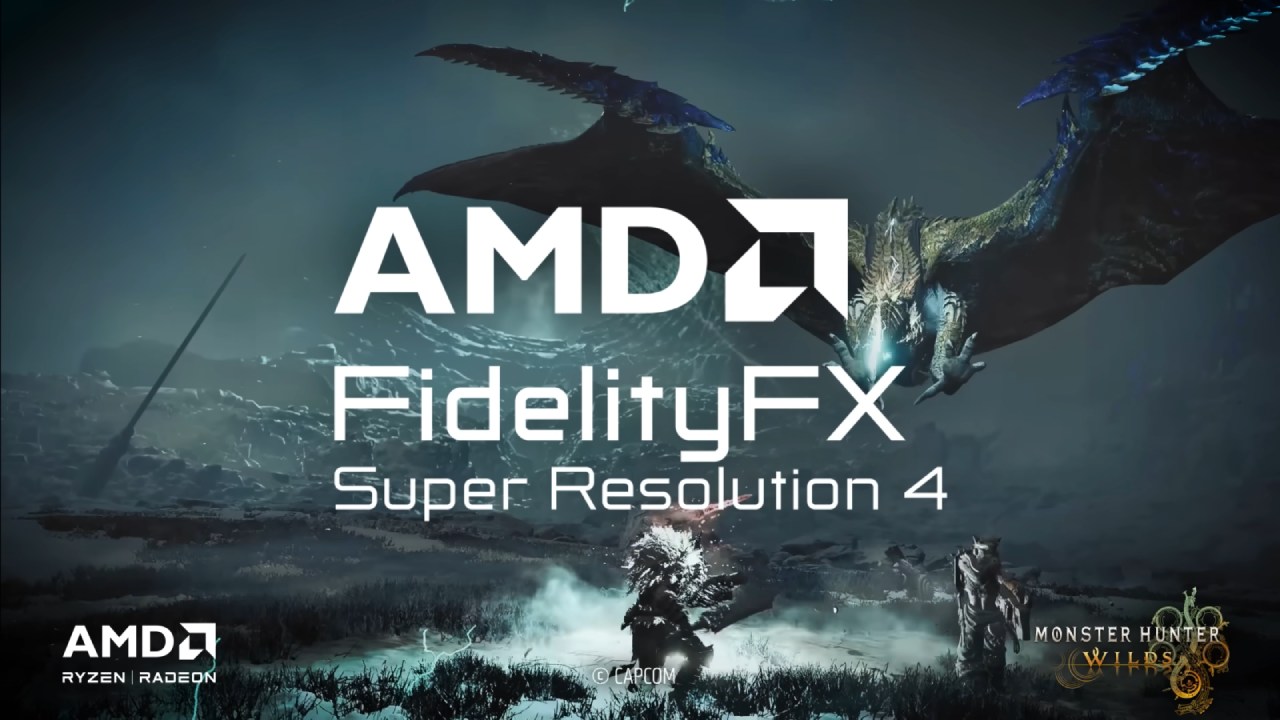
FSR 4 Downport could make Steam hardware last longer
AMD's FSR 4 is the best upscaling solution the firm has ever made. FSR1 and FSR 2, the first versions, improved performance, but they typically didn't produce as stable or clear images as other reconstruction approaches. FSR 3 closed the gap, but most people think that FSR 4 is the first version that really competes at a high level in both visual quality and speed.
When it first came out, FSR 4 only worked with RDNA 4 GPUs. That made it impossible for existing handheld devices to work right away. The Steam Deck is based on RDNA 2 architecture, whereas the upcoming Steam Machine is likely to use RDNA 3. According to official rules, neither platform can use FSR4's most powerful features.
But recent events point to progress toward more compatibility. Reports say that Valve has helped with efforts to make FSR 4 work on earlier AMD architectures by adding VKD3D Proton. Community testing has already shown that injection-based solutions can work with FSR 4 in several games. Decky Loader and other tools have proved that technological obstacles may not be as high as many thought.
If FSR 4 is used at the system level in SteamOS, it could replace the long-standing FSR 1 solution. The current approach struggles when scaling up quickly, such as from 360p to the Steam Deck's 800p display. When you send output to bigger screens like 4K TVs, visual softness, shimmering, and artifacting become even more obvious. A more sophisticated upscaler would make demanding titles much clearer.
This is becoming increasingly relevant as more games are developed with Unreal Engine 5. UE5 games generally use complex lighting systems, rich geometry, and higher internal resolution objectives. If portable gear doesn't offer better upscaling support, it could fall short of performance expectations. A successful FSR4 downport could make Steam hardware last a lot longer than it does now.
Xbox is thinking about making a first-party handheld
Xbox seems to be rethinking its plans for handheld devices amid competition. The company has been expanding its ecosystem approach over the past few years by delivering games across more platforms, such as the Nintendo Switch 2 and PlayStation 5. This push across several platforms was a symptom of a broader shift in thinking.
In the past, Xbox worked with ASUS to make an Xbox-branded version of the ROG Ally for portable gaming. Reports say the partnership exceeded expectations, which makes a Windows-based portable that works with Xbox services seem more likely.
New reports say that Xbox might be willing to make a completely unique first-party portable in the future. This kind of device would make it easier for hardware, Windows optimization, and Xbox software services to work together. More control over thermals, battery adjustment, and UI design might make the portable experience more like a console while still keeping the versatility of a PC.
.jpg)
A More Competitive Time for Portables
If Xbox makes a specialized handheld console, Valve would probably feel more pressure to compete. If Xbox builds a unique handheld console, Valve will definitely feel additional pressure to compete. That might speed up improvements to SteamOS, modifications to hardware, and system-level features like upscaling to the next generation. In the meantime, good FSR 4 downporting could keep devices from the current generation useful even as technology needs expand.
The handheld gaming market seems to be entering a more dynamic, technically ambitious era, with new graphics reconstruction technologies and major platform holders experimenting with new hardware.
Also, check our other hardware articles:
- AMD Ryzen 9 9950X3D Review: Setting The Standard For 2025 Gaming CPU
- Amazon Luna 2025 Review: Is Prime Gaming's Cloud Service Your Go-To For Casual Fun?
- AMD RX 9070 XT Review: AMD's RDNA 4 Champion for 1440p Gaming
- GeForce Now Ultimate: Ditching Your Gaming PC For Cloud RTX 4080 Power?
- NVIDIA GeForce RTX 5080 Review (2025): Still A 4K Gaming Powerhouse?
- Intel Core Ultra 9 285K Review And Performance Breakdown (2025)
- AMD Ryzen 7 9800X3D Review: 3D V-Cache Goes God Mode with Stunning Gaming Performance
- Intel Core Ultra 9 285K vs AMD Ryzen 7 9800X3D: In-Depth Gaming Performance and Benchmark Comparison
- NVIDIA GeForce RTX 5080 Super Performance In Cyberpunk 2077: Path Tracing & DLSS 4.0 Tested
- AMD Radeon RX 9070 XT In Cyberpunk 2077: Ray Tracing & FSR 4.0 Tested
- Intel Arc B580 Review: The $250 GPU Revolutionizing 1440p Gaming
- Intel Arc B570 Vs. B580: Value, Specs, And Real-World Gaming Performance
- RTX 5090 Laptop Vs. M4 Max MacBook Pro: Ultimate Raw Performance Vs. Battery Endurance
- Intel Arc b580 Vs. RTX 4060: Game Performance And Value Analysis
- RTX5090 Hell Is Us Demo 4K Ultra Benchmark: DLSS Vs. Native Performance Guide
- NVIDIA RTX 5070 Review: Mid-Range Muscle or Marketing Hype?
- Nintendo Switch 2 Review: Handheld Performance, Features & Value Breakdown
- RTX 5070 Ti Review: Performance, Thermals & Power Efficiency Tested
- Samsung Odyssey OLED G81SF Review 2025: Ultimate 32-Inch QD-OLED Gaming Monitor
- AMD RX 9070 Performance Review: Thermals, Clocks, and Real-World FPS
- AMD Ryzen 5 7600 Review: Best Budget Gaming CPU of 2025?
- AMD Radeon RX 7800 XT Review: RDNA 3 Power For Midrange Gaming
- Asus ROG RTX 5090 Astral OC Vs. Founders Edition: The 4K Gaming Benchmark
Senior Editor, NoobFeed
Gaming Hardware Updates
No Data.