
Assassin's Creed: Codename Hexe Reveals Darker Story, Brutal Combat, and Franchise Connections
Ubisoft’s upcoming Assassin’s Creed game is reportedly moving away from the series’ massive RPG formula with a darker setting, supernatural elements, acrobatic combat, and a focused story.
News by Tahmid Mahi on Oct 05, 2026
Assassin's Creed: Codename Hexe is becoming clearer as more information about Ubisoft’s upcoming project emerges. What was once a mysterious Assassin’s Creed title, revealed in a dark teaser featuring a witch symbol hanging from a tree, is now reportedly taking shape as a very different kind of entry for the franchise.
New details point to a darker story set in Germany, supernatural themes of witchcraft, a more focused world, and combat built around physical movement rather than the RPG mechanics seen in recent games. The new approach could give the game a distinct identity while allowing Ubisoft to explore a more grounded and unsettling side of the Assassin’s Creed formula.
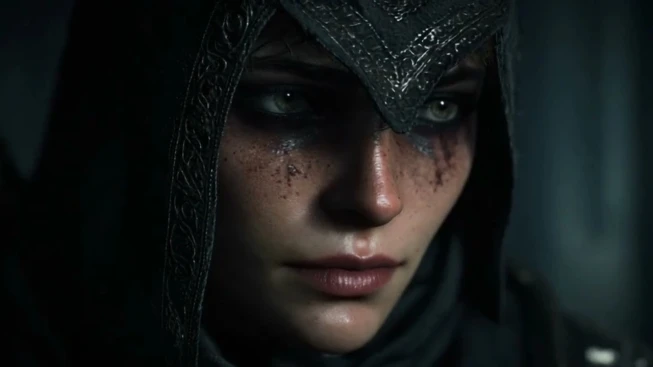
The game has always stood out among Ubisoft’s upcoming Assassin’s Creed projects because of its unusual setting and tone.
While the company has not revealed everything about the title, reports suggest it will not follow the enormous RPG structure used in games such as Assassin’s Creed Odyssey, Valhalla, and Shadows. Instead, Assassin's Creed: Codename Hexe is reportedly being designed as a more focused, narrative-driven experience that still gives players explorable environments and open-world elements.
One of the most important parts of the game is the historical setting. Assassin's Creed: Codename Hexe is reportedly taking players to Germany during a particularly dark period, with witch persecutions and the Würzburg witch trials forming an important part of the historical backdrop.
Rather than simply using witch trials as background scenery, the reports suggest that the persecution surrounding witchcraft will be directly connected to the protagonist, her family, and the people pursuing her. It could also help the game stand apart from recent entries by focusing more heavily on tension, atmosphere, and stealth.
Some material refers to the protagonist as Petra, while other reports use the names Anakah and Elsa. Because the project reportedly changed during development, these names may still be placeholders or may have been changed. The character’s background appears more consistent.
Her mother, Bridget, is reportedly a compassionate midwife with knowledge of herbs and healing. Her father, Conrad, is described as a deeply religious family man with a considerably darker occupation. He is apparently the headsman of Noat, creating an unusual family dynamic for a protagonist caught in a period where people accused of witchcraft can face persecution and death.
Another important figure is Mother Gertrude, a former village healer whom her community once trusted. That changed after an illness spread that she could not cure. The community eventually turned on her, calling her a witch and isolating her, even when she was never formally convicted.
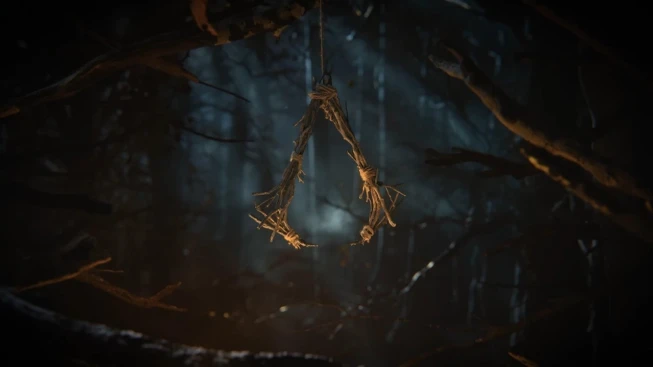
Of particular interest is the Order of the Lamb, a group that appears to be actively hunting our protagonist.
Their exact identity remains unclear, but their presence raises the possibility of another connection to the larger Assassin’s Creed mythology. Given the franchise’s history, some speculate the organmay be connected to the Templars, though this remains unconfirmedablished.
The supporting cast is also reportedly becoming more defined. Bruno is described as a larger-than-life patriarchal leader with a crude sense of humor, while Anton is intelligent and ambitious and presents himself as respectable despite reportedly operating differently behind the scenes.
Wolf Gang is another character who could potentially serve as a mentor. The game is also reportedly introducing several important locations, including Augsburg, which connects to the protagonist’s journey while she is in danger. Forsberg has also been linked to the witch trials and has appeared in reports about potential future content, suggesting the game’s historical locations will play an important role in shaping the narrative.
There is also a potentially significant connection to Assassin’s Creed history. Reports suggest the protagonist could be a direct descendant of the Auditore bloodline, giving her a surprising connection to one of the franchise’s most recognizable families. If that connection proves accurate, it could provide the story a stronger link to the series’ established lore while introducing a new chapter for the family.
That becomes even more compelling when combined with reports that Ezio was considered during development as a possible mentor figure who could help introduce the protagonist to the Assassin Brotherhood. His involvement could also create a meaningful connection to the series’ past while giving the new protagonist a familiar figure to learn from.
It remains unclear whether that idea is still part of the current version of the game. Assassin's Creed: Codename Hexe has reportedly undergone significant changes during development, so earlier plans may no longer reflect Ubisoft’s current direction. Still, the possibility of an Auditore connection gives the game another potential link to the franchise’s history without necessarily making it a direct continuation of Ezio’s story.
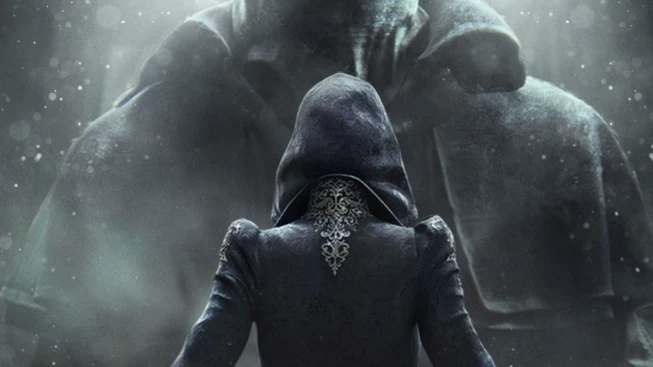
Combat is reportedly another area where Assassin's Creed: Codename Hexe is attempting to distinguish itself.
Ubisoft has apparently used a professional contortionist for motion capture, aiming to make the protagonist’s movement and fighting style more fluid and acrobatic. Some of these movements are reportedly designed to look strange or even disturbing, which would fit naturally with the game’s witchcraft themes.
That movement style could also become part of the game’s stealth mechanics. Reports suggest Ubisoft has experimented with supernatural abilities for stealth, and fear is also expected to play an important role. The idea builds on Ubisoft’s previous experimentation with fear mechanics in Assassin’s Creed Syndicate’s Jack the Ripper expansion.
Assassin's Creed: Codename Hexe reportedly takes that concept further by placing the protagonist in a world where people already fear witchcraft. If enemies believe they are witnessing something supernatural, their reactions could become part of stealth and combat rather than simply having guards behave like standard Assassin’s Creed enemies.
The combat itself is reportedly moving away from the RPG-style system used in several recent Assassin’s Creed games. Instead of relying heavily on levels, statistics, and numerical progression, Assassin's Creed: Codename Hexe is described as having more physical and fluid combat.
The protagonist’s unusual movement is expected to be a major part of how she approaches encounters, with the work of professional contortionists apparently contributing directly to the way she moves and fights. This could make her animations feel more distinctive while giving her combat style a physicality that separates her from previous protagonists.
This approach also ties into the game's reported structure.
Rather than creating another enormous world designed to support dozens of hours of RPG progression, Ubisoft is reportedly building a more focused experience with a comparatively linear story. Players should still have explorable areas and open-world elements, but the narrative is expected to have more control over where the player goes and how the story develops.

A modern-day component is also reportedly part of the game. A character currently known as Anna is described as a highly driven career woman working in a competitive professional environment. Her connection to the historical characters is not yet clear, but her presence has naturally led to speculation about the modern-day side of the Assassin’s Creed story.
Anna could potentially be connected to Abstergo, the Animus, or another part of the modern-day storyline, although the available information does not establish her exact role. Ubisoft has kept the modern-day portions of its recent Assassin’s Creed games relatively varied, so it remains difficult to determine how significant this character will become.
Development has reportedly faced its challenges.
Ubisoft reportedly moved around 50 developers off the project during its restructuring, and the game has also seen changes in creative leadership. Despite those changes, reports have continued to describe internal excitement around Assassin's Creed: Codename Hexe, with Ubisoft Montreal apparently viewing the project as one of its more compelling games in development.
Assassin's Creed: Codename Hexe is currently expected to arrive in the second half of 2027 at the earliest, potentially toward the end of the year. If the reported details are accurate, Ubisoft is taking the series in a noticeably different direction by combining a darker historical setting, witchcraft, fear-based stealth, supernatural abilities, acrobatic movement, and a more focused narrative structure.
Rather than recreating the massive RPG formula that has defined several recent entries, Assassin's Creed: Codename Hexe appears to be positioning itself as a more concentrated Assassin’s Creed experience. Its story, unusual protagonist, historical setting, and potential connections to the franchise’s past could give Ubisoft a chance to explore a side of Assassin’s Creed that the series has rarely touched on before.
Editor, NoobFeed
Related News
No Data.