
Ubisoft Delaying Assassin’s Creed and Far Cry Games as they Rebuilding the Franchises
Assassin’s Creed Codename: Hexe and Far Cry 7 are reportedly undergoing major changes as Ubisoft moves away from its yearly release strategy, restructures development, and experiments with new gameplay systems.
News by Tahmid Mahi on Sep 18, 2026
Ubisoft was once known for releasing major games at a remarkably consistent pace. Assassin’s Creed frequently received a new entry every year, while Far Cry returned every few years alongside franchises such as Ghost Recon and Watch Dogs. The company’s release schedule was so crowded that players sometimes asked Ubisoft to slow down.
Assassin’s Creed Shadows has already been released, but fans haven’t really seen anything from Assassin’s Creed Codename: Hexe since it was announced in 2022. Far Cry 6 came out in 2021, but the next mainline entry is still yet to arrive. Ubisoft has confirmed new projects in both franchises, but the long wait is due to more than production delays.

One of the clearest examples is Assassin’s Creed Codename: Hexe.
In 2022, Ubisoft showed the project, then called Codename Hexe, in a short teaser that featured a dark forest, strange symbols, and an Assassin’s Creed logo hanging from a tree. The teaser revealed very little about the game, although its unsettling atmosphere immediately suggested a different direction for the franchise.
Ubisoft previously explained that not every Assassin’s Creed game needed to follow the same massive open-world RPG structure. After Assassin’s Creed Origins introduced a stronger role-playing focus, Odyssey and Valhalla expanded the formula with larger maps, extensive side content, and campaigns that could take well over 100 hours to complete.
Hexe is expected to represent a different approach. Ubisoft Montreal is developing the game, which reportedly has a darker atmosphere and a stronger focus on storytelling. Instead of another enormous open world, the project has reportedly been planned around a more controlled, linear structure, combined with smaller open areas.
According to reports, the game is set in 16th-century Central Europe, when witch hunts were widespread. The protagonist was reportedly referred to as Elsa during early development, although Ubisoft has not officially confirmed all of these details. The historical setting could allow the game to explore fear, superstition, and persecution while maintaining the franchise’s focus on stealth and conflict.
Some earlier versions of Hexe reportedly included stronger supernatural elements. One of the rumored mechanics was where the protagonist controls a cat to distract guards, letting players manipulate the environment in surprising ways. However, later reports indicate the team dropped this idea as the project headed for a more grounded approach to witchcraft.
Instead of traditional magic, it was said that the protagonist could create chemical mixtures that produced smoke or other effects.
While the player would be employing practical means, those who lived in the period might interpret these actions as supernatural events. This approach would let Ubisoft maintain the unsettling atmosphere associated with witchcraft without straying too far from the historical foundations of Assassin’s Creed.
Leadership changes have also reportedly affected development. Creative director Clint Hocking left Ubisoft in 2026, while game director Benoit Richer reportedly departed afterward. Reports also claimed that the project team reassigned dozens of employees to other teams.
The project has no officially confirmed release date. Insider reports point to a 2027 launch, with one internal target reportedly in June of that year. However, Ubisoft has not publicly confirmed that date. Leadership changes, staff movements, and reported adjustments to gameplay systems still leave the release window unclear.
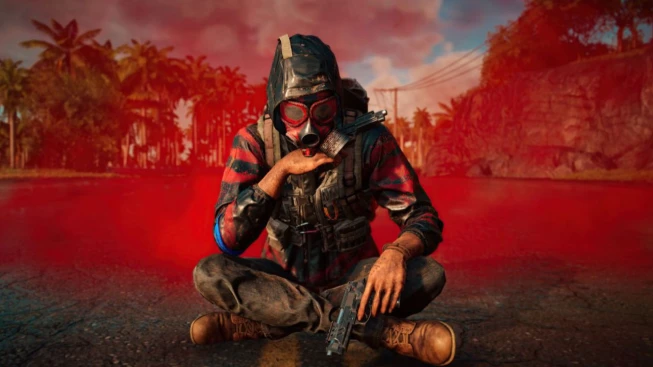
The Far Cry development situation is similarly complex. Far Cry 6 came out in 2021, so players had to wait five years between the last mainline game and the next big one. With no new mainline Far Cry on the horizon, the franchise hasn’t been forgotten, with Ubisoft confirming in 2026 that two different Far Cry projects were in development.
The next major Far Cry game is reportedly known internally as Project Blackbird. Ubisoft is said to be moving away from the established formula instead of simply creating another game with a new location and familiar gameplay systems. One of the biggest reported changes involves the game engine.
The Far Cry franchise has traditionally used Ubisoft’s Dunia Engine. Blackbird, however, is reportedly being developed using the Snowdrop Engine. Switching engines involves more than visual improvements. Development tools, workflows, technical systems, and existing gameplay features may all require significant changes.
The reported story structure also differs from previous Far Cry games.
One version of the project involved a group called the Sons of Truth kidnapping members of a wealthy family. Players would reportedly be able to decide the order in which they attempted to rescue the family members. Each rescue's outcome would influence the wider story, with some characters potentially dying while others survive.
The team was also reportedly considering an interrogation system. Characters that the player captures may be able to give helpful information, lie to the player, refuse to cooperate, or try to escape. These systems would introduce uncertainty to missions and make the world less predictable than the old model of taking out enemy outposts and completing objectives.
One of the most unusual reported features was a time limit. An earlier version of the game allegedly gave players 72 in-game hours to rescue the family, which reportedly translated to approximately 24 hours in real time. The timer would stop when players entered a safehouse but resume once they returned to the outside world.
This system could create pressure by forcing players to decide how they spend their time. Exploring the map, collecting the resources, and doing optional activities at the possible expense of postponing a rescue would be part of the game. But the feature could frustrate players if the time limit prevented them from fully enjoying the open world.

These details reportedly come from earlier versions of the project, meaning they might not appear in the final game.
Blackbird has allegedly experienced multiple delays, and Ubisoft has reportedly changed its plans during development. Nevertheless, the rumored systems suggest the company wants to make Far Cry more reactive and systemic rather than repeating the exact structure of previous entries.
Another project, reportedly known as Maverick, was being developed as an extraction-based multiplayer Far Cry experience. The game reportedly featured a harsh, Alaska-inspired environment, wildlife, changing weather conditions, and encounters with other players. But the project reportedly had trouble finding its direction and went through several changes during development.
Technical staff was allegedly moved from Maverick to Blackbird, and later reports indicated that Maverick had been canceled. Some of its ideas and technology may still be used in another open-world first-person shooter known as Project Kodiak. This suggests that Ubisoft might be transferring useful work between projects instead of abandoning every element of canceled games.
These developments tie into Ubisoft’s wider restructuring. In recent years, the company has experienced delayed releases, canceled projects, and cost reductions. Ubisoft reportedly cut seven projects and delayed six others during a major restructure in 2026. The company also placed several of its most important franchises under a new structure called Vantage Studios.
Assassin’s Creed, Far Cry, and Rainbow Six are now reportedly grouped under Vantage Studios, which also received an investment of more than €1 billion from Tencent. The structure reflects how important these franchises are to Ubisoft’s future plans. Rather than treating every game as another entry in a continuous production line, the company appears to be focusing on developing different experiences within its major brands.
That could allow Assassin’s Creed to come back more frequently without every new one being a giant RPG. A big game like Shadows could coexist with a smaller, more story-driven project like Hexe. Remakes, multiplayer experiences, and other spin-offs can also help bridge the time between major releases.
If Blackbird can get their new systems up and running.
Far Cry may also be able to do this. The branching narrative, time-sensitive missions, different movement mechanics, and new engine could change the design of future games in the franchise. Let’s see how well Ubisoft executes these ideas.
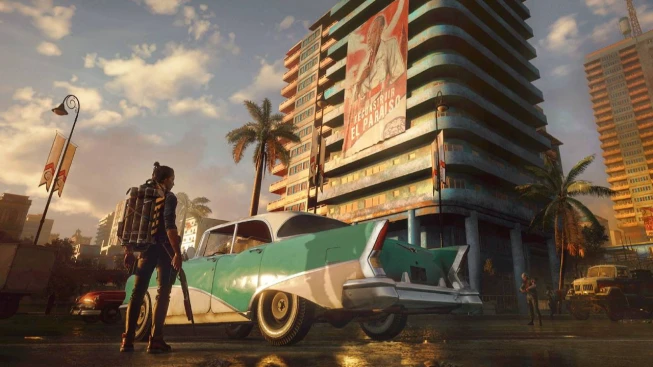
The long development times for Hexe and the upcoming Far Cry game, however, suggest Ubisoft is looking to change more than just its release schedule. The company is said to be rebuilding its franchises around new structures, technologies, and gameplay concepts. Whether those changes lead to better games depends on the final product, not the ideas discussed in development.
So far, Ubisoft hasn’t released enough official gameplay footage to show how these projects are progressing. Hexe still lacks a confirmed release date, while several reported Far Cry features come from earlier versions of the game. After years of waiting, players will likely need to see substantial gameplay before understanding how much these projects have changed.
Ubisoft’s greatest challenge is ensuring longer development cycles lead to meaningful improvements. Spending more years on a game does not automatically guarantee a better experience. Assassin’s Creed Codename: Hexe and the next Far Cry title will therefore serve as important examples of whether the company’s restructuring and new development strategy can produce the results it expects.
Editor, NoobFeed
Related News
No Data.