
AMD Broadens RDNA Support With Shader Delivery
Expanded RDNA compatibility brings shader delivery technology to more AMD graphics architectures and integrated processors.
News by Shinji Okazaki on Jun 17, 2026
AMD is aggressively adding new features and product options, while competition in gaming, laptop, and desktop platforms is growing. New features have been added recently, including Advanced Shader Delivery support, entry-level processors supporting DDR4 memory, and a direct comparison between Ryzen AI systems and Apple's MacBook Neo.
The developments are part of the goal of increasing gaming performance, offering affordable hardware, and gaining market share in the notebook market. It was released with 30 games supported at first, and will be limited to AMD GPUs for the time being, although Nvidia and Intel are also developing support. It was already available on devices such as the ROG Ally and ROG Ally X, both of which are equipped with AMD hardware.
AMD's Advanced Shader Delivery is Now Overpowered
Advanced Shader Delivery solves shader problems in two ways. First of all, it reduces the time you wait when downloading a game for the first time after buying it. Secondly, it reduces stuttering during shader compilation while in-game. This system works by downloading precompiled shaders tailored to your hardware from a database.
At first, it was only for RDNA 3, RDNA 3.5, and RDNA 4 graphics cards. AMD and Microsoft have now added support for RDNA 1 and RDNA 2 GPUs too. However, the feature has been added to every RDNA generation, including APUs.
Help is no longer limited to Xbox Insiders. It is available in the Xbox PC app on Windows 11 24H2 or later, which requires the following GPU and driver support. It's currently only available in the Xbox App, but we hope it'll be available on other platforms like Steam later.
AMD also made some other game enhancements. According to AMD, load times can be reduced by up to 95%. Even greater loading-time improvements were reportedly achieved in Tom's Hardware testing. We know that stutter is a prevalent problem in PC gaming, and reducing it could enhance the overall gaming experience.
AMD has Just Unveiled a New Lineup of Processors
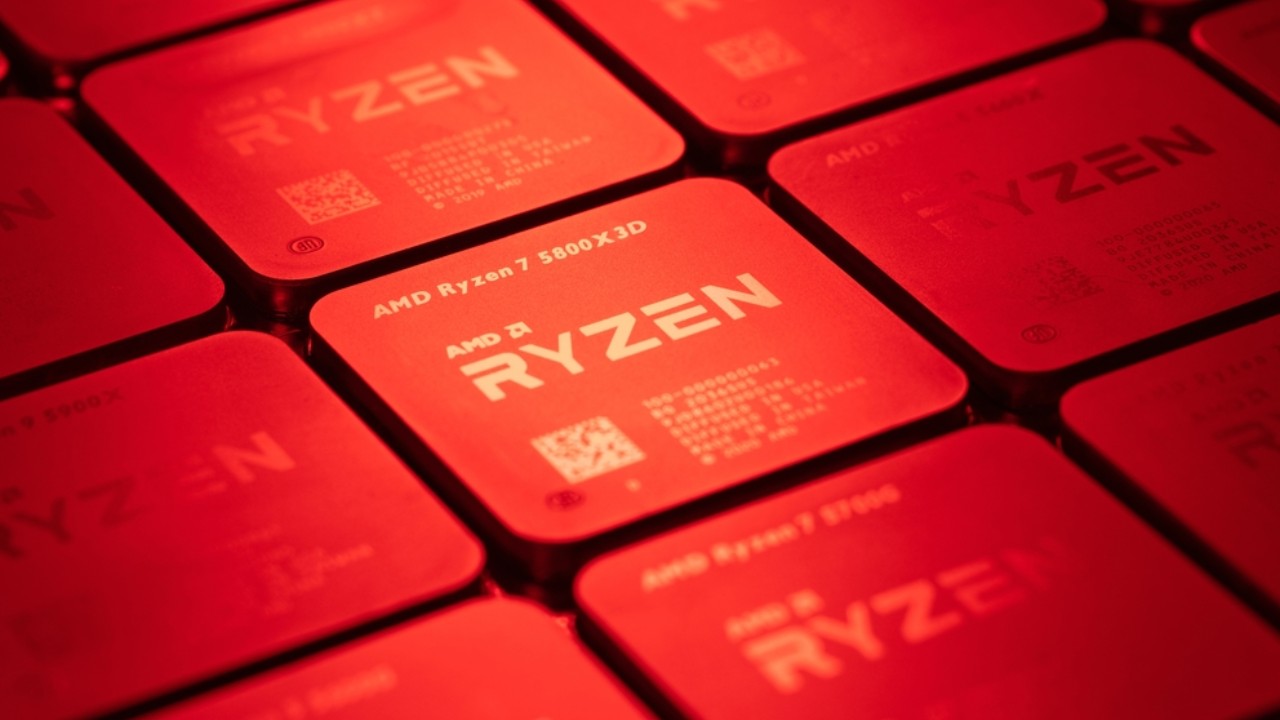
AMD has just announced a new generation of processors that use DDR4 memory. Memory prices continue to influence hardware upgrades, and AMD is attempting to offer alternatives. The company had previously resold the Ryzen 7 5800X3D, a chip that was not very popular since it lacked memory compatibility.
Older motherboard platforms are also being targeted by manufacturers, with more products offering DDR4 support. Conversely, AMD quietly unveiled three new entry-level processors based on Zen Plus and Zen 2 cores. These include the Ryzen 3 3100U, Ryzen 5 3501U, and Ryzen 7 4700LE.
Ryzen 3 3100U is designed for notebooks, as is the Ryzen 5 3501U. The 3100U has 2 cores and 2 threads, whereas the 3501U has 4 cores and 8 threads. Ryzen 7 4700LE, on the other hand, is the more powerful option with eight processor cores, 16 threads, and a boost clock of 4.2GHz.
The 4700LE is an OEM-only processor, so it is not available for build-your-own. All three processors, however, support DDR4 memory. Here, we can see AMD offering other options that use lower-cost memory standards. An eight-core, 16-thread processor running at speeds above 4GHz is still viable in some cases.
AMD is not responsible for memory supply, but it can expand hardware selection by adopting lower-cost memory technologies. Apple's MacBook Neo is the target of this AMD. In recent times, AMD has unveiled a comparison page to directly target Apple's MacBook Neo. Apple's silicon strategy has, in part, brought interest to the budget notebook.
MacBooks have been getting the M-series chips, while MacBook Neo is powered by the A18 Pro chip. The system works well because Apple controls the integration of hardware and software.
According to AMD's comparison page, users don't have to sacrifice anything, and the company encourages people to choose Ryzen AI processors. Gaming support is a major highlight, the company notes. Five of the top 20 PC games will not run natively on the MacBook Neo, according to AMD. AMD systems, on the other hand, offer access to game stores via Steam, the Epic Games Store, and others.
It's more of a Windows vs. MacOS comparison.
AMD is benchmarking the MacBook Neo against Ryzen 220-powered HP OmniBook X Flip. Compared to the Ryzen 5 220, Windows systems are much more likely to support a wide range of games. The Ryzen 5 220 is not optimized for heavy gaming, though it supports many more games than macOS devices do. That hardware might not be able to run some games at playable frame rates.
Meanwhile, the MacBook Neo isn't exactly a gaming system either. Windows ups the ante regarding compatibility, and AMD takes it up another notch. The company highlights touchscreen functionality, increased storage, enhanced connectivity, content creation options, and multitasking capabilities.
We are taking a more proactive stance towards key competitors, including AMD. Look at the notebook market in action, too, by observing the impact of products like the MacBook Neo. Business rivalry has driven the addition of more features, wider hardware support, and more user options.
Editor, NoobFeed
Related News
No Data.