
DLSS 4.5 Redefines Graphics While PS6 Tech Hints a Smarter Console Future
NVIDIA’s software leap reshapes PC gaming expectations as Sony and AMD quietly set the stage for what comes next.
News by Nusrat Choity on Jan 09, 2026
The graphics world is going through a quiet change that isn't just caused by more power. Some people say that Nvidia's DLSS 4.5 is a turning point that is changing how we judge the quality of images, how well hardware works, and how efficiently it uses power.
What makes this moment stand out is how quickly the subject has changed. Now, people aren't just talking about teraflops and brute-force drawing. They're also talking about reconstruction quality, motion stability, and smart use of frames, which are starting to change what "next-gen" really means.
.jpg)
People say that DLSS 4.5 is less of a big change and more of a milestone for improvement. People thought earlier versions of DLSS were great, and users could often turn on the feature and forget about it. But with version 4.5, the technology is said to have moved into an area that makes competitors nervous.
Information from reliable sources says that DLSS 4.5 can sometimes make images look better and more stable than native quality.
There is less shimmer, fine details stay put better when moving, and the general image quality is better, especially in scenes that demand it. Native rendering was thought to be the best for years, and upscaling was seen as a required compromise. That order is now being called into question.
The most interesting thing about this is that these benefits aren't just for games. Sources say that Nvidia's advantage covers daily tasks like editing videos, streaming, and doing more than one thing at once. It is said that GPUs with less VRAM or mobile-class hardware are working better than bigger, power-hungry alternatives in tasks that aren't games.
This has led to more talk about economy, thermals, and longevity, all of which are becoming more important as hardware needs increase and energy use becomes harder to ignore. DLSS isn't just a feature for games anymore; it's part of a bigger platform edge.
As power draw and economy become more important, the gap between companies has become clearer. Sources say that performance alone isn't enough to support big, energy-hungry graphics cards anymore, especially since software-based solutions are making big improvements.
People often use DLSS 4.5 as an example of mature software doing the heavy work, making the game run smoother and look better without relying only on powerful hardware. This change has also changed how standards are understood; now, how useful they are in real life is more important than seeing peak numbers on charts.
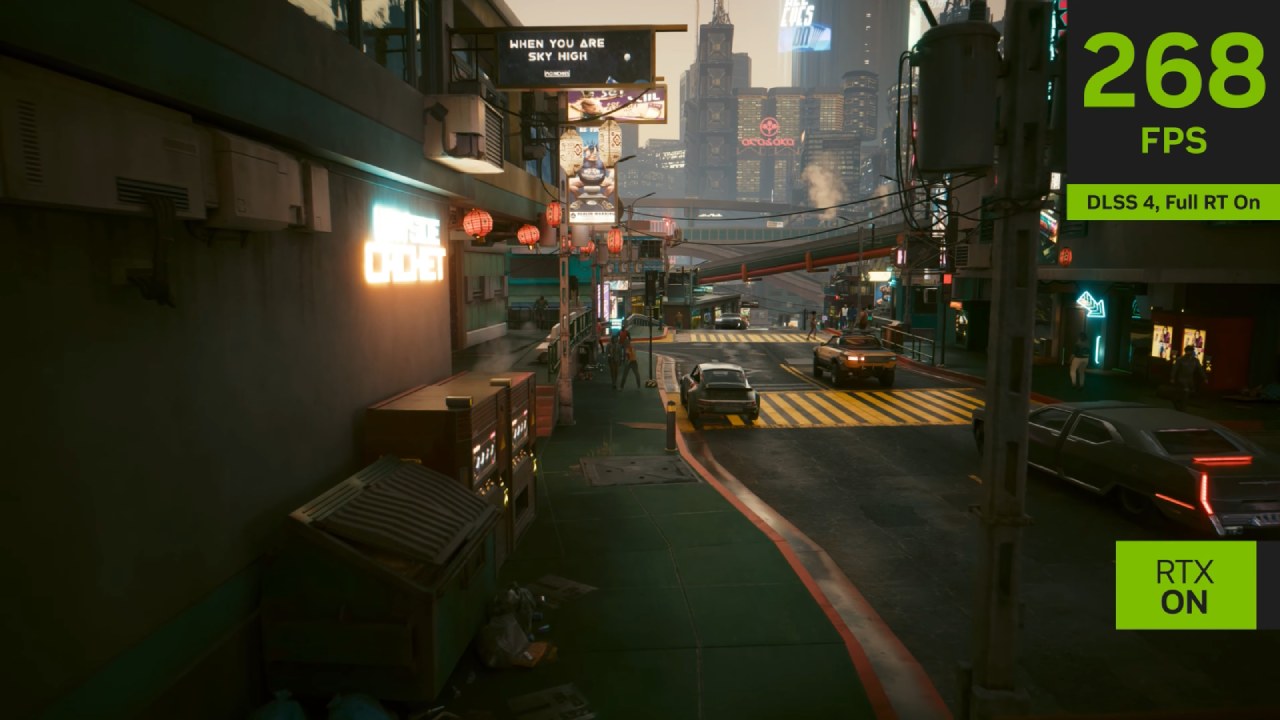
Moving forward, the talk about dynamic multi-frame creation has made things even more interesting. Sources say that new technologies like FG6X are going to take frame generation beyond just being a novelty. This method is said to only generate frames when they are needed, smoothing out drops in performance and then taking a step back.
The goal is not to boost frame counts for business reasons, but to keep motion and responsiveness stable.
If put into action as described, this could be the time when frame generation stops being a controversial topic and starts being used in real life. DLSS 4.5 is strongly rooted in the PC world, but its effects can be felt in many other areas as well. More and more people are interested in consoles, especially the next version of PlayStation hardware.
Sources say that Sony and AMD's shared work, which is sometimes called "Project Amethyst," is affecting what people want from the PlayStation 6. Instead of trying to get the most raw power, the focus seems to be on smarter reconstruction methods, stable motion, and consistent frame rates. This is similar to many of the ideas that made DLSS 4.5 so important.
Cost is a very important part of this talk. A lot of players can't afford high-end PCs that can fully utilize technologies like DLSS 4.5 because they need strong GPUs, a lot of VRAM, and well-balanced parts that make the total cost very high. When it comes to how they work, consoles are different.
Sources say that Sony isn't trying to directly copy Nvidia's set of features. Instead, they say that they're trying to put similar ideas into a package that is easier to use and fits with what consoles expect and how long support lasts.
A lot of information about Project Amethyst is still secret, but what we do know goes in a clear direction. Reconstruction quality, motion stability, and smart frame management are said to be the most important things. With their current technologies, Sony has already shown that picture integrity is important, and rumors say that the PlayStation 6 will build on that.

A lot of people assume dynamic frame assistance, but not as a feature that is always on. It could instead be a quiet system that only kicks in when performance drops to keep movements smooth without adding heavy artifacts or input latency. This way of doing things could change how performance goals for consoles are seen in a big way.
People have often written off goals like 4K at 120 frames per second as just marketing jargon. But with good upscaling and smart frame management, these goals start to seem more realistic.
Sources say that this is the bigger lesson that can be learned from DLSS 4.5's success: raw power is no longer the only way to move forward. A lot of the work is now being done by software-driven methods, temporal reconstruction, and smart use of frames. The effects are felt throughout the whole business. Using brute-force rendering alone is becoming less and less useful as games get harder and more demanding graphically.
DLSS 4.5 shows how far restoration technology has come, and Project Amethyst gives us a taste of how these ideas could be improved for consoles. The difference in graphics styles between PCs and consoles keeps getting smaller. This isn't because platforms are getting faster than PCs, but because both are adopting smarter ways to make great experiences.
DLSS 4.5 isn't just Nvidia getting ahead in the GPU race at the end of the day. In this case, the balance between speed, quality, and efficiency has changed. But Sony and AMD's quiet work to get ready for the next generation of consoles suggests that these ideas will still guide them, even if they are put into practice in a different way.
Now that players are thinking about the future, the question is not whether smart upscaling and dynamic frame management will be important in current games, but how these technologies can be used in everyday life. Is this focus on software going to be the real game-changer when the PlayStation 6 finally comes out?
Contributor, NoobFeed
Related News
No Data.