
Splatoon Raiders is Starting to Look Like Nintendo’s Most Surprising Game of 2026
New details about pricing, underground exploration, Salmonid lore, and co-op gameplay are making the Splatoon spin-off look far bigger than expected.
News by Tahmid Mahi on May 03, 2026
Nintendo’s upcoming spin-off Splatoon Raiders is starting to generate a lot more attention as new details continue to surface about the game’s structure, pricing, and overall scale. At first glance, you might have assumed this would be a smaller side project built around the Splatoon universe. This is especially true because of its lower price compared to other Switch 2 releases.
But the more information that comes out, the more it looks like Nintendo may be building something much larger than expected. Between the new screenshots, underground exploration, and hints of co-op gameplay, there are many exciting features to look forward to. The game is beginning to stand out as one of the company’s more remarkable releases planned for 2026.
One of the biggest surprises surrounding Splatoon Raiders is the pricing strategy Nintendo is using for the game.
While many people expected another $70 first-party Switch 2 title, the physical version is launching at $60, while the digital version drops even lower to $49.99 USD. That already makes the game cheaper than most major Nintendo releases, but retailers are pushing the price down even further. Stores like Walmart and Amazon are already listing the physical edition for around $49.94, essentially matching the digital version before launch.
That pricing shift is becoming part of a larger trend with Nintendo’s new variable pricing model for Switch 2 games. You can already see it affecting other titles, including Yoshi and the Mysterious Book, which is reportedly selling for under its standard retail price as well. But some upcoming Nintendo games still feel difficult to judge based on the footage shown so far.
Splatoon Raiders is quickly becoming one of the more convincing releases in the lineup. The lower price point almost makes the project feel more appealing. As a result, it creates the impression that Nintendo is trying something different instead of simply pushing another premium release.
At the same time, the game’s file size is raising some eyebrows because it doesn’t exactly line up with the idea of the title being a smaller project. Splatoon Raiders reportedly takes up around 20 GB of storage, which is relatively large for a Nintendo title. For comparison, Donkey Kong Bonanza is reportedly closer to 8.5 GB, while Mario Kart World sits around 23 GB. File size alone obviously doesn’t determine quality or scope, but when you combine that storage requirement with Nintendo’s repeated descriptions of the world being “vast” and “diverse,” it becomes harder to dismiss the title as a lightweight spin-off.
Nintendo recently shared additional details through the official Splatoon North America social media accounts.
Where the company described the Split Islands as surprisingly large and varied. The developers specifically highlighted multiple biomes and an “expansive underground,” which immediately caught the attention of longtime Splatoon fans. Those descriptions feel unusually ambitious for a game that sells below the normal $70 price tag.
The new screenshots support that idea as well because the environments shown so far are far more varied than many expected. Some areas feature massive underground caverns, while others introduce lava-filled locations that look completely different from previous Splatoon settings. There are also sections that resemble obstacle courses similar to earlier campaign levels in the series, complete with floating rings, checkpoints, and combat training areas.
One of the most captivating parts of the footage is the companion bot that travels alongside the player during much of the game. In several scenes, you can see the robot helping with traversal and interacting with environmental objects like crystal formations hiding treasure underneath them. Other footage, however, shows sections where the bot appears to be missing entirely.
The underground areas themselves are becoming a giant focus of discussion because they seem tied directly to the game’s larger mystery. Nintendo has repeatedly emphasized that the underground is “expansive,” and several screenshots hint at dungeon-like structures hidden beneath the islands. There also appears to be a separate dungeon tab on the in-game map, suggesting multiple layers of exploration.
Instead of simply exploring islands on the surface, you may also spend a large portion of the game navigating deeper underground systems filled with combat encounters and hidden rewards. It offers satisfying combat and creative combo potential, but it lacks defensive clarity, onboarding, and overall content depth at launch.
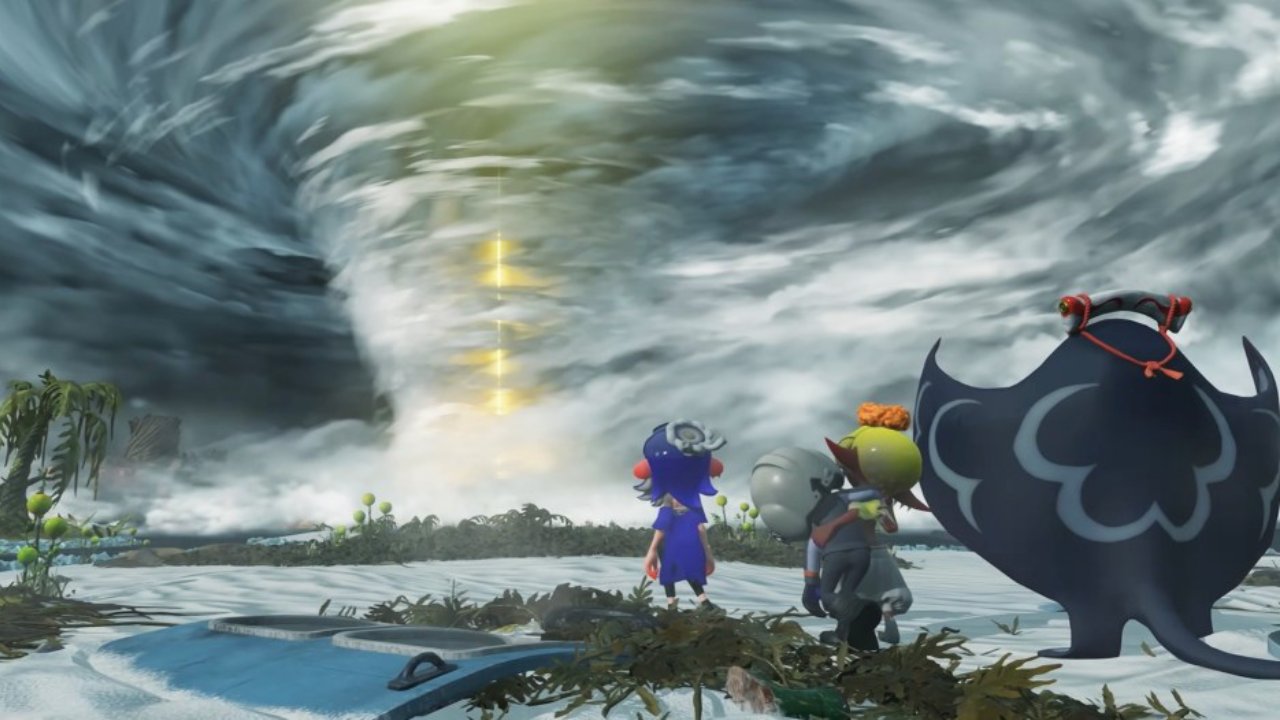
In Splatoon Raiders, they appear far more wild and almost primitive, with messy designs and garbage-covered outfits that make them look like they belong to the environment itself. The sludge surrounding them has a sewage-like appearance, and some scenes even show them erupting from the ground as if they are tied directly to whatever is happening beneath the islands.
Those details are fueling theories that Splatoon Raiders may have evolved from unused Salmon Run ideas originally planned for Splatoon 3.
Several years ago, datamines reportedly revealed concepts involving underground Salmon Run content that never appeared in the final game. Now with Splatoon Raiders so focused on underground exploration and Salmonids, many fans believe Nintendo may have taken those abandoned ideas and turned them into a standalone project. Add in the shared imagery of Tornados that Salmon Run and the new islands in Raiders share, and the connection becomes even harder to ignore.
The story setup also raises some interesting questions about how close this game is to the older Splatoon lore. The island location was discovered via a basement, which immediately attracted the attention of fans who were familiar with Grizzco and Salmon Run, as Big Man mentioned in the first trailer. The underground focus, sewage themes, and the changed Salmonids seem to be pointing to some larger mystery underneath the surface of the game.
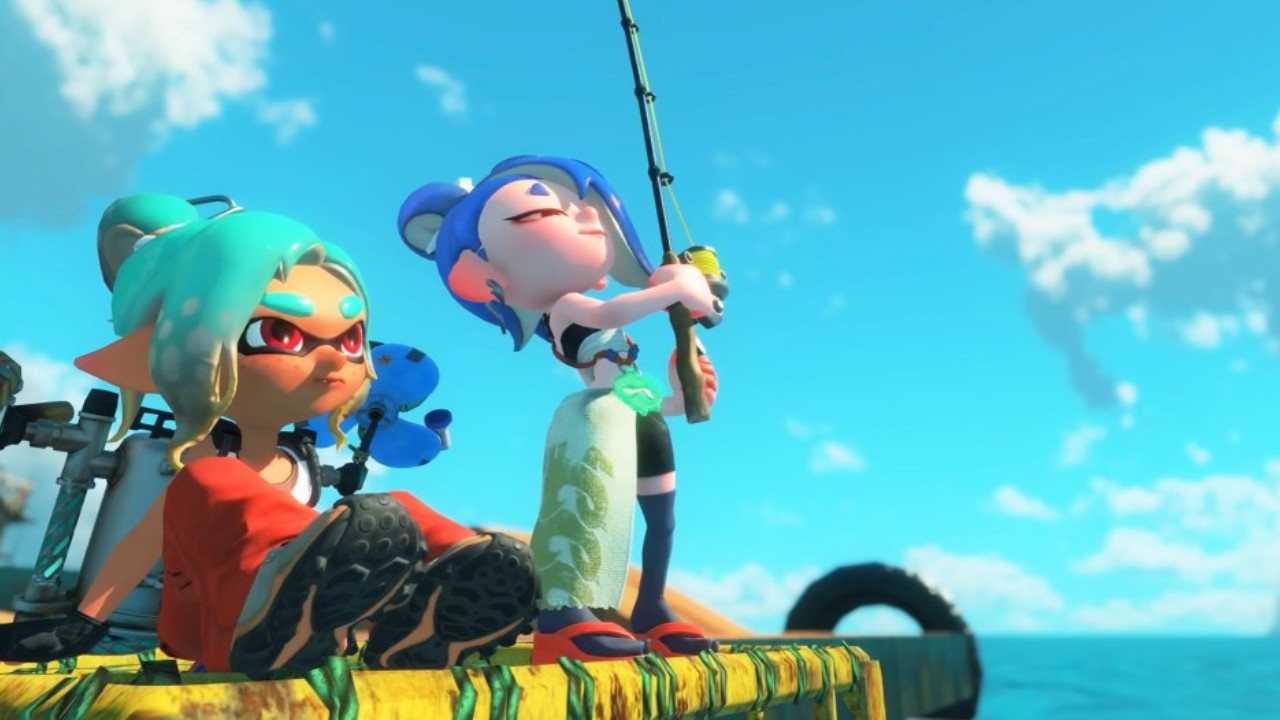
The game doesn’t appear to be fully open-world, despite the size of the environments. Water still poses a big obstacle since Inklings can’t survive in water, so exploration probably involves moving between islands and higher-up platforms. Some footage briefly shows Frye moving across the water with her eels, although it remains unclear whether the action is tied to traversal or simply one of her combat abilities.
Combat and progression systems are also starting to look more layered than expected. Footage shows leveling mechanics, gadget upgrades, and special abilities tied directly to the companion bot. One ability appears to allow a double jump while other upgrades seem designed to improve mobility and exploration. The structure feels somewhat inspired by Side Order, although the overall gameplay does not appear to lean into roguelike mechanics in the same way.
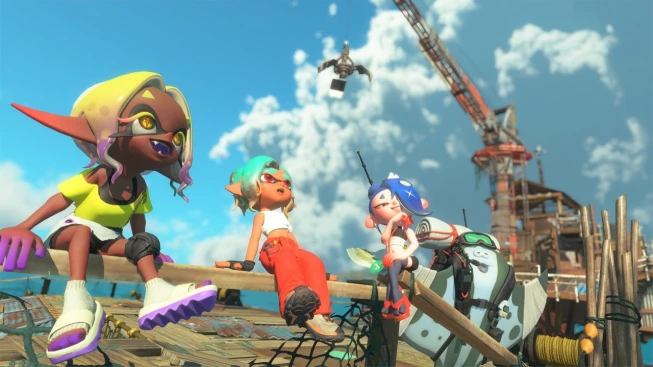
Another major part of the game is its cooperative play support. Nintendo has confirmed that players can form parties of up to four people, leading many fans to compare the structure to games like Monster Hunter. Instead of a seamless open world, Splatoon Raiders may revolve around selecting missions and exploration zones from a central hub area known as the Hideout Ship.
The map itself seems to use expanding cloud cover similar to exploration systems seen in other adventure games.
As new areas open up, players will likely gain access to additional islands, treasure locations, and underground sections. That setup would fit naturally with the game’s cooperative structure since it encourages repeated exploration across multiple regions instead of one continuous campaign path. It also explains why Nintendo keeps emphasizing the size and variety of the world despite the lower retail price.
There is still some uncertainty surrounding how multiplayer and dungeon content will work together. Certain footage suggests that the companion bot may not be available during specific dungeon sequences, which has led to speculation that some sections could be single-player only. Surface exploration, meanwhile, appears much more focused on cooperative gameplay and larger-scale encounters with enemy hordes. Nintendo has not fully explained how these systems connect yet, but the footage shown so far makes the structure look more ambitious than many originally expected.
When you put everything together, Splatoon Raiders starts to look less like a small spin-off and more like a full experiment built around the strongest parts of recent Splatoon games. It pulls ideas from Side Order, traditional story campaigns, Salmon Run combat, cooperative multiplayer, exploration mechanics, and progression systems all at once. The result is a game that feels surprisingly different from Nintendo’s usual formula while still clearly belonging to the Splatoon universe.
Editor, NoobFeed
Related News
No Data.