
After the Wane Review
PC
Dance, family secrets, and a voice you can't switch off.
Reviewed by Maisie Scott on Nov 10, 2026
After the Wane comes from Nova-box, a studio in Bordeaux, France, and it landed on November 10, 2026. You can get it on Steam, GOG, and itch.io for PC, Mac, and Linux, with a Nintendo Switch version planned for early 2027. The studio has been around since October 2007, and in those early years it worked on UX design and algorithmic systems.
Around 2013, it switched to original stories, starting with Echoes, which got a remake in 2024 for PC and Switch. Along the Edge came out in 2016, Seers Isle in 2018, and Across the Grooves in 2020, with the last two earning narrative finalist nominations at the Independent Games Festival.
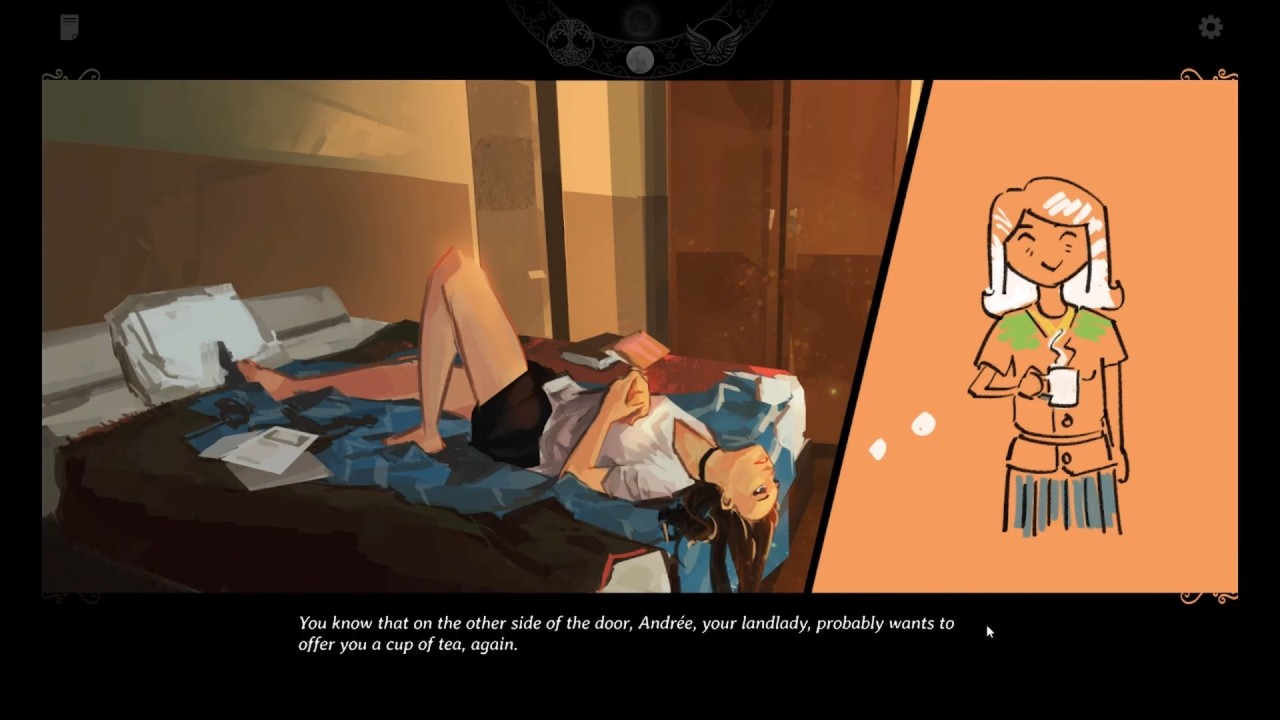
After the Wane is the third game in the thematic series that began with Along the Edge, and it shares that game's universe.
A few familiar characters turn up, including a Londoner. The series follows a young woman digging into where she comes from, and Lena sits alongside Alice and Daphné in that line. Writer and co-founder Geoffroy Vincens describes it as a story about dance as a magical ritual and a question of living in a body, not just something you do on a stage.
He also ties it to anamnesis, the idea of remembering what you truly are. The game also drew attention before release. It won Best Art Direction at the IndieX Awards 2026; it was a finalist for Game a Better World this month, and it was part of the official selection at Stunfest in Brittany in October 2026.
You play as Lena, a young dancer who leaves a small town for the capital to build a ballet career and find her mother, who was also a dancer and left her at birth. All she has is one photograph with a handwritten note on the back, where the name of a company or a venue has been crossed out.
She has spent hours trying to read it and still can't. Someone once promised to explain it all when she was older, but that chance never came. The title opens with narration over her morning routine, the glissades, demi-pliés, and entrechats she has repeated for years. At the same time, her feet drift toward familiar tracks as if following her mother's steps.
Lena stands on the brink, and her diary captures the night before she leaves.
The game's narration calls it a brink, with the unknown ahead and everything so far just rehearsal, and it plays with putting down roots versus spreading wings, echoing the names of the rooted and flight paths. Then comes the diary, dated August 26, 1998, the night before she leaves.
She has spent the last three years with foster parents Renata and Marek Novak, along with Laur and Salem, and those years were much calmer than the three before them, when her grandmother's death left her drifting through chaos.
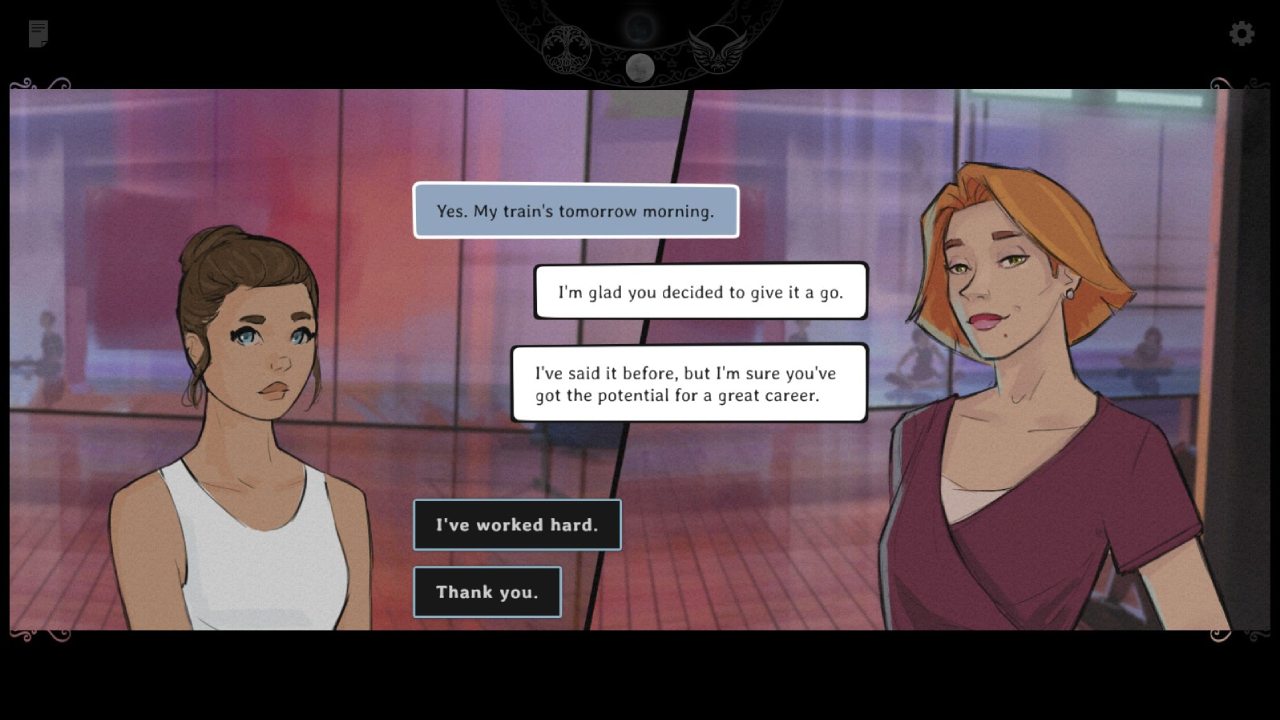
Before she goes, she says goodbye to Aurelia, her dance teacher and one of the few steady people in her life. Aurelia tells her that succeeding means standing up for herself and being more determined, and she calls Lena's technique perfect. Lena says she's ready to throw herself in at the deep end, and that she can picture a professional career at all because of the hard things she's had to get through.
Aurelia hands over the address of her aunt's boarding house, close to the National Opera and the theater quarter, and admits her own contacts have gone stale and that she never had Lena's potential. Lena thanks her, and the narration notes she could have been warmer, which is fair. That night there's a small farewell with the Novaks and a shared dessert, and Renata passes on some last advice.
Fostering is familiar ground for them, and Lena is giving up her place to another orphan the next day.
Later, with the photo in hand, an inner voice points out that it's more than 20 years old, that her mother may have stopped dancing, and that she may not even live in the same city. It adds that finding her could mean looking at modern dance and setting classical ballet aside for a while.
Lena answers that her career comes first and that finding her mother would be a bonus. The train ride takes her from forest to wheat fields to gray concrete blocks, then into a packed station and subway, where a stranger notices she's lost and tells her Line 14 is closed for roadwork.
She finally comes up into late-afternoon light on the biggest island in the river, and the boarding house turns out to be an old townhouse near the water, within walking distance of the theater. Once she's in the city, After the Wane pulls her into a feud inside the dance scene.
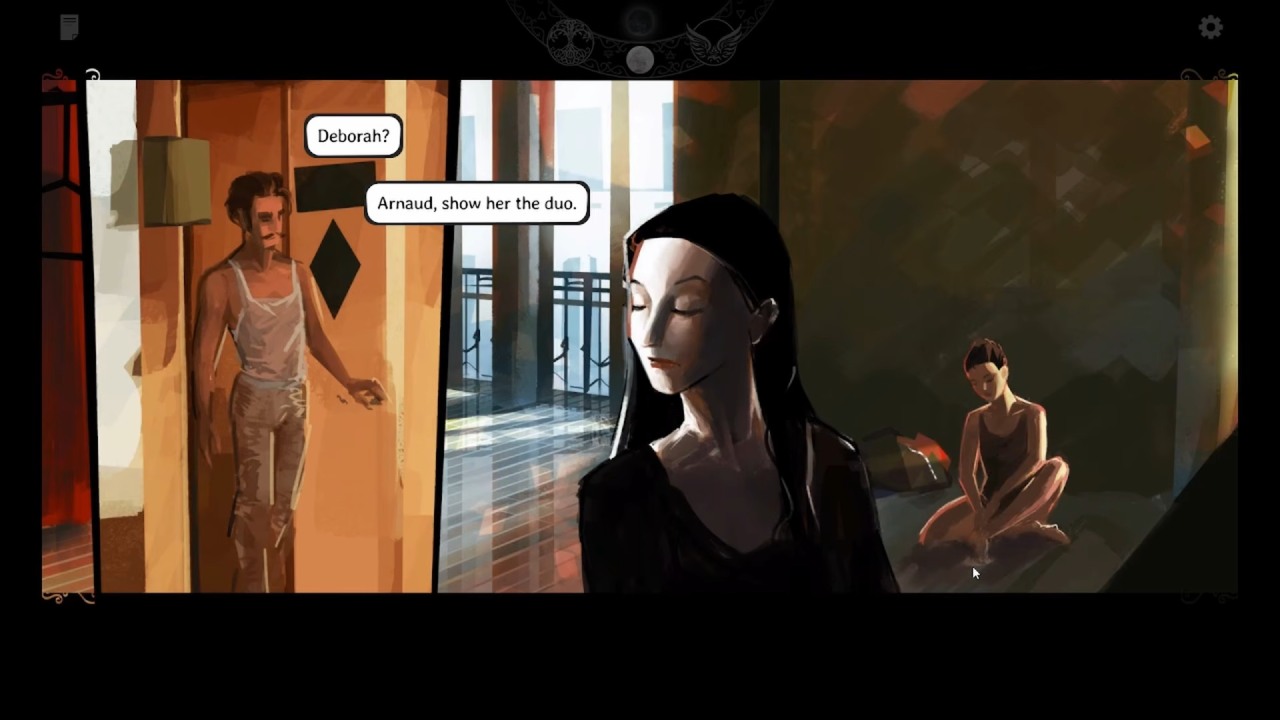
Deborah runs an elitist, demanding company out of a theater with an uneasy feel. Fernand, harder to read, keeps watch over the independent scene and its open community center. From there you get three paths: submit to the strict discipline of the prestigious company, find your people in the collective, or go your own way into the occult.
As Lena digs into the silence around her family, reality starts to crack.
Coincidences turn unsettling, strange things become part of daily life, and the voice in her head, which only she can hear, stops being content to watch. It's cynical; it comments on what she does, and it questions what she believed. You decide whether to work with it or push back, and whether it's a protective ally, a buried secret, or something ancient and dangerous.
In earlier Nova-box games, the supernatural tends to show up late, but here the voice makes it clear from the start that something is coming. It's the part of After the Wane that stays with you. Lena has made peace with it, and the two share an almost symbiotic bond, so it never comes across as a portrait of schizophrenia. The story also avoids simple good-versus-evil outcomes.
It focuses on the mental and physical growth of the person you're steering and what each decision costs. The supporting cast has its own ambitions, desires, and sexual orientations, and the studio's habit of showing natural diversity fits in without feeling forced. There's an unexpected turn later on, and the occult side matters more than the early chapters let on, so don't treat it as background.
After the Wane is a visual novel, so most of your time goes to reading, looking at the illustrations, and picking dialogue options. Nothing is timed, so you can think each choice over as long as you like. Text advances when you click, and there's no auto-advance.
Controls are simple, and progress saves automatically, with no manual saves.
A mouse alone is enough for the whole game. A keyboard, an XBOX controller, a DualShock (USB only), or a DualSense can handle most navigation. Controllers can't close the game. You can switch between English and French, adjust the volume, toggle windowed and full-screen modes, and turn off controller vibration.
Progress saves automatically; you can pause or quit at any time, and each chapter ends on a natural stopping point. A break after each arc, or every two to three chapters, feels about right. There's also a free demo of After the Wane, and your progress carries over to the full game.
There are no manual saves, and that matters more than you'd think. You can't rewind a decision to try the other option. You live with what you picked and start a fresh run to try the other option. That suits a story about consequences, but every replay begins from the very start.
After the Wane has no puzzles or combat, some choice system does that job. Nearly every conversation offers options that shift Lena's personality and sometimes the story's direction. Symbols at the top center of the screen track these choices. Some line up logically with what you picked, and others catch you off guard by triggering events you didn't see coming.
The stakes aren't limited to big plot moments, because ordinary, everyday moments ask you to take a stance too.
The voice adds another layer, since how you treat it changes how you read the plot. With auditions, fragile friendships, and romance in the mix, everything costs something, and you end up deciding whether your craft comes before the people around you or your feelings get to rearrange your priorities. Romance is optional.
There are four routes, among them male and female allosexual partners and an asexual male partner, and you can skip romance and follow the single route instead. Plenty of After the Wane works. The choices feel like they count, and the four personality tendencies visibly shape Lena with every decision.
The story never points to a right answer, and you can keep her kind and hopeful or turn her ruthless and ready to crush the competition, while the occult side keeps tugging at the plot either way. The script runs about 120,000 words with deep branching, so there are lots of routes and sharply different endings, and the achievements give you a reason to go back.
One run takes around five hours, which is short but leaves room for more. On this run, you take the rooted path with a romantic partner, leaving the flight path and the third main branch unseen, so you don't know how differently those play out. Some things work less well.
A few weaknesses show, from unclear choices to flat narration and a blurred sense of time.
You rarely know where a choice is heading, and the second-person narration can read like flat captioning, which takes some of the pull out of a scene. Time is also poorly marked, so days and story progress start to blur together. There's no XP and no grinding in After the Wane. The closest thing is the four personality tendencies, which grow from your decisions instead of repeated tasks, so there's nothing to farm or level.
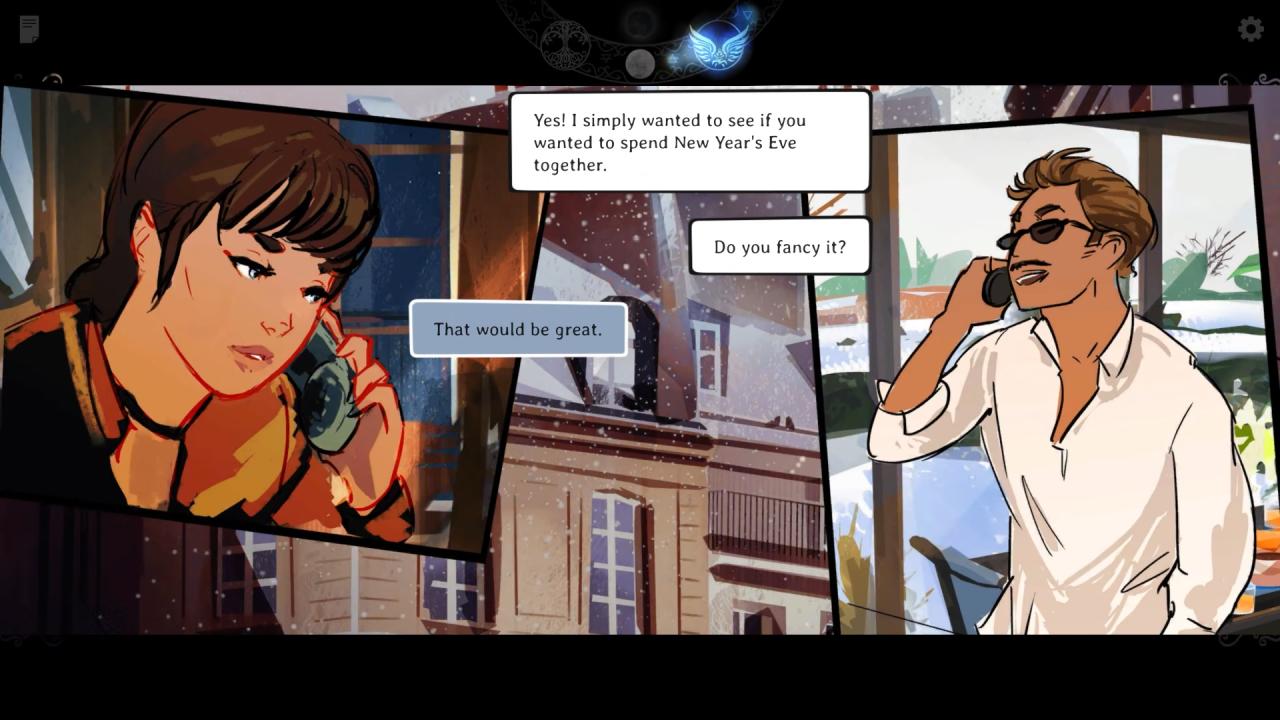
Each choice nudges Lena toward one of the four personality tendencies, affecting how she acts and what comes later. In the third act, a color-coded display shows which facet of her personality you're strengthening. You can ignore it and still progress, though you need to tell the colors apart to read it.
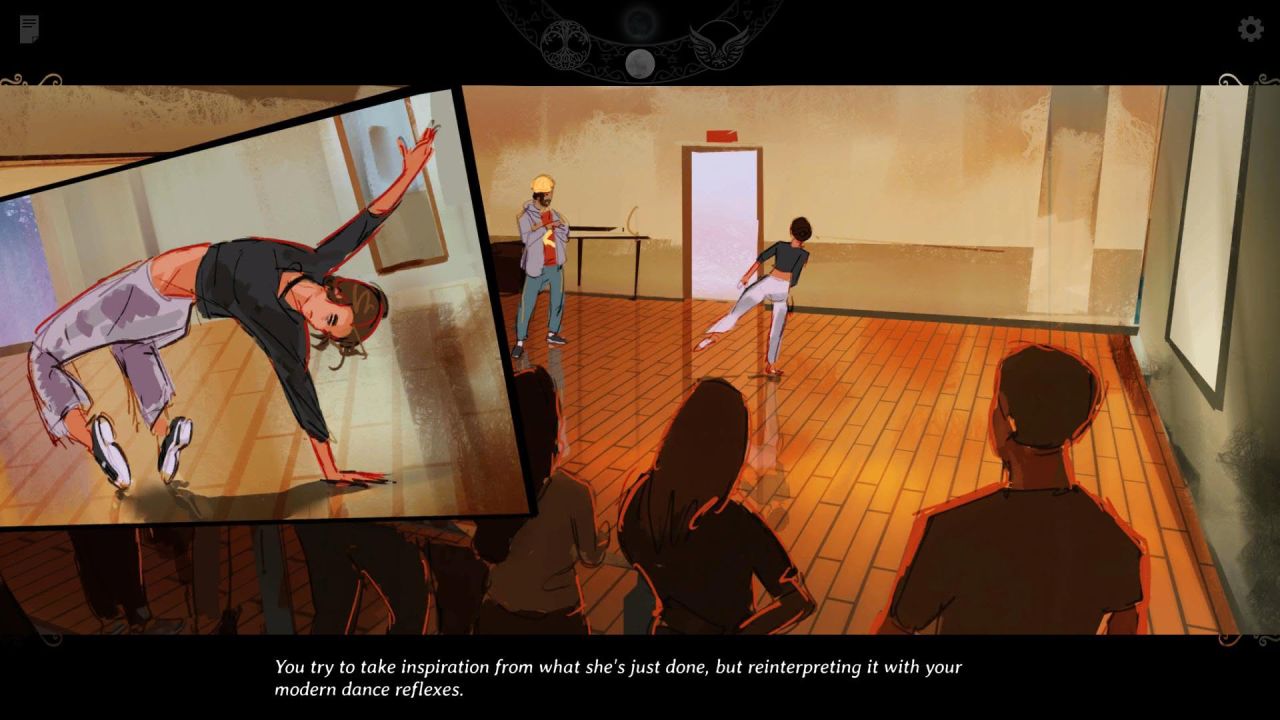
Achievements are another kind of progress, rewarding you for finding different scenes and endings. The art is the main draw of After the Wane. More than 2,000 hand-drawn pieces make up the rotoscoped animation, with hundreds of watercolor backgrounds by art director Nicolas Fouqué.
Rotoscoping here means real dancers were filmed and then traced frame by frame, and the studio worked with professional choreographers and dance companies to get there. It shows. The dance numbers and hallucinatory sequences look striking; ballet moves like entrechats, lifts, and pliés carry real weight, and the darker, ritual-like scenes feel just as controlled.
A sequence with a spider and its prey is handled especially well.
The character portraits are detailed, and outfits change with the situation, showing the care behind the small details. Everything in After the Wane is handmade with no generative AI, and you can tell because the human work shows in every scene. There are a couple of drawbacks.
Two animation sequences repeat and can bring on motion sickness, so be careful if you're sensitive to movement. Text size can't be adjusted, and there are no image descriptions; without a screen reader or optional auto-advance, some players will find After the Wane hard to use.
Illustrason, a music collective from Bordeaux made up of Camille Marcos and Julien Ponsoda, wrote the score for After the Wane. They've worked with Nova-box since Seers Isle, and this is their best soundtrack for the studio so far. It's orchestral, recorded with real instruments, and it shifts in real time with your choices, so it almost becomes a character of its own.
There's close to 3.5 hours of it. It backs up the dance scenes well and carries the stranger moments just as well. Nothing in the game requires you to hear the audio to progress, so the story stays playable without sound. Before you start, it's worth knowing what After the Wane contains. The studio lists minor horror scenes with spiders, alcohol and tobacco use, and veiled nudity.
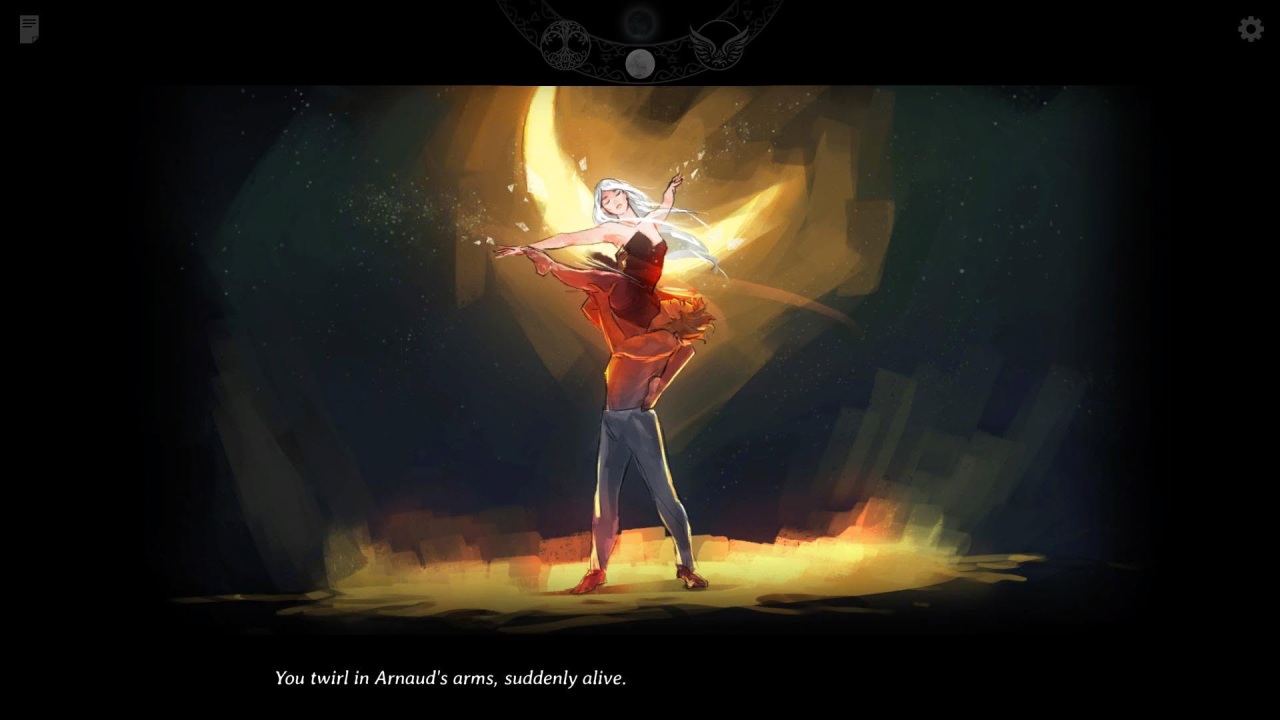
Beyond spiders and alcohol, heavier themes like body image and violence appear.
A few more things deserve a mention: discussions of body image, an injury and a physical attack, discriminatory behavior when a character believes another person is showing symptoms of psychosis, and some strong language. These themes make the game better fit for older players.
Up to the midpoint, After the Wane holds together well. In the second half, the pacing falters as the narrative threads merge, things speed up, and the ending lands in a rush. The esoteric dance ritual never fully connects with the studio's wider universe or with Lena's main arc, so the two feel like separate pieces.
Part of what keeps you hooked is wanting Lena to make it in Paris without losing her kindness and optimism, even though you're free to harden her. The story can also stir real emotion, especially if you see yourself in someone devoted to her craft but nervous about adulthood. Burnout, body image, physical limits, boundaries, and self-acceptance all come up, and you don't need any background in the performing arts to follow them.
After the Wane shows the darker side of professional dance, it takes apart a few industry stereotypes along the way. The strongest idea is that your ambitions may not be what you once believed, or may turn into something unexpected, and that real happiness might be a quiet neighborhood café on a Parisian street. The studio packs a rich, branching story into a few hours, and it leaves you wanting to try the other paths and relationships to see how differently they play out.
Editor, NoobFeed
Verdict
After the Wane is a handmade story about dance, family, and growing up. The rushed final act holds it back, but the art, the music, and the choices make it worth playing.
76
Related News
No Data.