
Luna Star Rancher Review
PC
Early Access
A space rancher raises creatures, tends her own needs, and builds a rocket.
Reviewed by Asura Kagawa on Nov 16, 2026
On paper, Luna Star Rancher sounds like the kind of game that should be easy to love. Developed by LEON GAGIN, it blends creature ranching, life simulation, and space travel into a single cozy, fairy-tale package. It was set to launch on November 11, but the build is still going through Steam's review process, so it's now waiting to arrive in Early Access. Within the first hour, it's clear where the ideas come from.
Raising and feeding colorful critters feels straight out of Slime Rancher, keeping your character fed, clean, and rested pulls from The Sims, and the promise of building a rocket and flying to other planets carries a bit of No Man's Sky. You can even spot a little Kerbal Space Program and My Time at Sandrock in the building and crafting. That's a lot of ground for one game to cover.

The real question is whether it all fits together, and that's where things start to fall apart.
It's also impossible to talk about Luna Star Rancher without mentioning how much of it leans on AI. The artwork, the character models, and the narrator's voice all have that generated look and sound, and it shows up almost everywhere.
AI can be useful in game development, but here it seems to handle nearly every part of the presentation, and that colors your impression of the whole game from the first scene. The story in Luna Star Rancher is light and mostly there to set the mood. An AI-voiced narrator opens by describing Earth as a dull, gray place where happiness is in short supply.
Far out in space, though, among more stars than there are grains of sand on a beach, sits a small, cheerful planet. That's where Luna arrives, and the narrator makes it clear that she's counting on you to look after her. The narration itself is stiff and awkward enough that you'll want to skip through it.
You can also tweak Luna's look before you set off, and again later in the game. Once you're on the ground, the story mostly fades into the background, and your focus shifts to the ranch, your daily chores, and the letters and tasks that keep showing up in your mailbox.
That doesn't mean the world is empty of mystery.
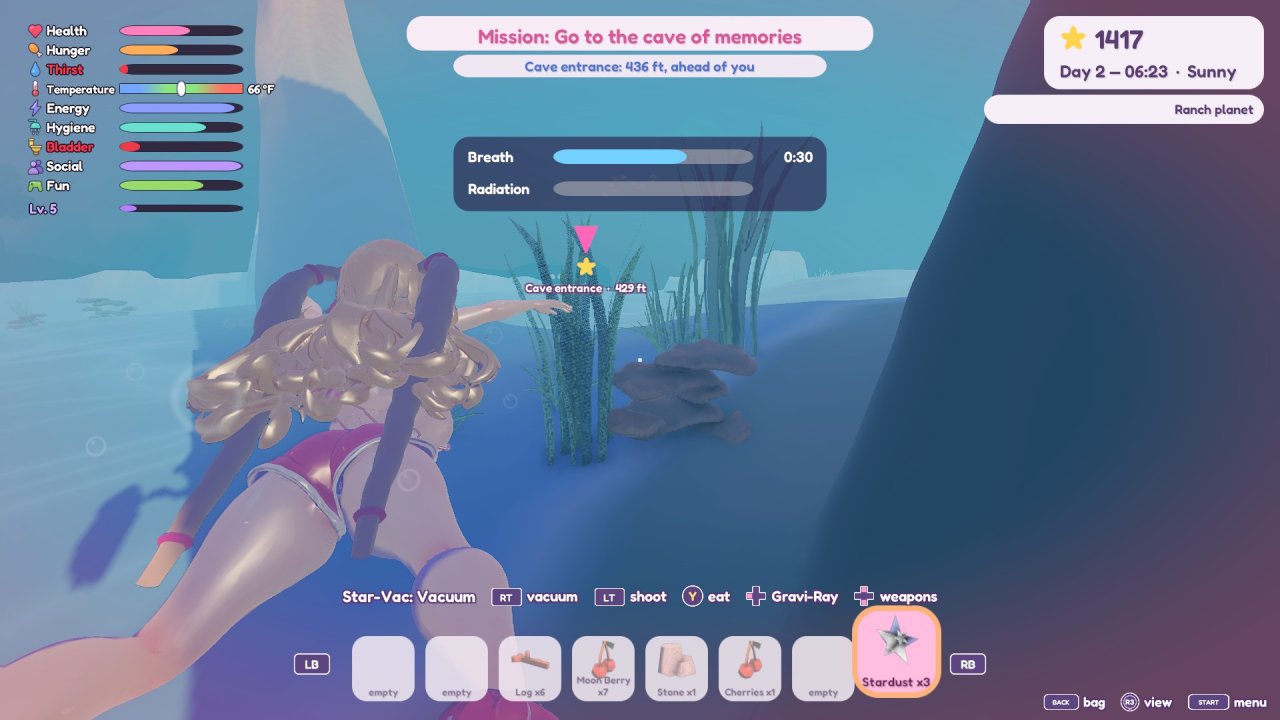
Swim far enough out, and you'll find a cave tucked away underwater. Inside, there's a cassette to pick up, a row of old graves, and an old phone you can examine. None of it is explained right away, and these small discoveries hint that something more is going on with this planet.
It's one of the more interesting moments in Luna Star Rancher, and it's a shame there isn't more of this kind of quiet storytelling sprinkled around the map. At its heart, it is an open-world exploration game built around a single tool: a matter gun that Luna carries at all times.
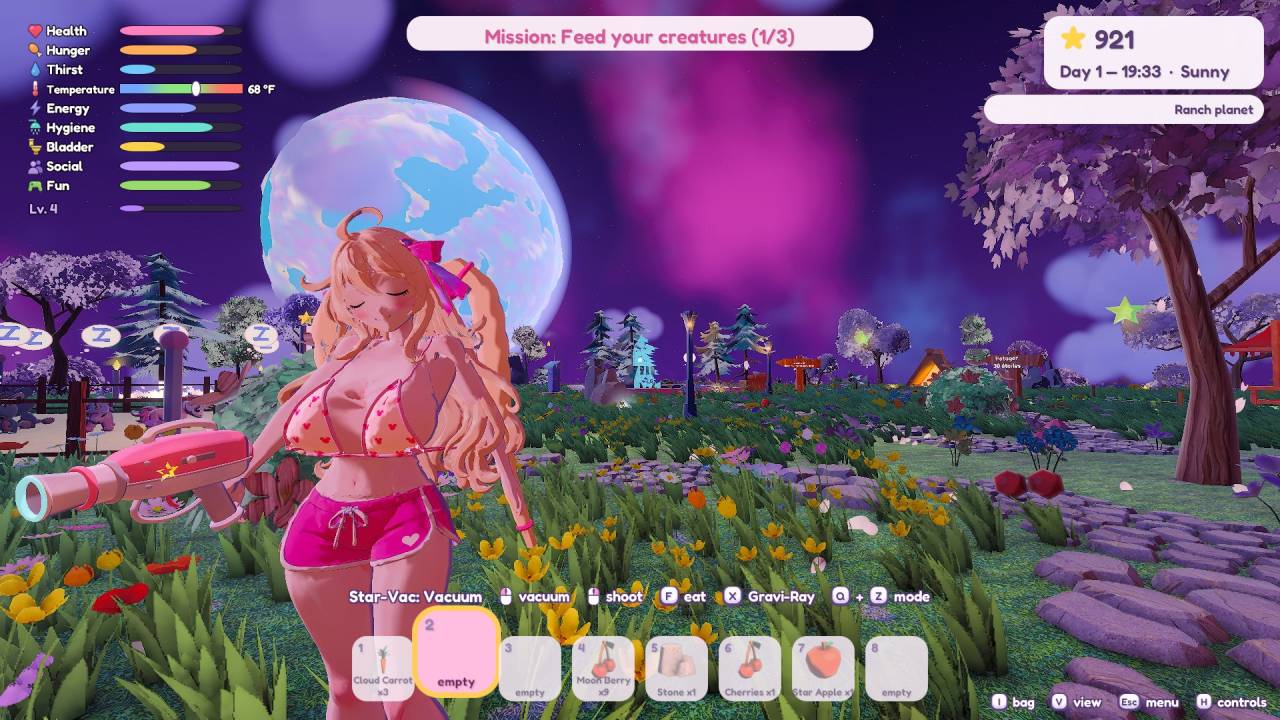
Aim it at fruit, rocks, or creatures, hold the button, and it pulls them in, storing them in the slots at the bottom of your screen. From there, you can spit them back out, toss them somewhere else, feed them to your animals, or eat them yourself.
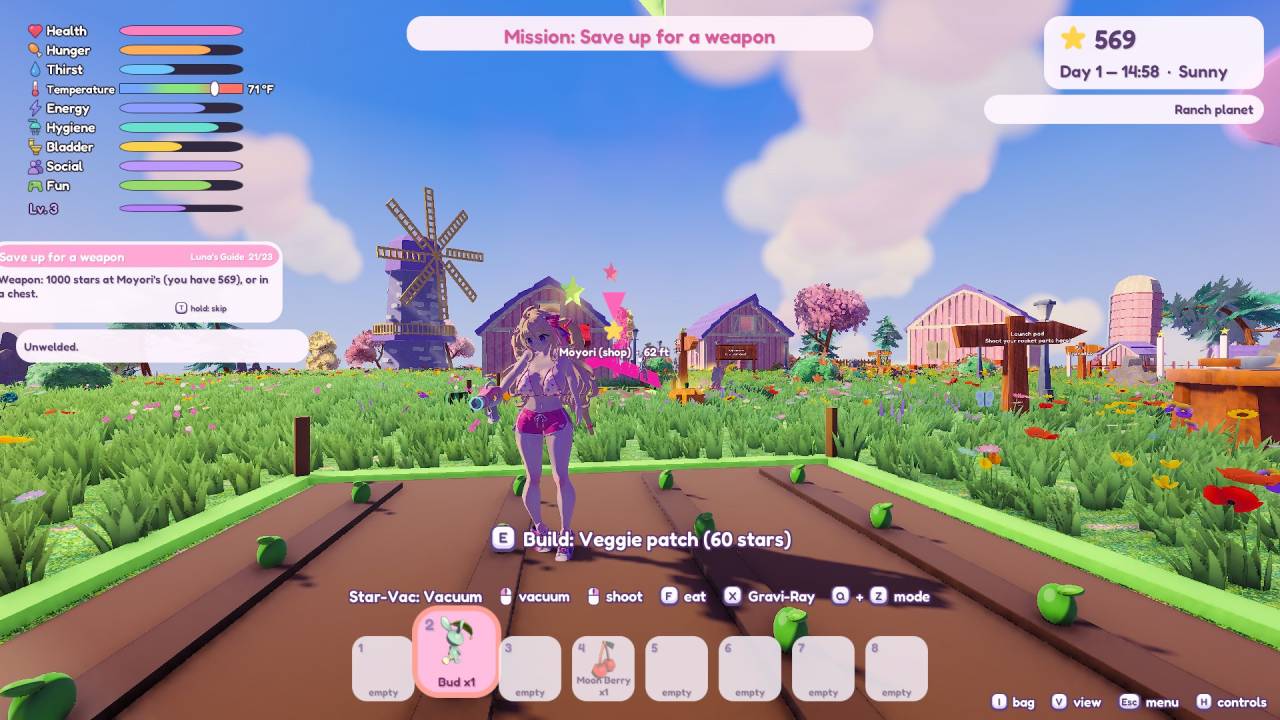
A second mode called the Gravi-Ray lets you grab objects and hold them floating in front of you, then move, rotate, and fit pieces together to build equipment and inventions. It feels a bit like playing with LEGO in space, and it's one of the better ideas here, since it leaves room for you to get creative with how you build things.
You can switch between these beams as needed, and later on you can buy actual weapons, like the bubble blaster, from the shop.
Getting around in Luna Star Rancher is simple enough. You can run, jump, and crouch, and sprint to slide across the ground, which is surprisingly fun. You can also dive into the water and swim, though you'll need to watch your oxygen as you go deeper and keep an eye out for the large octopuses lurking below.
When you climb back out, Luna is soaking wet, and sliding along the ground helps her dry off. You can also throw anything from your slots, so you can lob carrots straight into a pen from a distance instead of walking each one over. A backpack holds your extra items and tools, and the island has chests to crack open and golden items to collect that sell for a good amount.
The bigger twist in Luna Star Rancher is that you aren't just controlling Luna. You're also responsible for keeping her alive and comfortable. She has needs for hunger, thirst, sleep, hygiene, companionship, and fun, and you'll need to check on each regularly.
On top of that, there's body temperature. Running around in the sun heats her, so find shade, jump into the water, or drink from a fountain to cool her down. Let her bladder fill up, and she'll need a bathroom; if you wait too long, she'll make a mess.
At home, you can take a nap, shower, and save your game all in one place.
If you ignore her needs or wander into something dangerous like a fire, Luna gets knocked out, and you lose 500 stars as a penalty. This system could have given you a real bond with Luna, and for a while it does make her feel like more than an avatar. The problem is balance.
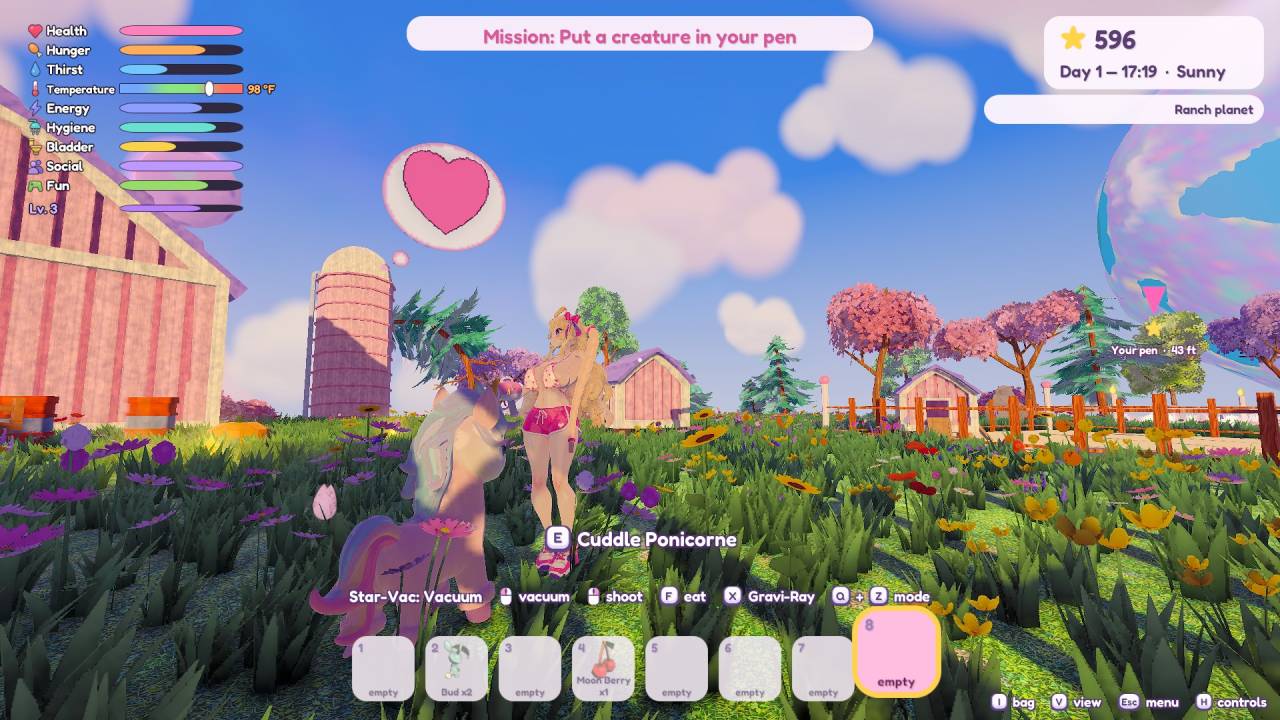
Luna's stats are so detailed that it takes a while just to figure out what you're supposed to do each day and how to keep everything in check. Instead of adding to the adventure, it often turns simple activities into chores. You came to explore space and raise cute animals, but you spend much of your time babysitting a list of meters.
The effort it demands rarely pays off with enough enjoyment to feel worth it. Ranching is the main loop, and it's where Luna Star Rancher feels most like the games that inspired it. The planet is full of creatures with odd names, like the horse-like Ponicornes, the leafy Bourgeons that look like rabbits with plants on their heads, and the starry Axoétoiles.
You'll also find glow-cats, mini ponies, and other critters wandering around. To start your ranch, you head to a sign near the path and build your first pen. Then you suck up a creature with your gun, spit it into the pen, and toss it some food.
Each species has its own tastes, habits, and even reactions to the weather, so you'll need to learn what each one wants.
Not every creature is part of the ranch, either. You'll bump into crabs on the shore that don't attack you or do much, and some critters run off the moment you get close, so catching them takes a bit of chasing. Your animals will let you know when they're hungry, thirsty, sleepy, or want some attention, and you can pet them to keep them happy.
Spend enough time petting a creature, and it starts to grow attached to you, which is sweet. The petting and cuddling animations are clunky, though, and they take a lot of the charm out of those moments. Caring for your creatures earns you stars, which double as the game's currency.
You spend them on pen upgrades, like an automatic feeder that keeps your animals fed while you're away, or a bigger pen to hold more. Over time, you can also unlock a motorbike, a cannon, teleporters, and other vehicles to help you move around faster. Farming is part of the mix, too.
You can set up a vegetable patch and grow crops like cloud carrots, moonberries, and cherries, and stellar fertilizer helps them along. To get started, though, you'll need seeds, which you have to buy, and the game doesn't make it especially clear where to find them at first.
Most of your trading happens at the Starry Kiosk, run by a shopkeeper named Maiori.
She hands out daily orders, like a batch of carrots, and buys whatever you bring her. You'll sell fruit, creature drops, and golden items to build up your funds, then spend them on seeds, decorations, rocket parts, and what the shop calls cute weapons.
Some of the better gear is expensive, so you'll have to sell a fair amount before you can afford it. You also level up as you go, mostly by doing ordinary tasks like collecting items with your gun. You can hit level five without really knowing how you got there, and it doesn't seem to change much about how you play.
Mail also arrives regularly with small goals, like feeding your creatures or planting a garden worth 30 stars, and following them is the easiest way to figure out what to do next. The long-term goal is the rocket. You buy the parts from the kiosk, including the nose, the engines, and the fuel tanks, then assemble them piece by piece.
Once it's built, you can leave the planet and head out into space to visit other worlds and discover what's out there. You'll also need to repair a landing zone along the way. Boss battles are part of the package too, adding a bit of combat to the farm life.
It's the most exciting promise Luna Star Rancher makes.
You start your morning by feeding your animals and end your night by flying toward another planet. The trouble is, all these ideas need a strong structure to hold them up, and that structure isn't here. A game like Stardew Valley has lots of activities, but they feed into each other naturally.
You grow crops to make money, spend the money on your farm, explore for resources, and build relationships, and it all forms one clear cycle. Luna Star Rancher tries to do the same with its ranching, life sim, building, exploring, and combat, but the pieces don't connect satisfyingly.
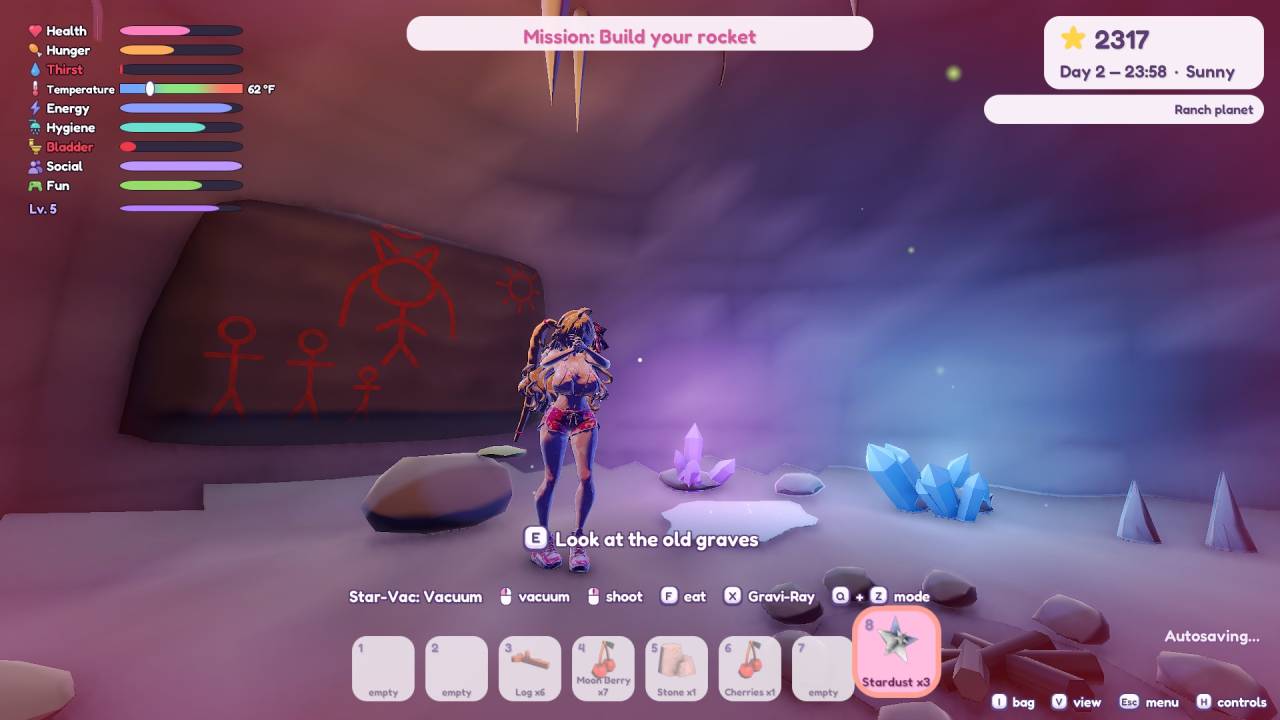
Each system works on its own, but nothing strongly pushes you from one to the next. It feels like too many features were added before making sure each one was fun to use. Some mechanics simply feel off in practice, even when the idea behind them is solid.
Visually, Luna Star Rancher makes a decent first impression. The environments are bright and colorful, the objects have a cartoony look, and the creatures are designed to be friendly and cute. In a still screenshot, some areas even look pretty inviting. The issues show up as soon as things start moving.
The animations are stiff and robotic, and characters move like plastic toys trying to copy human motion.
It's a lot like those 3D anime games from the early 2000s on the PlayStation 2 and PC, back when developers were still figuring out how to animate characters properly. That era had its charm, and simple graphics aren't a problem on their own. But there's a big difference between a deliberate retro style and animation that just doesn't work. Here, the problem isn't the textures or the polygon count.
It's how the world comes to life, or rather, how it doesn't. Since you spend most of your time walking around and interacting with the world, these animations drag down almost every part of the experience. The bright scenery and cute creatures actually make the problem stand out even more, because the stiff movement clashes so badly with everything else.
The AI-generated style adds to that strange feeling. Everything has a slightly off look, and once you notice it, it becomes hard to ignore. Luna's character design also seems more focused on showing off her figure than on fitting the cozy fairy-tale tone the game is going for, which can feel out of place.
Sound is the weakest part of Luna Star Rancher's presentation. The narrator's AI voice is flat and awkward, and it's hard to sit through the opening without wanting to skip it. Background music plays while you explore, but it doesn't leave much of an impression. Beyond that, the audio doesn't do much to support the cozy mood the visuals are reaching for.
After a few hours, Luna Star Rancher leaves you with mixed feelings.
The concept is great. Cute creatures, a colorful world, a building system with real potential, and the dream of flying a homemade rocket to another planet all make cozy games appealing. With more time and care, it's easy to imagine a version of this game that works as a fun mix of ranching, life sim, and space travel. In its current state, though, it stumbles in too many places.
The animations are rough, the needs system turns into busywork, the features don't connect meaningfully, and the heavy use of AI gives the whole thing a hollow feel. There's a lot of ambition here, but ambition alone isn't enough to carry the game. For now, Luna Star Rancher needs to get its footing before it can really aim for the stars.
Staff Writer, NoobFeed
Verdict
Luna Star Rancher is a cute idea that never gets off the ground. The animations are stiff, caring for Luna's needs feels like busywork, and the different systems don't really tie together. Cozy Ranch fans might still find a little fun in it.
60
Related News
No Data.