
Nivalis Nights Review
PC
A cyberpunk life sim where you build a small noodle business, manage a growing empire, and try to make a life in a city that never really feels quiet.
Reviewed by Maisie Scott on Sep 30, 2026
Nivalis Nights starts by putting you in a small apartment in a city full of neon, rain, trains, boats, and people trying to get through another day. You wake up with little context, meet Ava, the AI companion connected to your mind, and learn that Thaddius is waiting for you at a noodle bar. That trip becomes the beginning of your new life.
Instead of dropping you into another cyberpunk story about being a mercenary or supersoldier, Nivalis Nights asks you to build something from almost nothing. Ion Lands, the studio behind Cloudpunk, returns to the same cyberpunk city and uses that setting for something much more personal.
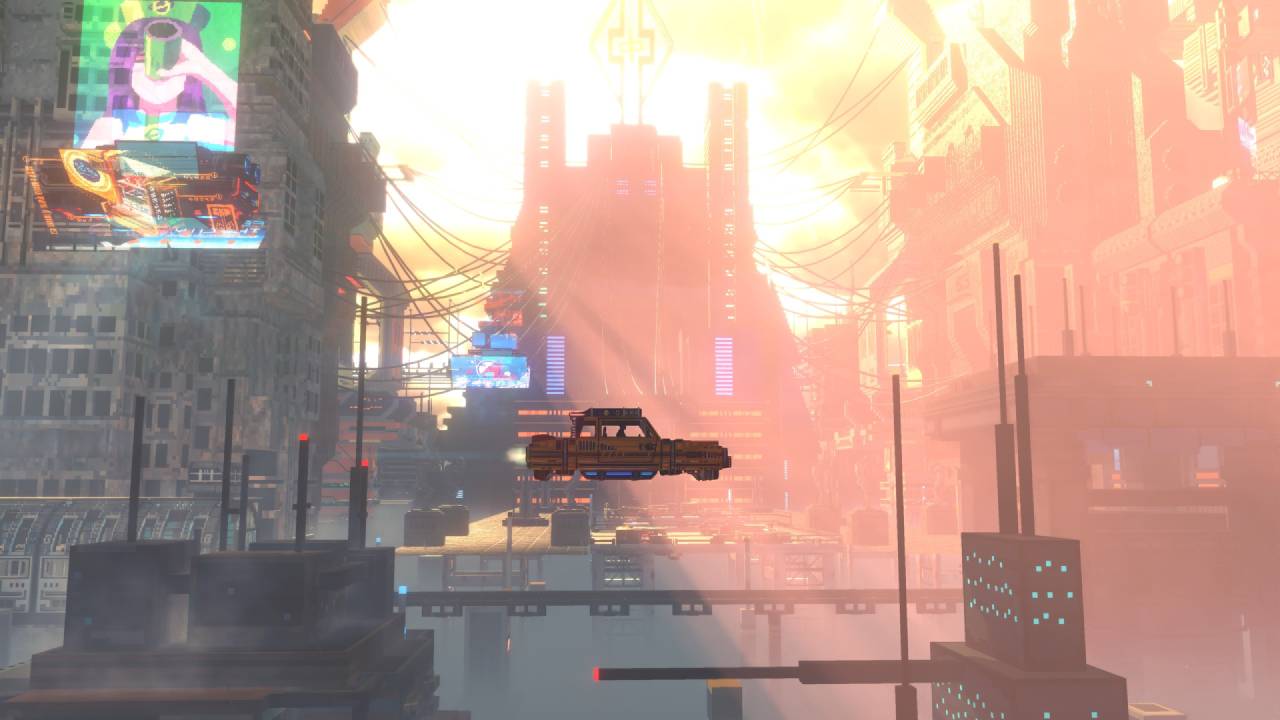
Nivalis Nights isn't a sequel to Cloudpunk, even though it shares its world.
The focus is on living inside it rather than simply moving through it. You inherit a struggling noodle business, take on its debt, and slowly work toward owning better properties. The developers clearly wanted the city itself to be a major part of it, which is important because your progress is tied to where you go, who you meet, and how you spend each day.
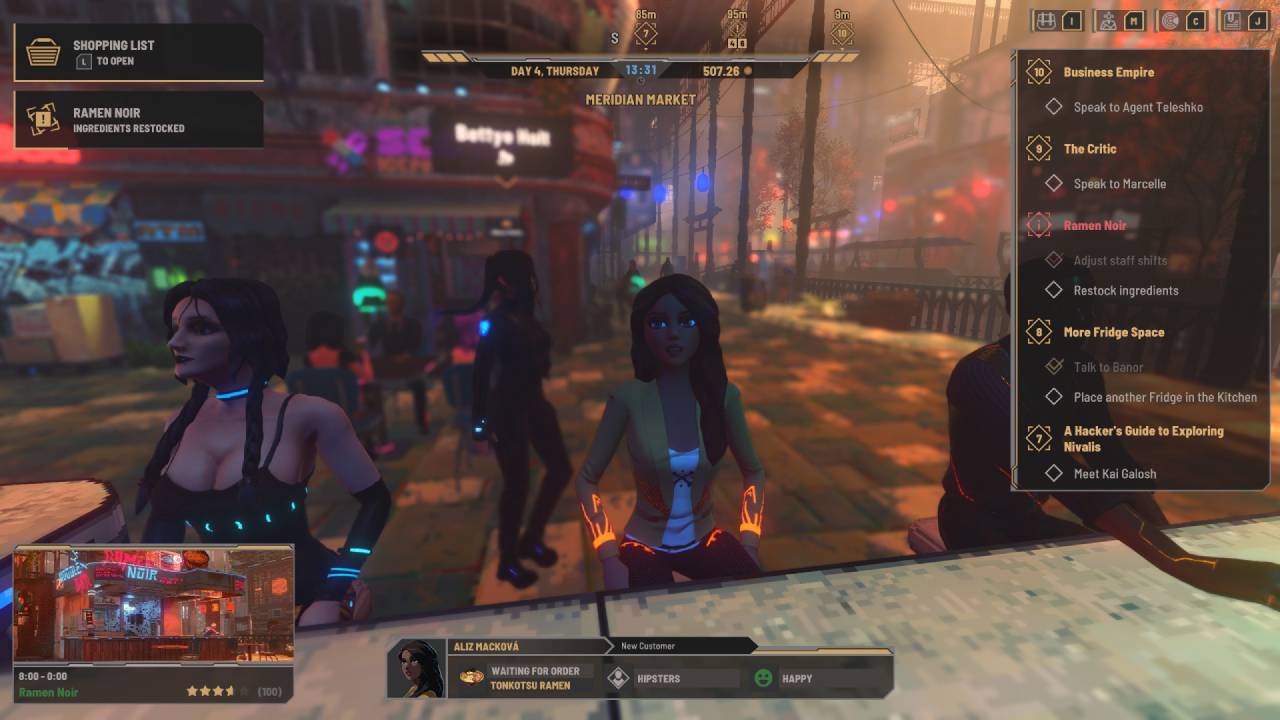
Your first business is Ramen Noir, a noodle stand that Thaddius hands over to you. Banor helps train you, and the early routine is straightforward. You need ingredients like chicken, onions, and ramen noodles; then you take orders, cook them, serve customers, clean up, and keep the place running.
The business has bills to pay, and your nightly finances show what you earned, what you spent, how much debt remains, and where you sit among other owners. Debt gives the business side a reason to keep moving, while the chance to buy and improve other properties gives you something to work toward.
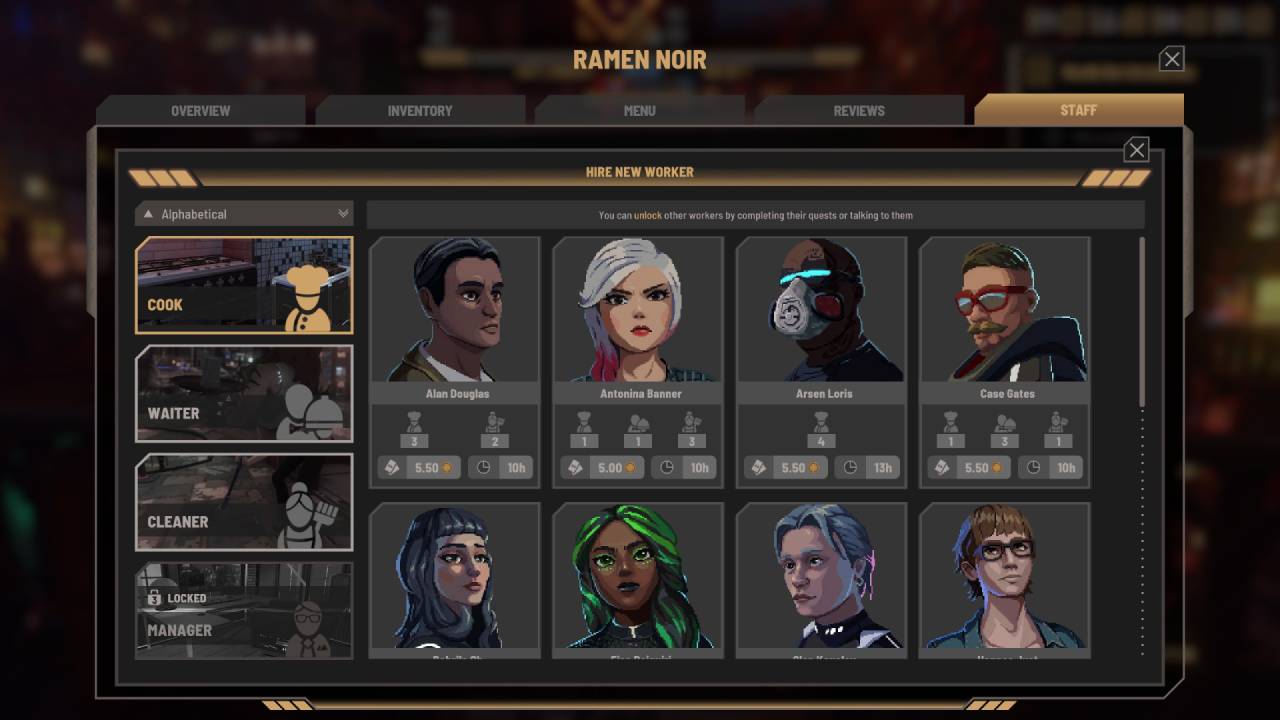
Nivalis Nights makes the management systems more involved as the restaurant grows. You can hire waiters, cooks, and eventually managers, but staff roles matter. Putting the wrong worker in the wrong job can make the restaurant less effective, and employees have their own stats and schedules.
At first, you are doing most of the work yourself. Later, you can let staff handle more, although automation doesn't always feel like a complete solution. A manager can take over scheduling and shopping, but once the restaurant runs smoothly, you may find yourself with little to do.
Ingredients also become a bigger concern.
Vendors supply the basics, while other shops can provide things needed for more unusual recipes. Ingredients can spoil after two days, so buying too much is not always a good idea. You can eventually grow produce in greenhouses, which gives you another way to reduce costs. Fishing also provides resources, though the activity itself is simple: cast, wait, and reel in your catch.
It doesn't have the deeper, skill-based fishing system you might expect from a farming or life simulator. Recipes are tied into exploration and conversations as well. Beef ramen, desserts, drinks, and other dishes become available through people you meet, quests you complete, and restaurants you visit. Nivalis Nights has a large pool of ingredients and recipes, so you can expand the menu instead of serving the same few dishes forever.
Serving better food lets you charge higher prices and keeps customers happier, but once demand climbs, the restaurant can quickly become a stressful place to run. When you run out of ingredients, or your staff cannot keep up, orders can fail, customers may receive discounts or free meals, and your reviews can suffer.
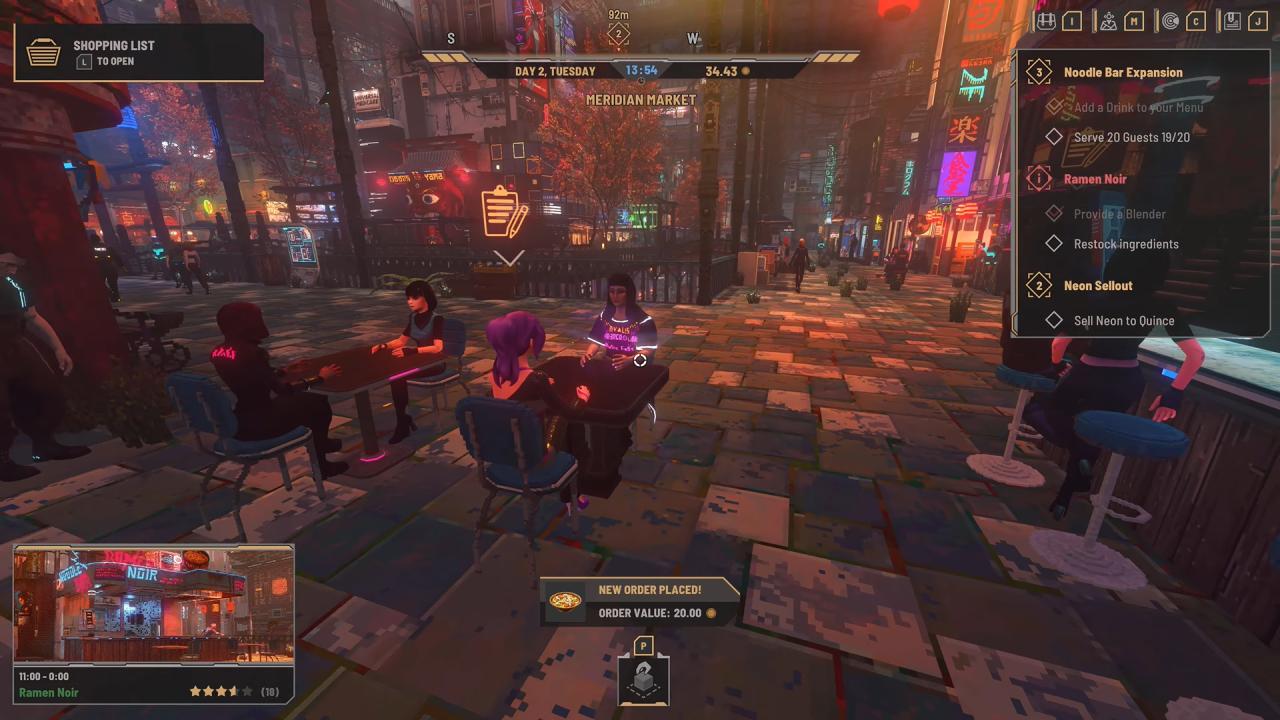
That pressure is one of the strongest parts of the business system. You'll have plenty to juggle here: where people sit, what furniture goes where, what's in the kitchen, how many menu slots you've got, what drinks you're pouring, who's on staff, what supplies are in stock, and how much elbow room your customers need.
Even the smallest decisions can ripple through and change how smoothly the restaurant runs day to day.
You can pick up bar stools and other furnishings, upgrade your equipment to unlock new recipes, give the property a fresh look, and eventually scale up to larger businesses. Your business comes in two main flavors, restaurants and nightclubs, and each has its own opening hours, menu, and kind of crowd.
You remain within food and drink rather than suddenly opening a hacking store or another unrelated cyberpunk business, which keeps the management focus consistent. In Nivalis Nights, the broader life-sim side feels less complete. You can rent apartments in different districts and spend time decorating them with furniture, plants, chairs, lights, and other objects.
There are little touches around the place too, like a treadmill, a television, a shower, and a washing machine, but most of them never really grow into anything worth doing. You also don't have to eat, drink, shower, or make bathroom trips just to get through a normal day, and your character doesn't risk dying from neglect.
You can even sleep on your boat. That makes the apartments feel more like spaces to customize than places you actually live in. Nivalis Nights also gives you more to do in the city. Districts are large and visually distinct, and you can travel by taxi, train, or boat.
You can explore waterways, fish, look for treasure, visit businesses, enter apartments, and find people connected to side quests.
Fast travel becomes available after you visit locations, but loading screens separate the districts, so this isn't a seamless open-world city. Transportation options make the world feel large, but fast travel can make some of those systems less important once you have unlocked enough destinations.
Your daily routine is shaped by the time of day and the weather. You wake up, check the conditions, decide what needs attention at the restaurant, follow quests, meet people, and eventually return home to sleep. The weather can shift from cloudy days to rain, and thunderstorms become especially striking when neon lights reflect off wet streets.
A strict 1 A.M. curfew, tied to the serial killer storyline, also hangs over everything. Once night falls, security cameras and city patrols matter much more, and public transport can stop running after curfew, so if you lose track of time, you could easily find yourself stuck with no way home.
In Nivalis Nights, the serial killer case gives the story a bigger thread to follow than just paying off your debt. The killer targets people carrying major debts, and your own financial situation makes that storyline feel connected to the business you are building.
Alongside the investigation, you deal with corporate pressure, rival businesses, shady customers, sabotage, and people looking for help with their own problems. One side quest, for example, involves finding a dead husband's persona construct inside a Flavor unit. These stories give you reasons to leave the restaurant and explore the city rather than treating every district as a shopping area.
Relationships also add another layer.
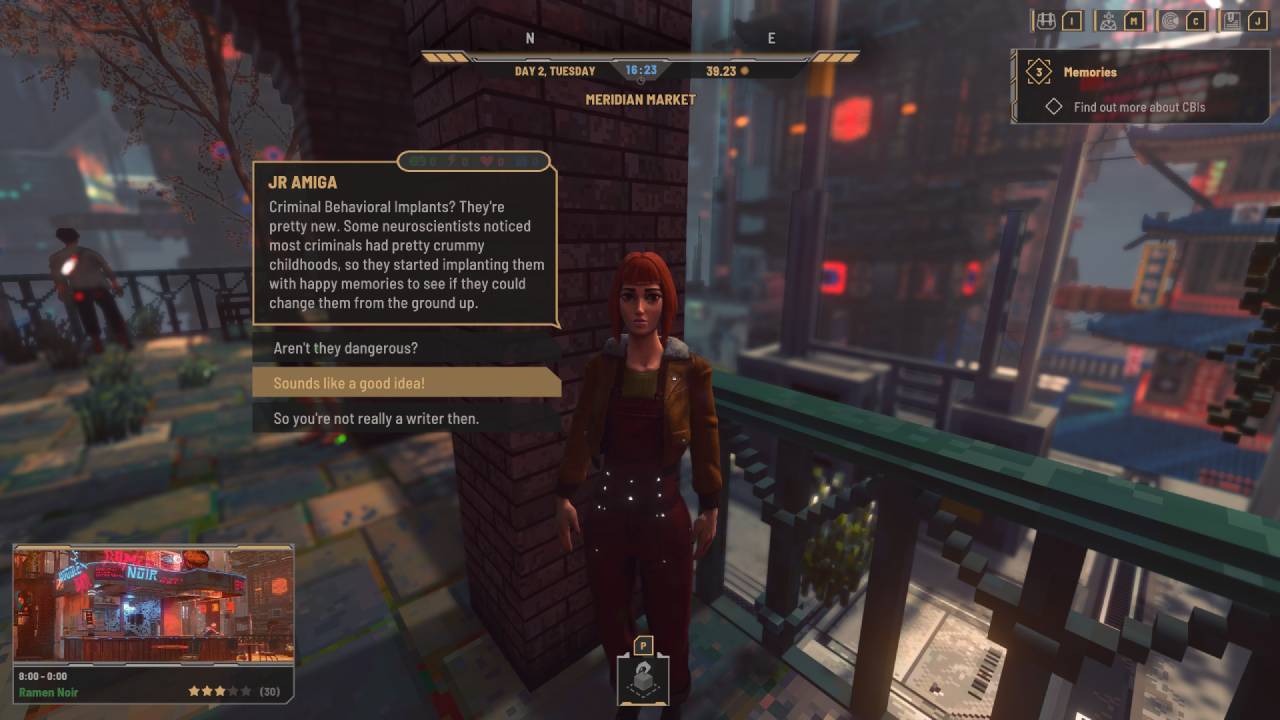
Characters can become friends, rivals, romantic interests, or business partners, and your dialogue choices can change those relationships. Those changes can affect quests, vendors, money, and sometimes the direction of a story. You can also fail quests, which gives your decisions more weight than a simple checklist would.
More than a hundred side-story characters make up the world, and many named characters are fully voiced. The voice work has enough range to make conversations worth following, even when some performances don't always sound completely natural.
Ava is constantly involved in your progress. She is wired into your brain and helps guide you through the early stages, while also commenting on what is happening around you. Her frequent explanations can be useful when you are learning the systems. Still, the tutorial interruptions can get irritating because she speaks slowly and keeps returning with prompts throughout the game.
The morning newspaper also gives you another way to catch up on what is happening in the city. There is no traditional combat system here. You do not spend your time fighting enemies, scavenging weapons, robbing stores, or clearing hostile areas. That makes the lack of a conventional combat or puzzle section less of a missing feature and more of a deliberate choice.
Your challenges come from running the business, handling quests, managing relationships, finding recipes, and keeping your finances under control.
There is also no clear traditional XP grind driving the whole experience. Trading has its own skill progression, while businesses can level up, but the larger progression comes from money, recipes, property improvements, staff, relationships, and access to more of the city. That structure can be satisfying because the rewards are easy to understand.
You start with a small noodle stand and gradually see better equipment, more recipes, more customers, additional properties, and higher earnings. Watching the business grow can become addictive, especially when you have enough money to improve the place and see its ranking rise. That said, things can drag. Progress often crawls along slower than you'd want, and you may catch yourself waiting for the next step to open up.
During quieter periods, planting seeds or waiting for the next thing to happen can leave you with little to do. Once a manager handles the restaurant, some days can feel strangely empty unless you deliberately fill them with quests, fishing, exploration, or relationship activities. The lack of deeper life-sim interactions also limits the role-playing side.
The setting looks like a cyberpunk city, but the business itself rarely feels like the dangerous underworld you might associate with that genre. You do not have to deal with armed robberies, protection money, gangs, or keeping a weapon under the counter. Those omissions are not necessarily problems if you want a business simulator first, but they become noticeable when you expect the city to offer more systemic cyberpunk activities.
Visually, the voxel and pixel-inspired style takes some adjustment, but it works extremely well once you settle into it.
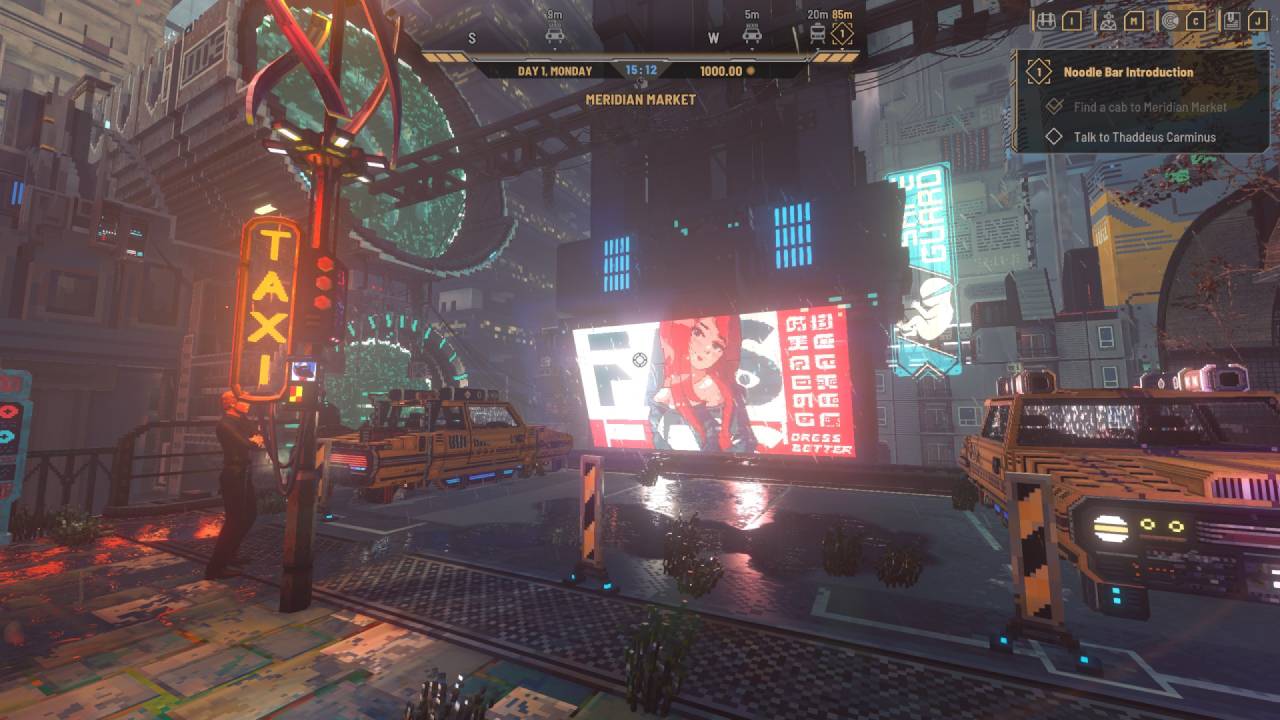
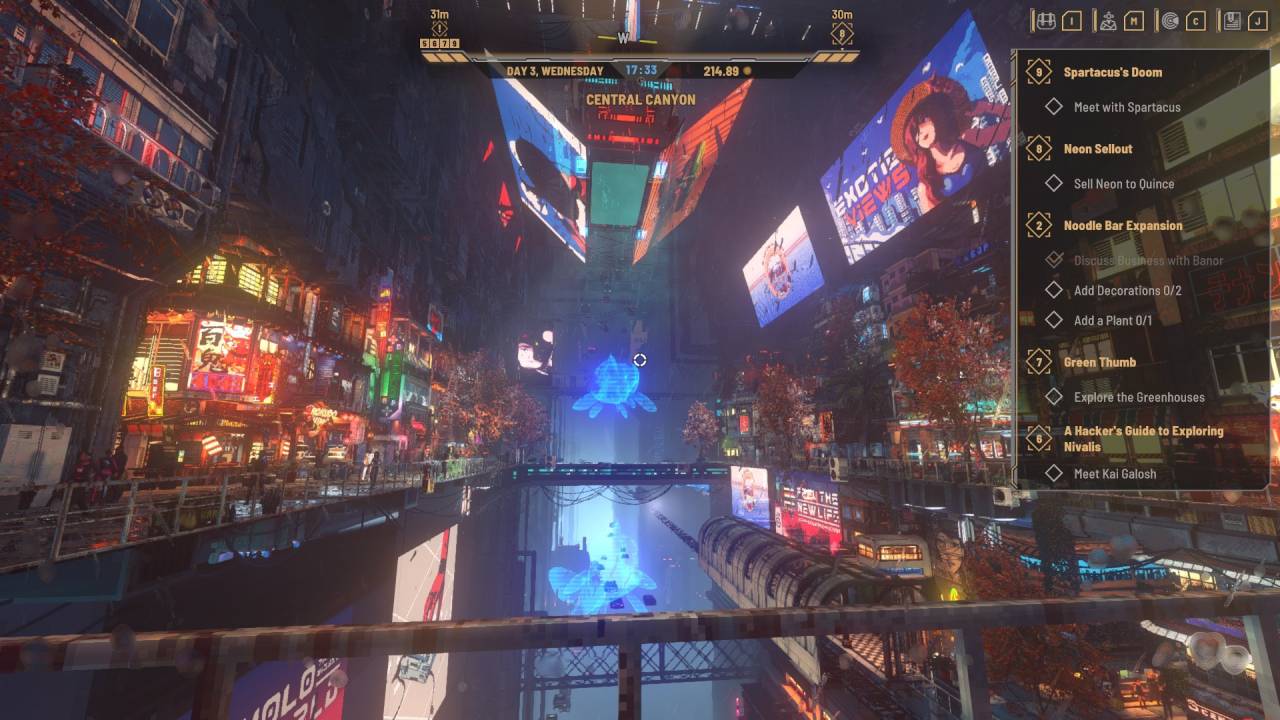
The characters have a stylized appearance, while the city has enough detail to make the districts feel different. After sunset, the streets look great. It rains almost constantly, and the neon signs smear across every puddle on the ground. Thunder grumbles now and then, and everything sits under a dim, moody light. Nothing about the city feels generic, because it has its own mood.
The soundtrack, ambient noise, and sound effects support the atmosphere, keeping the city consistently active. Photo mode is also a useful addition because the environment can be striking when the weather and lighting line up. Performance is a different story. Frame-rate drops can be severe in busy areas, with performance falling from high frame rates to around 30 FPS.
Lowering settings does not always solve the problem, and GPU usage can remain low during these drops. Characters can also get stuck or pop into place, while other glitches can interfere with food, cleaning, or quests. There have even been reports of freezes and softlocks. Because the developers planned patches for launch, some of these issues may improve, but they are still important when judging the version you actually play.
The interface has its own problems. Quest markers can crowd the screen and map, and there is not always an obvious way to reduce the clutter. Menus and inventory controls sometimes feel more naturally designed for keyboard and mouse than for a controller, especially when searching through items. Some objectives aren't explained as clearly as they could be, and the interface takes time to learn.
Once you know where everything is, the systems become easier to manage, but the first hours can involve more menu confusion than necessary.
Even with those problems, the business side gives the whole experience a clear identity. You can spend a day balancing ingredient costs, changing your menu, hiring staff, improving seating, handling a rush, and checking the nightly numbers.
Then you can leave the restaurant, take a boat through the city, follow a strange quest, meet a new character, fish for supplies, or simply head home and decorate your apartment. That flexibility is where Nivalis Nights shines. It lets you choose whether a day is about making money or simply seeing what the city has to offer.
After spending enough time with Nivalis Nights, it's clear that the strongest part is the restaurant management, which holds everything together. The story gives you reasons to explore, the city provides the setting, and the relationships add personality, but the business progression is what makes the routine worth repeating.
The life-sim elements are more limited than the presentation suggests, and the technical problems can interrupt an otherwise enjoyable session. Nivalis Nights works best when you treat it as a first-person cyberpunk business simulator with life-sim and narrative elements rather than as a complete cyberpunk RPG.
You build from a small noodle shop, learn how to control your costs, expand your menu, hire people, explore new districts, and gradually turn your modest operation into something bigger. You also get a city filled with quests, voiced characters, apartments, fishing, boats, weather, and an ongoing murder investigation.
There's enough here to make this feel worthwhile, particularly if management games are already your thing.
You'll find plenty to keep you busy, from collecting recipes and buying up properties to building relationships and working through side quests, though the lack of major branching paths means there's less reason to come back for a second playthrough.
The biggest thing standing between Nivalis Nights and a smoother experience is optimization, followed by the thin life-sim activities. Nivalis Nights is therefore an uneven but distinctive cyberpunk simulation. Its best moments come from watching a tiny noodle business turn into a growing operation while the city carries on around you.
Its weaker moments come when you expect your apartment, transportation, or everyday life to offer the same depth as the restaurant. If the business side is what keeps you engaged, there is enough here to make the routine satisfying. If you expect a broader life simulator or an RPG with combat, the systems are much more limited than the setting might suggest.
Editor, NoobFeed
Verdict
Nivalis Nights is a solid cyberpunk business sim with strong atmosphere, detailed restaurant management, and plenty of side content. Its thin life-sim systems and rough performance keep it from being the complete city-life RPG its setting hints at.
70
Related News
No Data.